Monday 21st April 2025
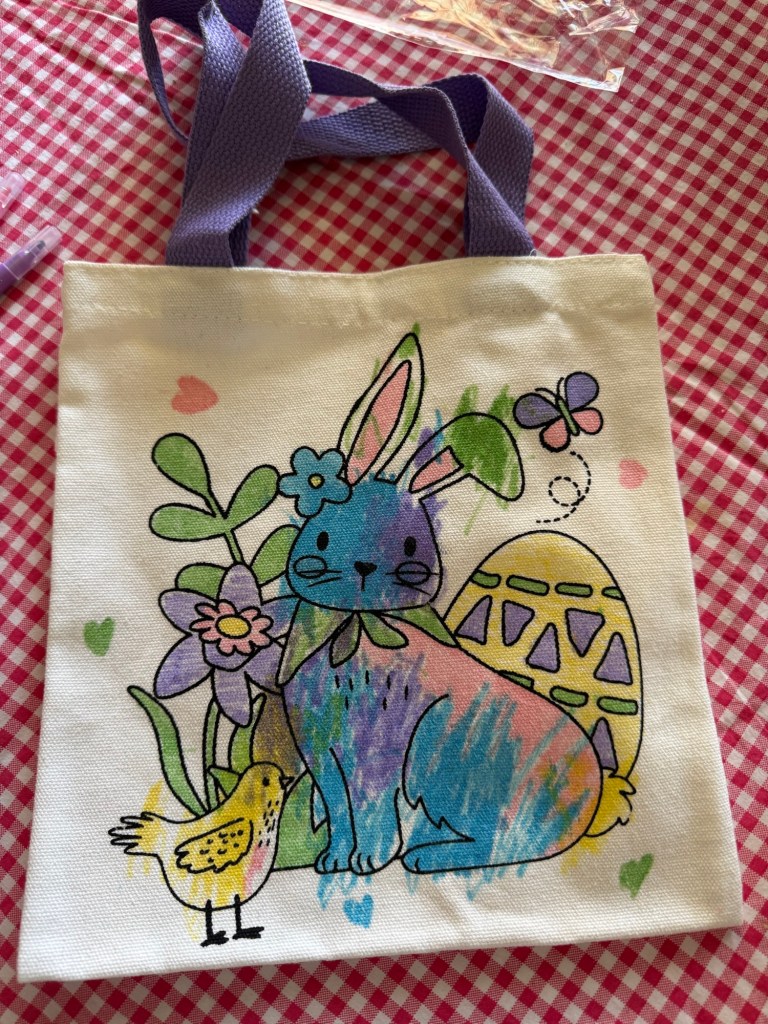
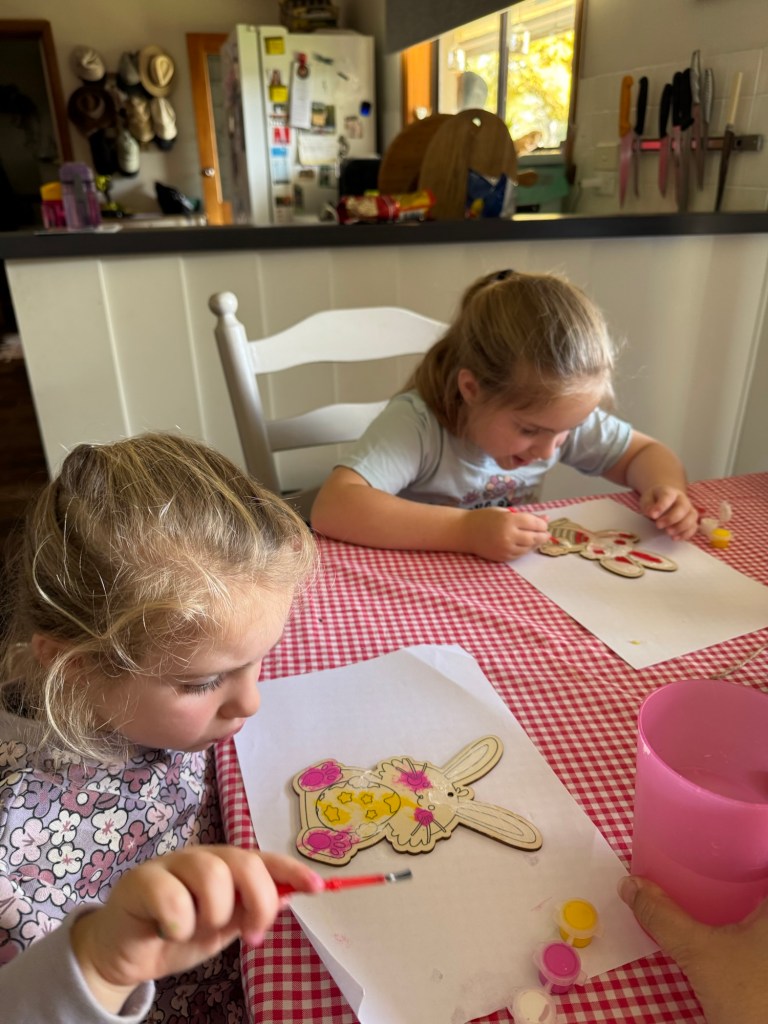
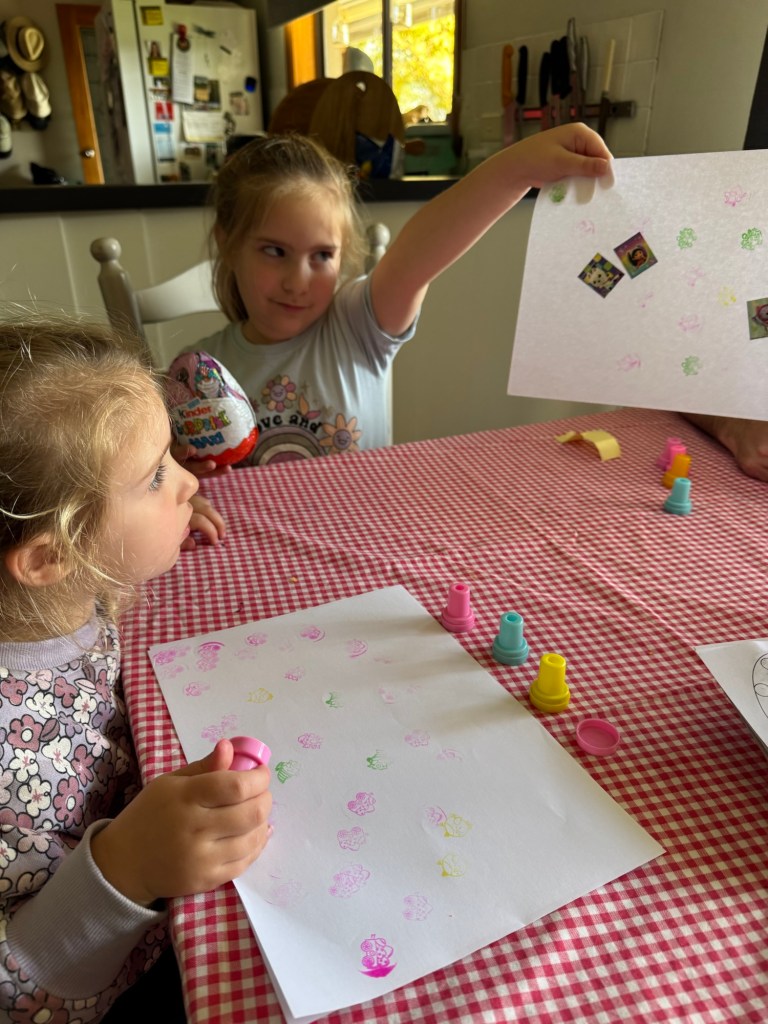
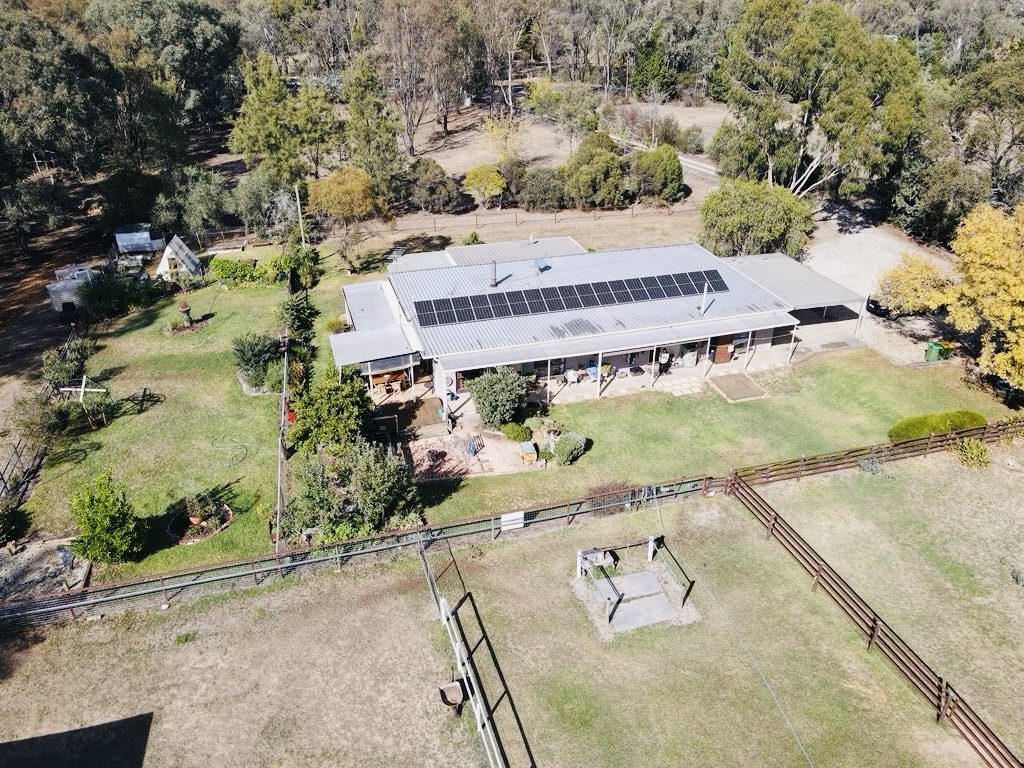
We hung out at the farm house this morning. Doing Easter art, playing games and flying the drone.
In the afternoon we headed off for a trip to Yarrawonga, VIC. It was an hour drive West of Jindera through the Rutherford Wineries region.
We drove the distance to give the girls the opportunity to experience a Paddlesteamer experience. The paddlesteamer we were going to board was PS Cumberoona.
We arrived at the Yarrawonga Foreshore and had a very short play on the playground.
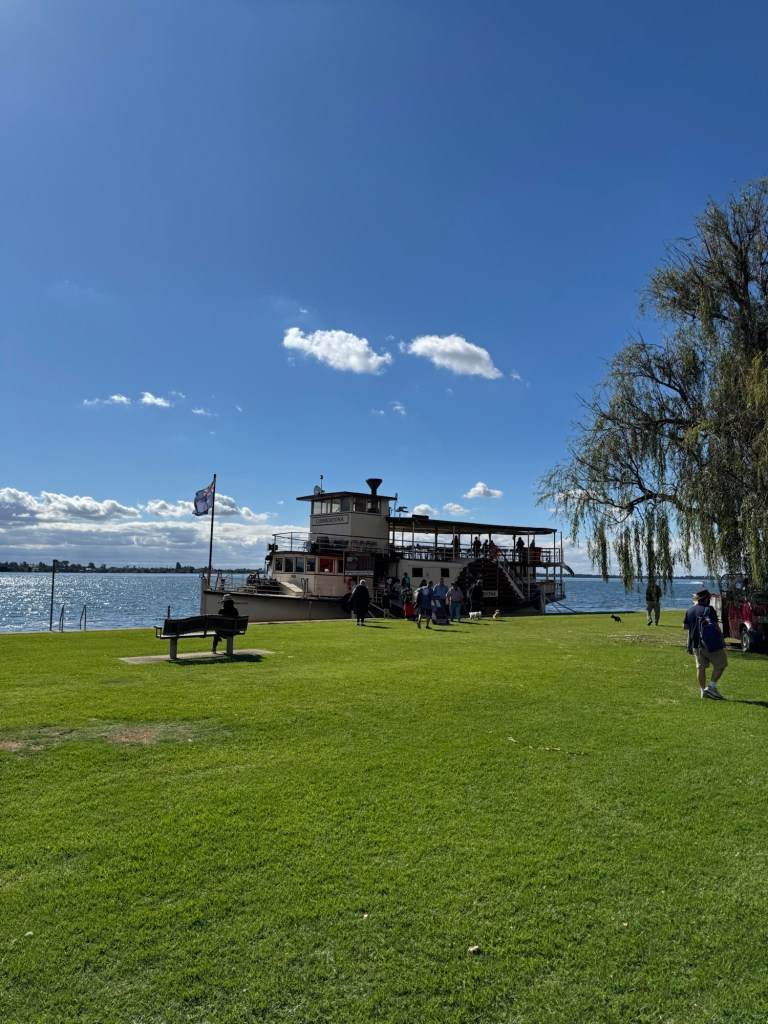
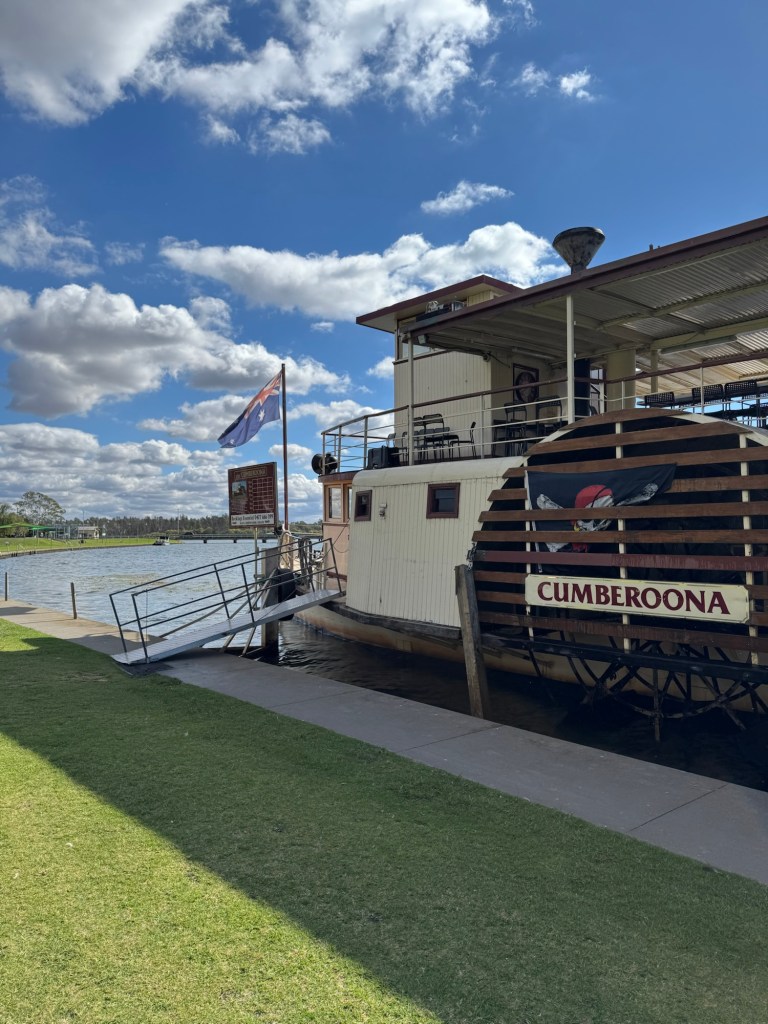
We set sail on Lake Wulwala for an hour on the lake. The experience was amazing and the views were phenomenal.
After the cruise we headed back to the farm to feed the animals and have dinner.
Tomorrow
Tuesday is our last full day at Jindera. It’s also Eva’s birthday. We have no plans at this stage.
Yarrawonga/Mulwala border towns
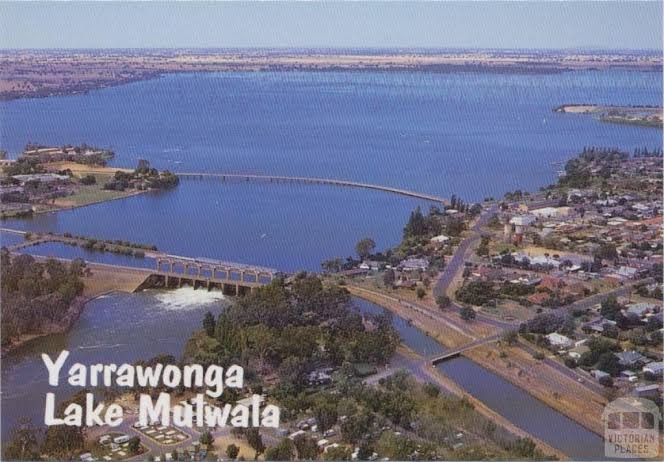
Yarrawonga lies on the border between Victoria and New South Wales at the south-western corner of Lake Mulwala where the lake passes through the Yarrawonga Weir and flows into the Murray River. Mulwala, which is located in New South Wales, spreads along the western shore of the lake.
In 1842, explorer Hamilton Hume assisted his sister-in-law, Elizabeth Hume to form the ‘Yarrawonga Run’, built on a sand hill by a lagoon near the Murray River. Elizabeth was the first European to live in north east Victoria, and moved to the area with her nine children, after her husband John Hume was killed by bushrangers in Gunning.. Elizabeth named her home ‘Byramine’, meaning ‘rustic retreat’. The design of the house is unique, due to the octagonal central room, or ‘the fortress’, which ensured a clear view out all windows, in case of attack. The homestead remains in its original condition, and is open to the public.
The village of Yarrawonga was founded in 1868, and by 1874 was large enough to justify the opening of a courthouse. In 1881, Yarrawonga’s population was recorded at 366.
Mulwala was declared in 1858, and was a crossing place for people travelling to the Victorian goldfields. By the 1890’s, Yarrawonga-Mulwala was an important crossing point.
n 1868 a town was surveyed at Yarrawonga, occupying the four blocks bounded by Witt, Hume, Orr, and Hovell Streets near the river. Town blocks further south were surveyed in 1875 and 1886. The railway from Melbourne reached Yarrawonga in 1886. A road bridge across the river to Mulwala was built in 1891, replacing a punt that had operated since 1850.
Lake Mulwala
Lake Mulwala, which is 1,992 km upstream from the mouth of the Murray River, was built in 1939 when the Murray was dammed at the Yarrawonga Weir as part of the Murray-Darling Irrigation Scheme.
The Mulwala Canal is one of the longest irrigation channels in the country. Lake Mulwala has an area of 6000 hectares and 43 km of shoreline. There are seven boat ramps and two swimming pools. Alexandra Park has an oval, tennis courts and 500 caravan sites. There are bowling greens, a golf course bordered by State forest and facilities for fishing and shooting.
Pelican Island is a breeding ground for pelicans. There are several ibis rookeries and thousands of partially submerged trees are perfect sites for breeding birds.
PS Cumberoona
The Cumberoona is a 25.2m long, 6.5m wide paddlesteamer, originally fired by two Buffalo Pitt engines manufactured in 1906.
The original paddle steamer Cumberoona launched in Echuca in 1866.
The river trade had peaked in the early 1870s, but rail links to Echuca (1864), Wodonga (1873) and Albury (from Sydney in 1881) saw a rapid decline in river trade. The Albury Banner of November 21, 1874 reported that “The railway has driven steamers from the Murray.” By the 1890s, river trade as far as Albury had all but ceased.
After plying the river trade for over 20 years, the Cumberoona was heading up the Darling in June 1889 loaded with flour and woolpacks when she hit rocks at Christmas Rocks, about 40 miles from Wilcannia and sank. It was reported that just her funnel was out of the water. After efforts to refloat her failed, she was abandoned until in February 1892 and after complaints from skippers of other vessels about her blocking the river, the wreck was blown up with dynamite. The remains of the original Cumberoona are still buried at Christmas Rocks
Replica
The replica PS Cumberoona was launched in 1986 and subsequently entered into service on 4 January 1987, the Cumberoona has been operated by volunteers (until 1991), AlburyCity Council (1992-2001) and through a management lease (2001-2007.)
In 2014, Albury City Council failed to attract an operator to lease the vessel and disposed of the vessel via expressions of interest.
March 2nd 1015, Robbie and Fraser Knowles took possession of the PS Cumberoona and lowered her back into Wodonga Creek.

 morrisblog.travel.blog