Sunday 3rd April 2022
We left Elliston this morning for Coffin Bay, famous for Coffin Bay Oysters.
The drive was a little longer and we arrived at the caravan park after around 2hrs of driving. The views coming into Coffin Bay were spectacular.
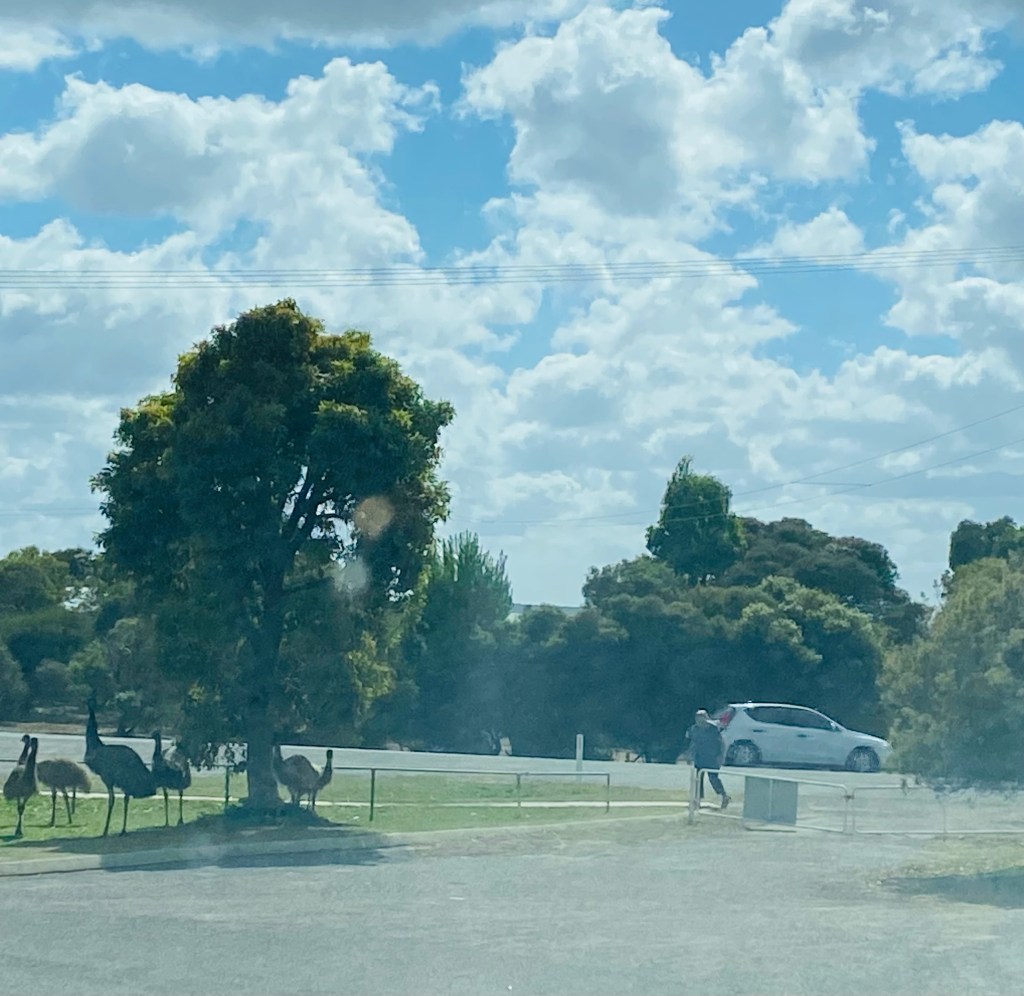
We set up camp in a large drive through spot and we were able to stay hooked to the car. We were greeted by emus on arrival. we had lunch and then went for a walk.
The walk we ventured on was part of a much longer ‘Oyster walk.’ The full trail is 10.4km long, although most people would just walk some sections of it. The section to Old Oyster Town in Kellidie Conservation Park is 2.2km one-way (or 4.4km return.) Old Oyster Town dates from the mid-1840s when Europeans first started harvested local wild oysters.
We joined the walk across from our caravan park at Oyster HQ.
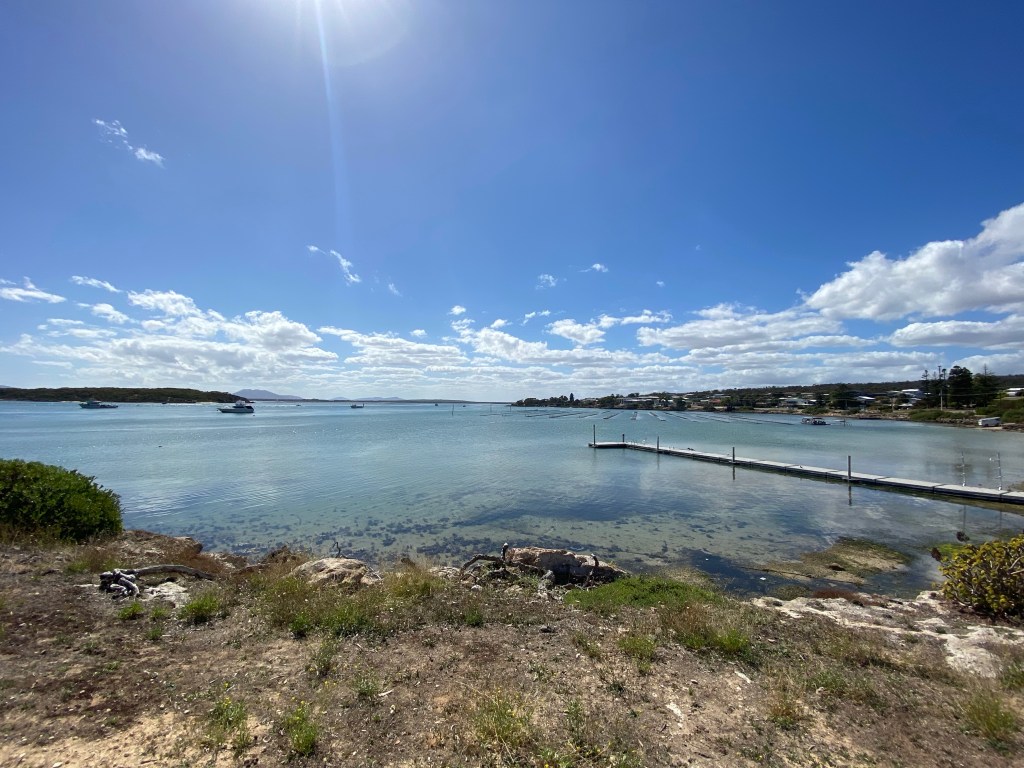
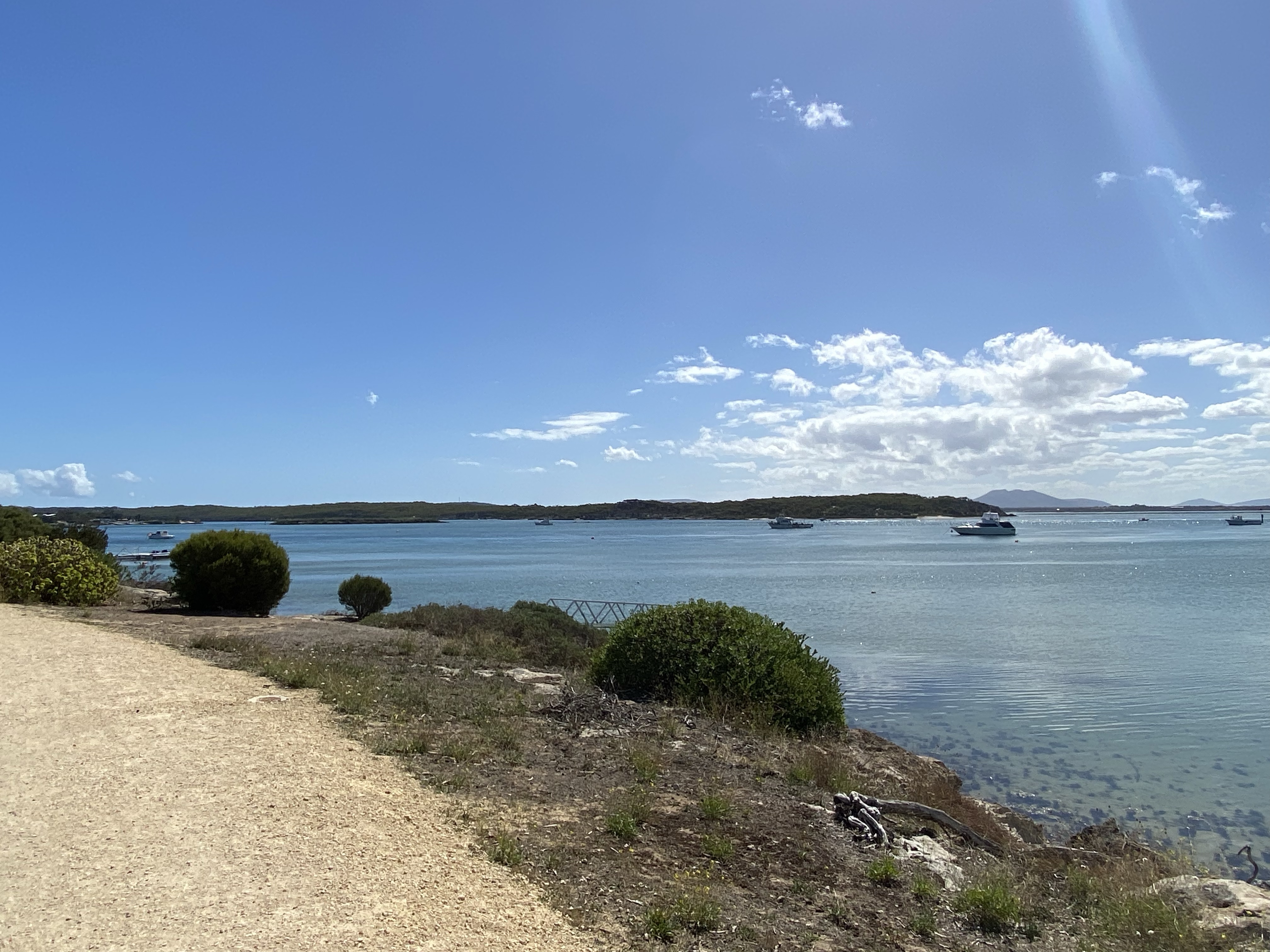
The walk meandered along a unsealed walking path between holiday letting dwellings and the Bay.
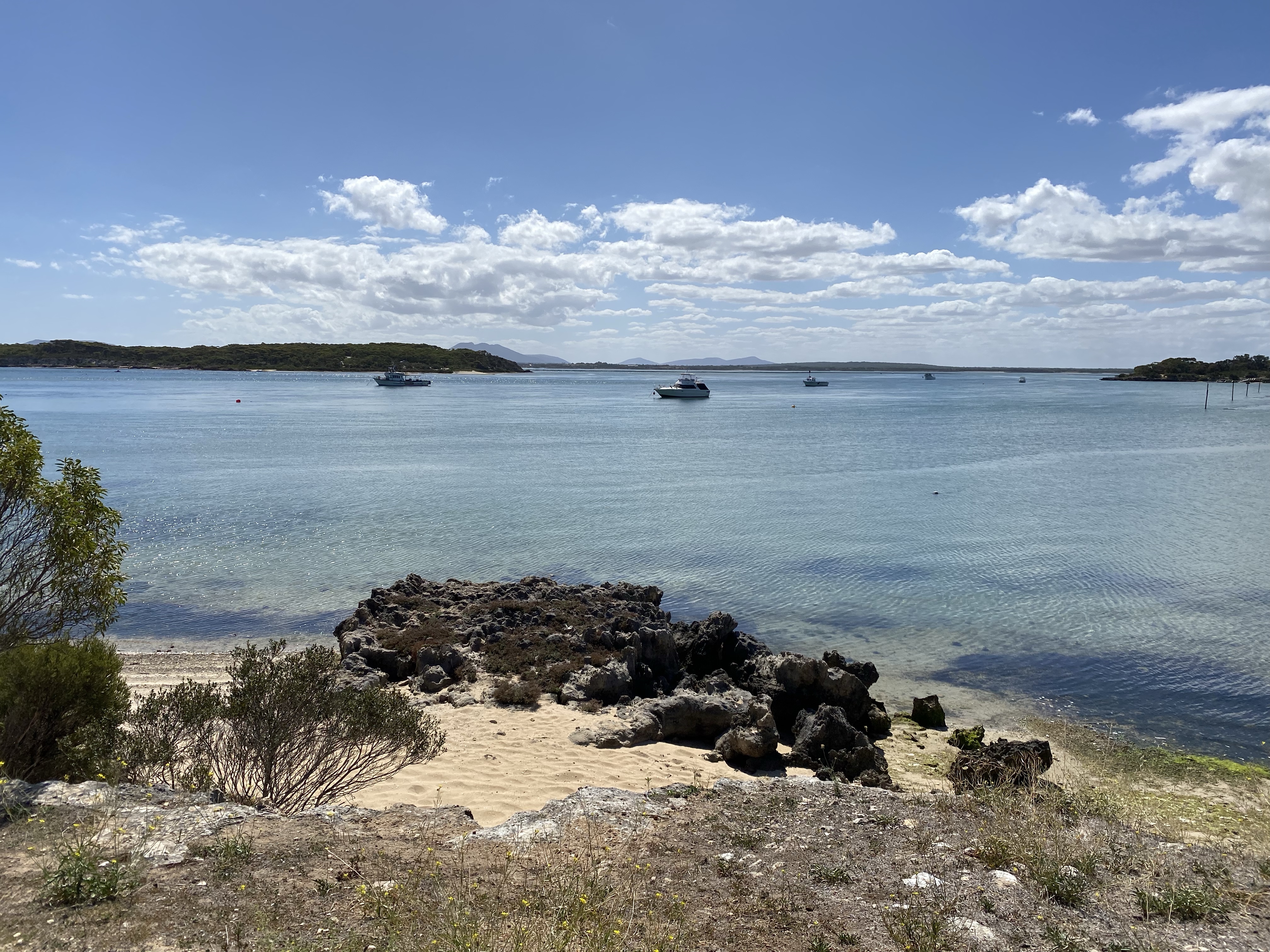
We walked past the swimming area which had some pontoons for water play.
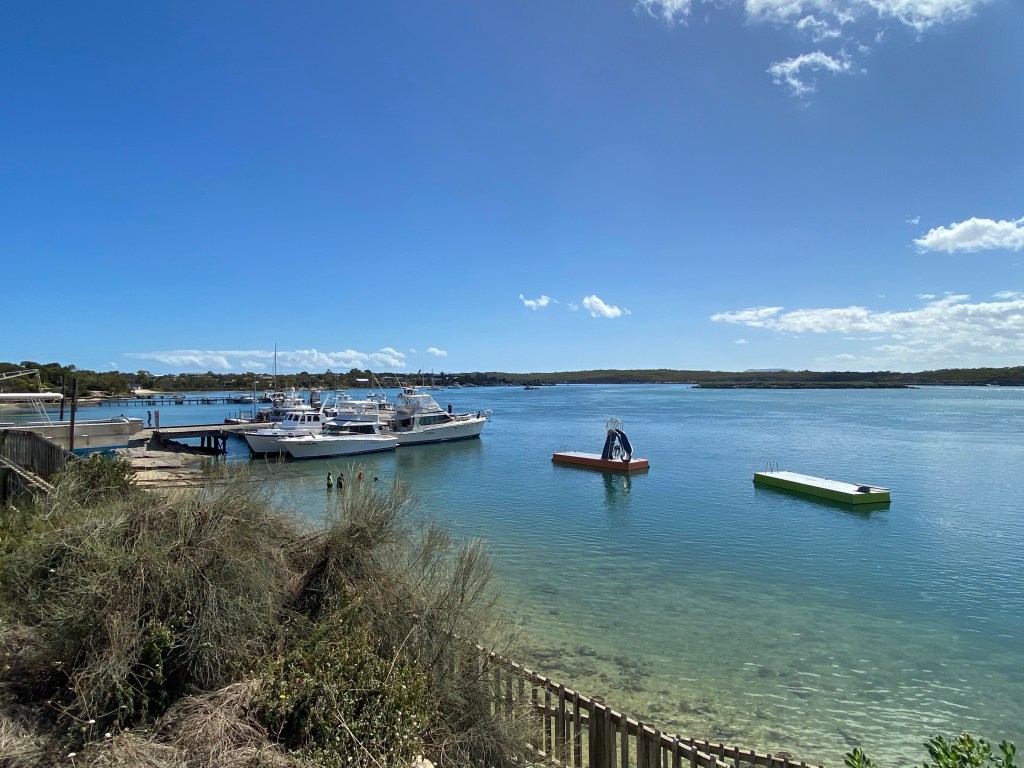
We walked around the wharf and Charlotte feel asleep.
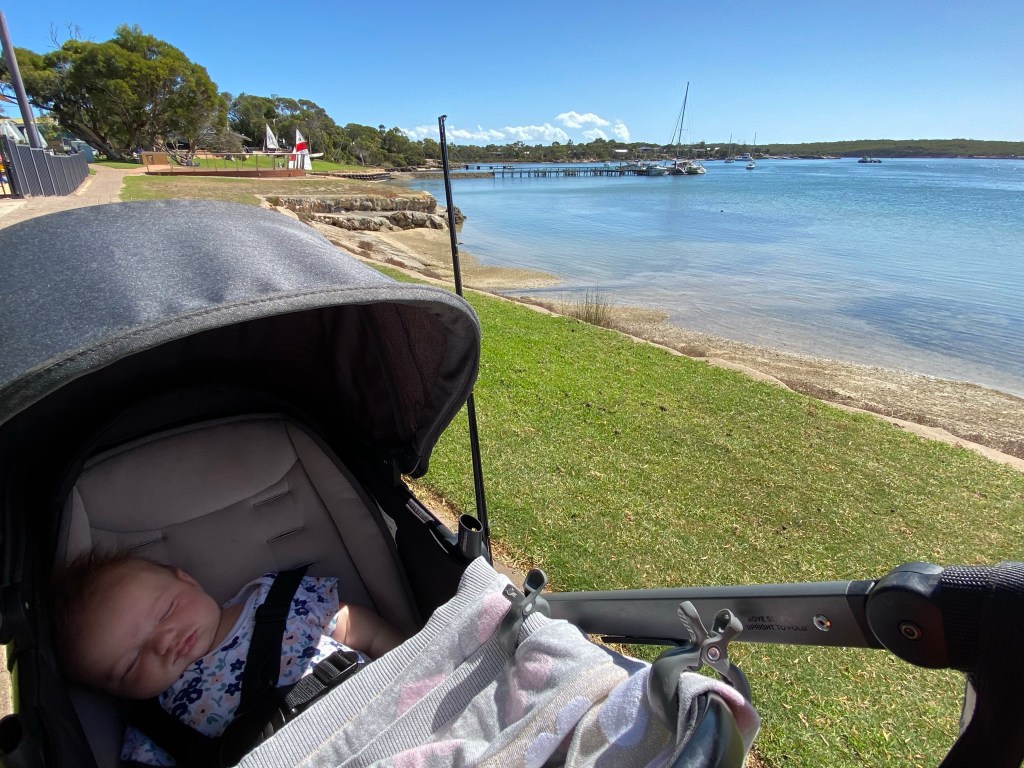
We arrived at a playground on the foreshore. We fed Charlotte while Madeline played at the park.
We then went to get some bread and milk from the shop and also bought ice-creams.
We sat in the grassy park overlooking the bay to eat our ice-creams.
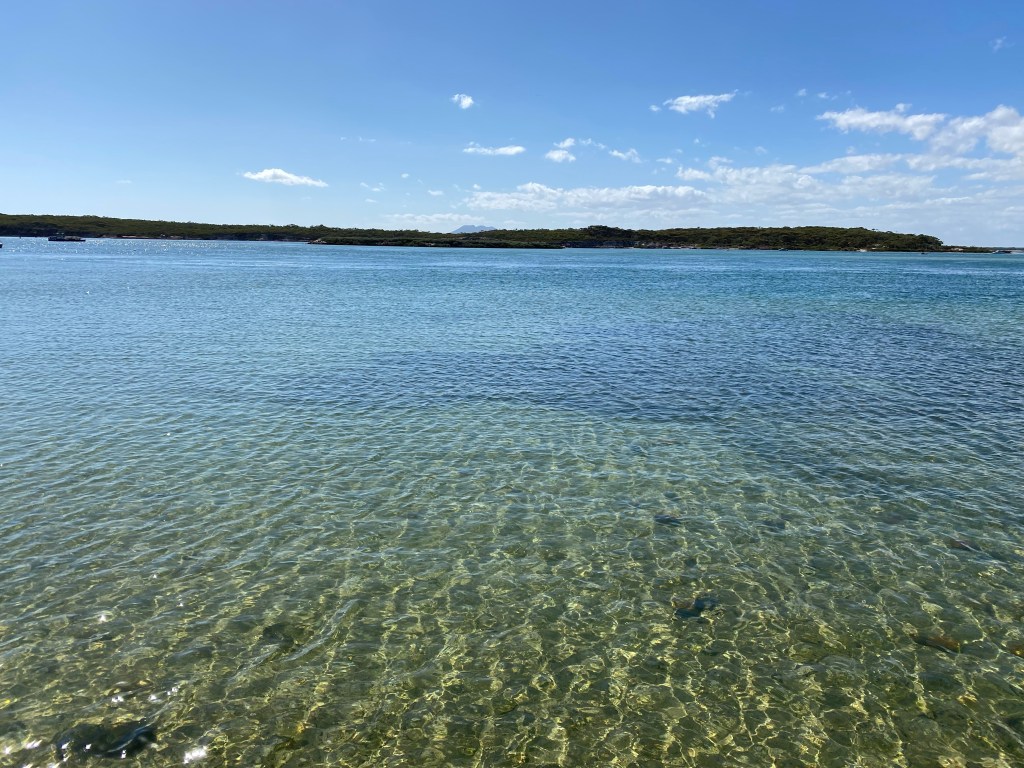
We walked back the way we came to the caravan park. Madeline and daddy played outside for a bit while mummy prepared dinner.
Due to daylight savings the sun went down early and the girls went off to sleep at a decent hour. Charlotte was very restless and needed to sleep on mummy fir some of the night.
Coffin Bay
British naval explorer Matthew Flinders named the bay on 16 February 1802 in honour of his friend Sir Isaac Coffin, who was Resident Naval Commissioner at Sheerness, where the Investigator was fitted out.
By 1804 whalers had entered Coffin Bay and established a simple settlement.
The Nauo people occupied the area prior to European settlement in the 1830s.
The bay remained uncharted until explored in March 1839 by Captain Frederick R. Lees (d.1839) in command of the brig Nereus. Lees’ thorough charts became a standard reference for mariners through until the electronic era.
Also in 1839 a man named Henry Hawson explored the area and established a claim over Coffin Bay. He used the land to run sheep. In 1847 Hawson was officially granted a pastoral lease over the land. He called his property Kellidie.
By 1848 there was a small settlement, appropriately named Oyster Town, in Coffin Bay exploiting the vast supplies of oysters in the area. The oysters, harvested by up to thirty cutters, were shipped to Adelaide (via Port Lincoln).
In 1866 a man named John Mortlock, who had purchased Kellidie from Hawson, built a house on Kellidie Bay.
By 1871 there was a house, a store, garden, sheep yards and huts where Coffin Bay township now stands.
The oyster beds were closed for seven of the nine years between 1882 and 1891. By 1891 Oyster Town had effectively closed down.
In 1966, BHP opened the Coffin Bay Tramway between a site 8 kilometres south-east of the town and Port Lincoln to convey lime sands. It was closed in 1989, with the track removed in 2001.
In the late 1960s Pacific oysters were imported from Japan and Tasmania and the local industry was established.
The historic former Coffin Bay Whaling Site at Point Sir Isaac lies within the locality and is listed on the South Australian Heritage Register.
Tomorrow
We head to Port Lincoln.

 morrisblog.travel.blog