Thursday 24th March 2022
We had a rough night with Charlotte waking every 3 hours. She’s been a little more unsettled lately.
We slept in a bit today before heading onto the beach behind our caravan park. Shelley Beach was beautiful, but today we copped a beating from the wind. Still Jason cast his lure a few times and Madeline wanted to play in the sand. That’s when things went wrong.
Madeline got sand in her eye. Eva put Charlotte in the car and run to get Madeline. She opened a water bottle and tried to flush Maddie’s eye. For those who don’t know, Madeline has a fear of water in her eyes. Well she wouldn’t have a bar of it. She was screaming and kicking. Eva tried to explain to her the absolute need to get the sand out but it made no difference. Eva screamed and whistled to Jason to come and help, but as it was windy he couldn’t hear well. We finally got his attention and he came.
The two of us still couldn’t hold her still. We jumped in the car and raced to the van. Here Eva got out her kit and eye flushing kit, we held her down while she pleaded for us to stop. It broke out heart. Eva managed to fish out the last few specks with a cotton bud.
Madeline then reluctantly let Eva use fluroscene and blue light to inspect the eye for scratches to the cornea. No scratches and Madeline’s eye felt better.
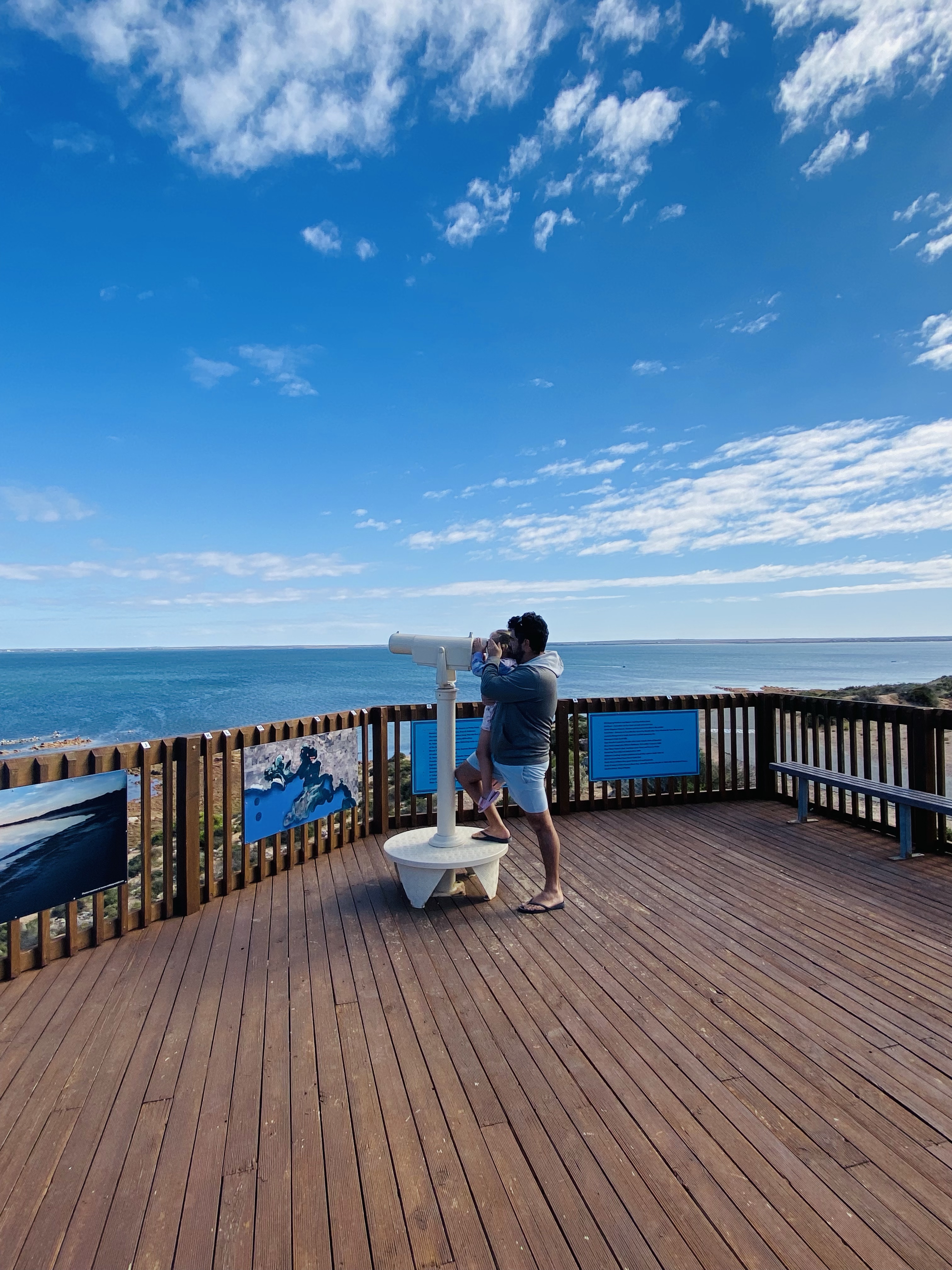
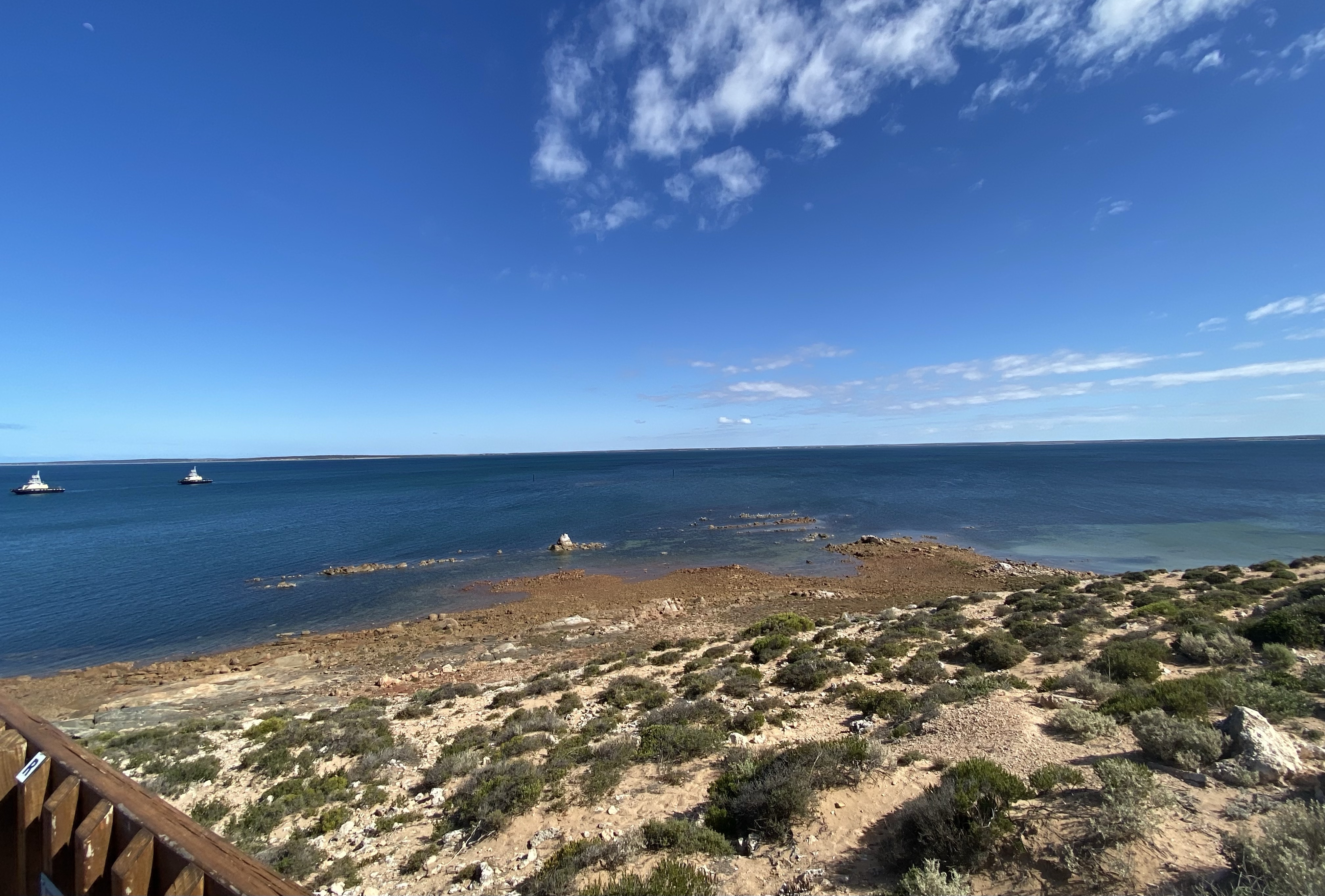
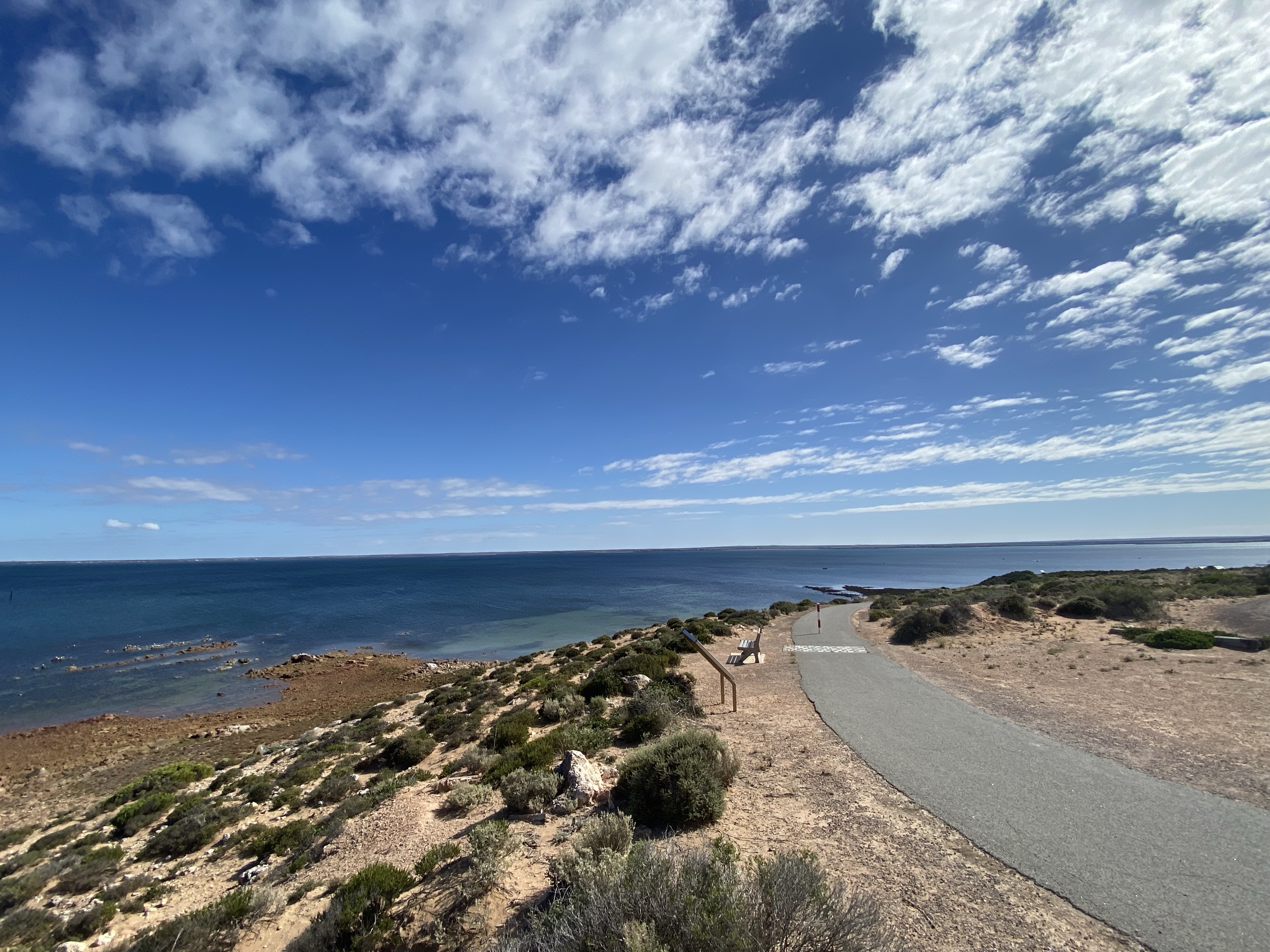
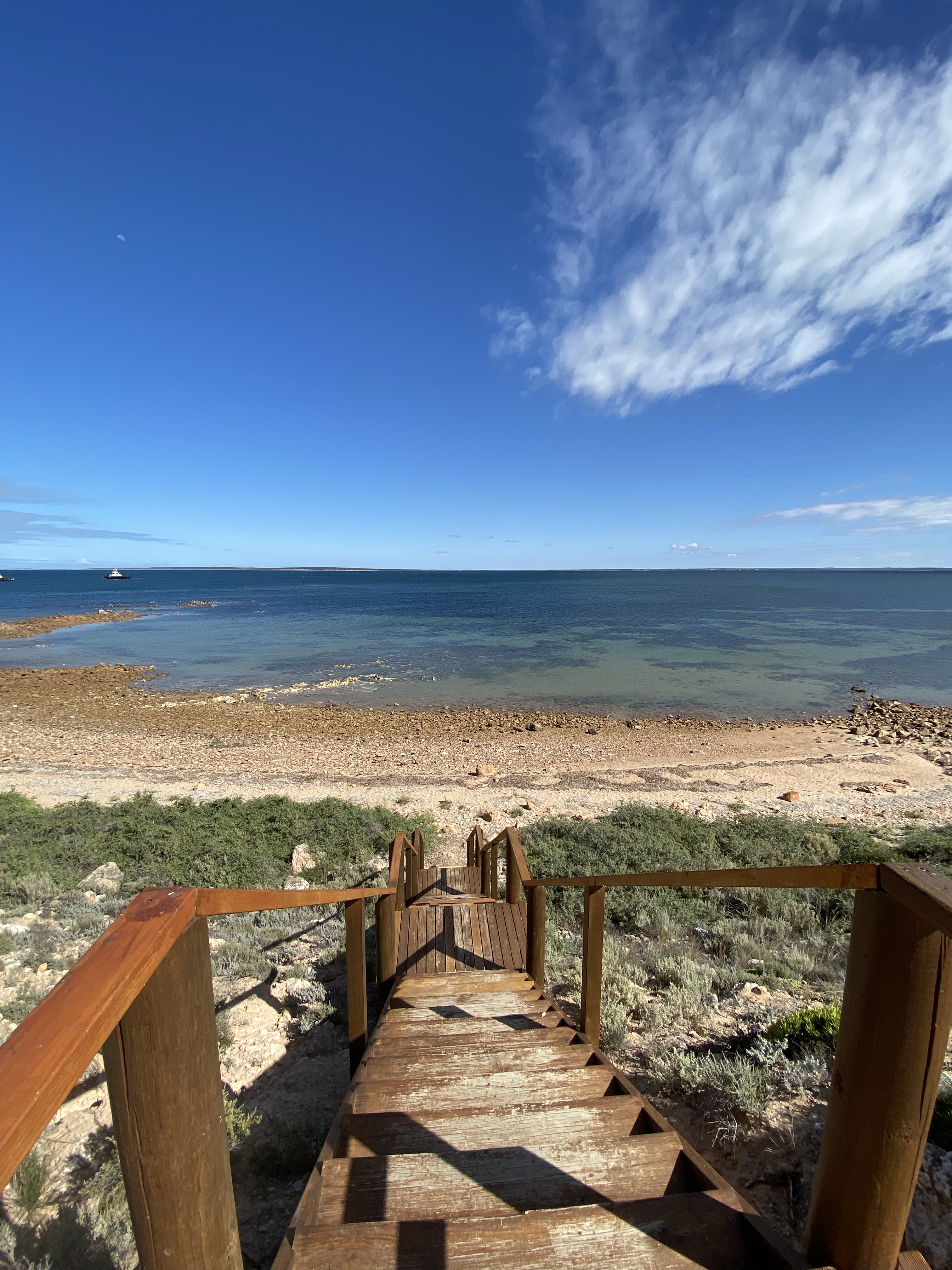
We jumped back in the car and took off to Pinky Point. Here there is a 3.5km one-way costal walk. At the start of the walk there is a lookout and some information about the area. we didn’t do the walk, it was windy and Madeline managed to fall over and scrap both her knees causing her to be “unable to walk on her blood knees.” Poor baby was in the wars.
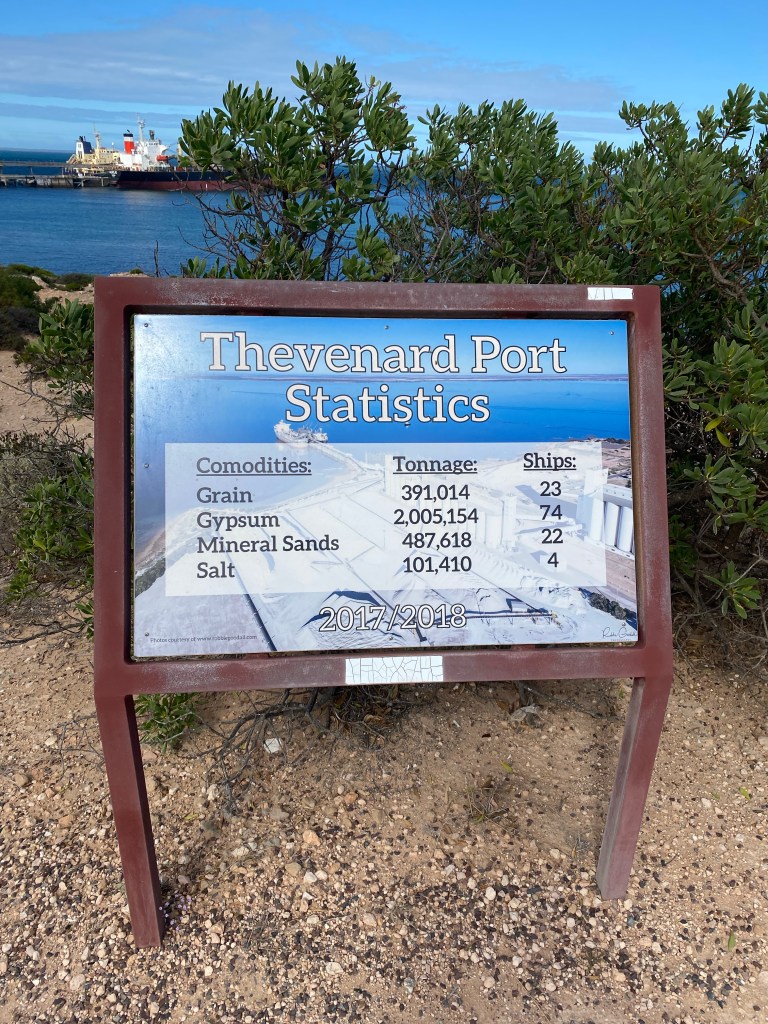
Just behind the lookout is Thevenard Port which handles bulk grain, gypsum, salt and zircon. Thevenard is a terminus on the isolated Eyre Peninsula Railway network, and receives several trains daily of bulk gypsum from the Lake MacDonnell mine at Kevin.
Iluka Resources exports 300,000 tonnes of zircon product from Thevenard annually produced at the Jacinth Ambrosia Mine.
The most spoken language in Thevenard, other than English, is Greek.
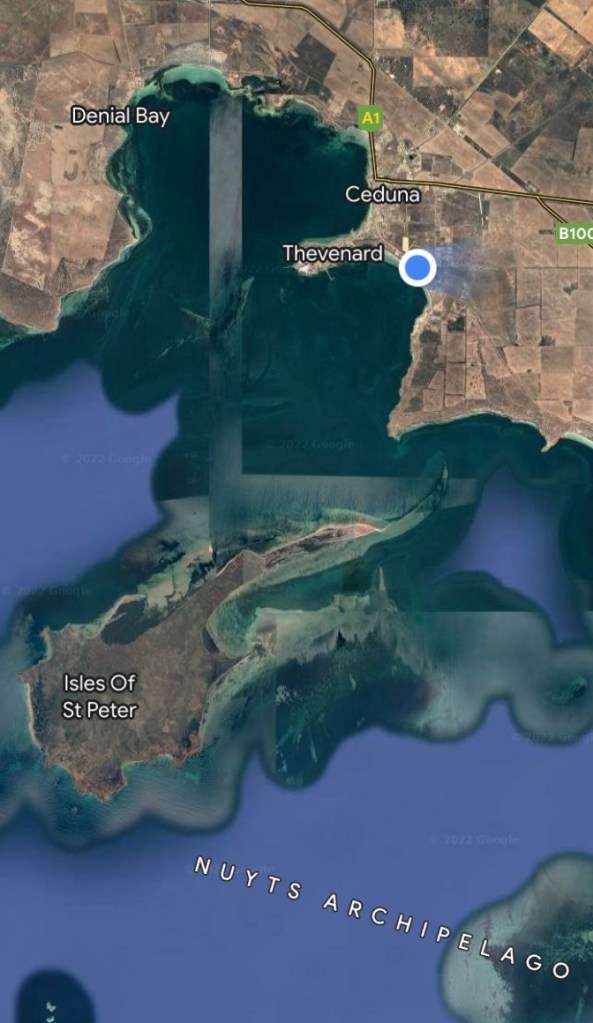
Murat Bay was initially named Baie des Saints by French explorer Nicolas Baudin in 1801. It was renamed to Baie Murat by François Péron and Louis de Freycinet on the exact same expedition company, named after Joachim Murat, a Marshal of France. Baudin died before writing the official account of the expedition. Péron wrote the account instead. As that name was in French, the current name is the English translation.
Matthew Flinders named the bay Denial Bay, which is now the name of a small community on the western side of the bay. Murat Bay is the enclosed bay bounded by Cape Thevenard and Matts Point. Denial Bay is the larger body of water bounded by Nuyts Archipelago on the seaward side.
Denial Bay
We left Thevenard and drove west to Denial Bay. We got out and had lunch under the beach shelter.
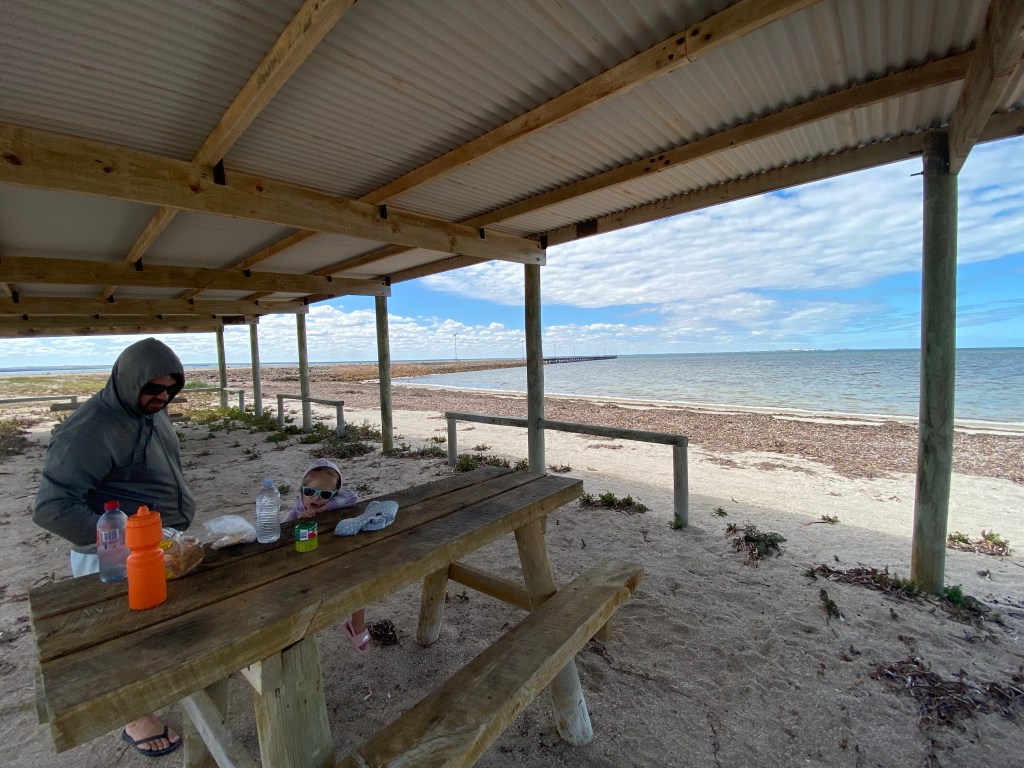
We then walked the Denial Bay jetty, played at the playground and visited McKenzie’s Landing.
As stated above the bay was mapped by Matthew Flinders in 1802, as part of a wider attempt to map South Australia’s coastline. Flinders named the inlet “Denial Bay” because of
“the deceptive hope we had formed of penetrating by it some distance into the interior of the country”.
The town was established by William McKenzie in 1889 as the first settlement in what was to become the Ceduna area. McKenzie nearly single-handedly set up the town, clearing mallee scrub by axe, building a general store and becoming the local harbour master, postman, blacksmith, butcher, saddler and Justice of the Peace, employing up to 30 people at any one time.
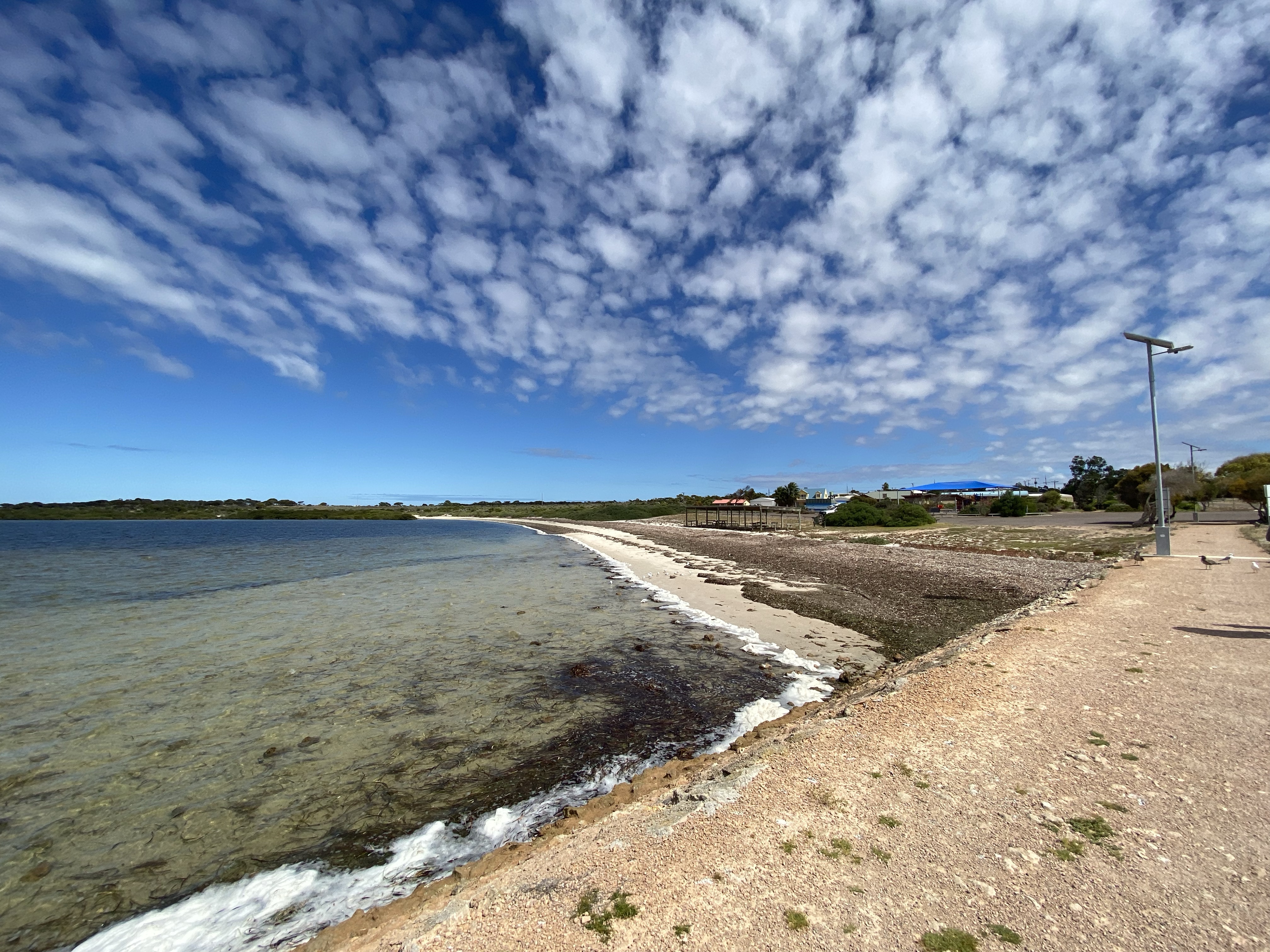
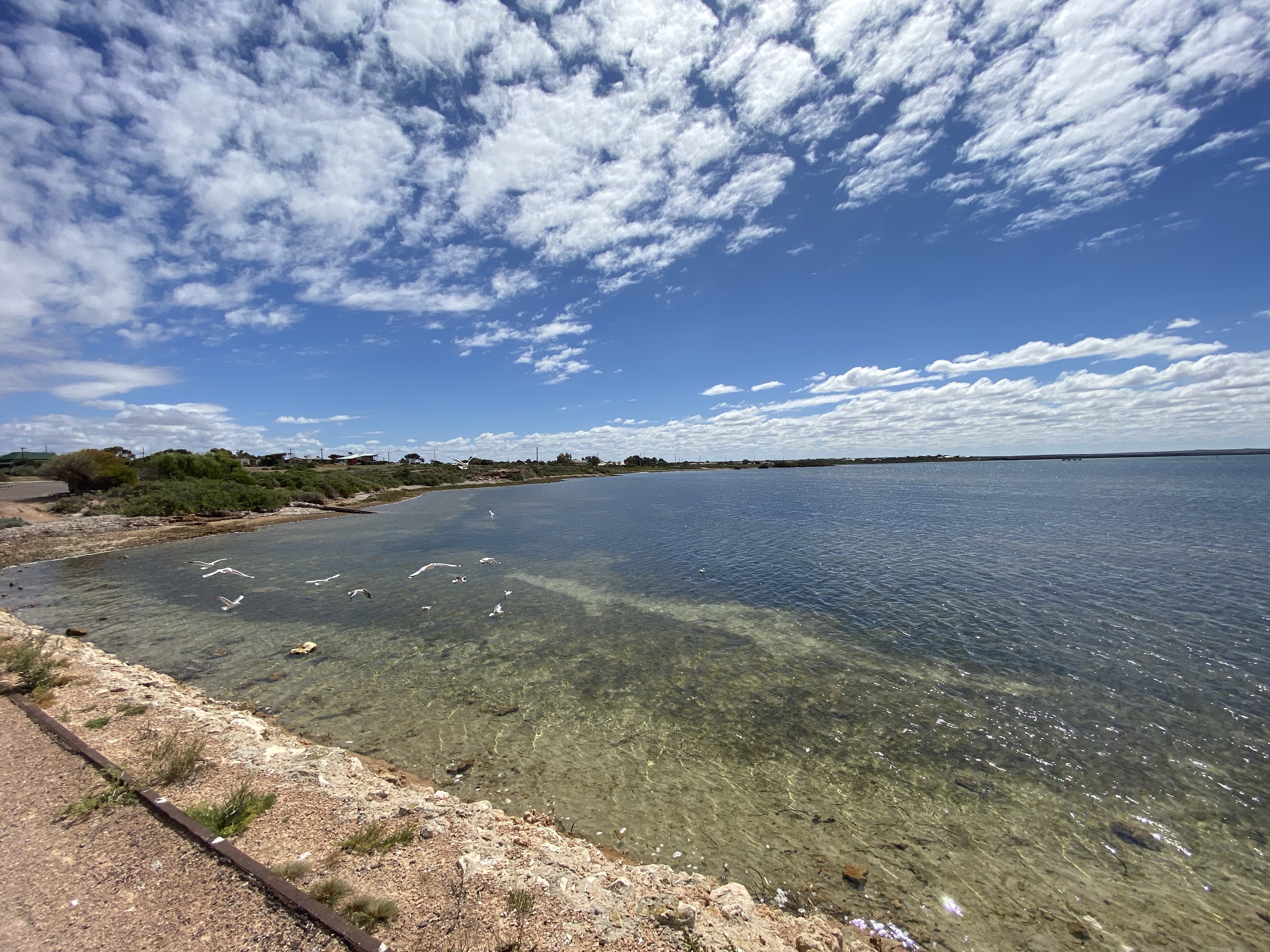
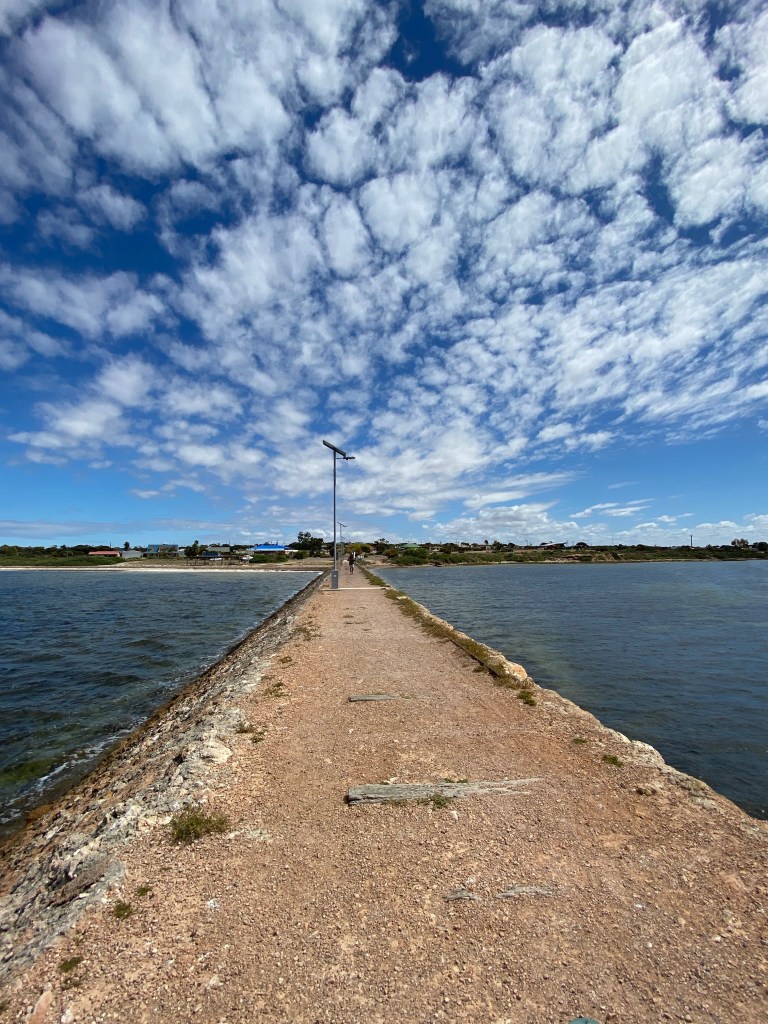
The town established primarily as a loading and offloading point for the various inland farming activities, and this was done using a unique system based on the rocky floor of the bay’s seabed.
McKenzie’s Landing
A large wooden platform known as ‘McKenzie’s Landing’ was constructed in 1892 and at high tide, boats would unload goods onto the platform and at low tides horse and cart would be used to collect the items. The same would be done to load boats.
The town was surveyed during December 1909 and proclaimed under the name McKenzie on 16 June 1910 presumably after William McKenzie. The town was officially renamed as Denial Bay on 19 September 1940.
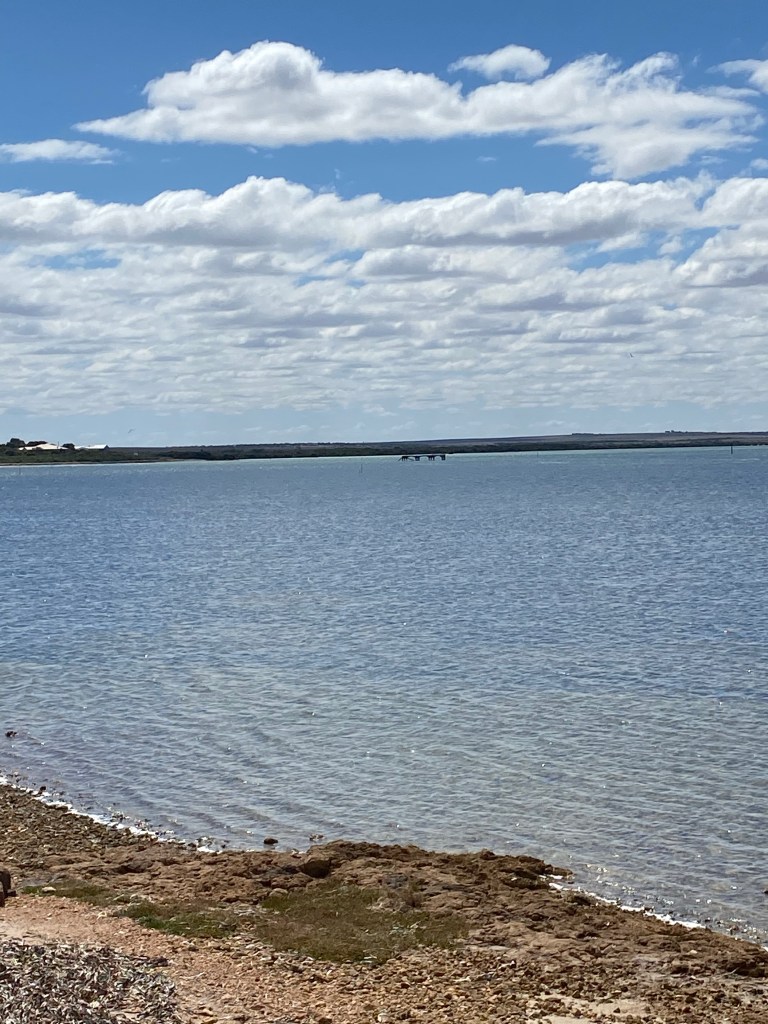
The bay is now known for its aquaculture, farming oysters.
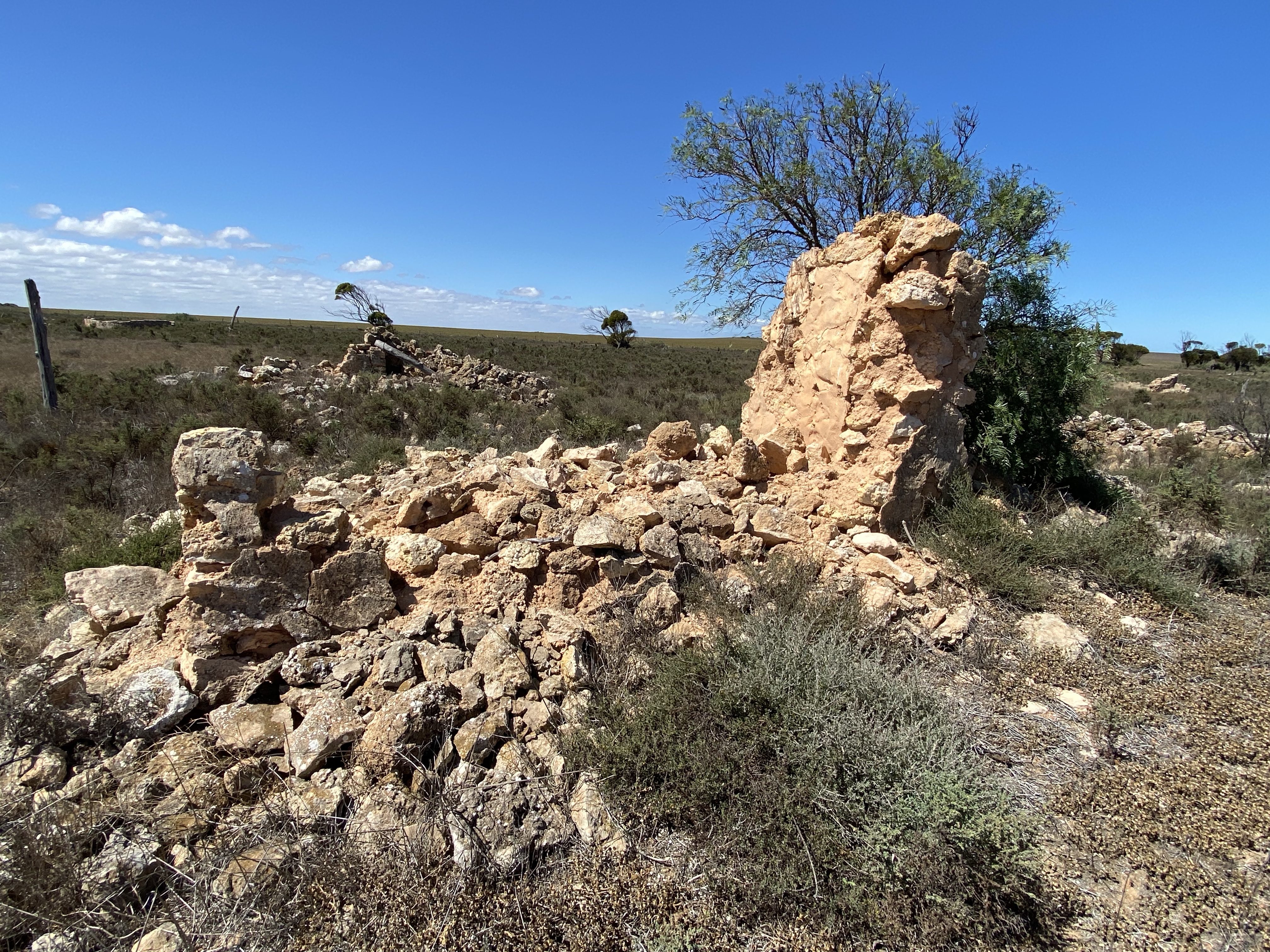
We left Denial Bay and headed for Mac town, which is now ruins. In 1889 McKenzie purchased 16,280 ha of land at Denial Bay.
In 1890 McKenzie built a small town adjacent to his homestead. The town had; a post office, blacksmith shop, post office, saddlery, slaughter yards, several cottages and a police station.
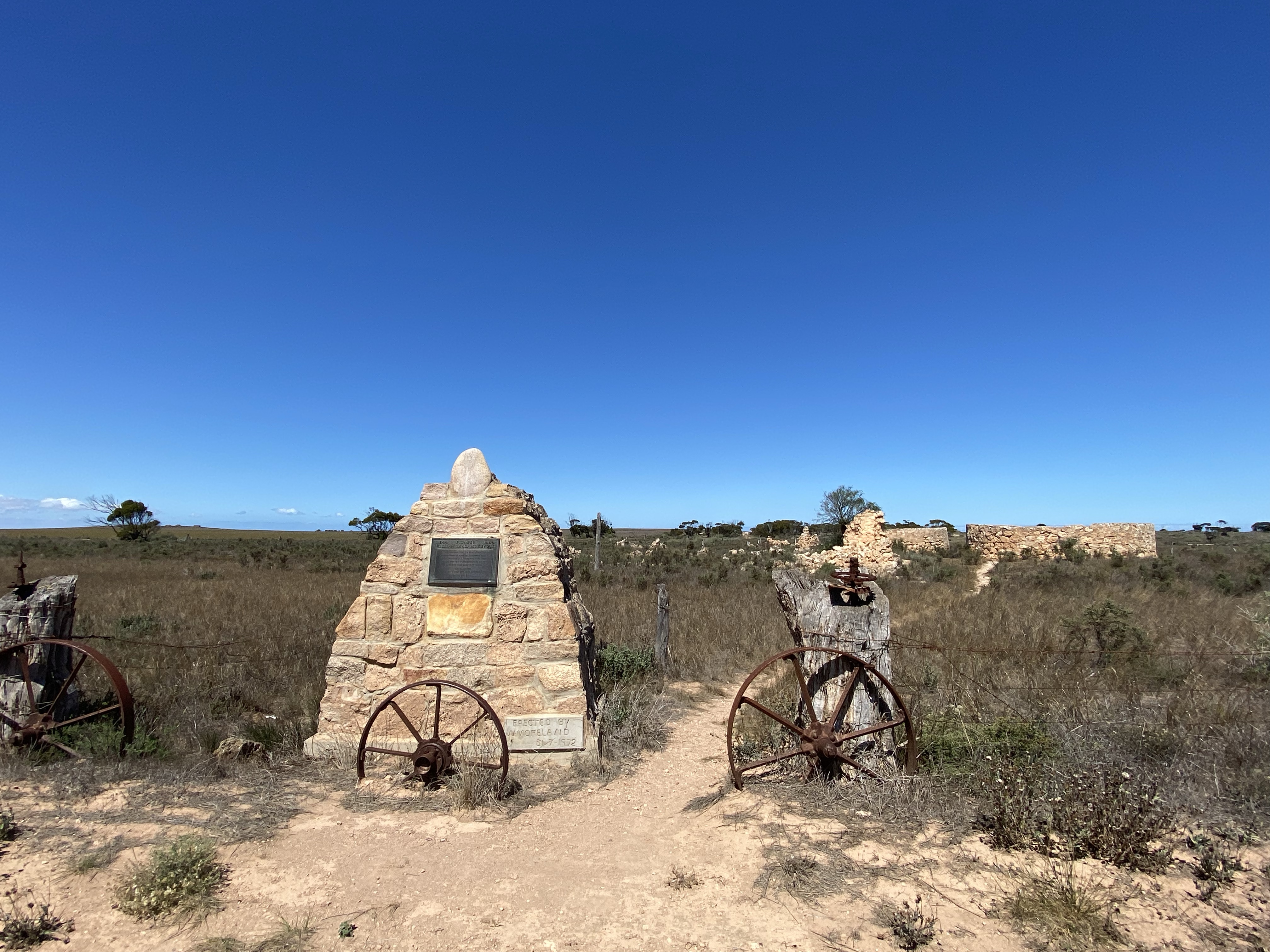
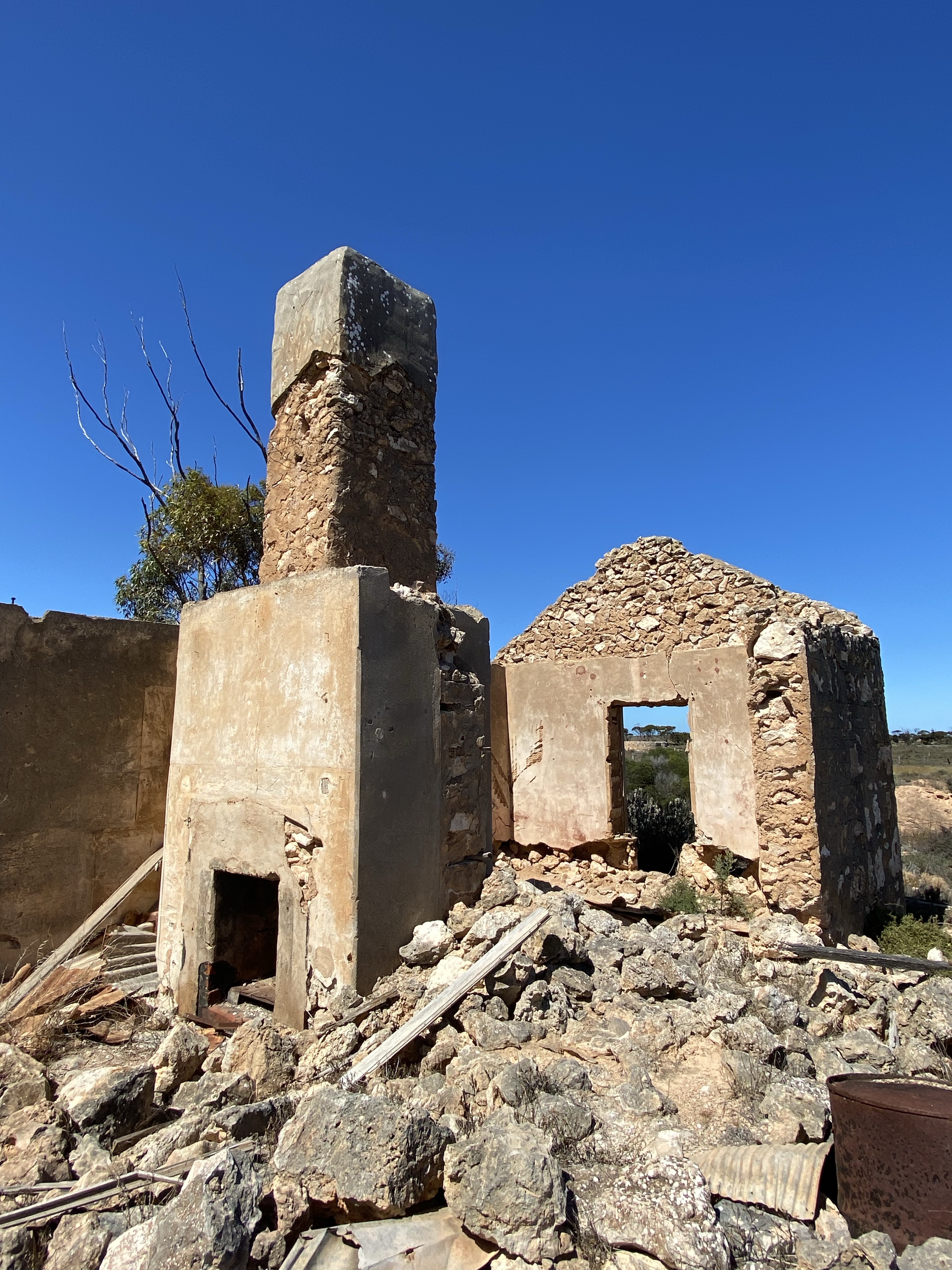
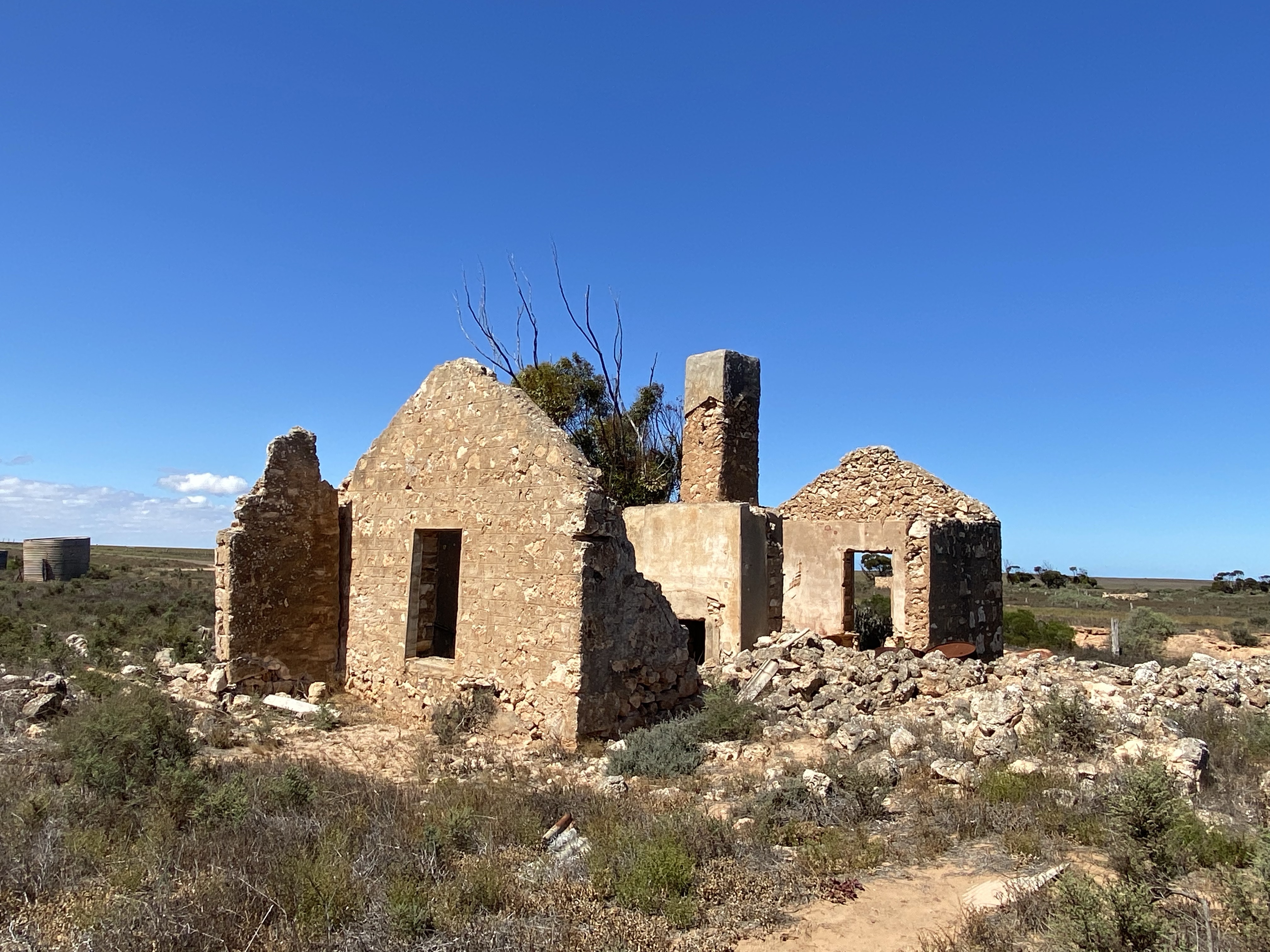
We turned to the Caravan around 330pm and started preparing dinner.
Tomorrow
We move on to Smoky Bay.

 morrisblog.travel.blog