
Saturday 19th March 2022
Today we were going to check out the opals and underground living.
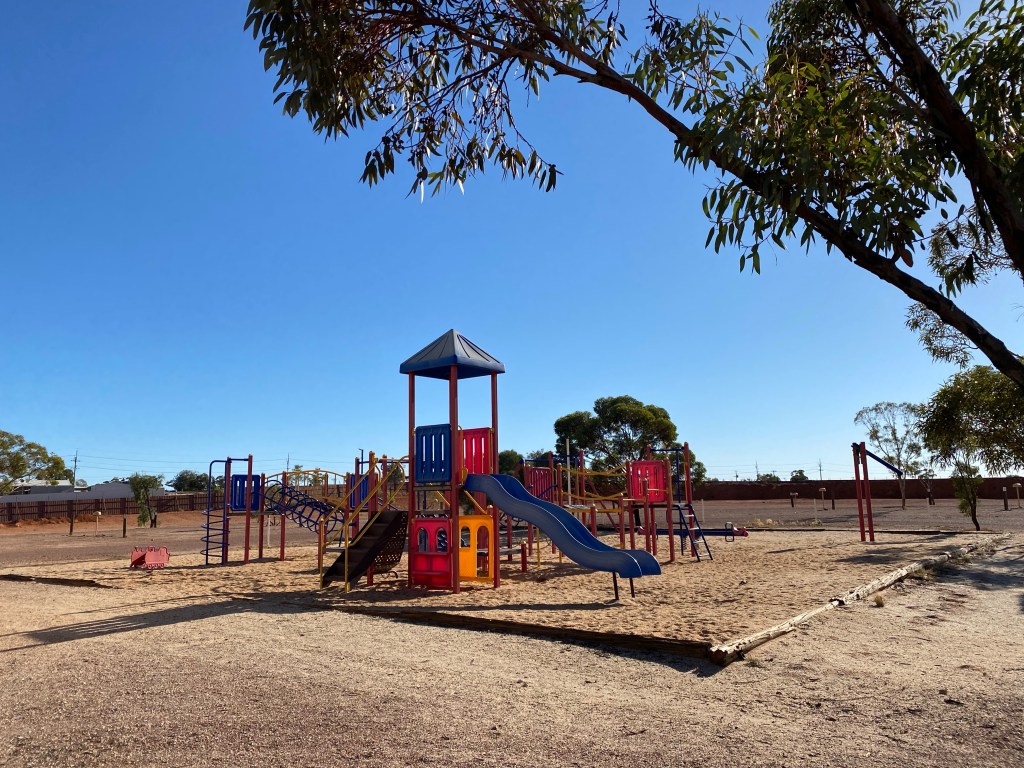
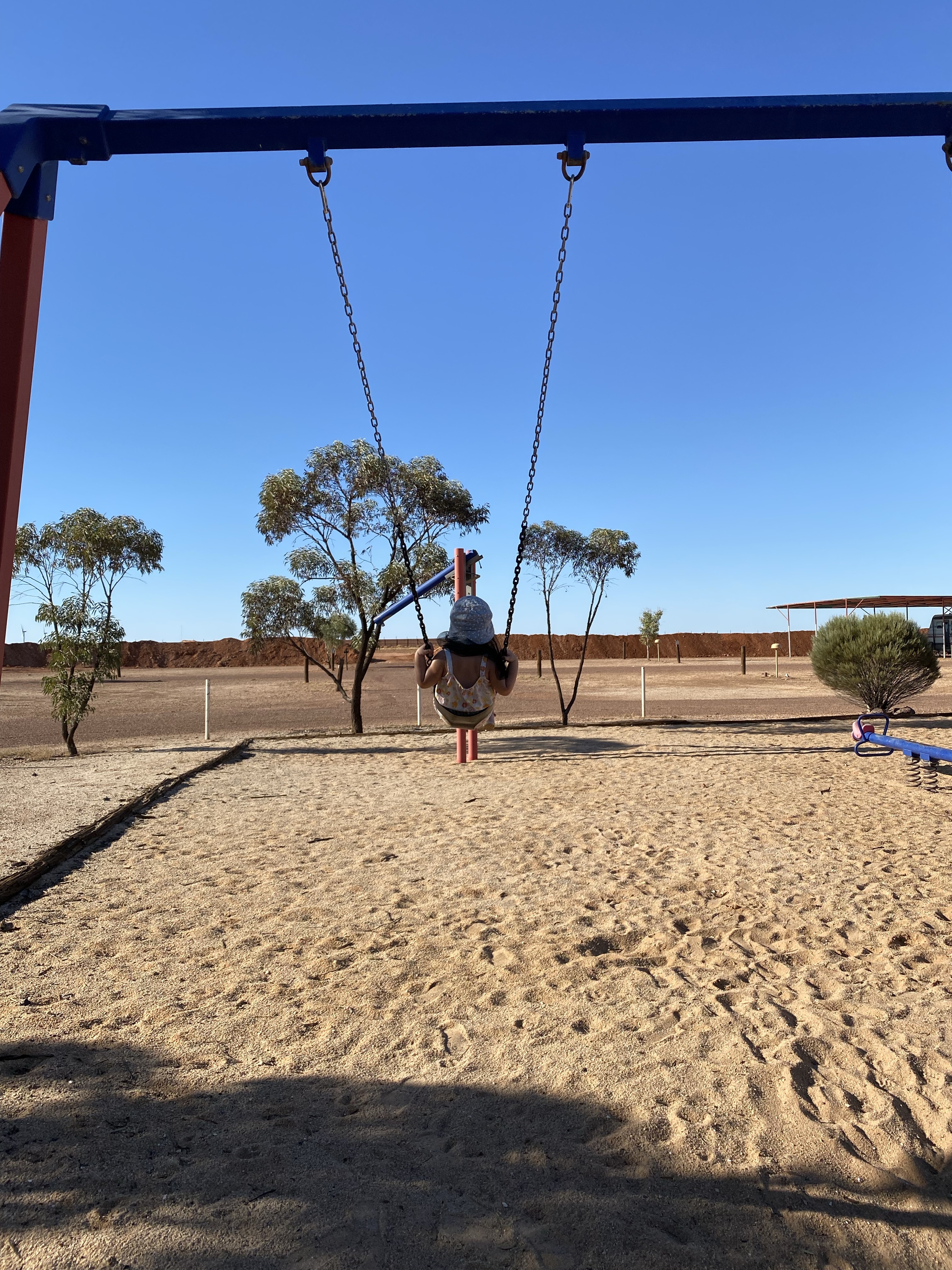
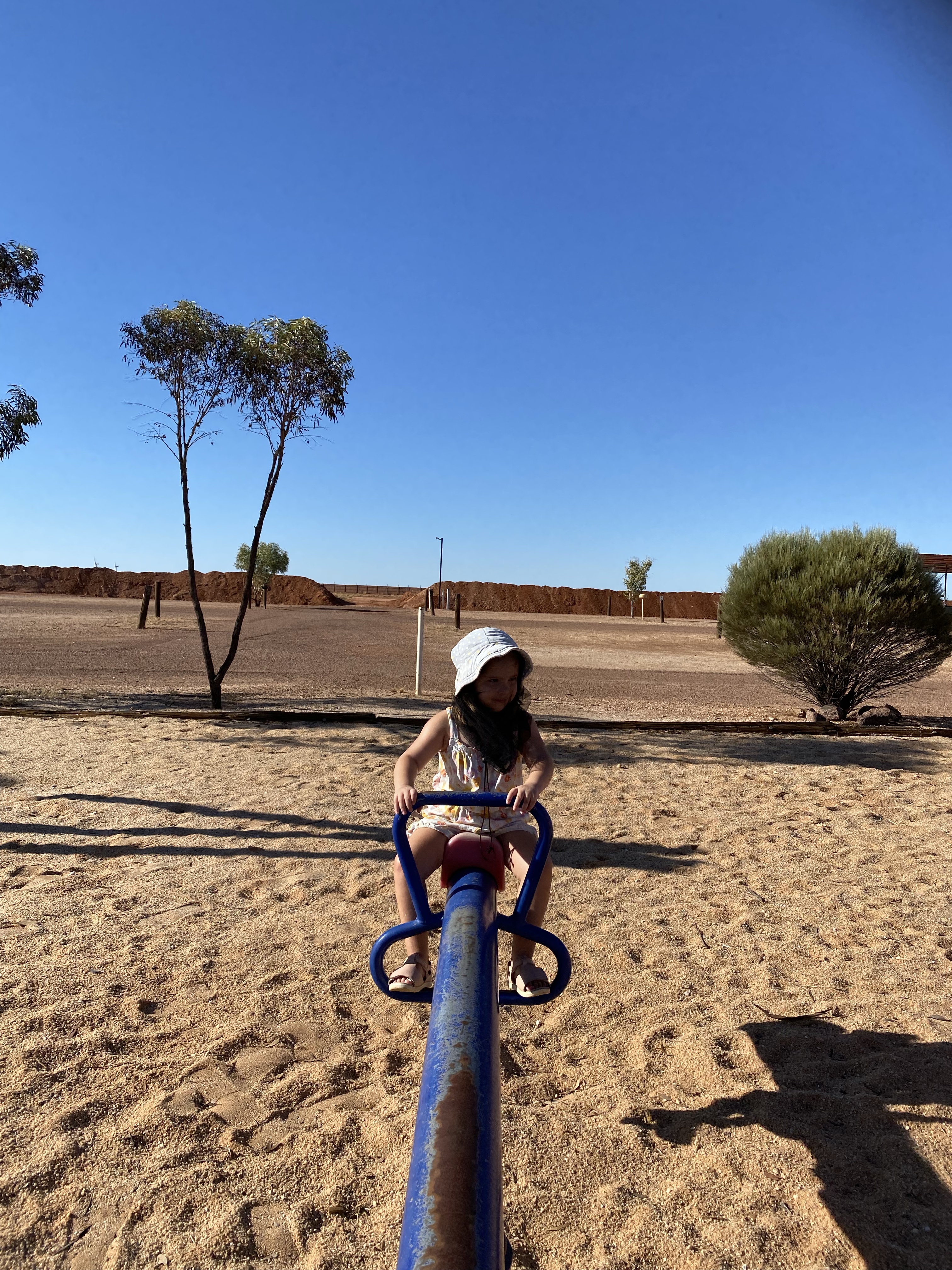
We started the day with a play at the caravan park playground. Mummy and Madeline had some fun.
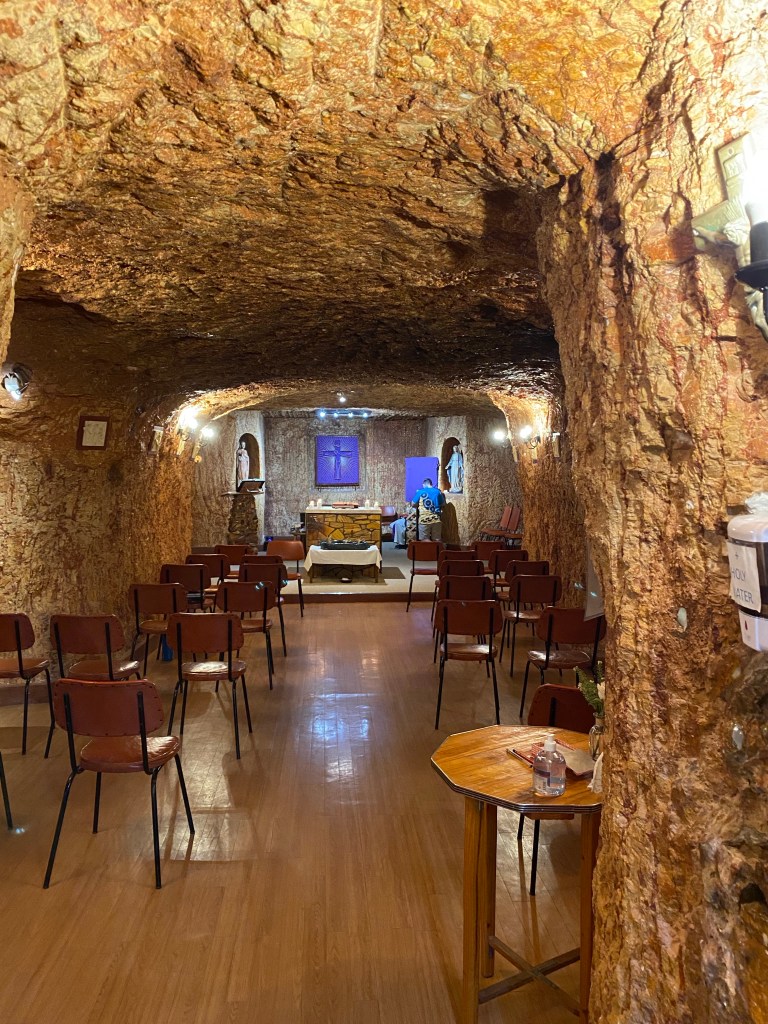
We then went to check out St Peter and St Paul’s Catholic Church. We walked in around 1010 to find mass had just started. So we sat down to celebrate mass.
After mass we went to do a bit of noodling (or fossicking) in the public access area. Lots of gypsum, no Opal.
We returned to the van for lunch and then headed out again to Umoona Mine and Museum.
The museum showcased the Opal history of Coober Pedy, the background of its landscape, fossils found in the region and of course how mining Opal worked.
Coober Pedy Landscape
100-150 million years ago Central Australia was under a vast inland sea. It was filled with marine life including; Plesiosaurs, Ichthyosaurs, Ammomites, Belemites, mussles, cockles and scallops.
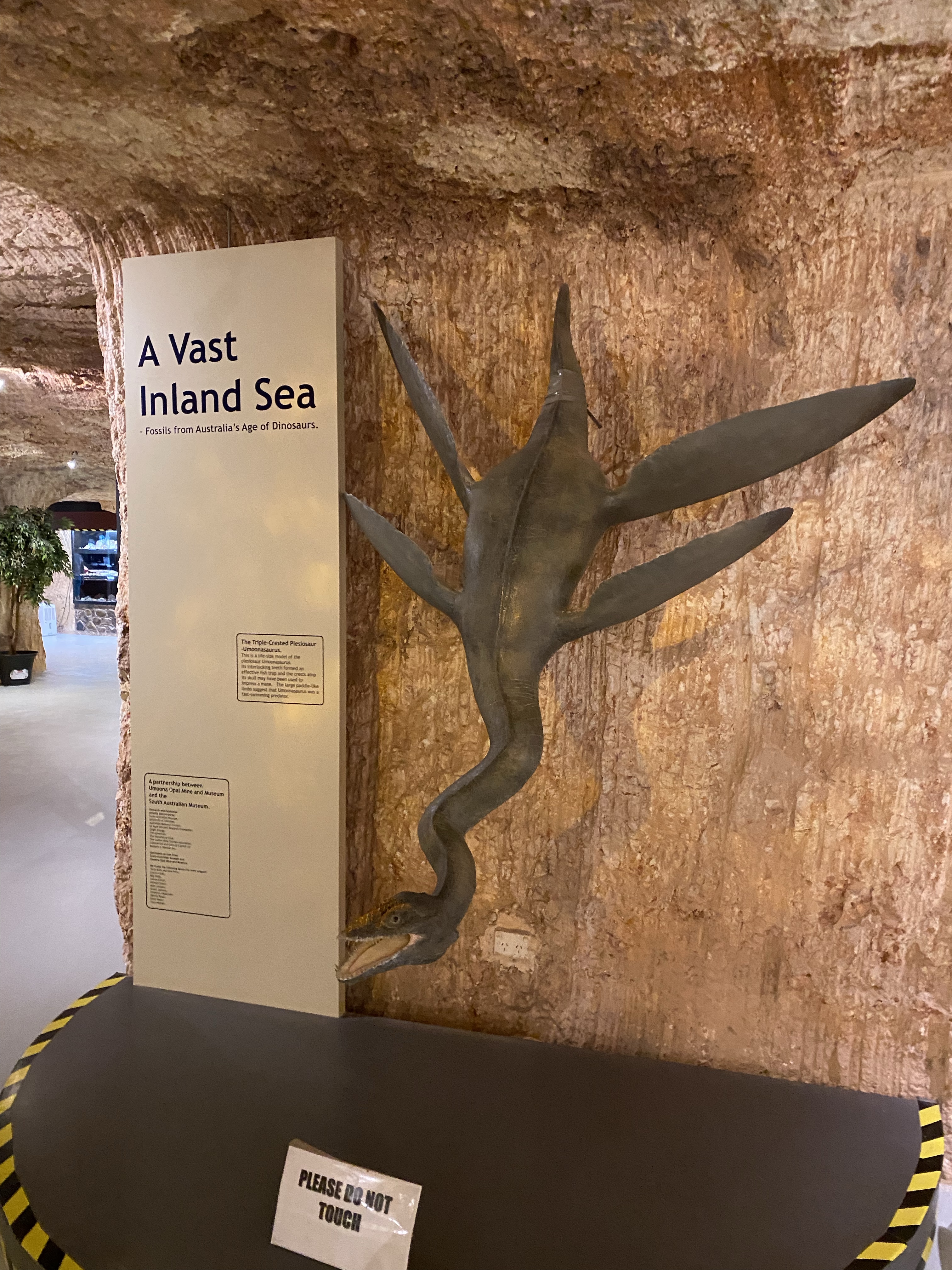
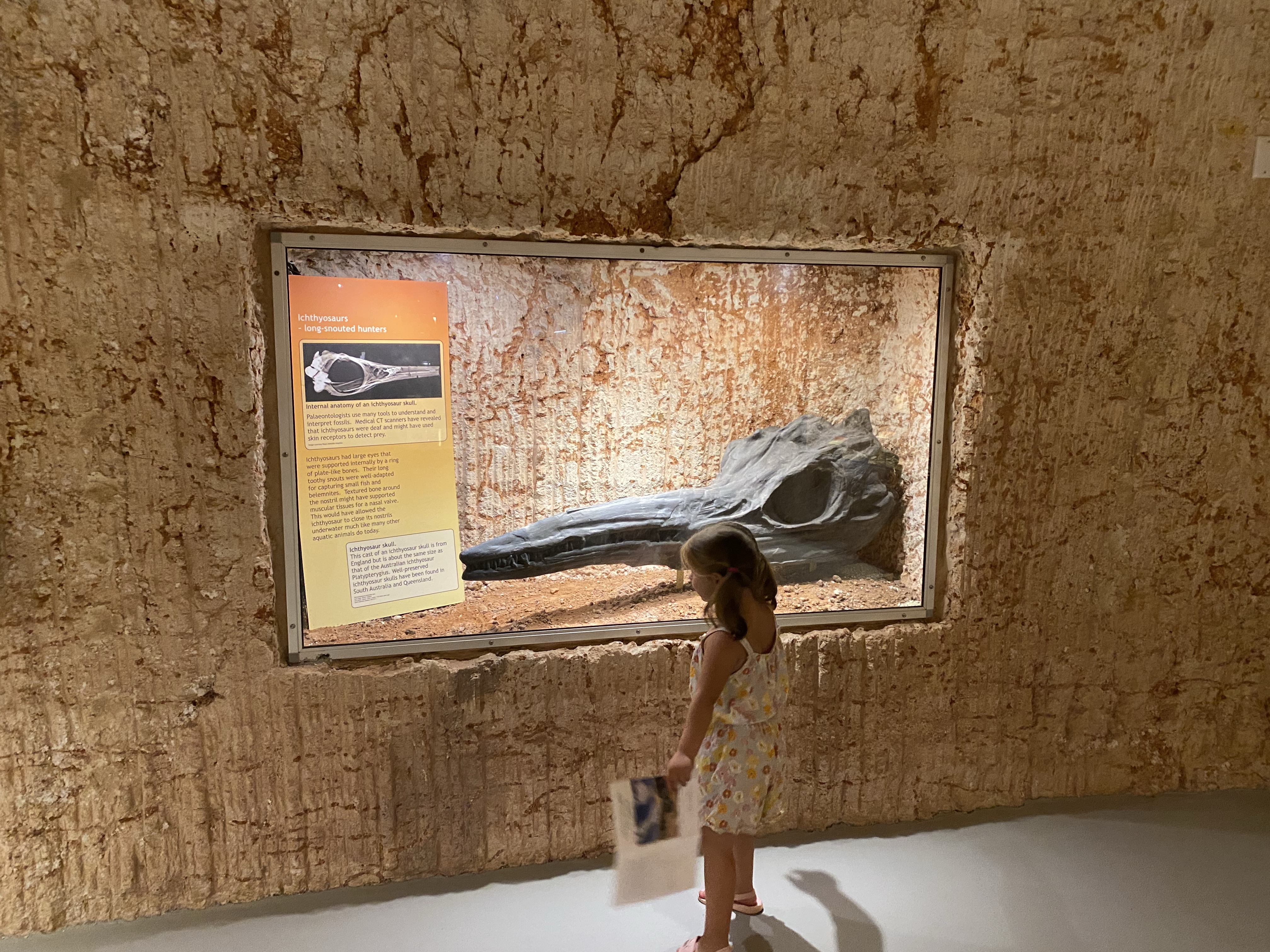
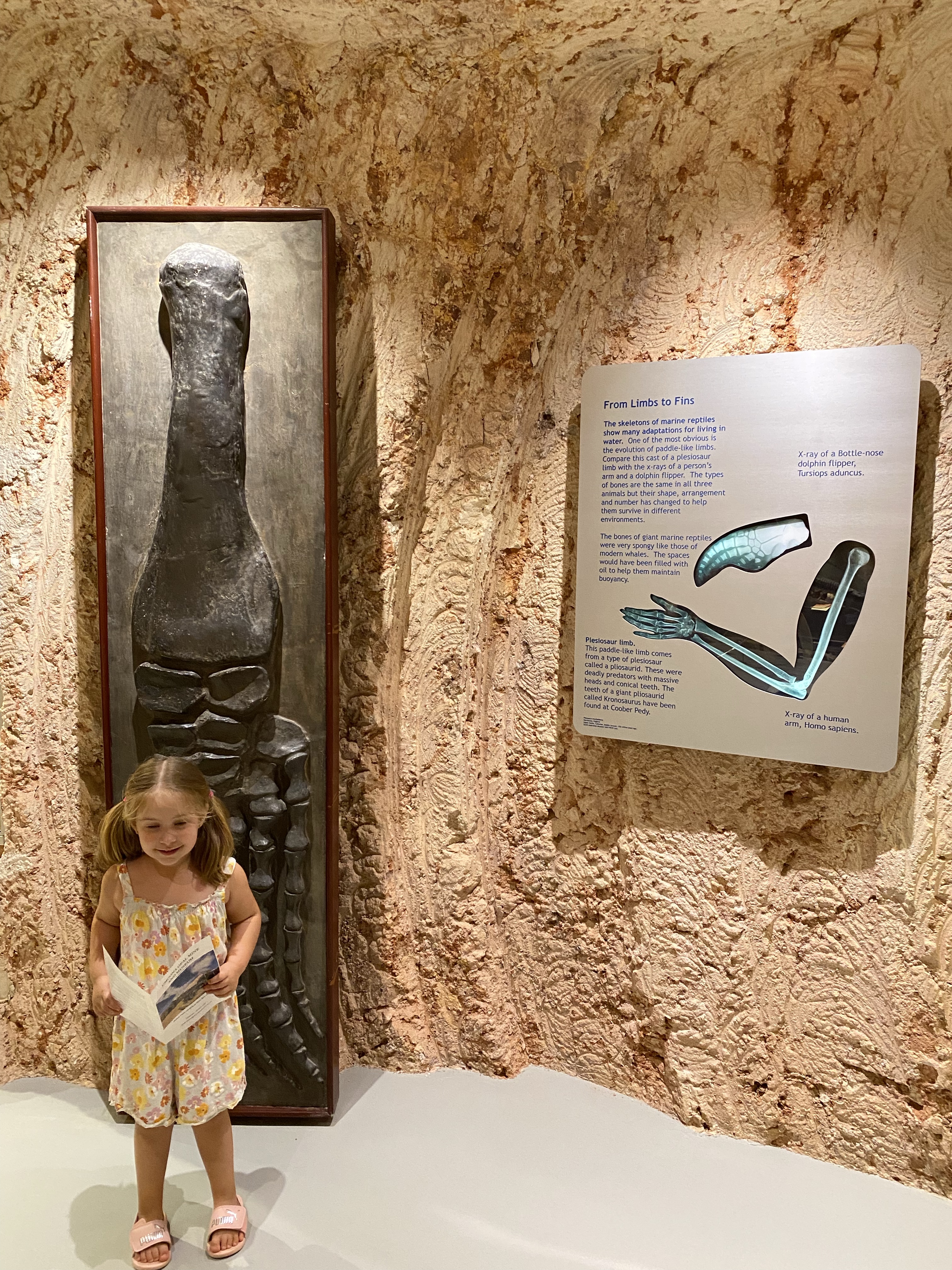
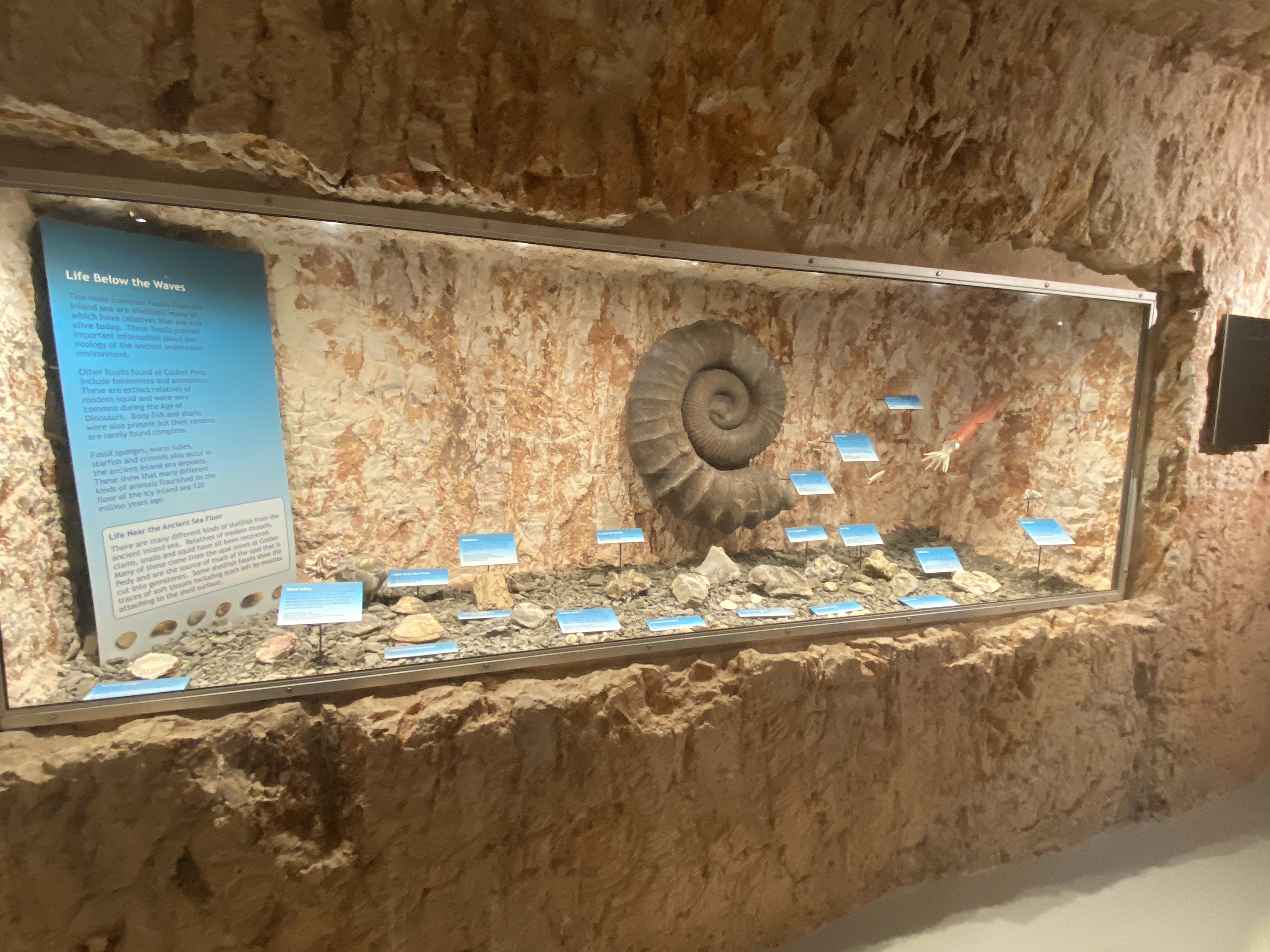
The waters started to recede as the South and North Pole froze over leaving the sandy soil behind. As the soil heated from and the water evaporated, it form a very solid sandstone.
Over millions of years weathering by rainfall broke down the sandstone and released silica from the stone. This left behind a softer claystone which makes up the Coober Pedy landscape.
With the weathering of the sandstone, the rain water and silica travelled down crevices, cracks and faults to find itself a deeper pocket, void or crack.
The environment changed again, rain disappeared and the long, hot rainless days began. Again the water was evaporated as the clay dried out. Water leeched out of the silica filled voids and hardened into many different minerals two of interest here are potch and Opal.
Opal
Opal is a non-crystalline form of hydrated silica dioxide. Chemically, it’s similar to a whole range of silica-based minerals, but what makes opal special is its microscopic structure.
At a microscopic level opal is made of tiny spheres. In precious opal, the spheres are arranged in tightly packed, ordered three-dimensional arrays. When white light hits the spheres and the spaces between them, it is diffracted back as visible colour.
The size of the spheres and how loosely or densely they are packed determines what colours are absorbed and what colours are able to be transmitted.
The groups of neatly ordered spheres usually occur in patches and it is these patches, and the interactions between them, that produce the pattern and play of colour in opal.
Potch
In the vast bulk of opal, the silica spheres are too large or too small to diffract visible light, or the size of the spheres varies too much for them to be able to pack tightly together and form a diffraction grating.
This kind of opal is called common opal – in Australia it’s colloquially known as potch.
Mining the precious stuff
So how do we find it? A lot of hard work and looking for signs in the rock.
Once you know that the site was silica containing weathered sandstone you can pretty much start mining anywhere. in Coober Pedy you can stake a claim for around $350 a year and go for your life. The only law is each claim is owned by one individual, no companies or collaborators.
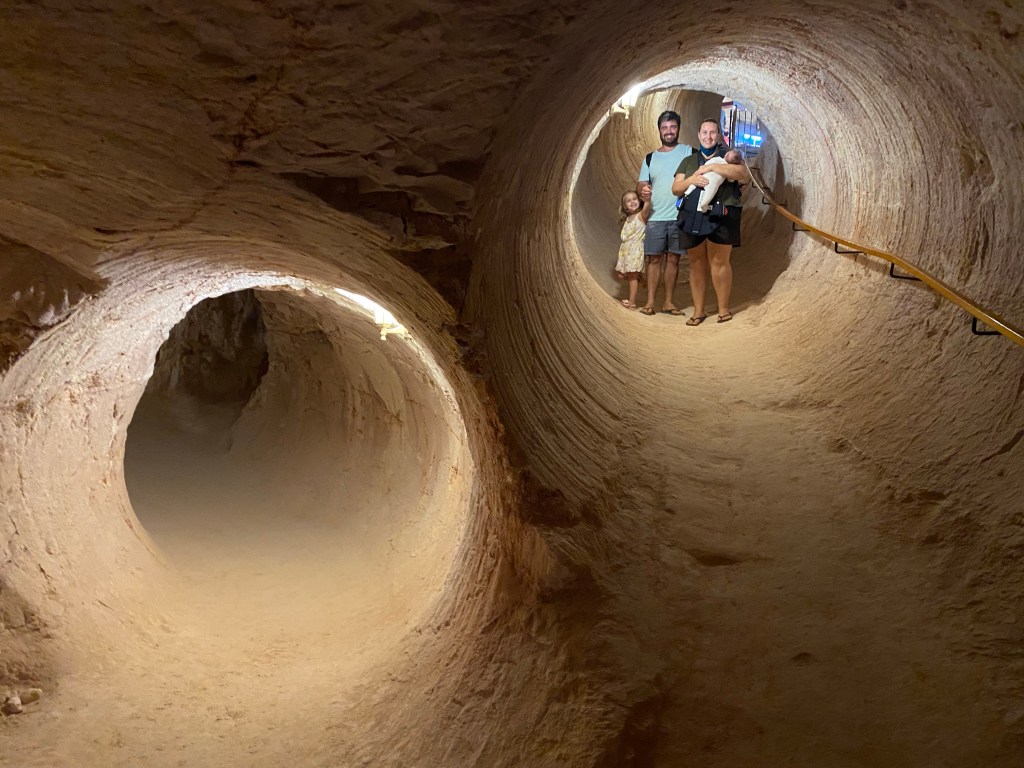
The first thing is to sink a shaft. Using machinery nowadays or by hand in the olden days. Sinking a hole and hoping to find an Opal seam. This therefore means sinking a shaft takes time and lots of inspection between depths.
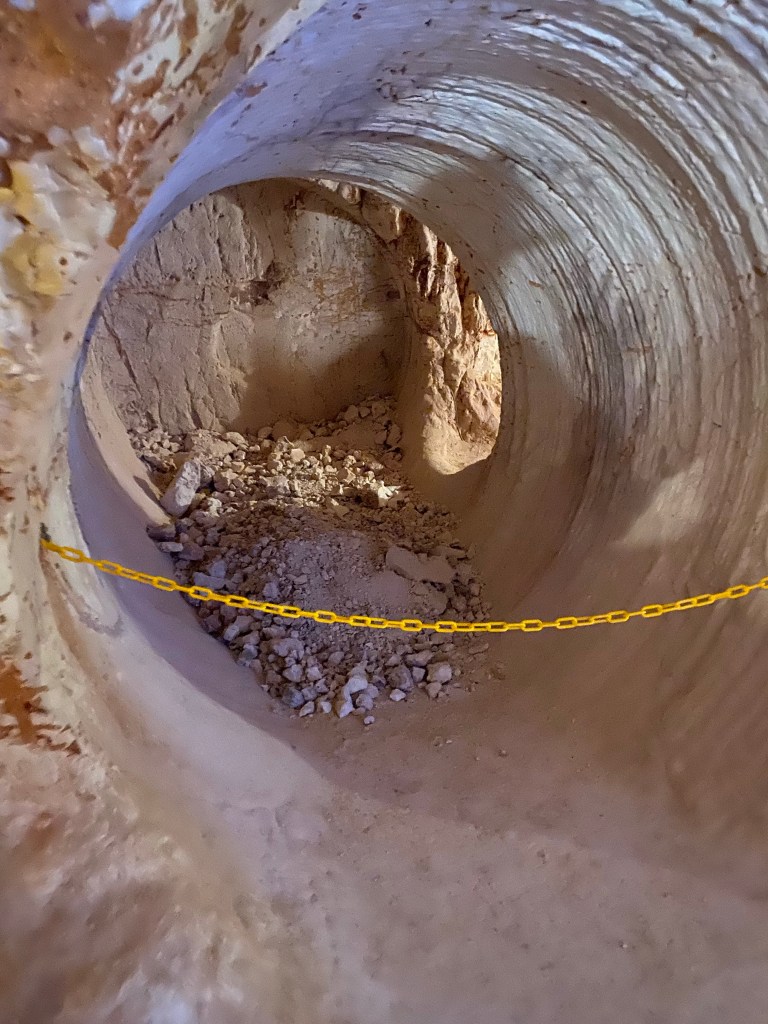
Once a seam of the glassy gray “potch” is found, it’s followed along in hopes that at some spot, the potch will suddenly take on the qualities of gem opal. The tunnels branch out sideways and these are usually dug by using explosives and/or drills.
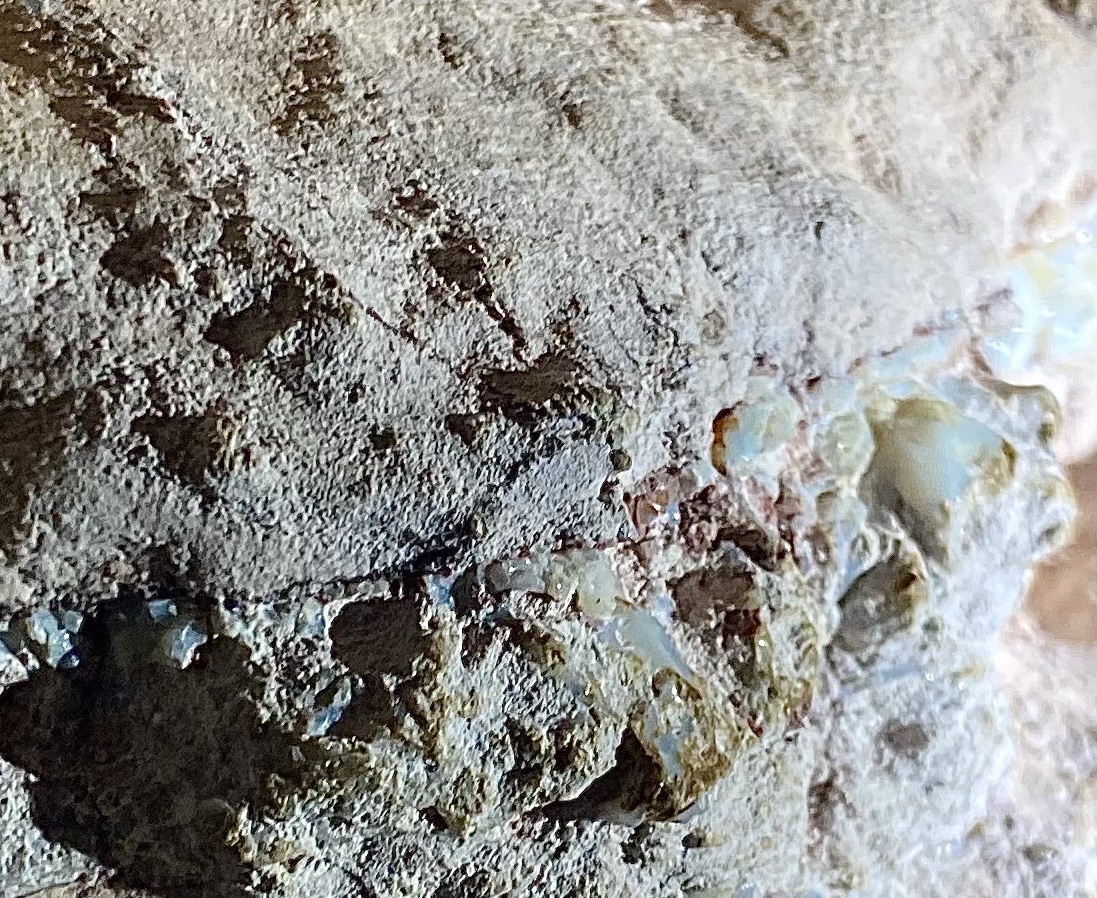
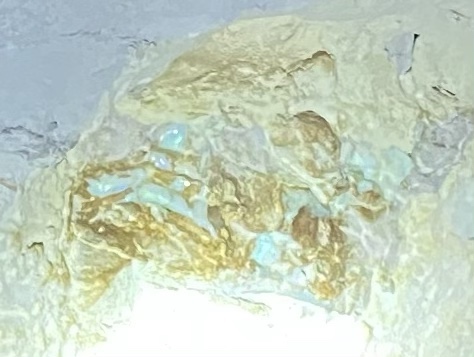
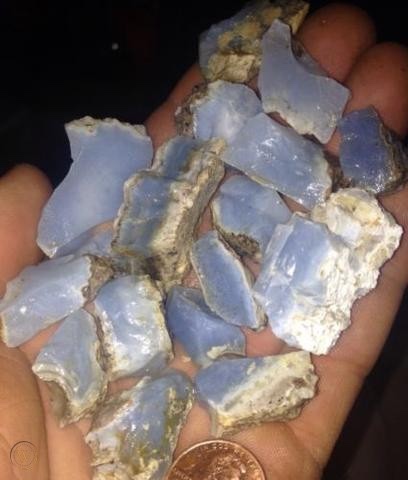
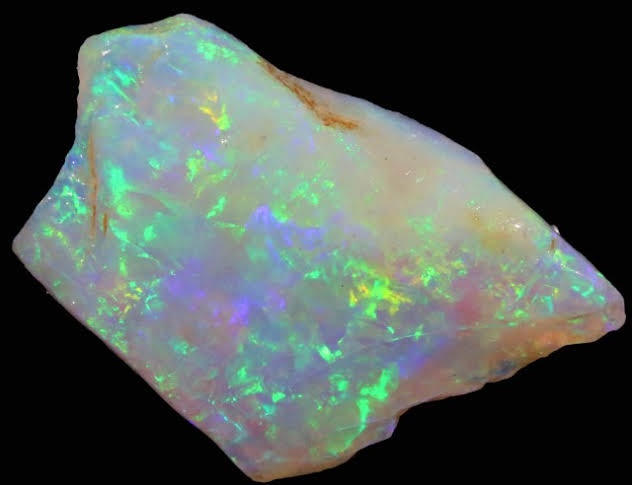
If Opal is found it is removed by hand, screwdrivers and picks.
Underground living
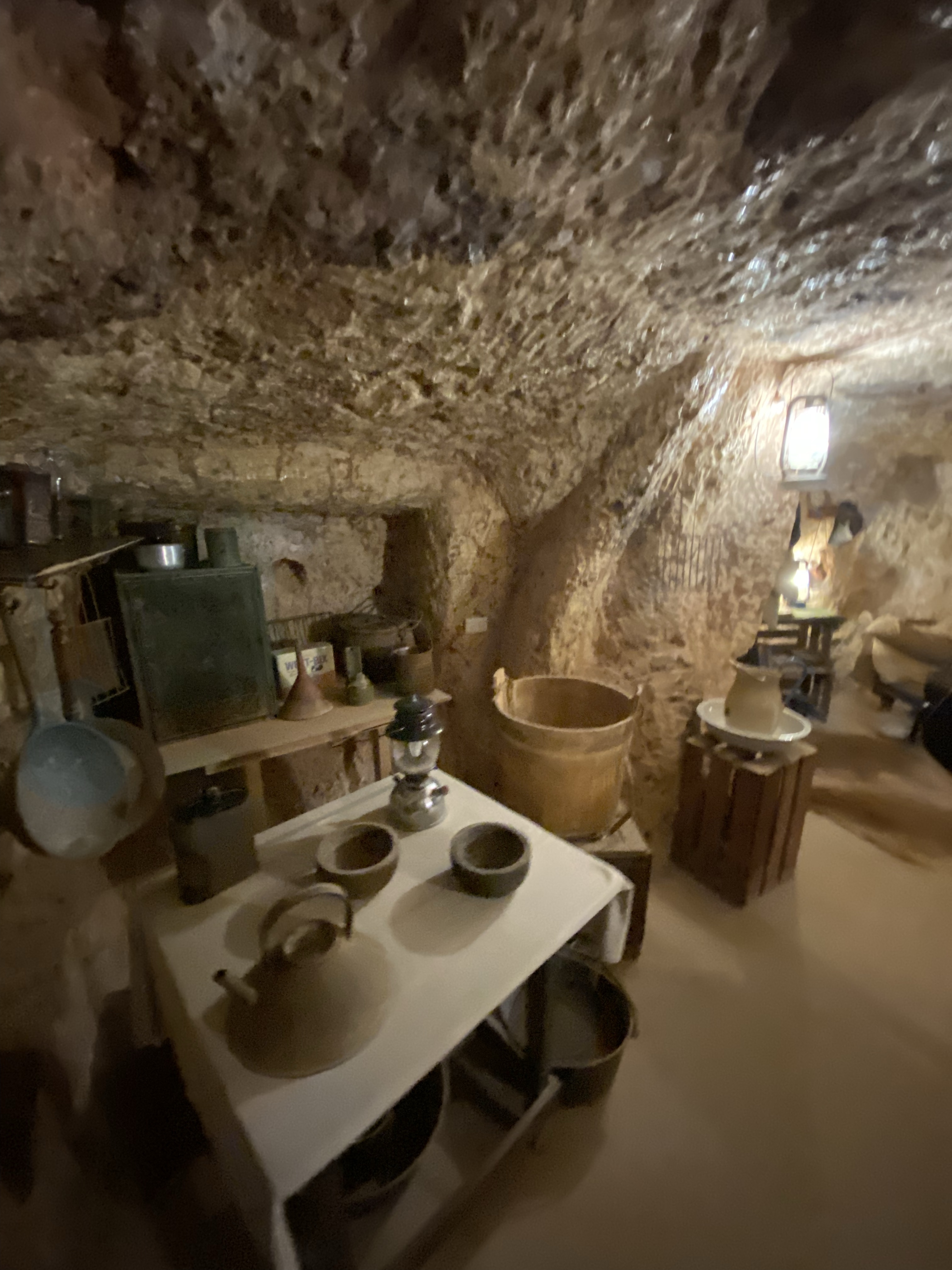
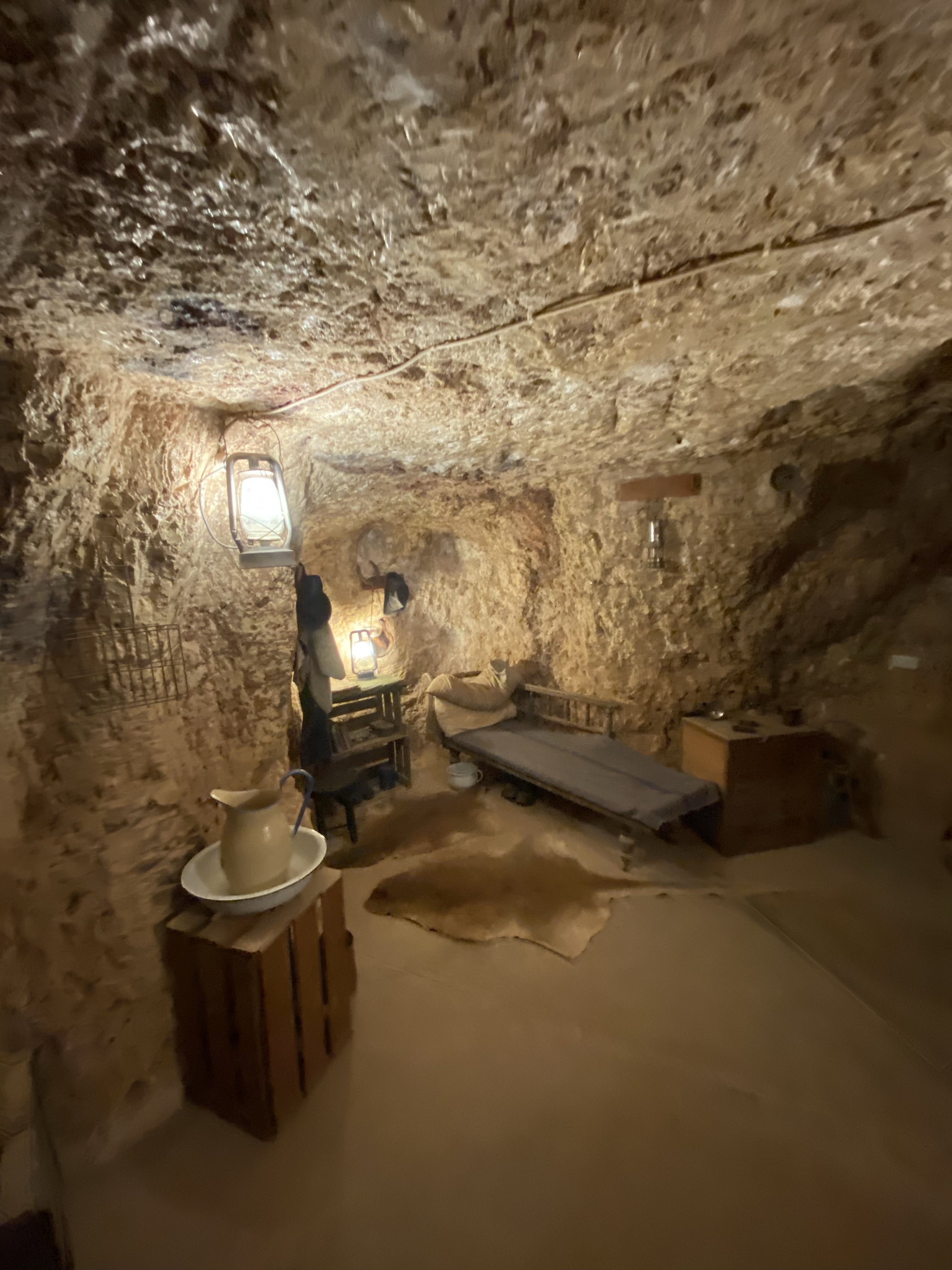
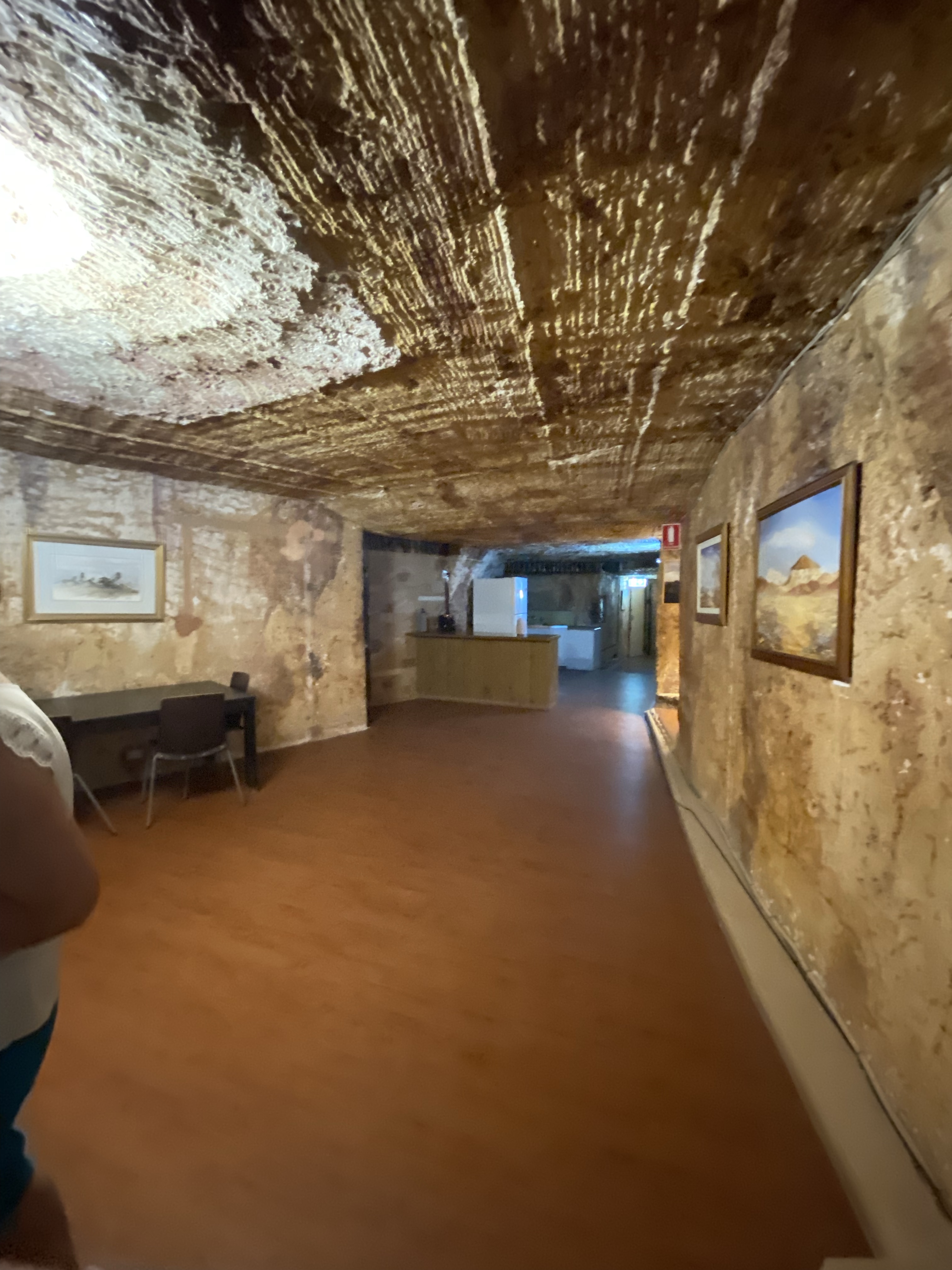
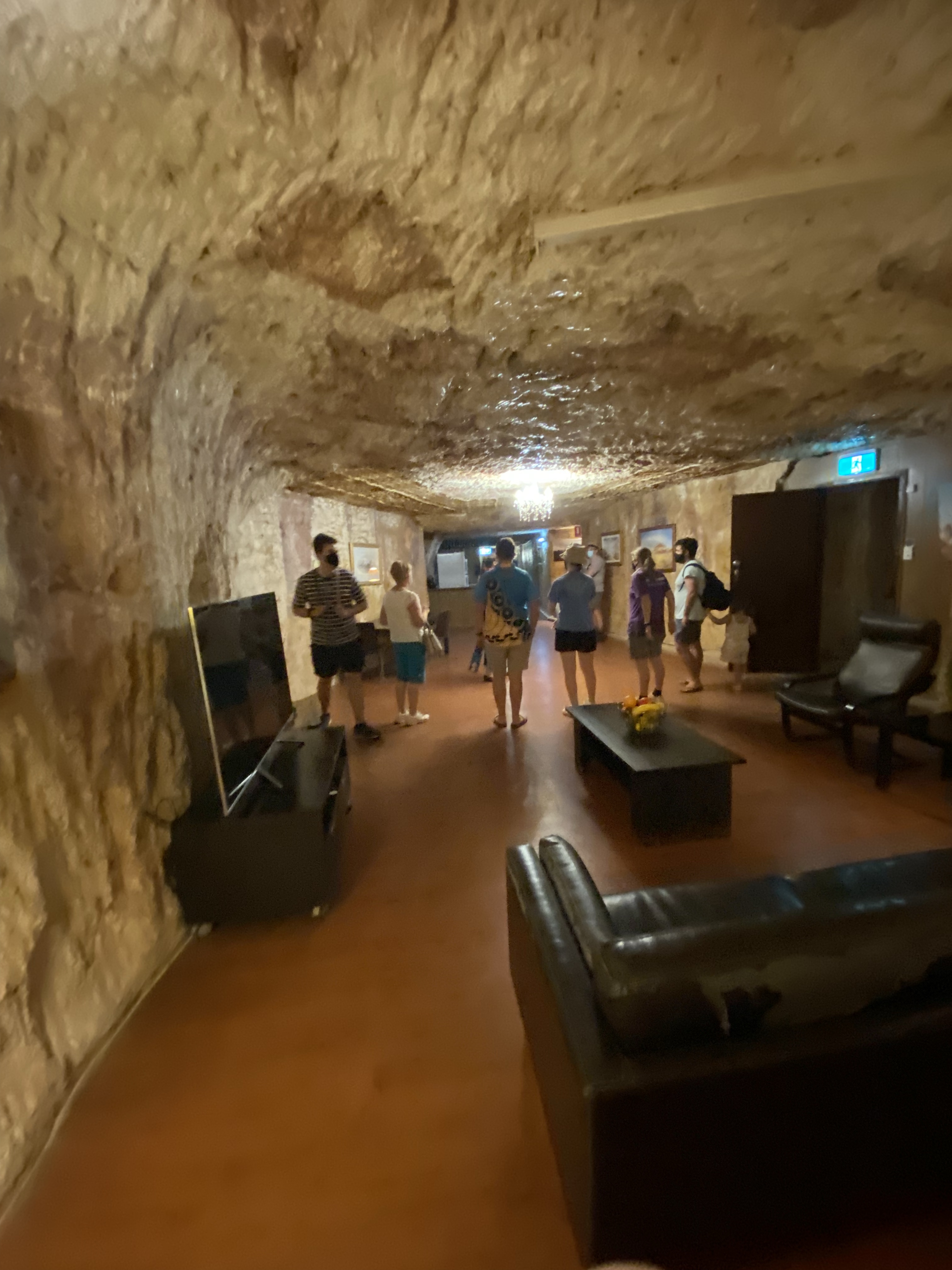
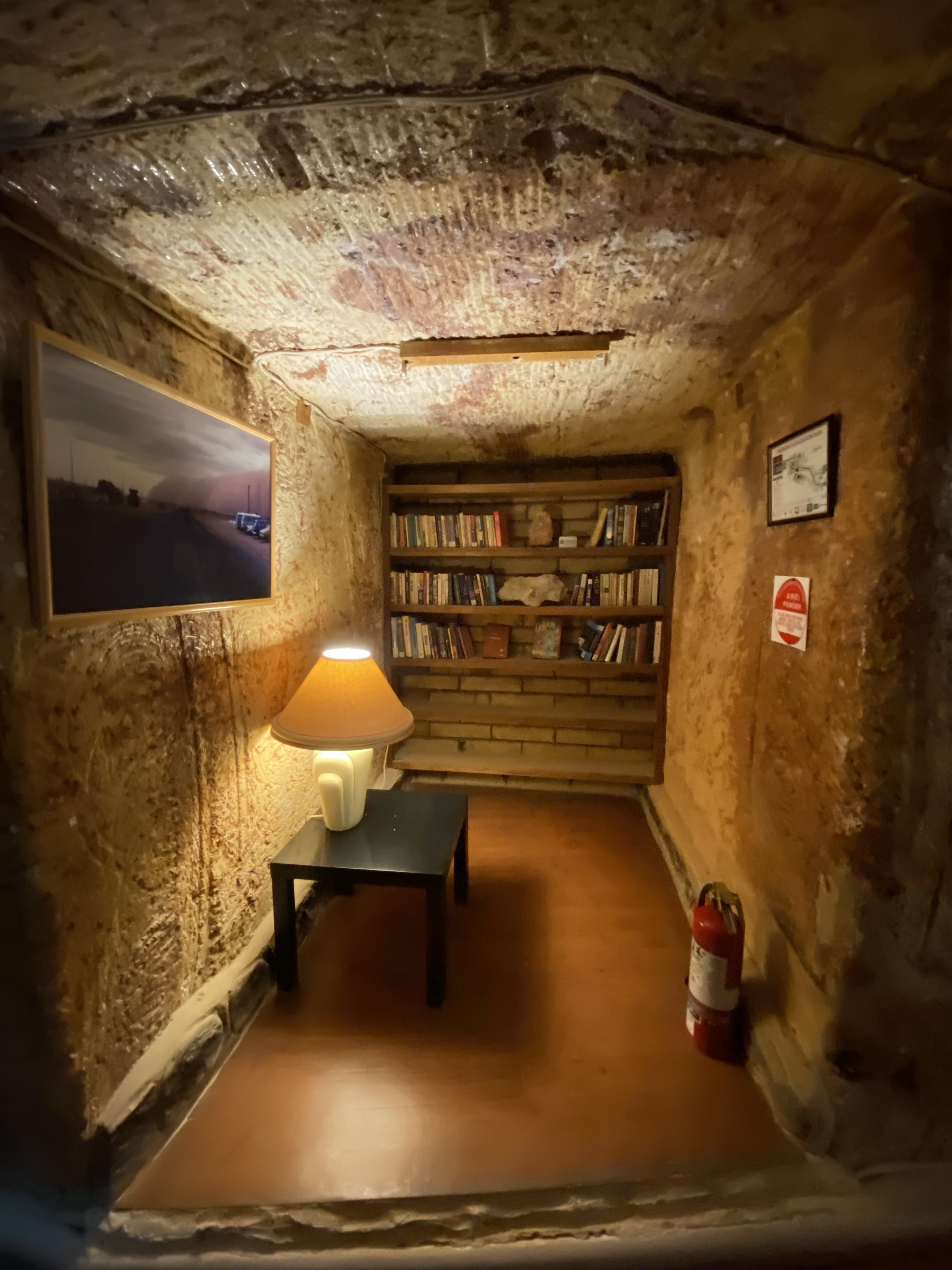
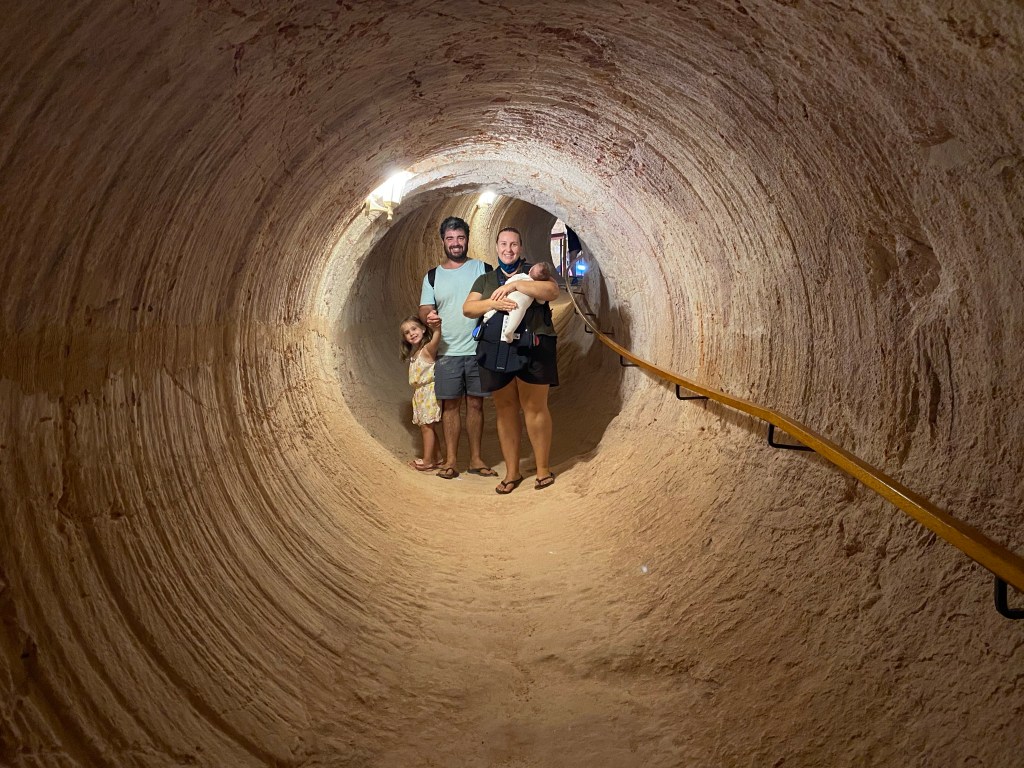
While the Opal miners were underground they realised that the temperatures were much cooler. This lead to the thinking that living underground would be more suitable. A lot of miners started living within the claim down sunken shafts to escape the heat.
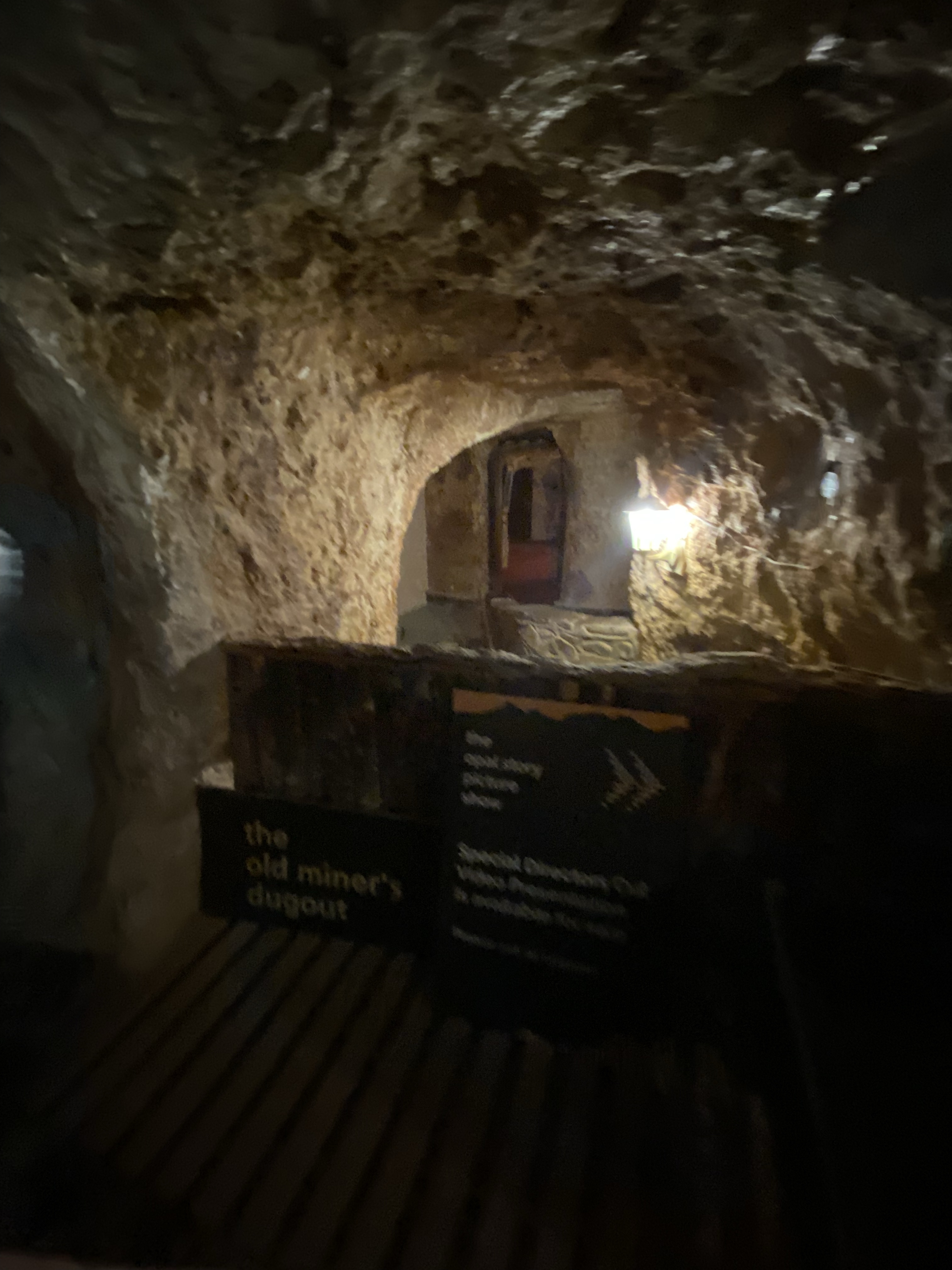
Later, once the areas were mined, some of the claims were turned into housing. More recently houses were purposely built underground and are termed dugouts.
Tomorrow
We leave Coober Pedy and head further south towards Port Augusta. We are travelling for 2 days before we get there.

 morrisblog.travel.blog