
Sunday 16th May 2021
We woke up early this morning and started finalising the van and car. We were on the road just after 8am.
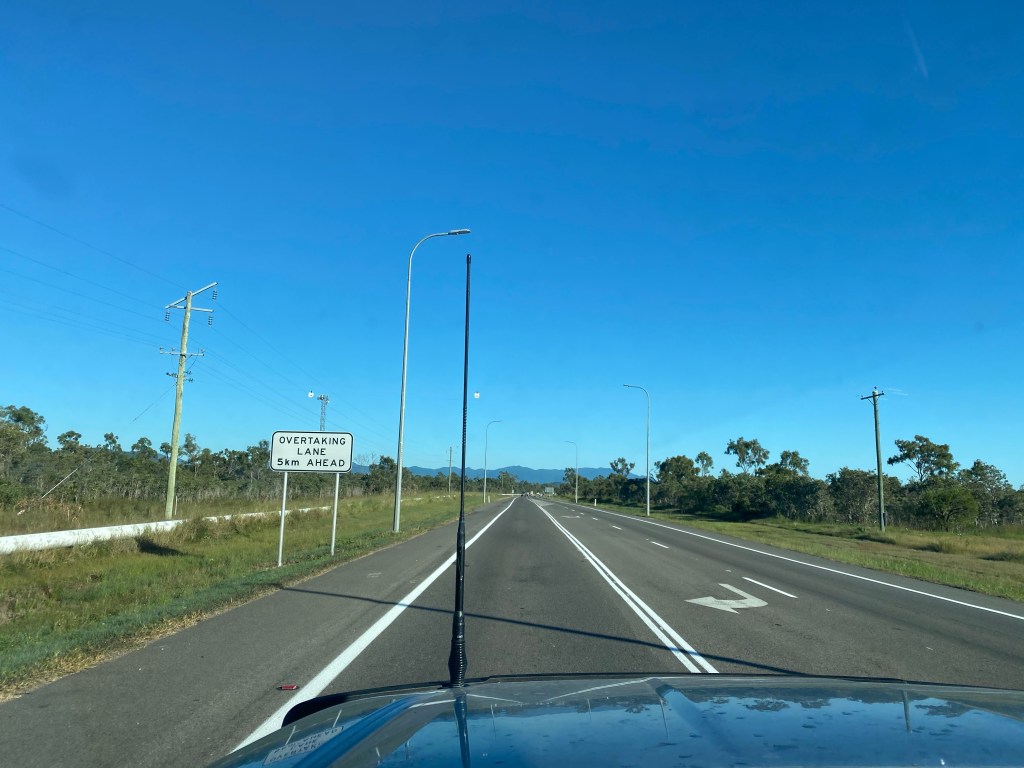
We made our way north and passed through Ingham and Cardwell. We pulled off into the rest area at Bilyana and parked the van. It has a 24hr limit for stops.
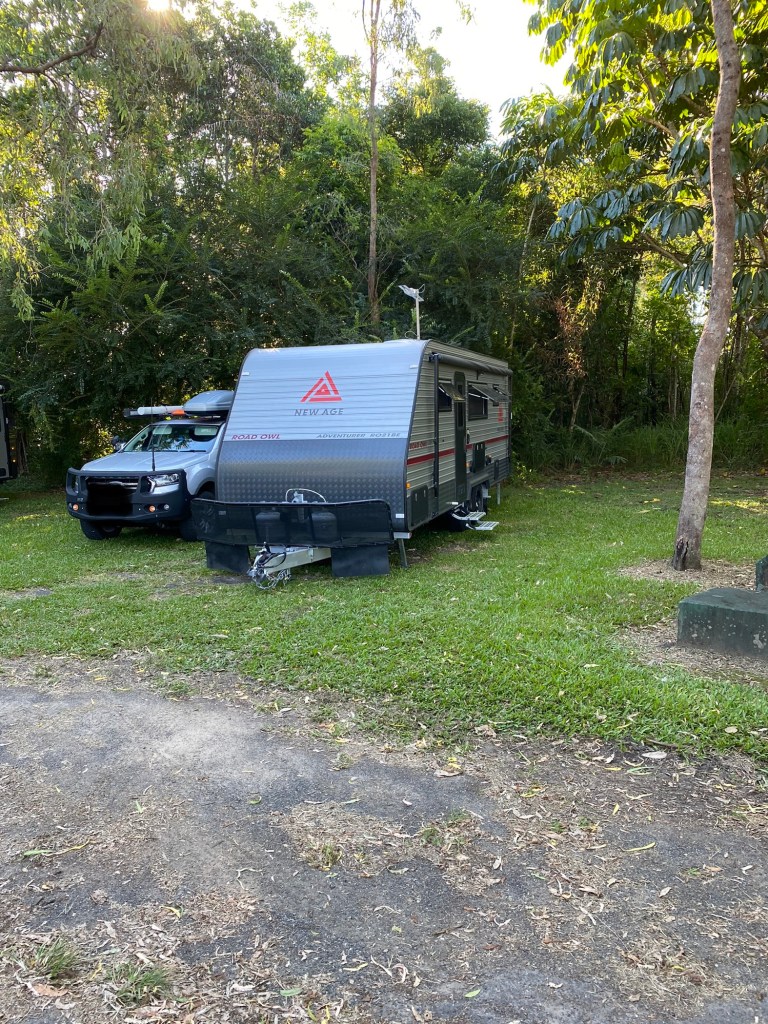
We made some lunch to take on the road with us and left for a quick drive down south, back to Cardwell.
Cardwell
We stopped at the visitors centre first. It had an amazing discovery centre.
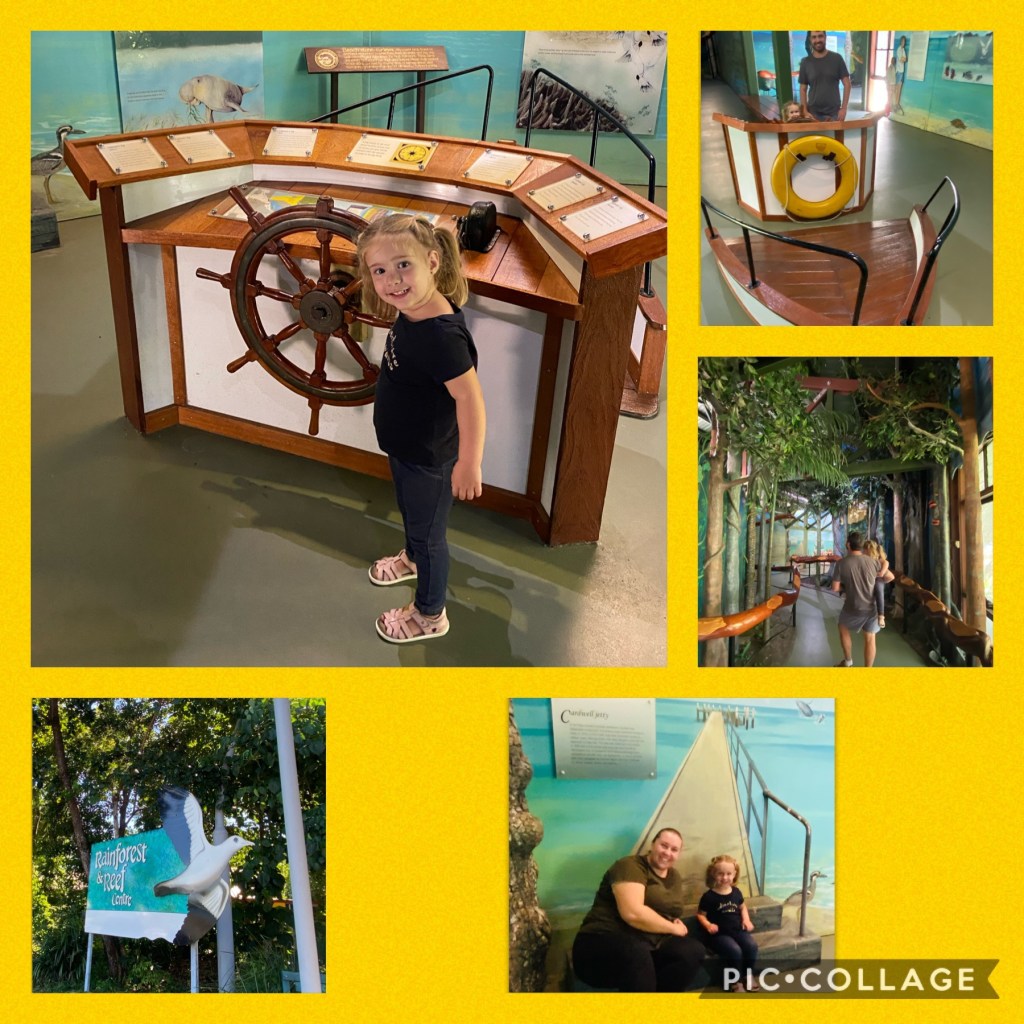
Madeline had a ball pretending to be the ships captain.
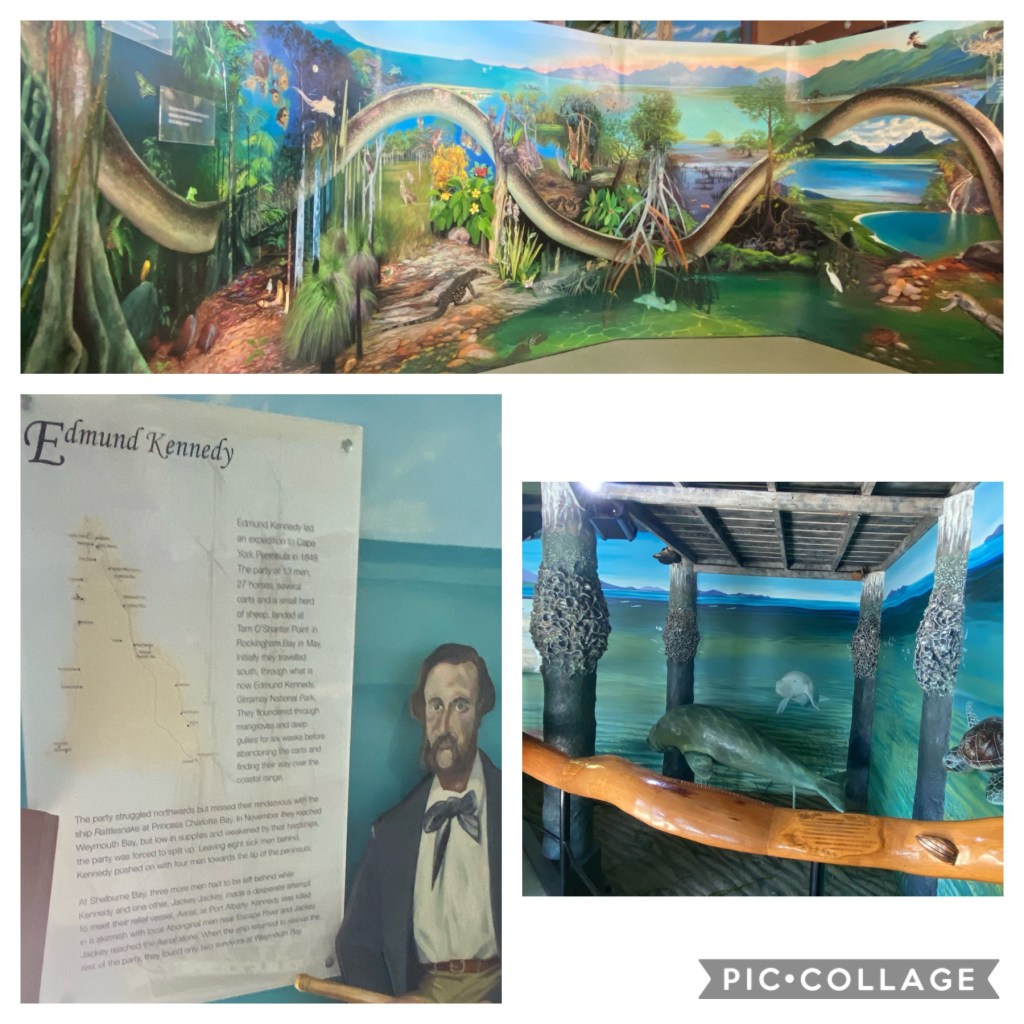
After visiting the information centre we walked out to the beach and up to the Cardwell Jetty.
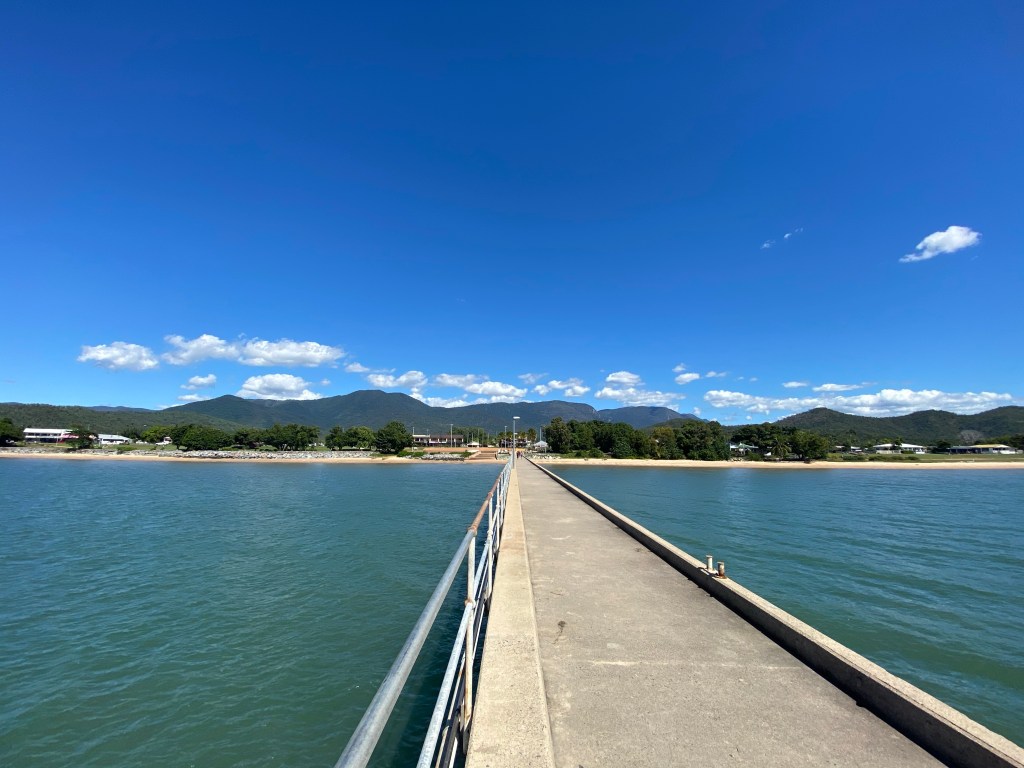
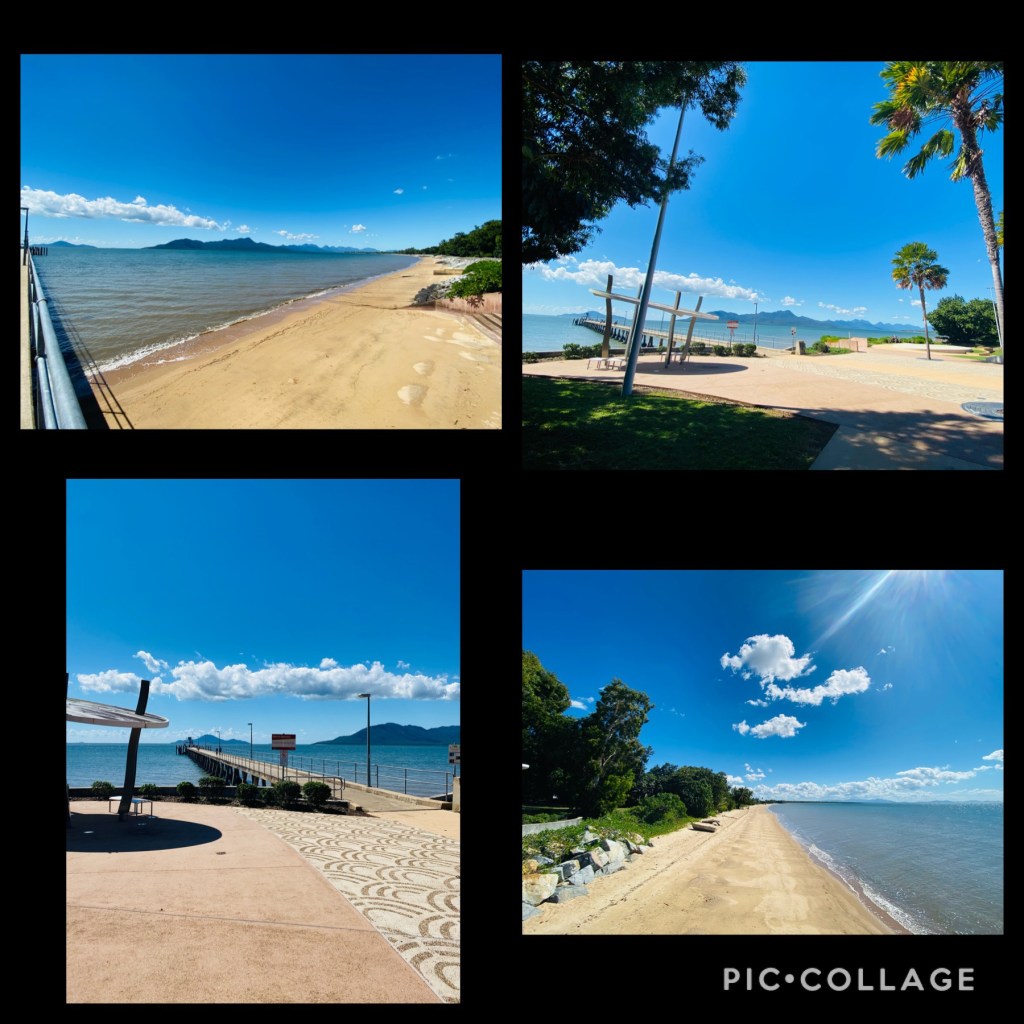
We saw about 4 sea turtles swimming in the ocean. It was a beautiful sight to see.
Cardwell State Forest
We drove to Cardwell State Forest which is only a minute drive from the town centre. We hit a dirt road and drove up to Attie Creek Carpark.
Attie Creek
It was a steep climb and a walk of only around 700m to see this beautiful waterfall and Creek running high in the mountains.
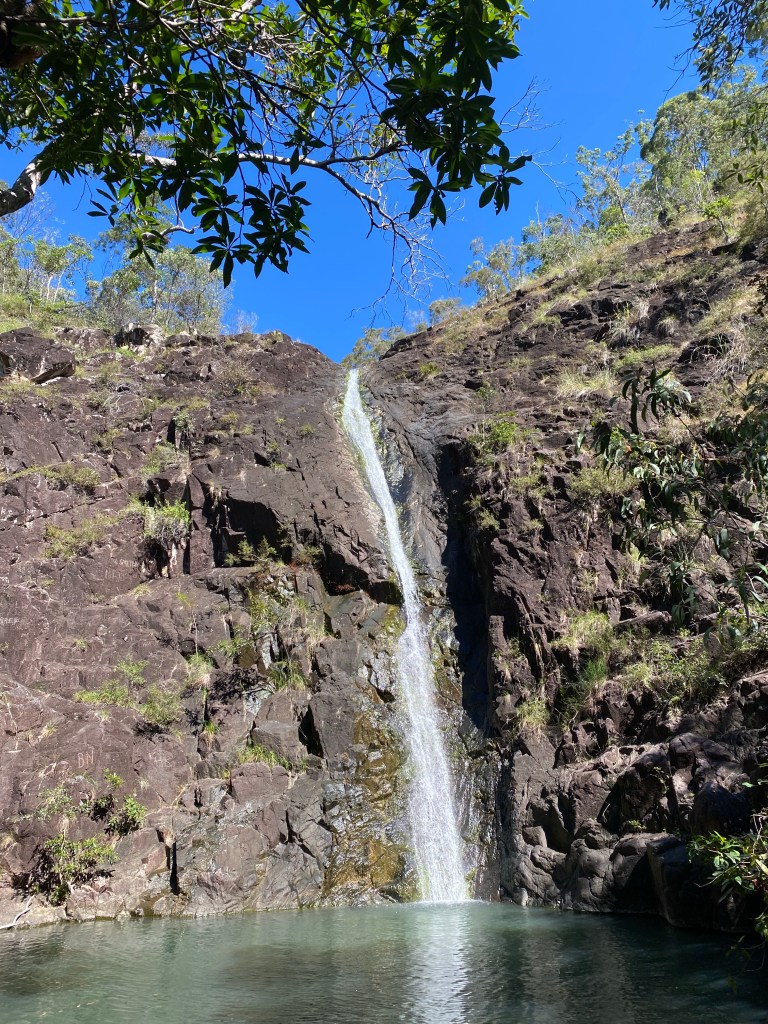
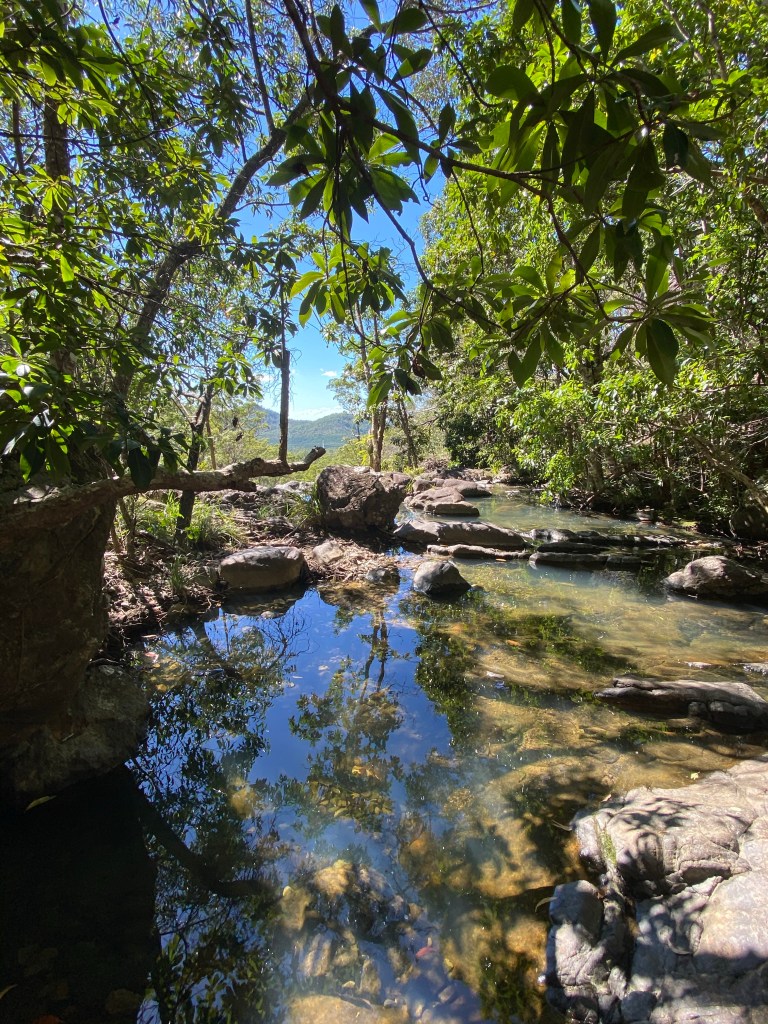
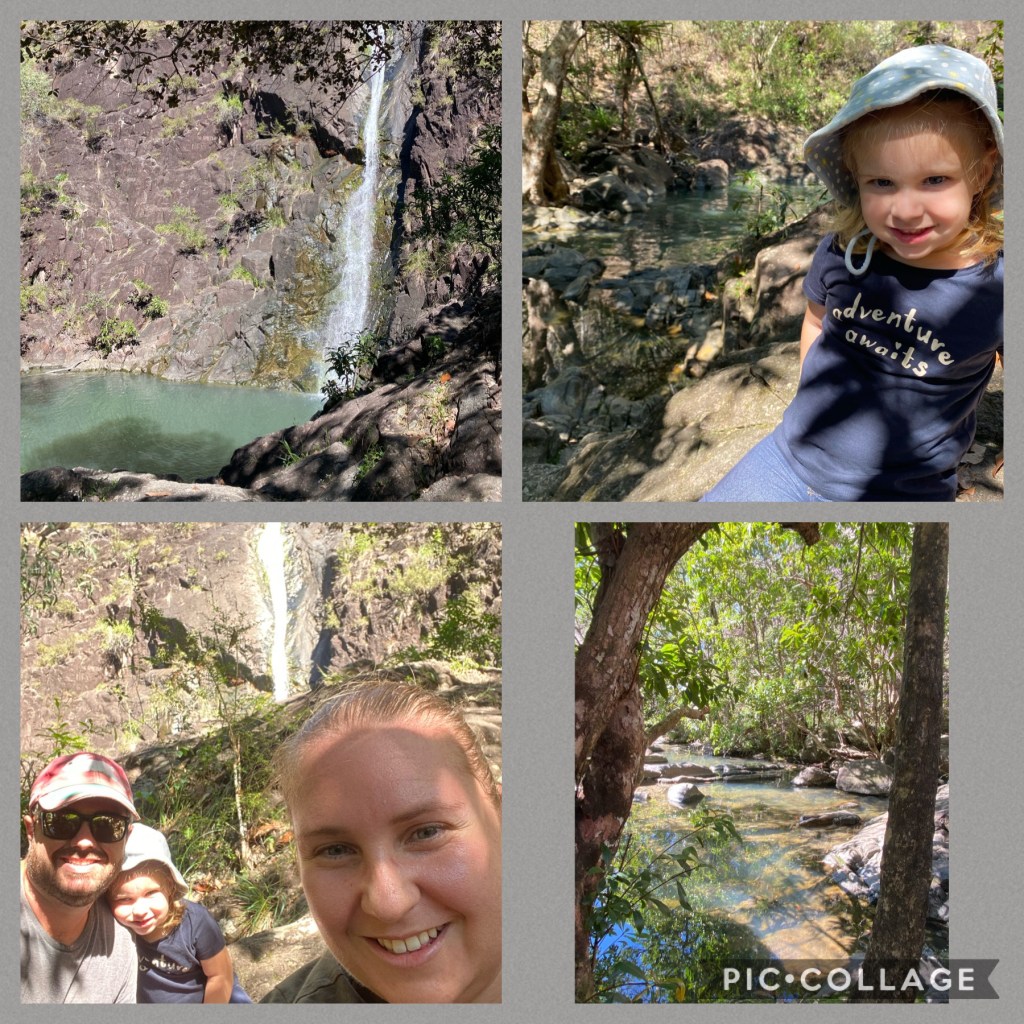
After a short stay taking in the breathtakingly beautiful sights, we descended the 700m back to the carpark.
Cardwell Spa Pool
We drove up the road about 4km and stopped at the famous swimming hole which has a natural spa pool.
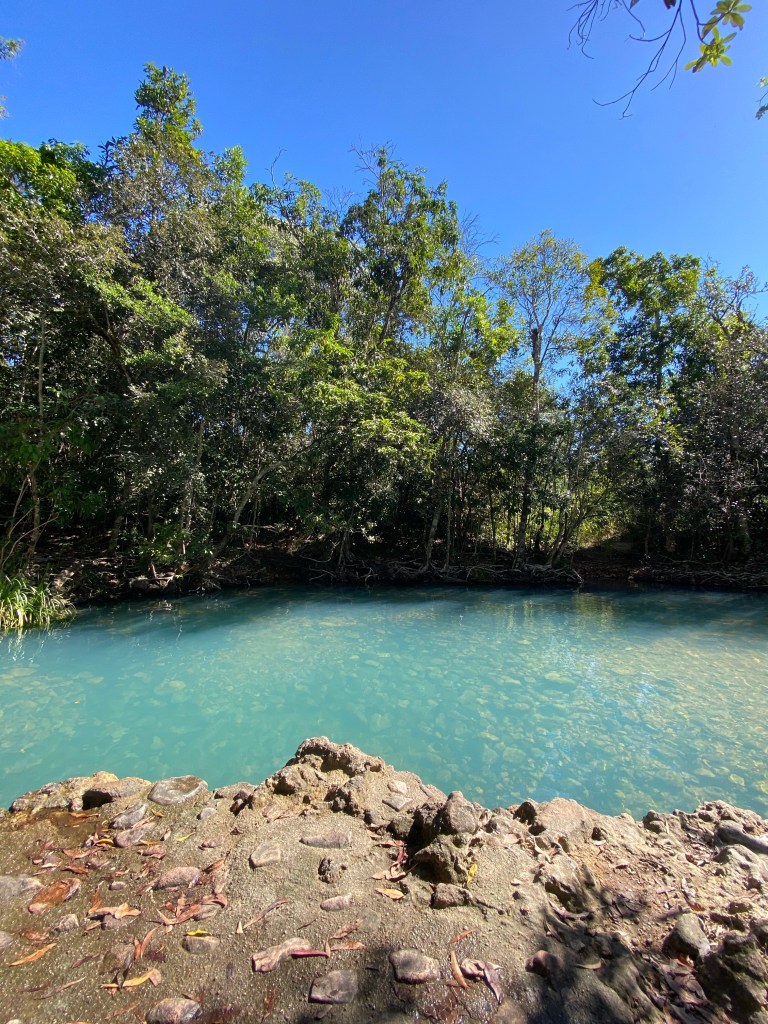
So why so blue? the turquoise colour of the water, is thought to be due to 3 interacting phenomena;
1. Phytoplankton in the water produce insoluble carbonate minerals as a byproduct of photosynthesis.
2. These carbonates bind to clay crystals that then become coated in reflective material such as calcite and aragonite (the composite known as ‘marl.’
3. Marl reflects light but also refracts it.
The colour of the phytoplankton + the reflection/refraction of the marl = turquoise water.
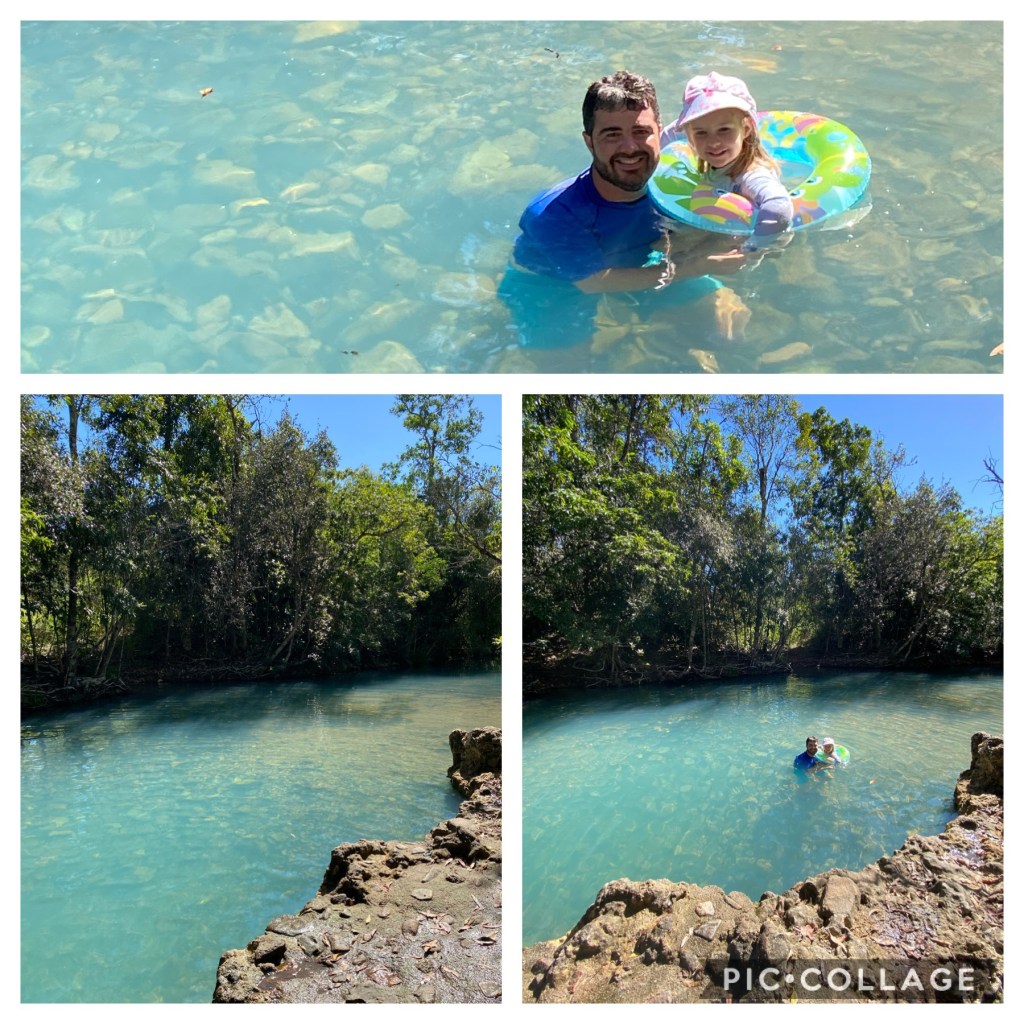
The water was about 25 degrees and it was lovely and refreshing
Bilyana Rest Area
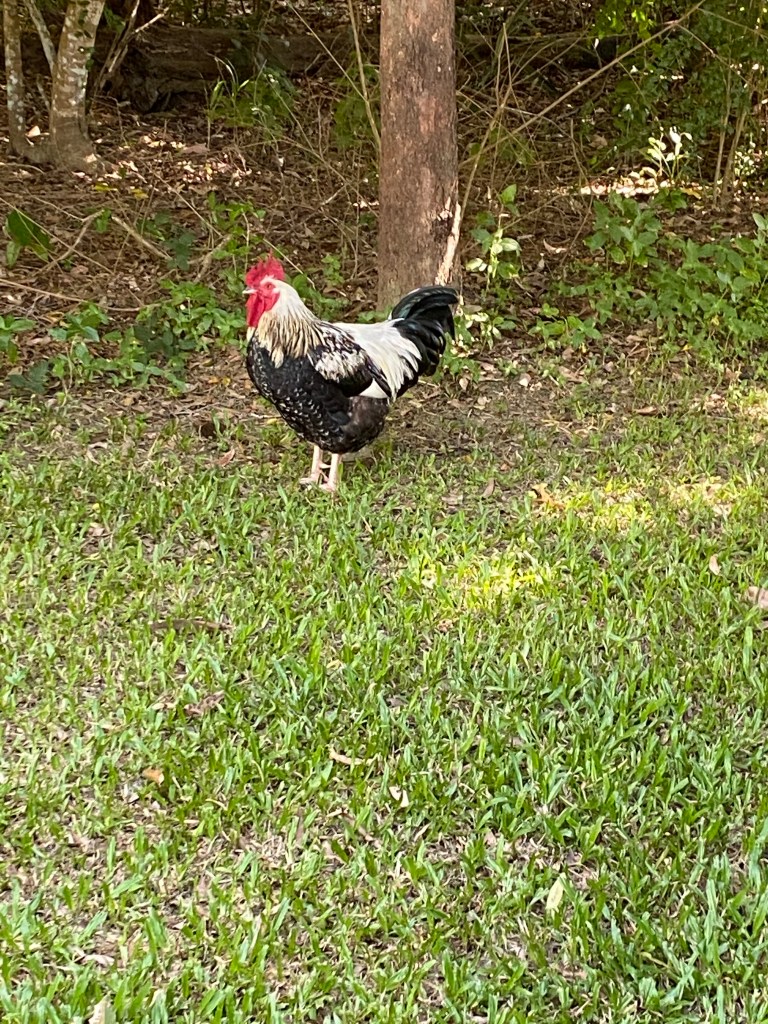
We returned to our caravan and unpacked. We heard a crow of a rooster.
Cardwell History
Geography
Cardwell is a coastal town and rural locality in the Cassowary Coast Region, Queensland.
To the north 182km lies Cairns and South 165km is Townsville.
West of Cardwell the rugged topography of the Cardwell Range intercepts the trade winds resulting in high rainfall. The coastal escarpment is covered in rainforest which transitions to the west to eucalypt woodland and tropical savanna.
East of Cardwell lies the Hinchinbrook Channel and Rockingham Bay which are both are part of the Coral Sea.
Islands are visible from Cardwell including protected areas i.e. Hinchinbrook Island, Goold Island and the Brook Islands Group.
Pre-colonisation
Two distinct language tribes have their boundary here; the Dyirbal and Warrgamay lies between Cardwell and Tully in the north.
European settlement
The explorer Edmund Kennedy passed two miles north of the present townsite on 26 June, 1848 during his tragic attempt to travel from Rockingham Bay to Cape York.
The first Europeans settled in the area in January 1864 in order to create a port initially called “Port Hinchinbrook”.
The town was later renamed but there is discrepancy as to whom.
Either in 1864 by explorer George Elphinstone Dalrymple or by the Governor of Queensland, Sir George Bowen. Either way it was named after Edward Cardwell, 1st Viscount Cardwell, the Secretary of State for the Colonies at that time.
In 1862 the HMS Pioneer sailed into the Hinchinbrook Channel looking for a suitable port to service the Valley of Lagoon pastoral holdings on the upper Burdekin River.
In 1864 Dalrymple did manage to find a track from the coast to the highlands and Cardwell became the first port north of Bowen.
In 1872 work started on Cardwell’s first jetty. The Cardwell jetty was completed in 1875.
In 1882 the town was partially destroyed by a cyclone.
By 1884 there were 25 houses and 50 people living in Cardwell. By 1886 Cardwell boasted the largest sawmill in North Queensland.
The town was hit by another cyclone in March, 1890. The Cardwell jetty was damaged by the cyclone. A new jetty was built in 1892.
By 1921 there were only 70 people living in Cardwell Shire.
In 2011 Cyclone Yasi, with winds of over 290 km/hr destroyed over one quarter of the houses in Cardwell and wrecked 70 vessels in the waters off the coast.
Tomorrow
We move up north and stay at Mena Creek.

 morrisblog.travel.blog