We woke up early and left after a quick breakfast. Thank goodness we had a lovely sleep with no overnight wakes.
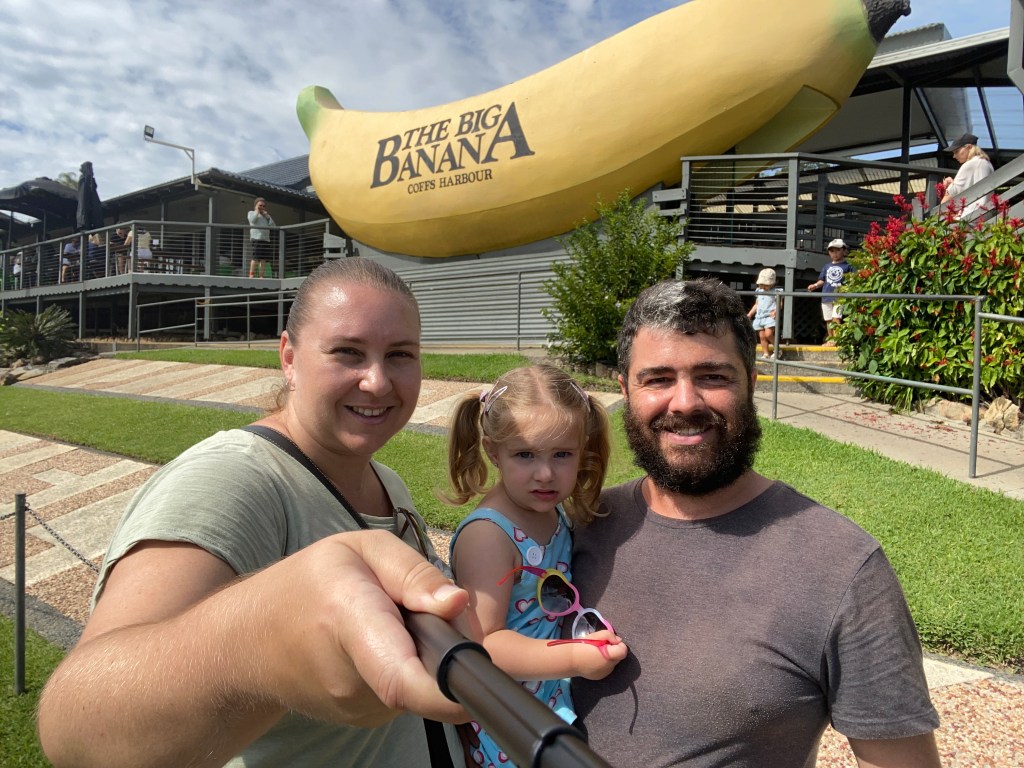
Our first stop was, the big banana.
Big Banana
This is a tourist attraction in Coffs Harbour. The grounds of the park are set amongst a banana plantation, featuring a large walk-through banana. Built in 1964, it was one of Australia’s first Big Things.

Maclean, NSW
Our visit
Our visit to this small town was short and sweet. We had lunch at a park by a playground.
We did some shopping in the main town and filled up our water tanks at the local Showground.
We always try to spend money in the towns where we use the free facilities.
History
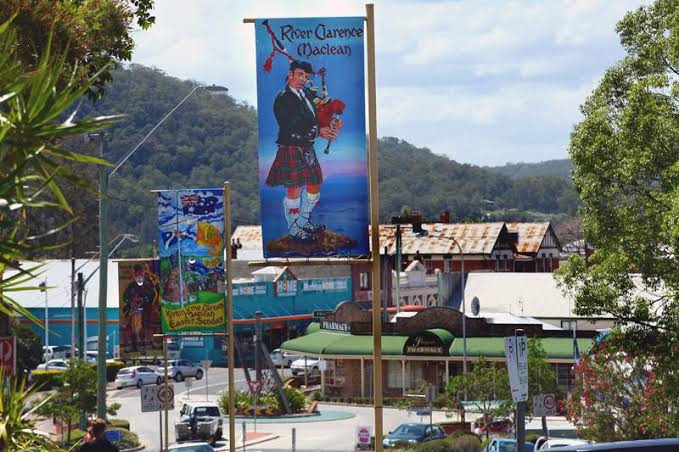
“The Scottish Town in Australia” due to a large number of the early settlers in the valley being originally from Scotland and the town itself was named after Scottish born Alexander Grant McLean, who was the NSW Surveyor-General from 1861-1862.
The town is located where the southern and northern arms of the Clarence River meet but, being only 6 metres above sea-level, it has been prone to flooding and is now protected by a levee bank which runs beside River Street.
The Maclean district is recognised as the southern limit of the Australian sugar crop.
Early history
The area is home to the Yaygir/Yaegl and the Bundjalung Aborigines.
Matthew Flinders investigated the river mouth in 1799. He landed on the northern headland, near present-day Iluka, but found the waters shallow and dismissed the whole area. Flinders did not realise the bay was actually the mouth of the Clarence River. He called the river mouth Shoal Bay.
In 1838 Thomas Small of Sydney sent his brother and two dozen sawyers on board the schooner, the Susan, to the ‘Big River’. It was the first European vessel to enter the river. Thomas Small took up a large parcel of land on Woodford Island in 1838.
Maclean was laid out in 1862 and named after the surveyor-general.
The early crops in the valley were maize and cotton. By 1865 sugar had become an increasingly important local crop.
In 1874 Harwood (just down river from Maclean) had a sugar mill. The oldest operating mill in Australia.
New Italy
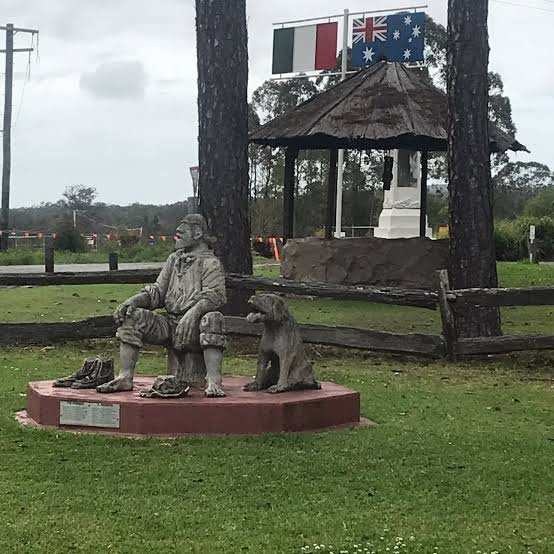
Our place of rest for the night. We pulled in around 230pm to a rest area and set up for the night.
We had a chance to get a quick look around the museum, cafe and gallery before it closed.
The voyage history
New Italy was established in 1880 when families of Italian migrant farmers were lured to purchase phantom land and farms in the Pacific named La Nouvelle France. Marquis de Rays was responsible for this fraudulent claim. The migration was named the “de Rays expedition.”
Despite being warned, 50 families from the region of Veneto, in Northern Italy, set sail in July 1880.
In October they arrived at Port Breton to find death and deprivation.
In February 1881 they sailed for Noumea to escape their situation and became stranded after their boat was made unseaworthy.
The Italian Consul in Australia requested the assistance of Sir Henry Parkes. On the 7th April 1881, 217 of the original 340 immigrants arrived in Sydney, in poor health.
The migration history
On arrival to Sydney they were given shelter, food and medical assistance. The government hired the workers to employers for 12 months. There were sent to places like Young, Goulburn and Singleton.
After their 12 months the families came back together to form a settlement. They obtained land in Northern NSW on the Richmond river. Originally called La Cea Venezia. T
he expansion of the settlement continued from 1882 to early 1930s. As the land was poor, many families moved to richer soil, which lead to New Italy dwindling to a few aged settlers.
Our afternoon and evening
We settled into the humidity of the afternoon. It was 31 degrees and humid. We played with playdoh and Madeline’s family of toys until dinner.
Overall it was a long trip to New Italy today. Madeline coped as well as we could have hoped.
Tomorrow…
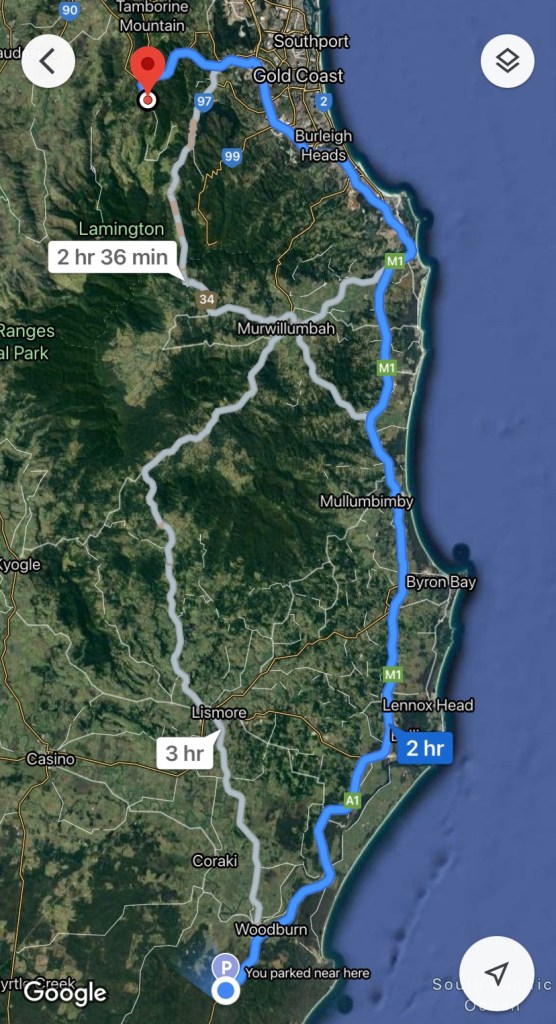
We plan to travel across the QLD border to Mount Tamborine. With a few stops on the way.

 morrisblog.travel.blog