Friday 11th June 2021
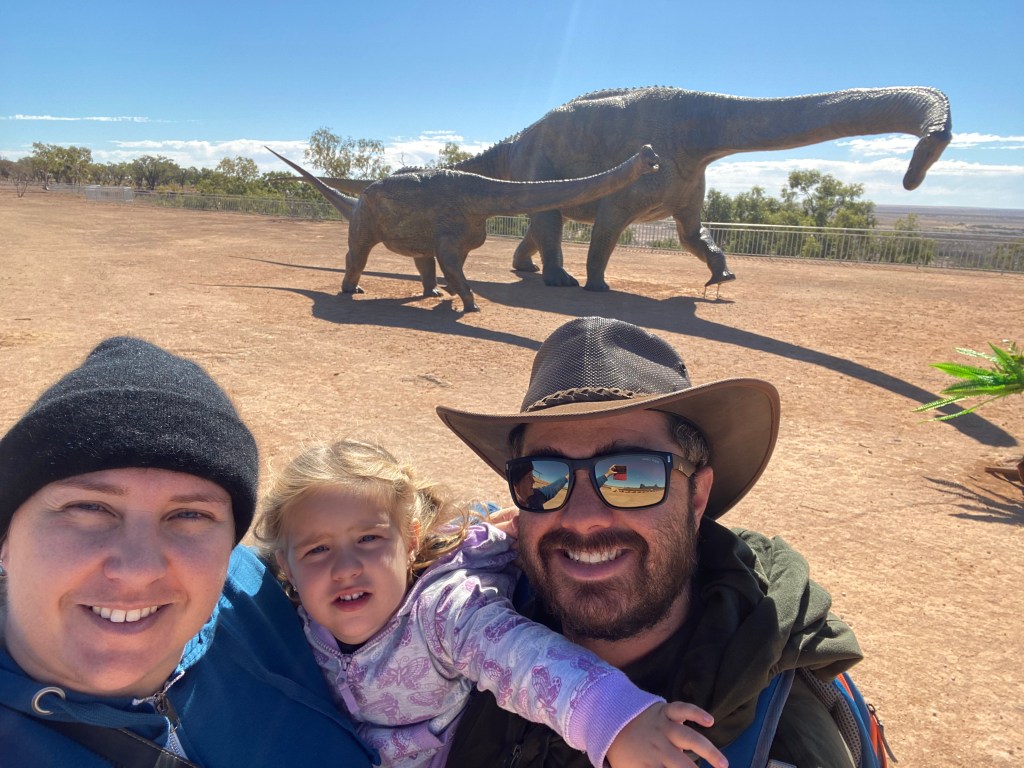
We awoke another cold morning to issues with our electrical. For some reason our batteries are not holding charge. This was not going to stop us enjoying the exciting day ahead, we are off to see dinosaurs!!
Winton – Age of Dinosaurs
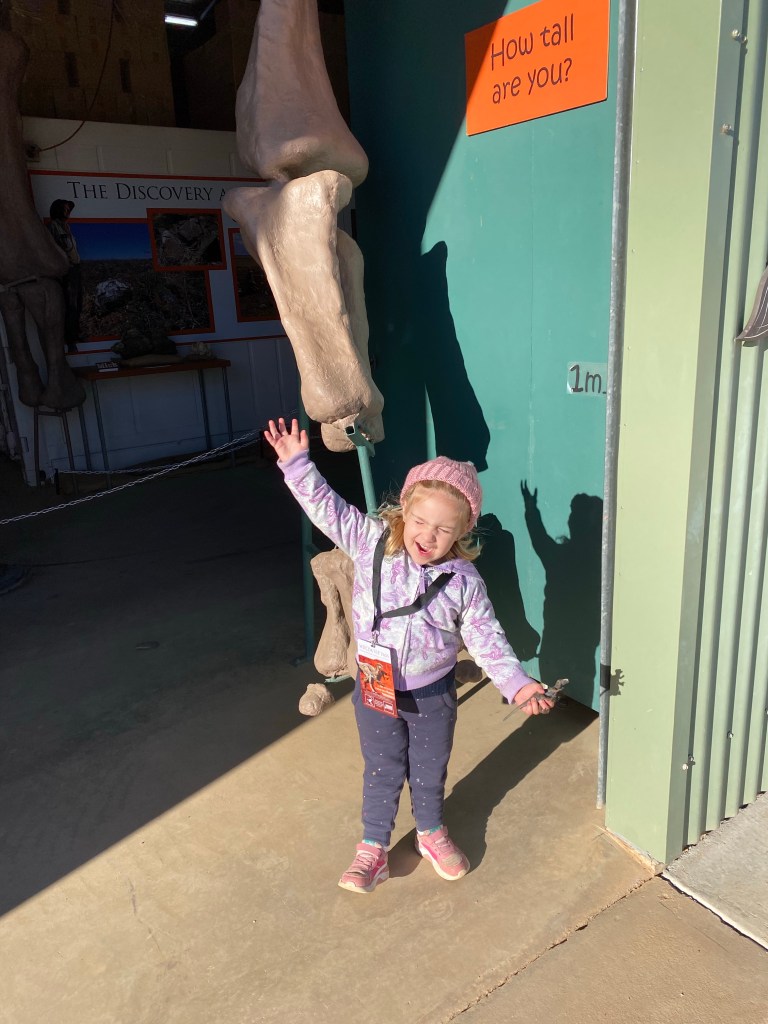
We arrived at the Centre about 45min early for our first tour as Jason was super excited. This extra time allowed Maddie to convince us to buy her a toy dinosaur. She the proceeded to roar at everyone we walked past.
Brief History
In 1999 while mustering sheep on his property Belmont near Winton, David Elliott discovered the fossilised bone of what was, at the time, Australia’s largest dinosaur. This bone was later identified as part of a giant femur from a Cretaceous sauropod that roamed the Winton area 95 million years ago.
Following the discovery of more fossils during digs held in conjunction with the Queensland Museum, David and his wife, Judy Elliott, called a public meeting in Winton on 17 August 2002 with a view to establishing a dinosaur museum at Winton. On 25 October 2002 Australian Age of Dinosaurs Incorporated (AAOD Inc) commenced operations as a not-for-profit organisation.
Fossil Preparation Laboratory
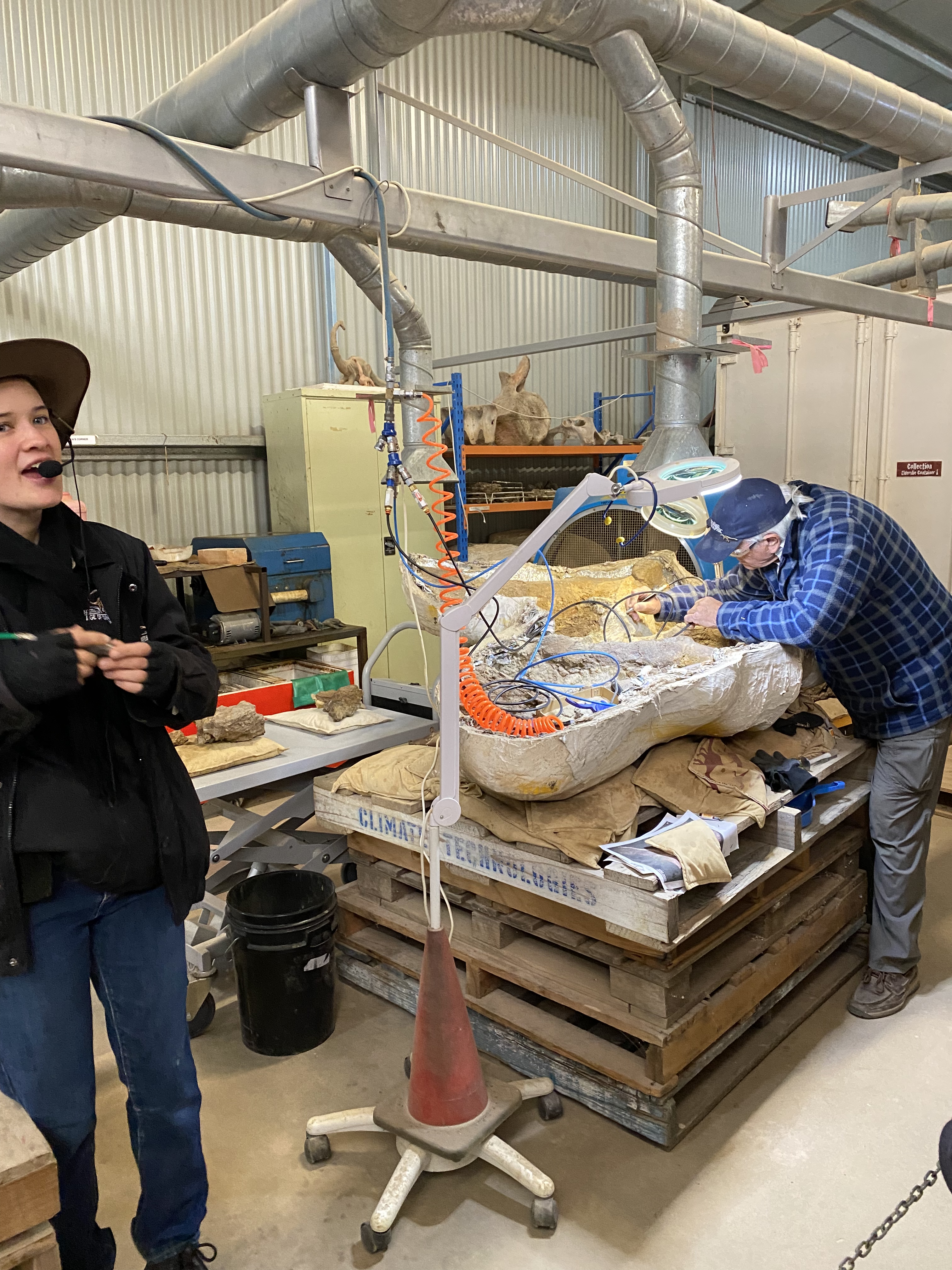
Our first tour was a tour of the fossil preparation laboratory. We found out that if they ceased bringing new fossils and only worked on what they had, it would take 10 years to get through them all. Where we actually had a chance to witness fossils being worked on. Maddie also happily provided the sound effects, continuing to roar with her toy dinosaur.
Apparently anyone can volunteer to work on the fossils after some short training.
Collection Room Tour
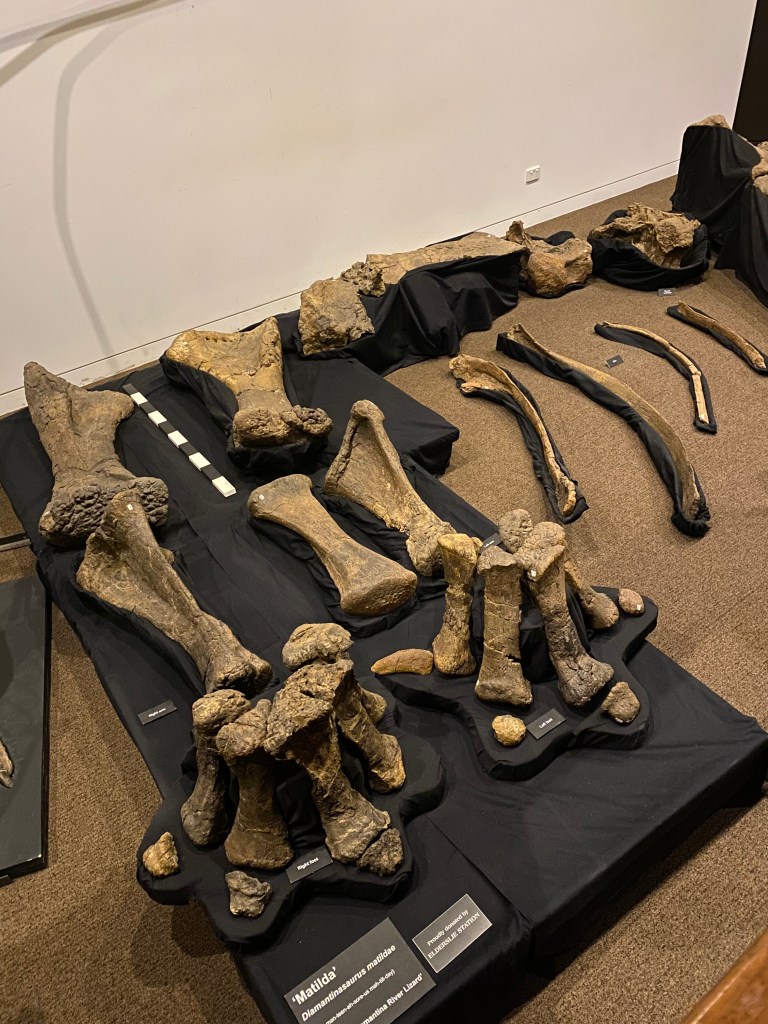
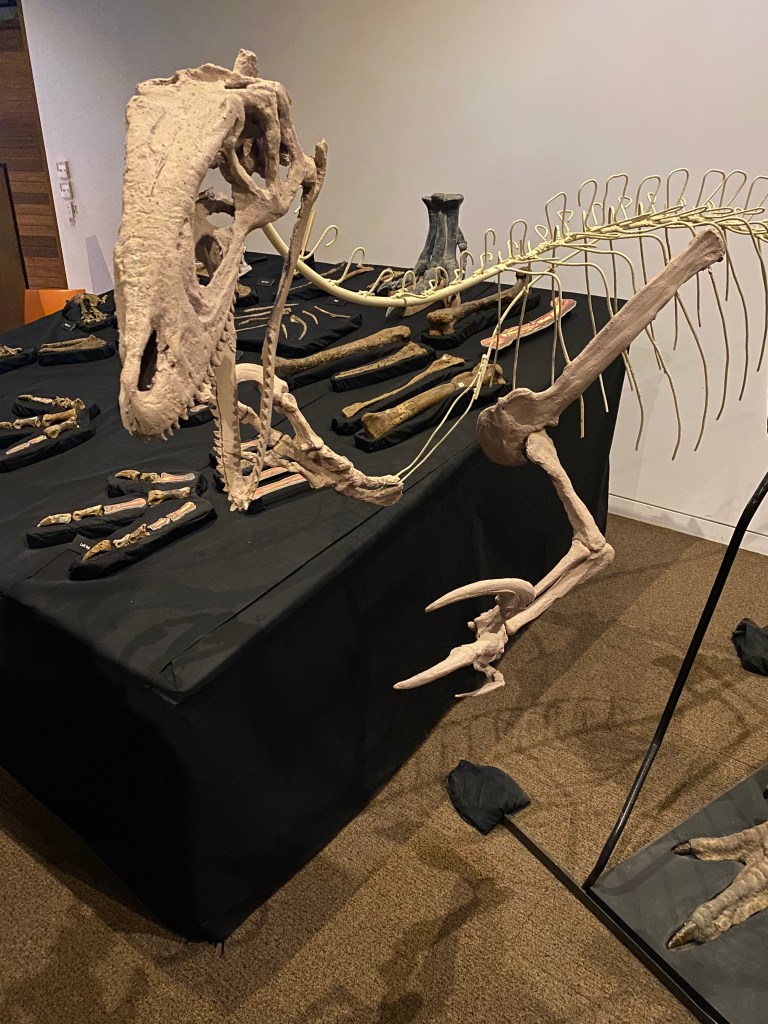
Here we got to meet a couple of the more famous fossils, Diamantinasaurus Matilday (Matilda) and Australovenator.
Matilda was found on Elderslie station (near Winton), Queensland, in 2005 by the property owner, Sandra Muir. Diamantinasaurus was established on the basis of a skeleton (nicknamed “Matilda”) which preserves both forelimbs, the right hind limb, the shoulders and pelvis, and several back vertebrae and ribs. Approximately 30% of the skeleton of “Matilda” has been recovered, making it the most complete Cretaceous sauropod ever found in Australia. At the shoulder, Diamantinasaurus would have been 2.5–3m tall and approximately 15-16m long.
Australovenator was Found on Elderslie station (near Winton) Queensland in 2006 during the first excavation of the “Matilda” site. Australovenator was established on the basis of the most complete non-avian theropod skeleton (~30% complete) ever found in Australia. This skeleton preserves almost complete arms and hands, legs and feet, several back and belly ribs, the paired front halves of the lower jaw, and several teeth. It is unique by Australian standards, and unusual worldwide, because its remains were found interspersed with those of a sauropod, Diamantinasaurus; it is unusual to find two such different dinosaurs buried together. Australovenator is the largest theropod from Australia known from decent remains, although opalised fragments of slightly larger theropods have been found at Lightning Ridge
Australovenator was a medium-sized predator, approximately 1.6m tall at the hips and 5–6m long from tip to tail. Its long, muscular legs would have allowed it to run fast, although not as quickly as modern emus or ostriches.
Dinosaur Canyon Tour
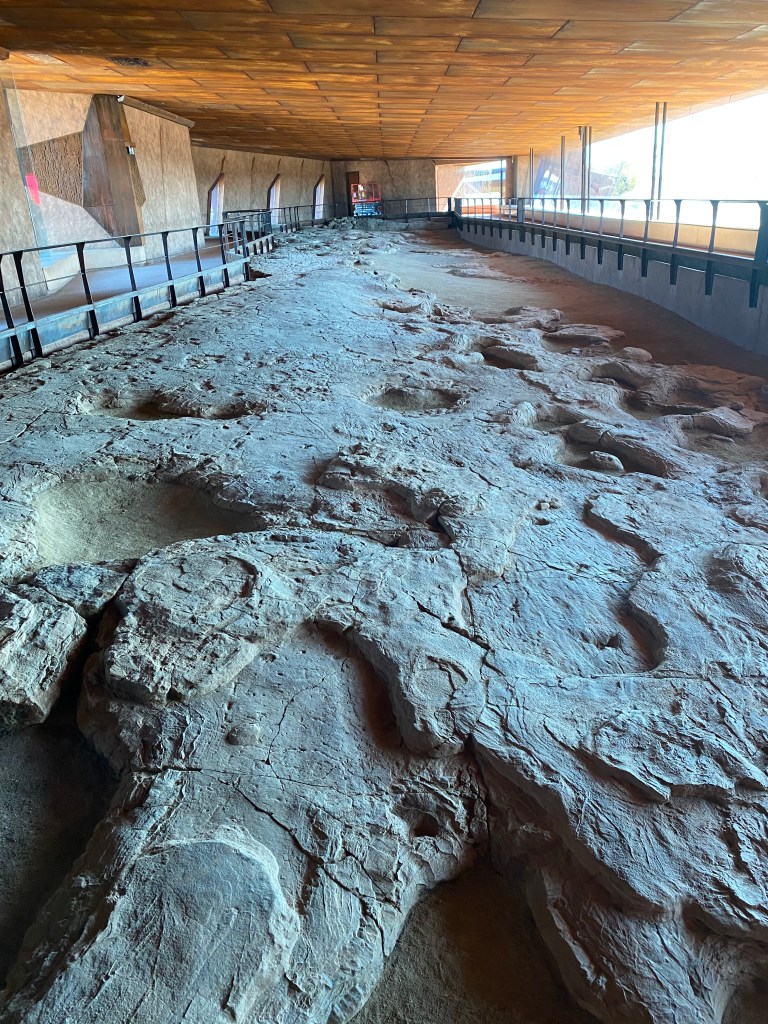
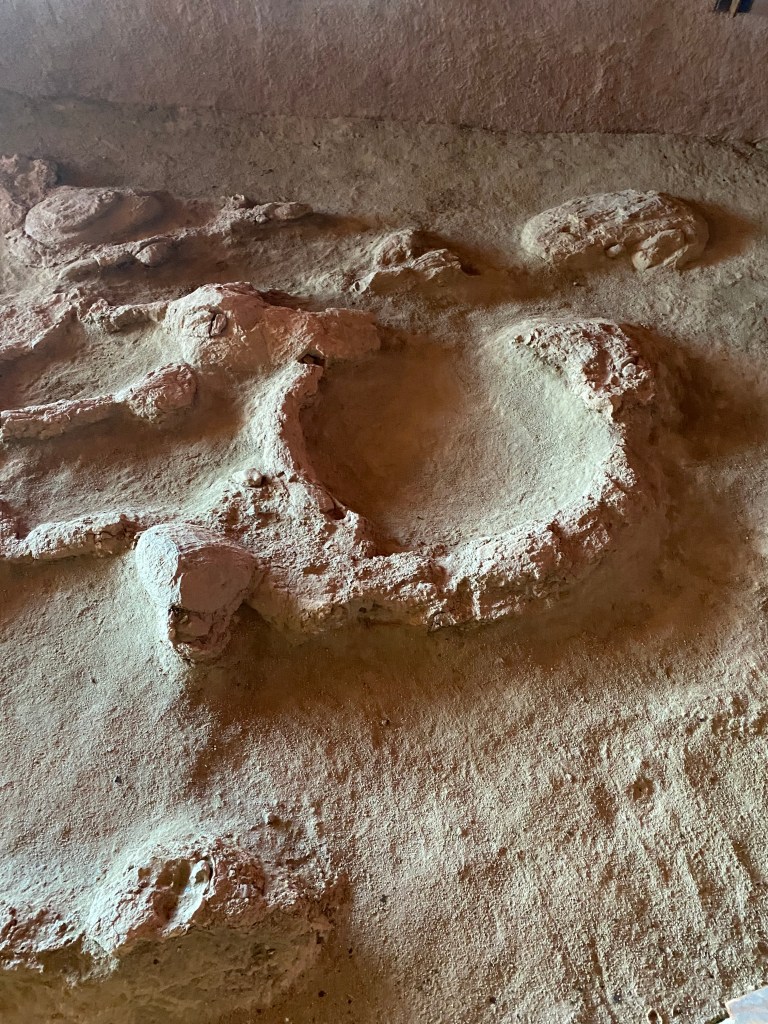
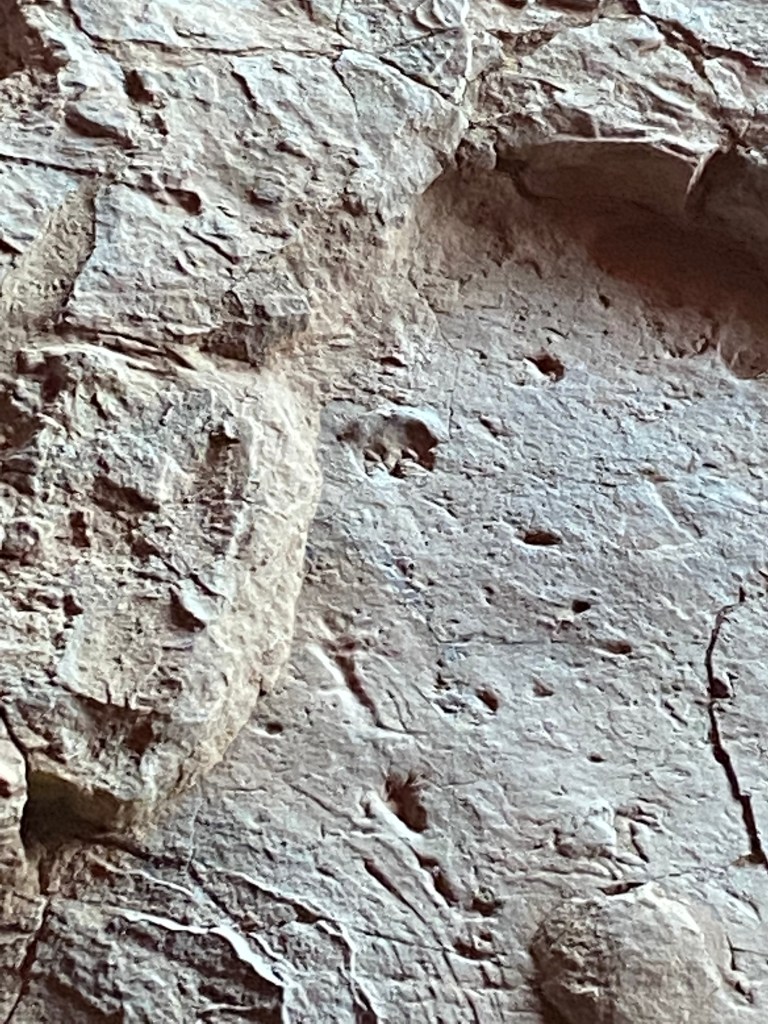
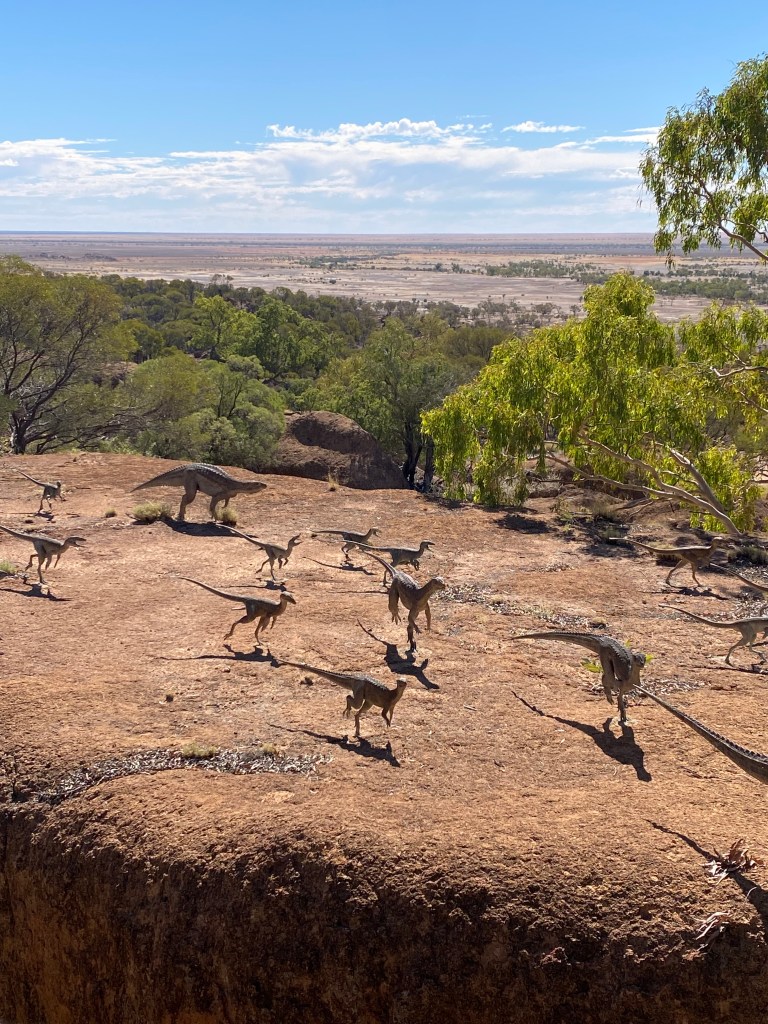
Our last tour for the day consisted of a short shuttle ride out to Dinosaur Canyon. Here we got to see actual dinosaur footprints, including sauropods, crocodiles, turtles. These footprints were transported piece by piece from over 100km away and re-assembled exactly as they were found.
Afternoon Wildlife
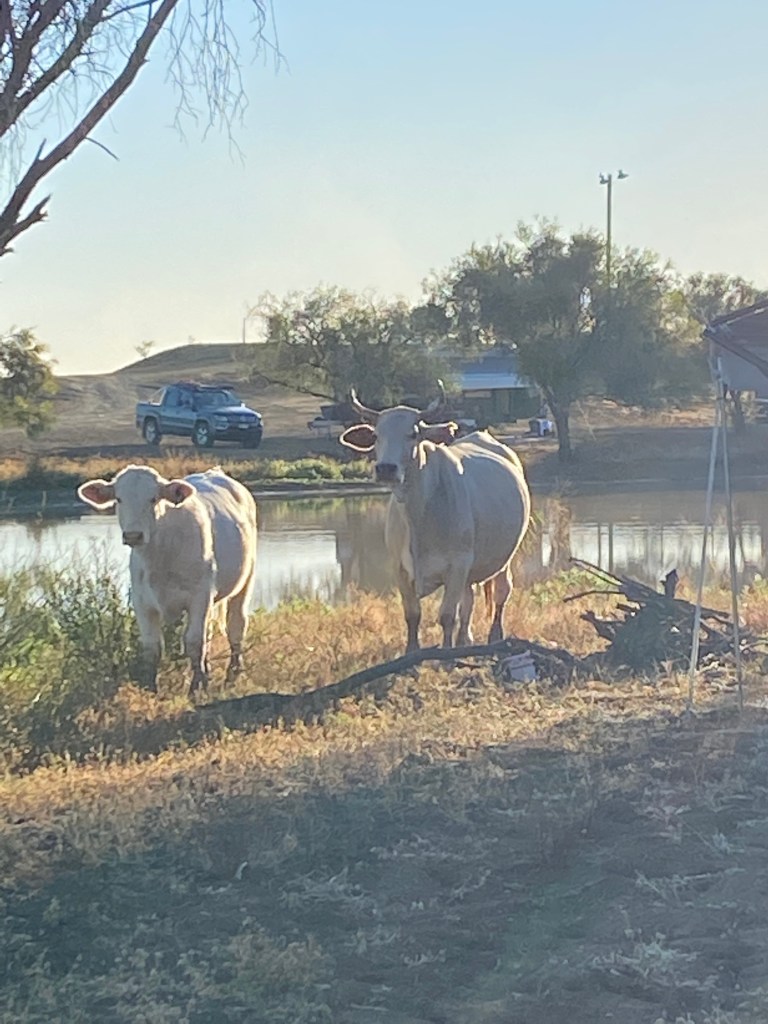
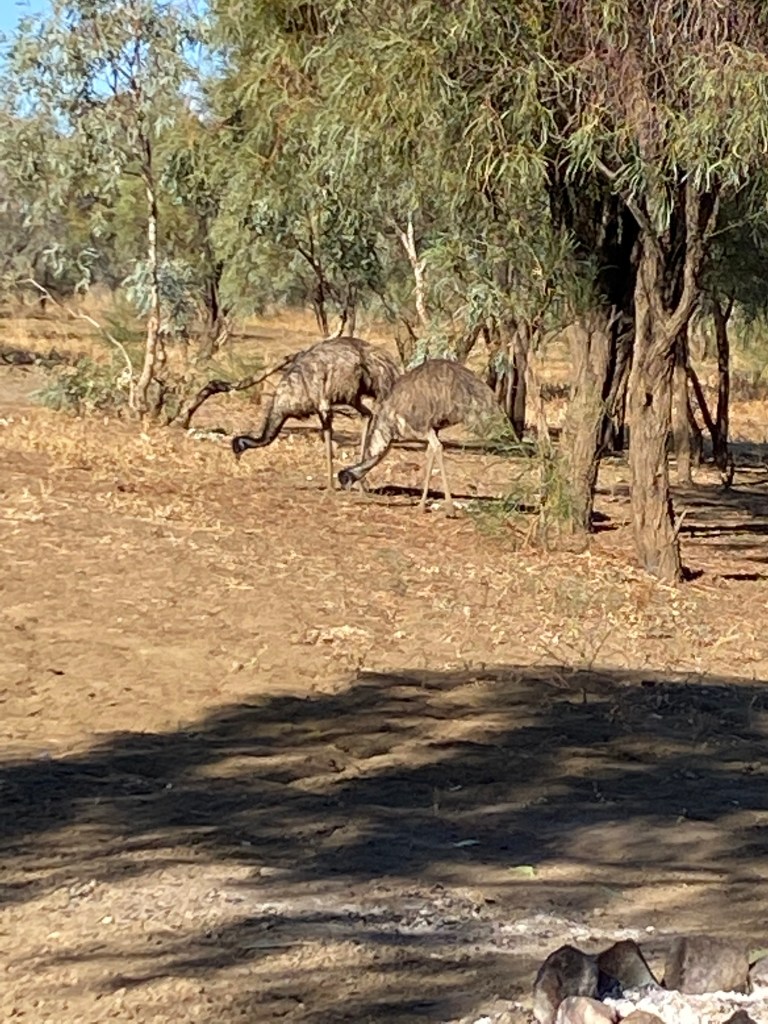
In the afternoon we were visited by some of the locals.

 morrisblog.travel.blog