Friday 21st May 2021
We had a little bit of a rough night with Madeline up with a tummy ache.
We got up and got ourselves together for our day trip to Kuranda. We packed the car and went to pick up Babcia and Dziadzio from their accommodation.
We arrived at Smithfield Skyrail at around 845 and got our tickets. We boarded the bus for Freshwater Station.
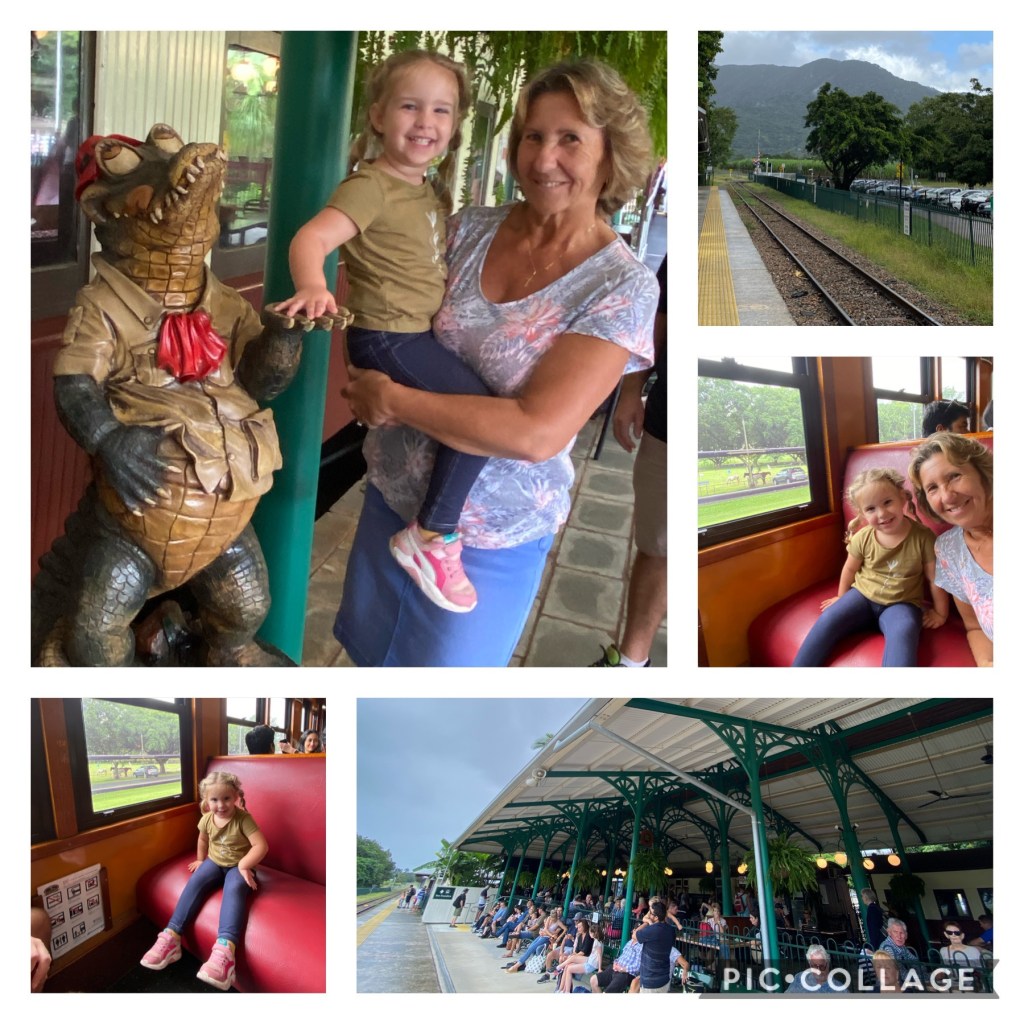
We arrived at Freshwater Station around 930 and waited for the Scenic Railway Train to arrive.
Freshwater Station
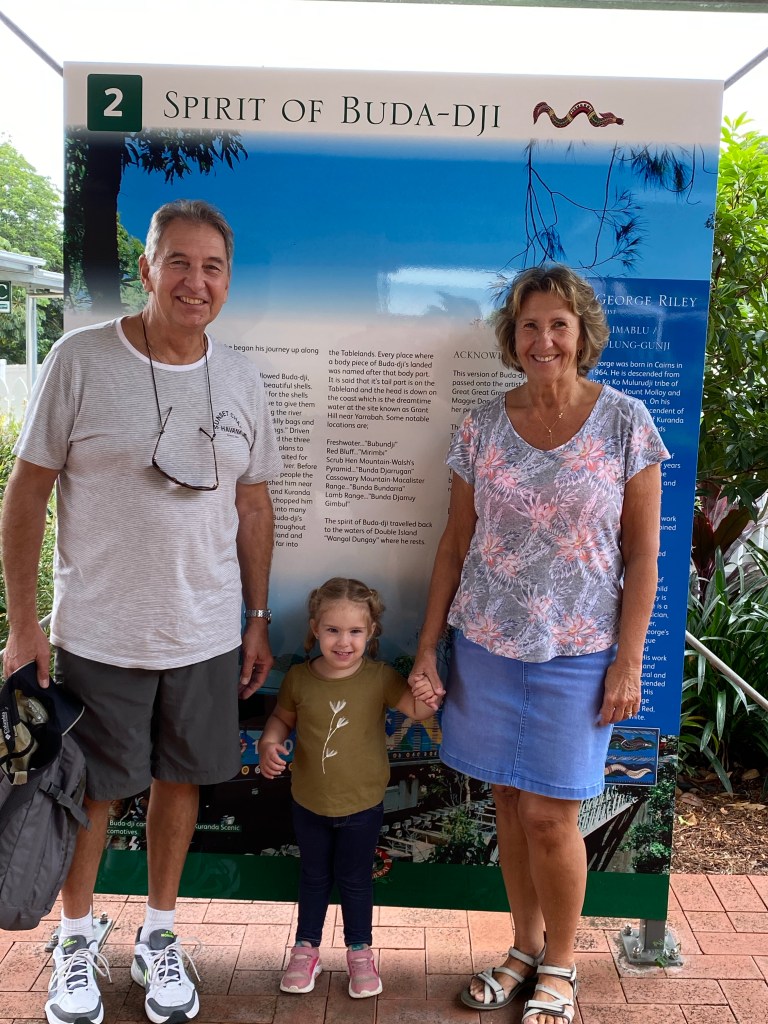
This was the first point where ‘fresh’ water could be obtained by the construction teams before heading up the Karanda Range.
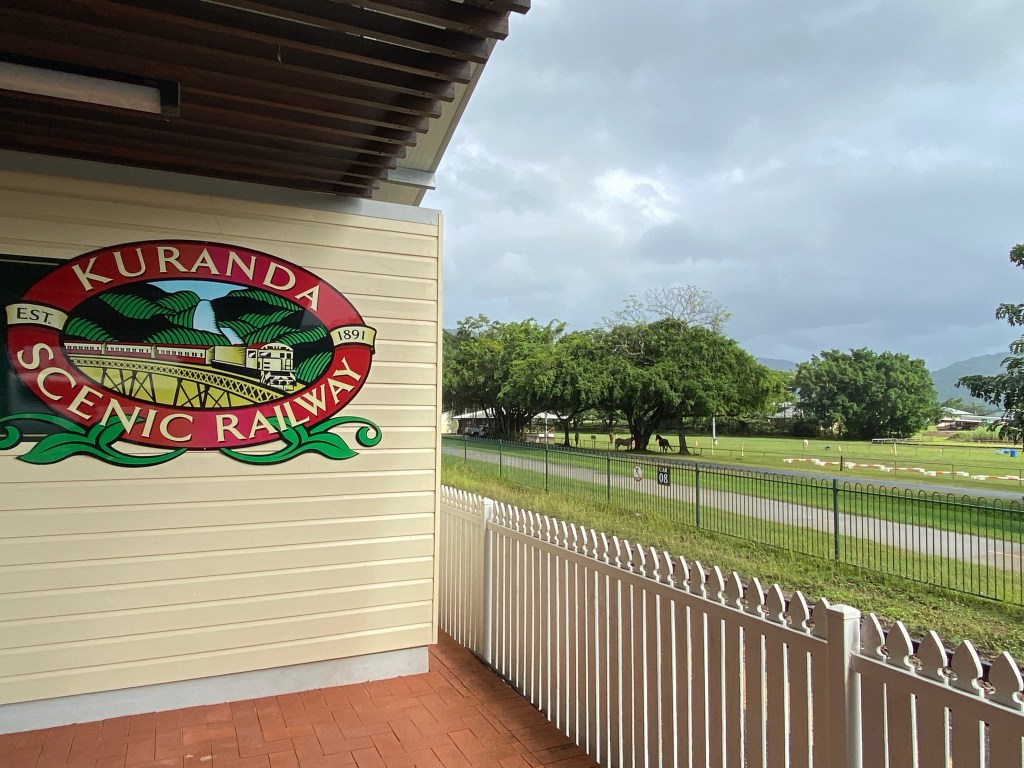
In 1984 Freshwater Connection was built as a tribute to the visionaries and pioneers who built the Kuranda Scenic Railway between 1887 and 1891.
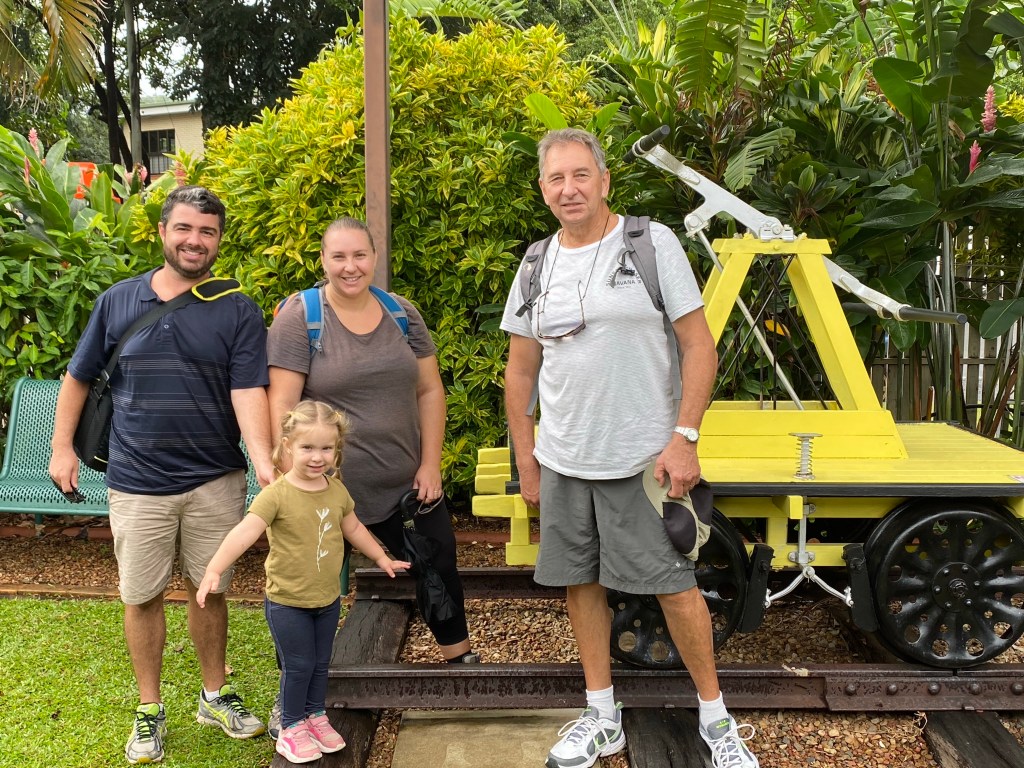
On display was an original pump cart once used on the Kuranda Railway Line.
The Sheffield Pumper, which was passenger powered, was used mainly for line maintenance and inspection. It also doubled as a mail and supply vehicle in time of floods and other natural disasters.
Why was the Railway built in the first place?
n 1873 gold was found on the Palmer River northwest of Cairns and started a frantic gold rush.
New townships blossomed across the Atherton Tablelands following further finds of gold at Hodgkinson and a rich vein of tin near Herberton.
The lifelines of these townships were rough pack horse tracks up from the coastal ports. However these tracks proved unreliable, and during the wet season of 1882 thousands of people came close to starvation.
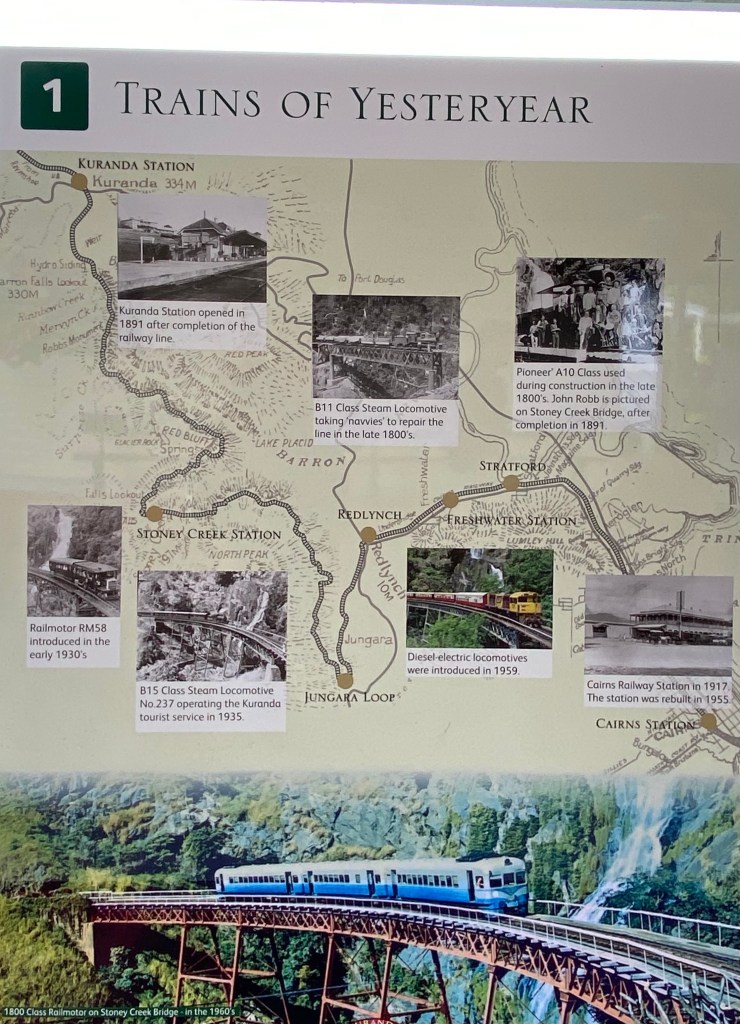
A railway over the mountains was decided the most reliable supply route, and so started one of the most ambitious projects in the history of Australia.
The successful contractor for this formidable second section was Melbourne engineer, John Robb.
It must have been a daunting prospect. There are nearly 2 kilometres of tunnels and over 2 kilometres of bridges, some built over ravines several hundred metres deep.
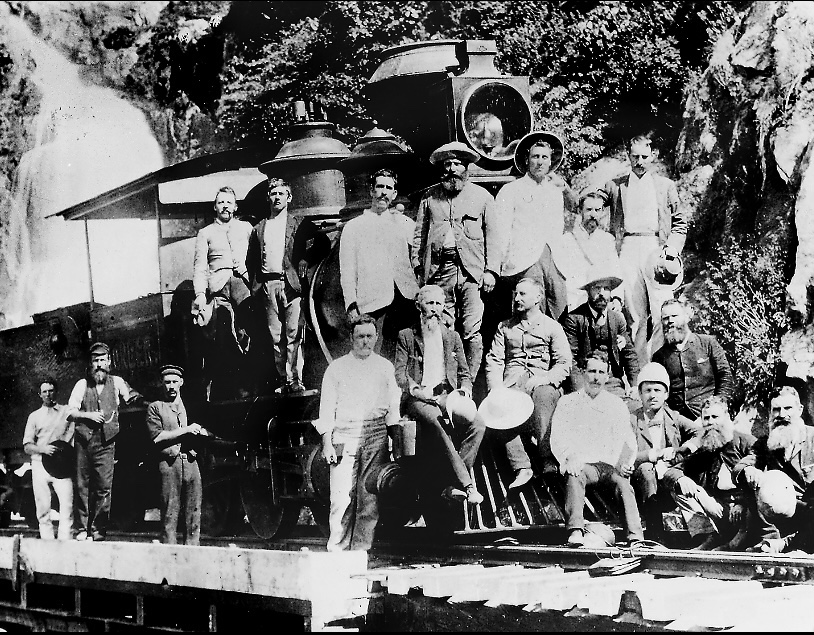
All tunnels and cuttings were dug with picks and shovels, after dynamite or gun powder was used to loosen the rock.
Around 2.8 million cubic metres of earth was moved by hand during construction of the railway.
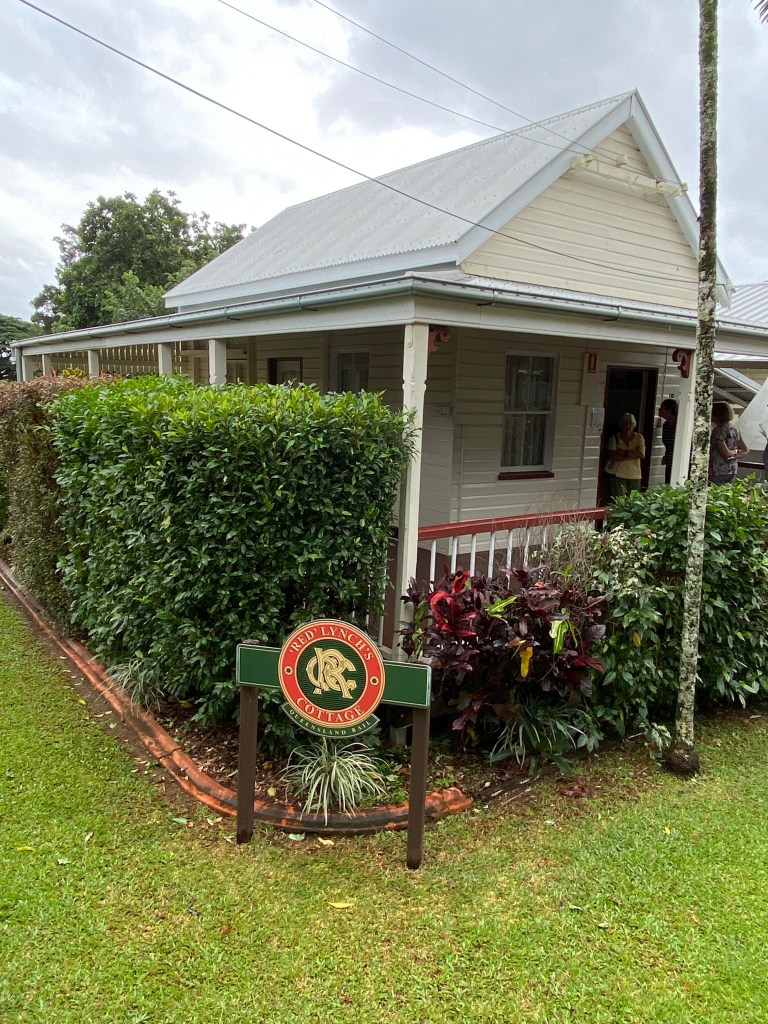
Redlynch Station
The first stage of the Cairns-to-Herberton railway line was from Cairns to a location that was known to the project as the Eight Mile Camp. This first stage opened in November 1887 at which time the railway station at the Eight Mile Camp was named Redlynch railway station.
During the Second World War, the area of Redlynch was the site of a large staging area for troops about to embark for the Pacific theatre of war. Also located here was a large military hospital and a malaria research facility. Some brave troops volunteered to be infected with the disease in the hope of finding a cure.
The Redlynch Staging Camp, or 16 Australian Personnel Staging Camp was located in the vicinity of Harley Street, Redlynch. Also know as a Leave and Transit Depot, the Redlynch site saw vast numbers of troops pass through its gates, en-route to New Guinea and later Borneo and the South-West Pacific.
Jungarra Loop
The train climbed up the mountain at approximately one metre in every fifty to an elevation of 327 metres. The line to Kuranda has; 15 tunnels, over 55 bridges, around 98 curves and through 153 cuttings.
Jungarra Loop is a 180 degree turn which is also known as Horseshoe Bend. This curve was built up above the surrounding terrain to allow trains to build speed for the ascent ahead.
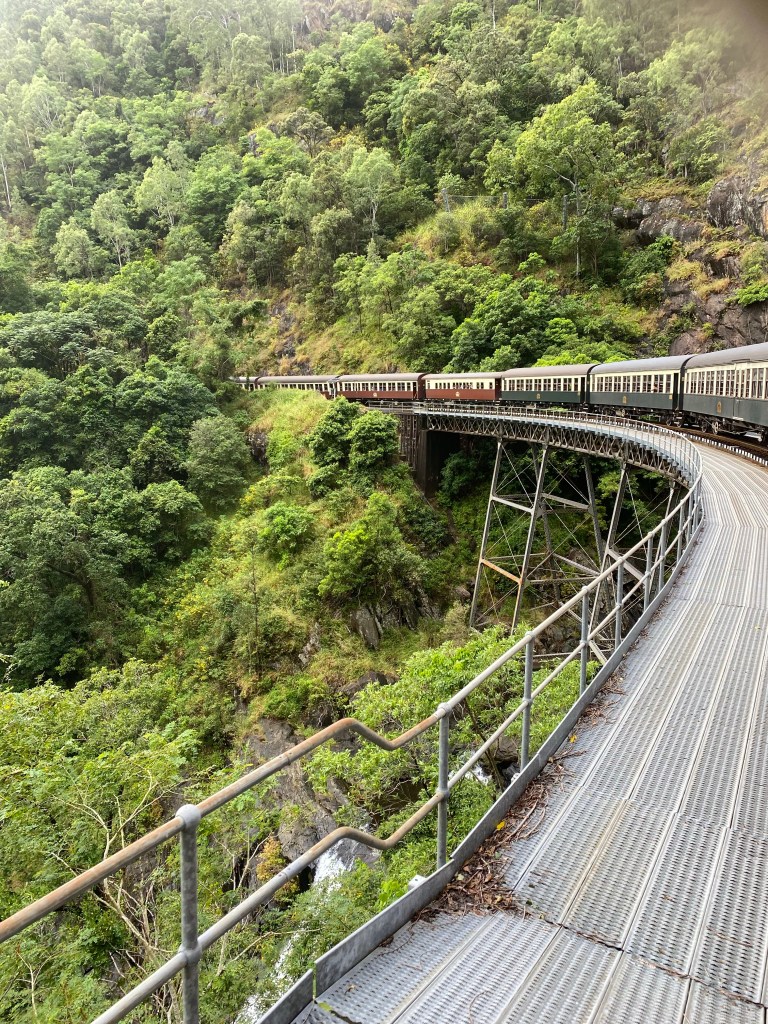
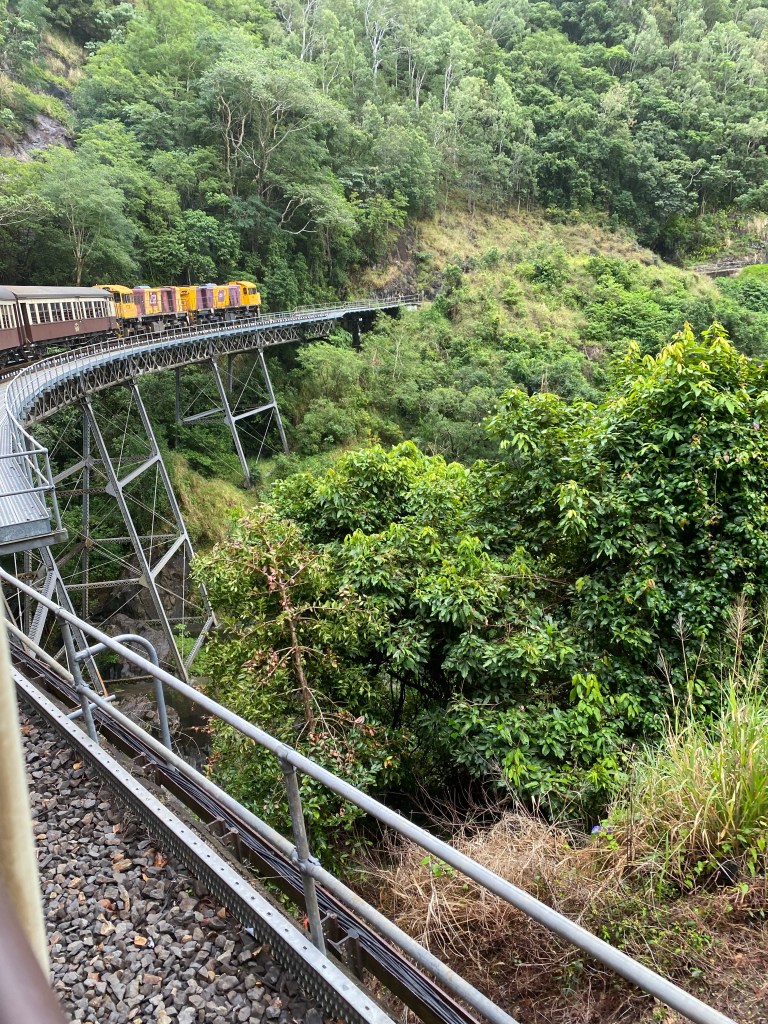
Coal-fired steam engines were operated on the line until 1967. Today Kuranda Scenic Railway is hauled by two 1720 class diesel electric locomotives, each emitting around 1000 horsepower.
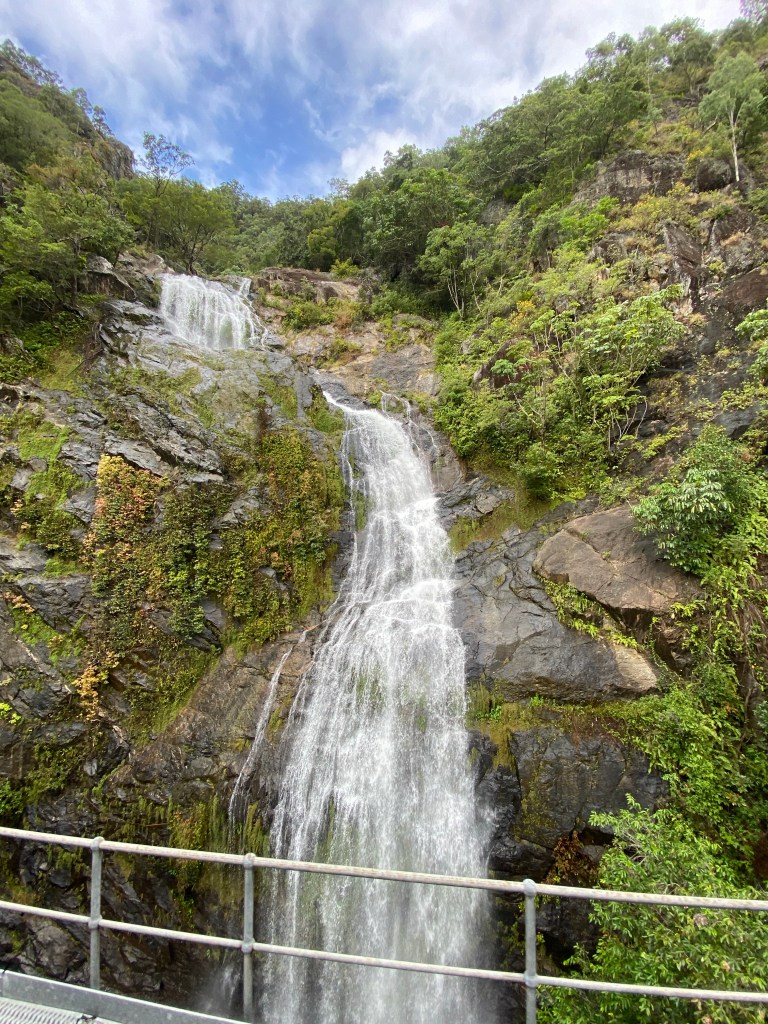
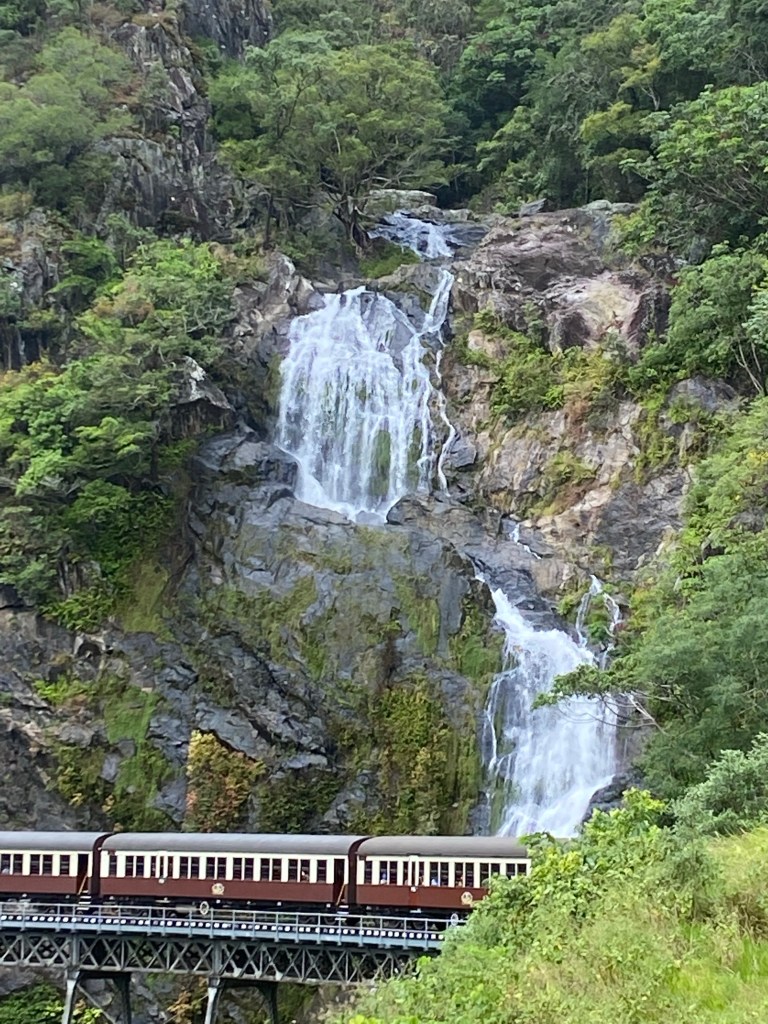
Stoney Creek Gorge
The large greyish outcrop of exposed granite is Glacier Rock and to its right is Red Bluff.
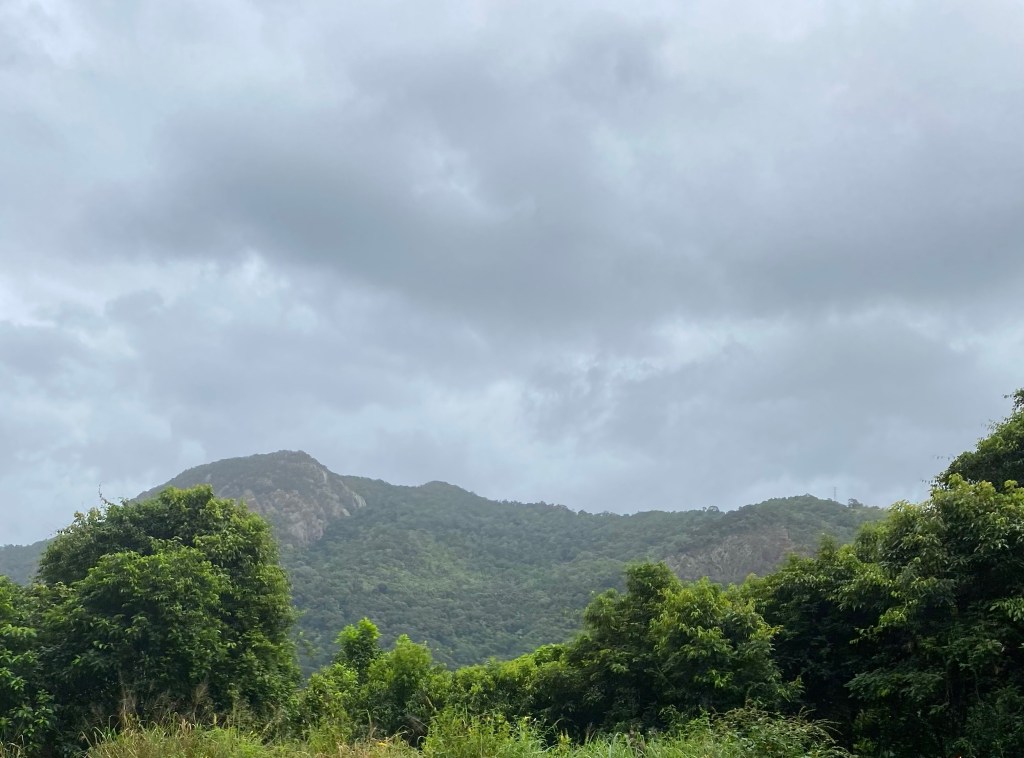
Stoney Creek Falls is seen as we passed through this section.
Barron Gorge
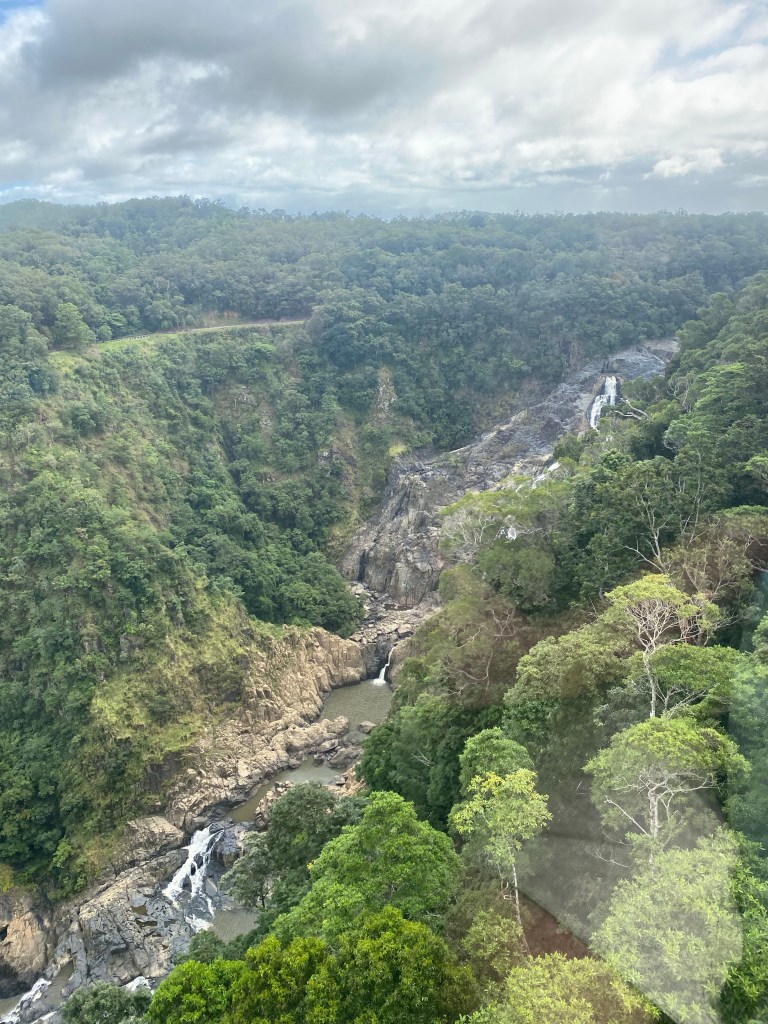
The Barron Gorge National Park was declared in 1940 and is a section of the Wet Tropics World Heritage Area.
The traditional inhabitants of this environmentally and culturally significant region are the Djabugay people.
At the bottom of the gorge is the Barron Gorge Hydro Electric Power station. The power of water flowing over Barron Falls was first harnessed in 1935 and as Australia’s first underground power station.
Barron Gorge Station
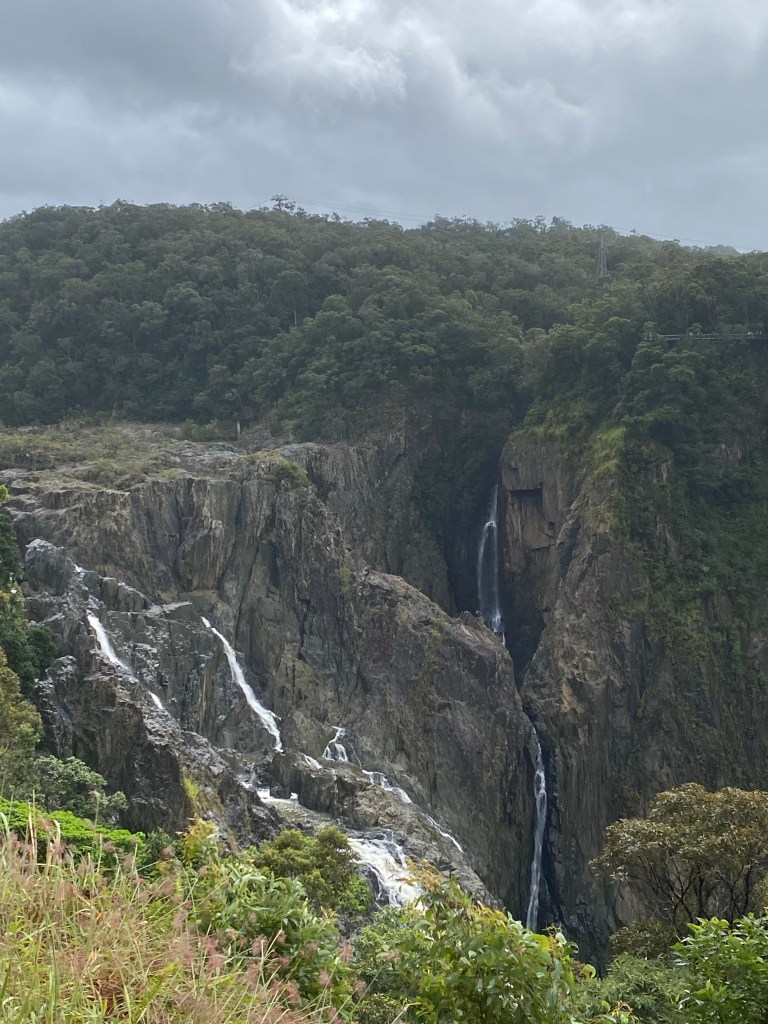
Until 1958, the Barron River was a raging torrent, but since the construction of Tinaroo Dam, the water has been contained and used for irrigation purposes on the Atherton Tablelands.
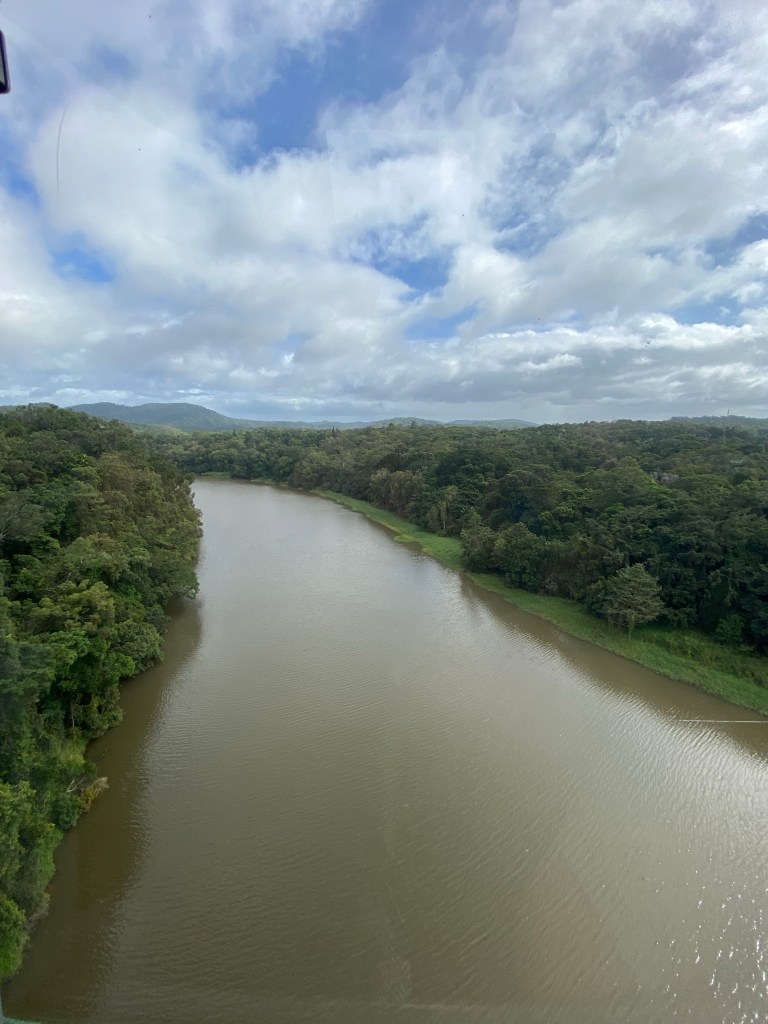
However when the Barron River is in flood, an enormous volume of water gushes over the falls and drops 265 metres, creating a spectacular eruption of water and mist.
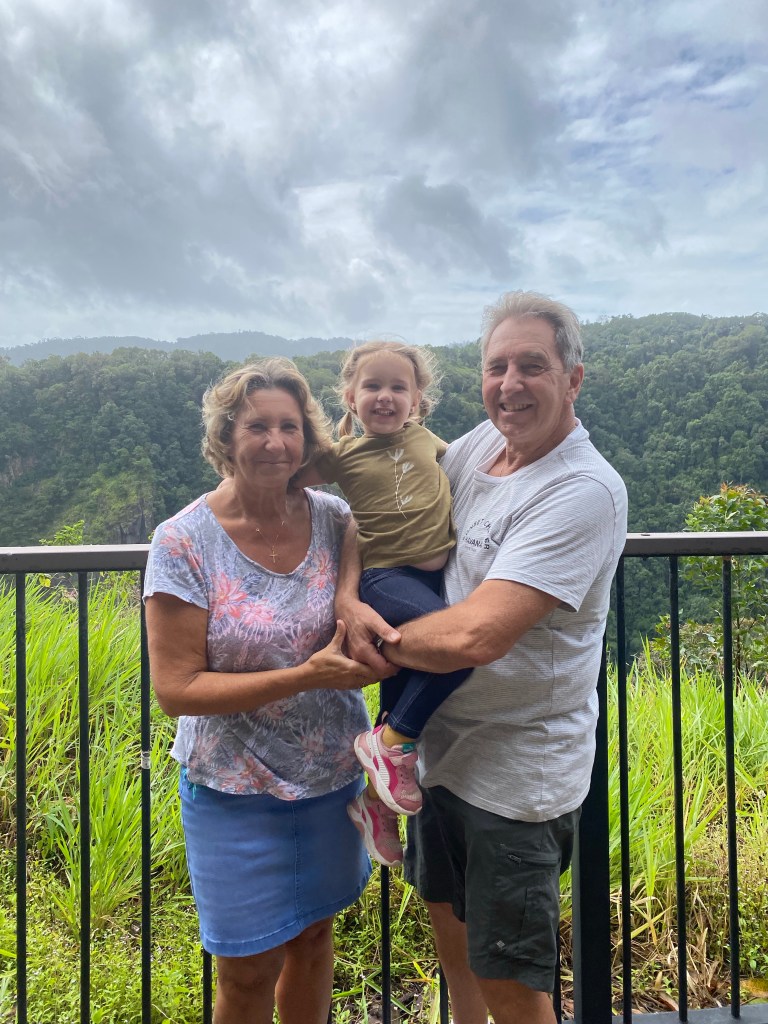
Kuranda
Kuranda is a rural town and locality on the Atherton Tableland in the Shire of Mareeba, Queensland.
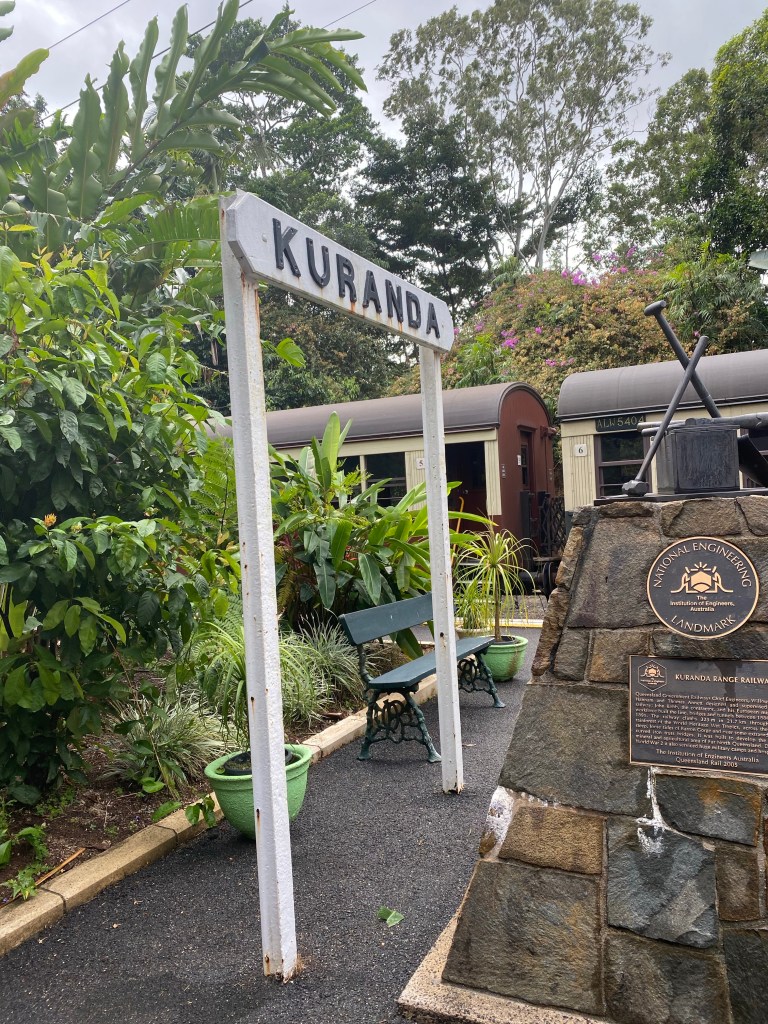
It is known as the village in the rainforest and is gone for alternative and eclectic lifestyle.
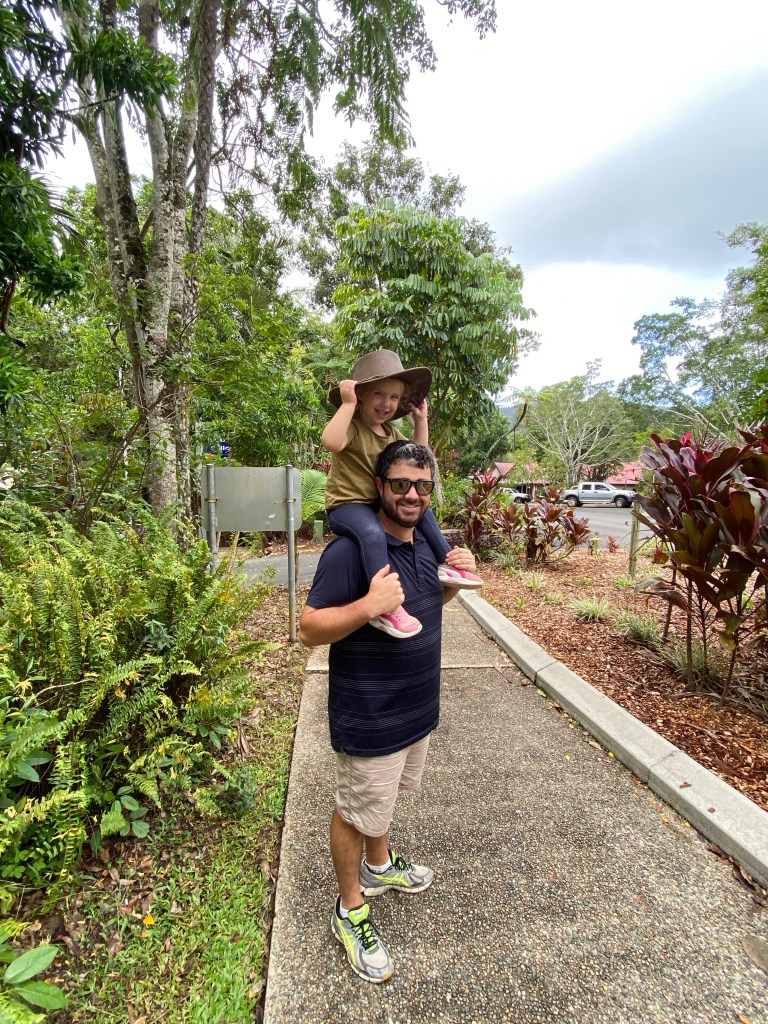
We walked around the town for several hours taking in the village and local shops.
Skyrail
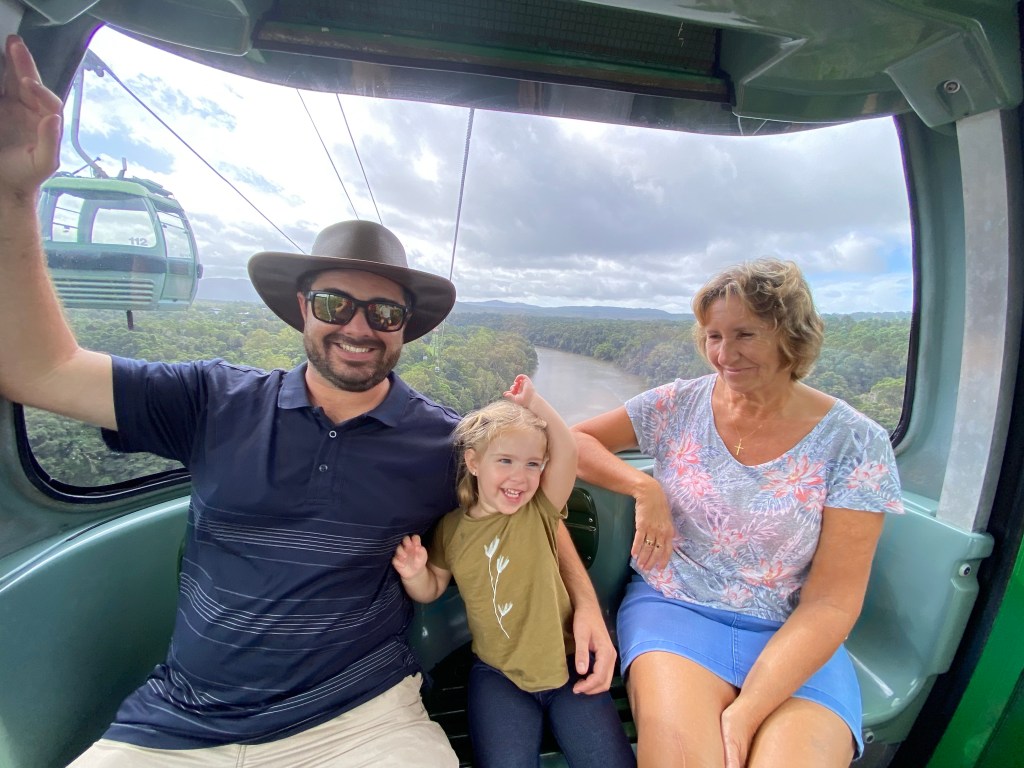
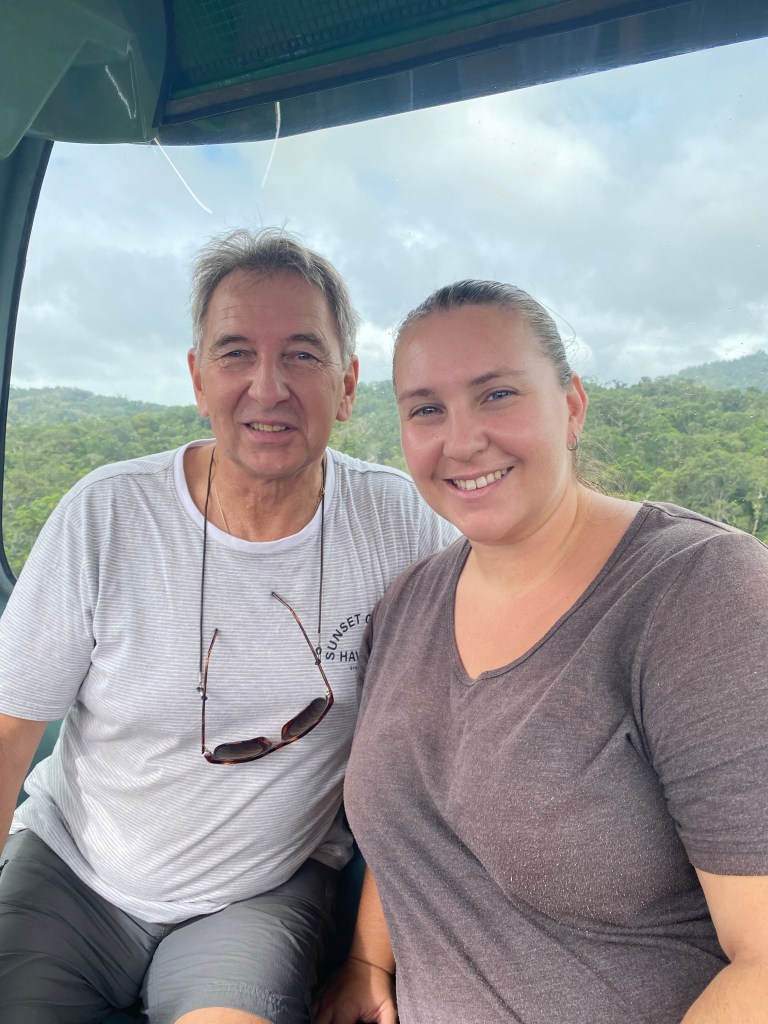
We returned to the car via the Skyrail, which is a cable car.
The afternoon
We arrived at the car around 330 and drove back to the accommodation. We had dinner together and Madeline decided she wanted to spend the night with Babcia and Dziadzio.
Tomorrow
We have no specific plans for tomorrow and will take the day as it comes.

 morrisblog.travel.blog