Wednesday 16th April 2025
Today we awoke in Albury after a great night sleep at the Commadore Motor Inn. It was a cool morning around 10 degrees, but was quite comfortable indoors.
The girls enjoyed playing in the hotel room and watching some ABC iView before breakfast. We enjoyed a takeaway breakfast from Willow and Co Coffee Shop, Albury. Their brioche bacon and egg bun was so yum with a beautiful tomato relish.
We left the hotel after breakfast around 830am for the local Aldi to shop for some of our perishable goods. We left around 930am to head to the Farm House to unpack and settle in.
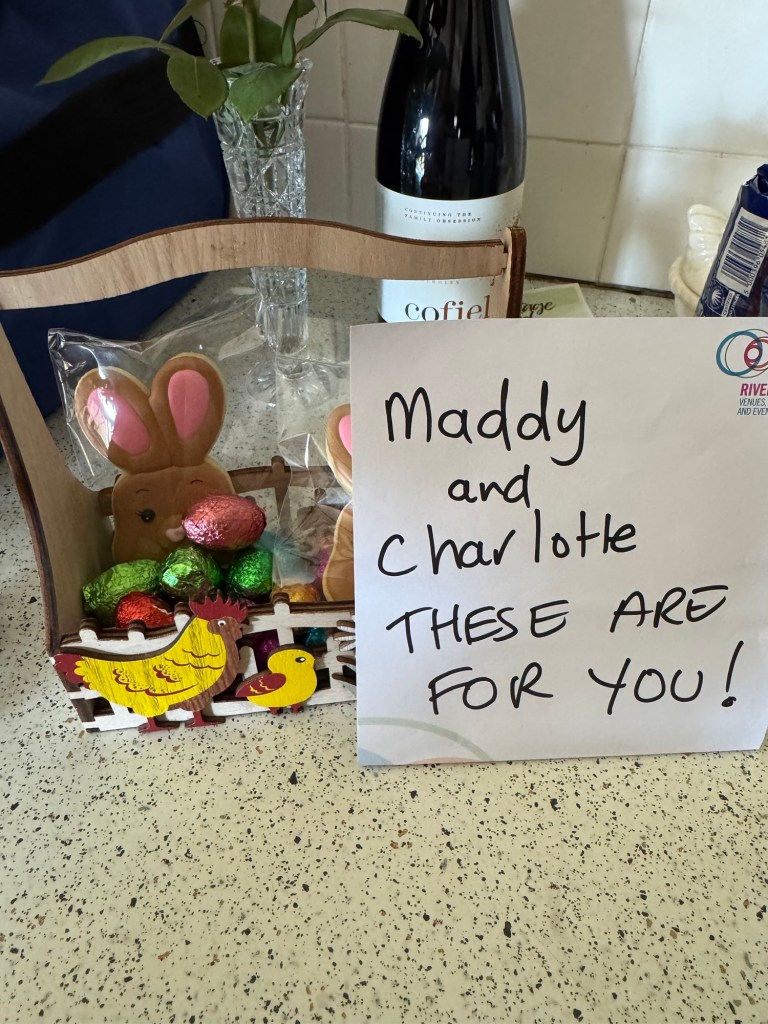
We arrived, unpacked and then got on our work boots to go and feed the Alpacas.
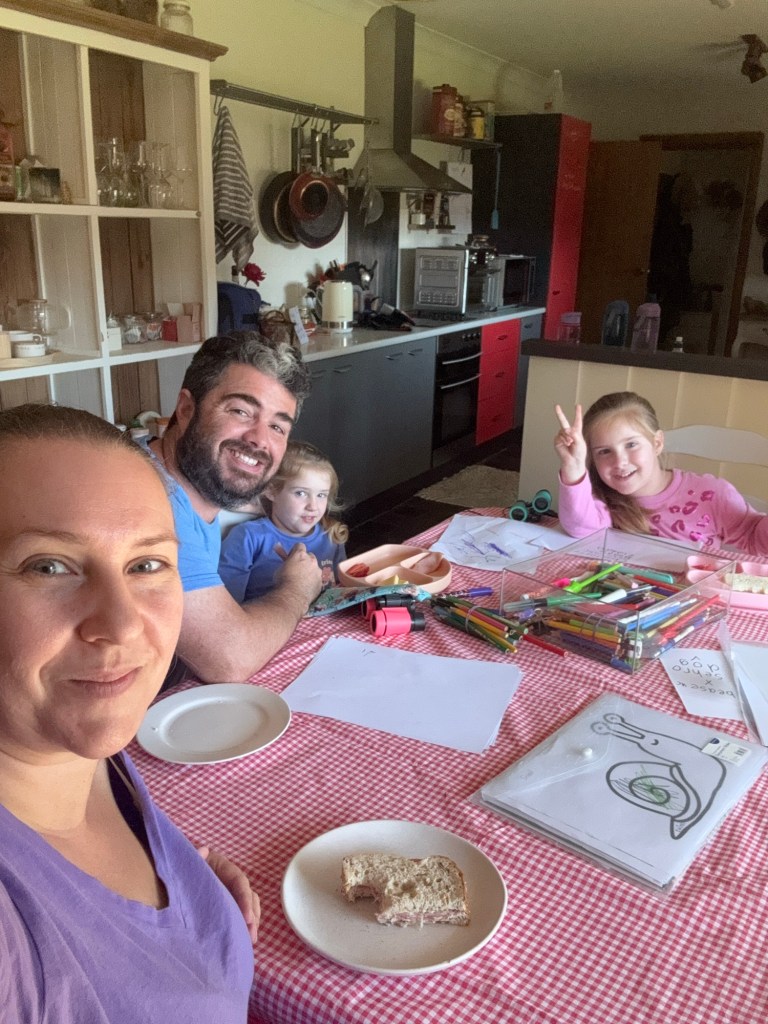
After our morning look around we retired inside to do some drawing.
Eva prepared schnitzels for dinner while Jason took the girls outside to play with a frisbee and walk up to see the horses.
We sat down for lunch together.
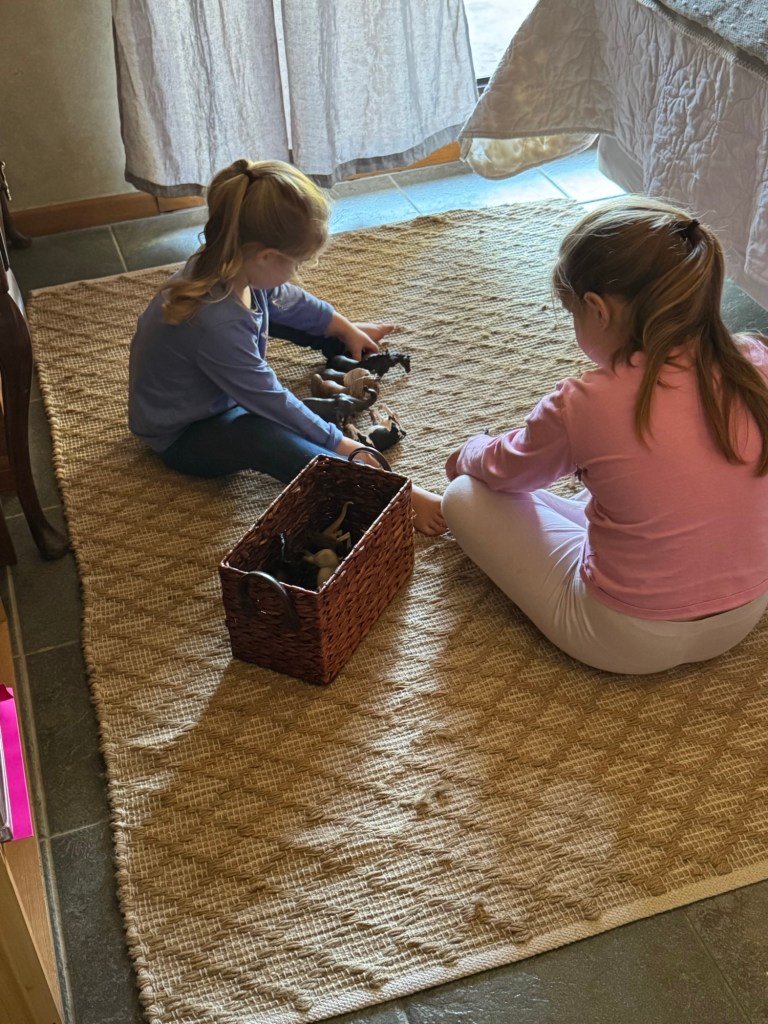
The girls played with some of the toys the owners bought and left for them to play with.
Late afternoon was spent watering the garden, veg patches and grass. We got our work boots on again and headed out to feed the animals their night food.
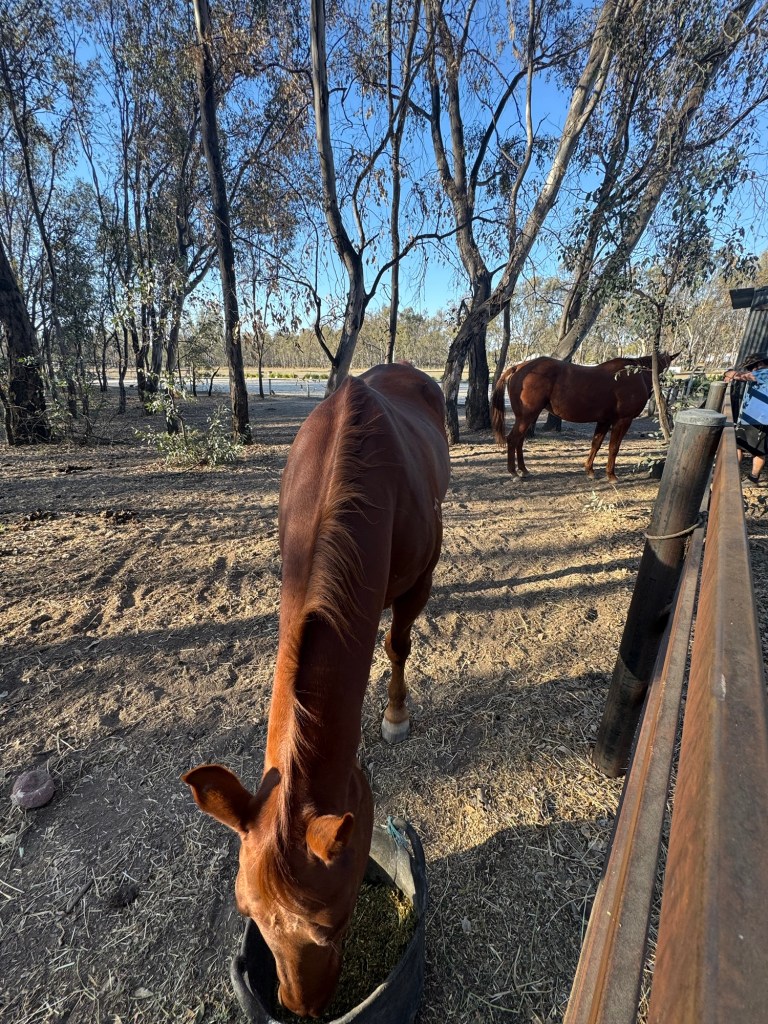
After feeding the animals the girls had a bath. We all cleaned up for dinner time.
Today was a great introduction to life on a small hobby farm.
Tomorrow we are looking forward to some excitement in Albury in the afternoon.
We are hoping to explore the Pioneer Village in Jindera in the coming days, which will help shape our understanding of the history of the township Jindera.
Jindera History
Jindera was gazetted as a town in 1869.
Prior to the arrival of Europeans the area around Jindera was inhabited by the Wiradjuri people.
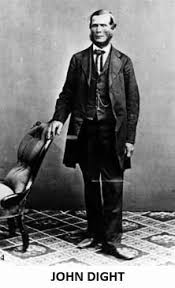
It was a friend of Hamilton Hume, a settler named John Dight, who, hearing of the richness of the area, arrived and occupied 45,000 acres (18,220 ha) only 2.5 km north of the present day Jindera.
Some time in the 1840s a wattle and daub hut was built on the site of the village. It now stands in the Jindera Pioneer Museum and claims to be the oldest building in the Albury Shire.
A wattle and daub hut is an ancient building method where a woven lattice of wooden strips (wattle) is covered with a sticky material, typically mud, clay, sand, and straw (daub), to create walls.
In 1867 German settlers travelled from South Australia along the Murray River in horse-drawn wagons searching for land. They settled in Walla Walla and Jindera.
The 56 German settlers that arrived camped at the Four Mile Creek to access a good supply of running water. A Pioneer Cairn has been erected on the site of that original camp.
In 1874 Peter Wagner and Johann Rosler built the three room residence and general store now known as Wagner’s Store.
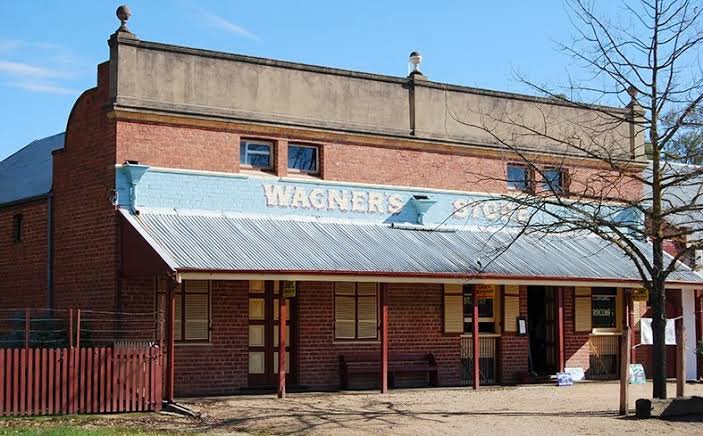
By the late 1880s Jindera had four hotels, a butcher, baker, saddler, carpenter, dressmaker, police station and a flour mill.
On 5 October, 1968 Wagner’s Store became the Jindera Pioneer Museum. It was opened by Russell Drysdale, the famous painter.
Today Jindera is an expanding residential town only 15km from Albury, and is the perfect place for residential subdivisions as well as rural living lots.

 morrisblog.travel.blog