Tuesday 29th March 2022
Today we left Perlubie Beach after an awesome 2 nights.
We woke to a still morning today. Packing up the caravan we were heading further south east today to Streaky Bay.
We drive to our caravan park where we met up with Babcia and Dziadzio. We will stay two nights here. We went shopping while the girls stayed with their grandparents.
We returned and had lunch before leaving on a scenic drive called the Bauer Loop.
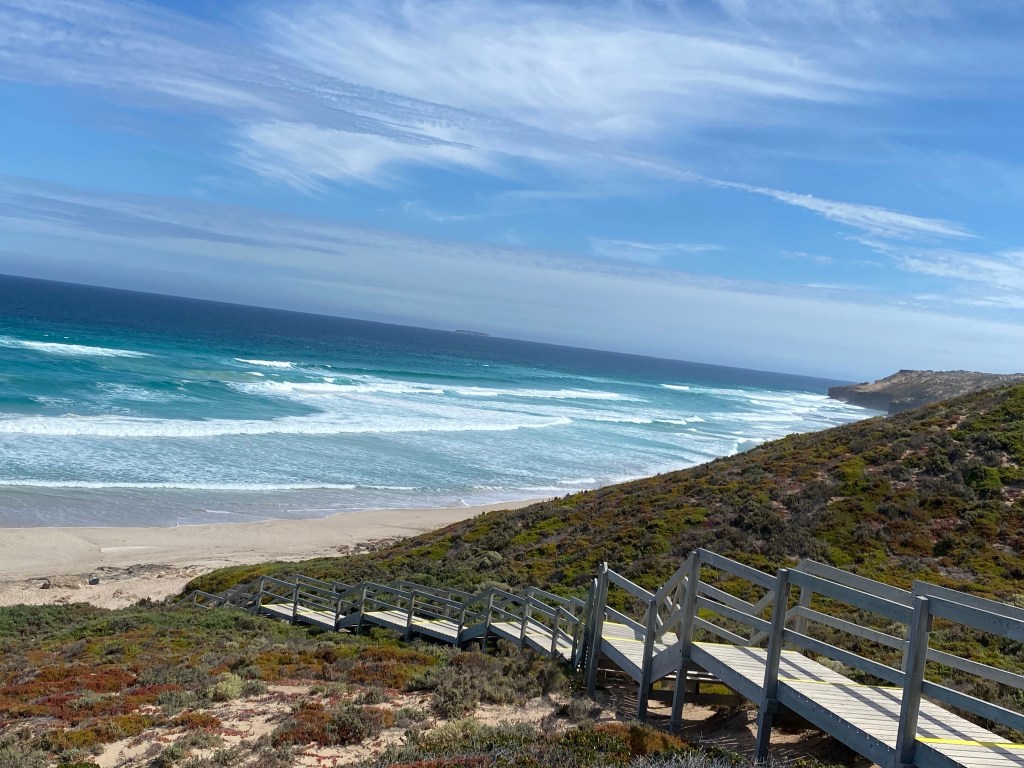
The first stop was Halley’s beach. It’s a pristine strip of coastline with rolling sand dunes.
We then moved on to the Whistling rocks and blowholes. These are made by erosion of vertical fractures in the limestone rock. The erosion creates a verticals tunnel in the rock. The swell of waves forces either air under pressure (whistling) or water (blowhole) up through these tunnels.
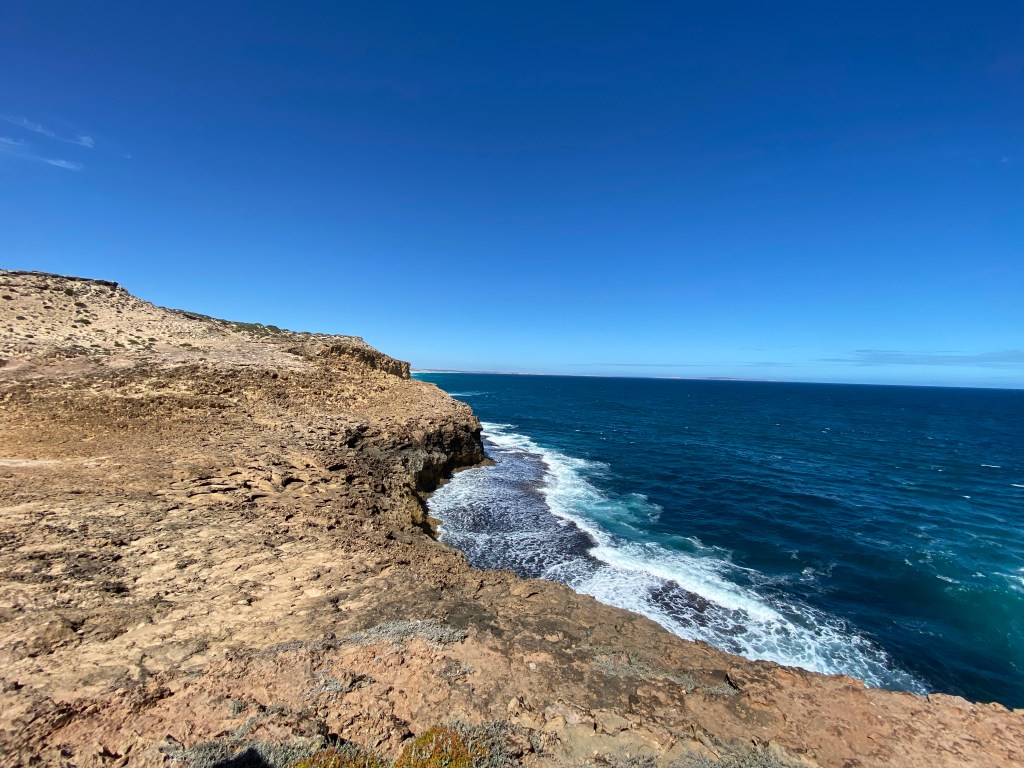
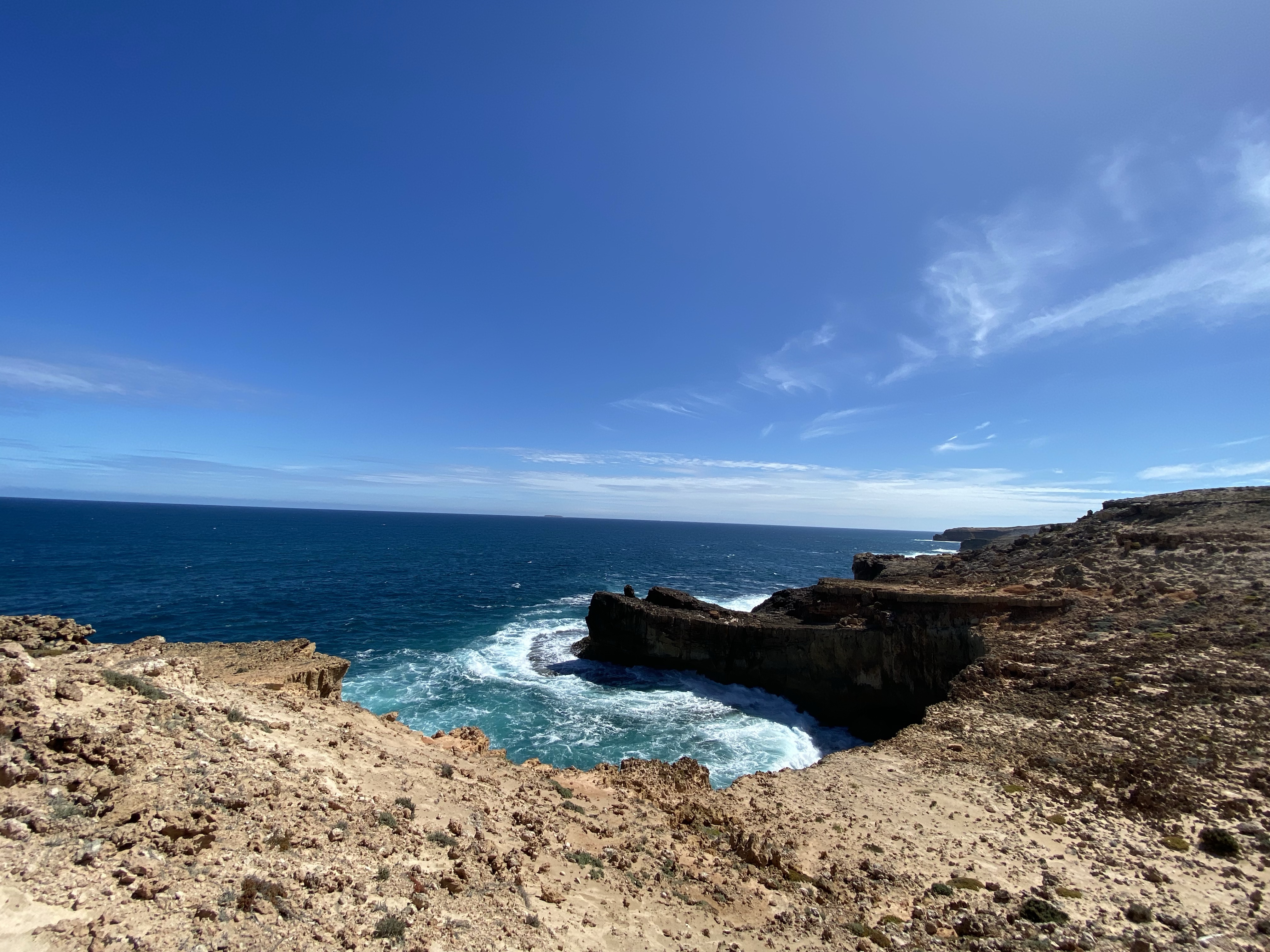
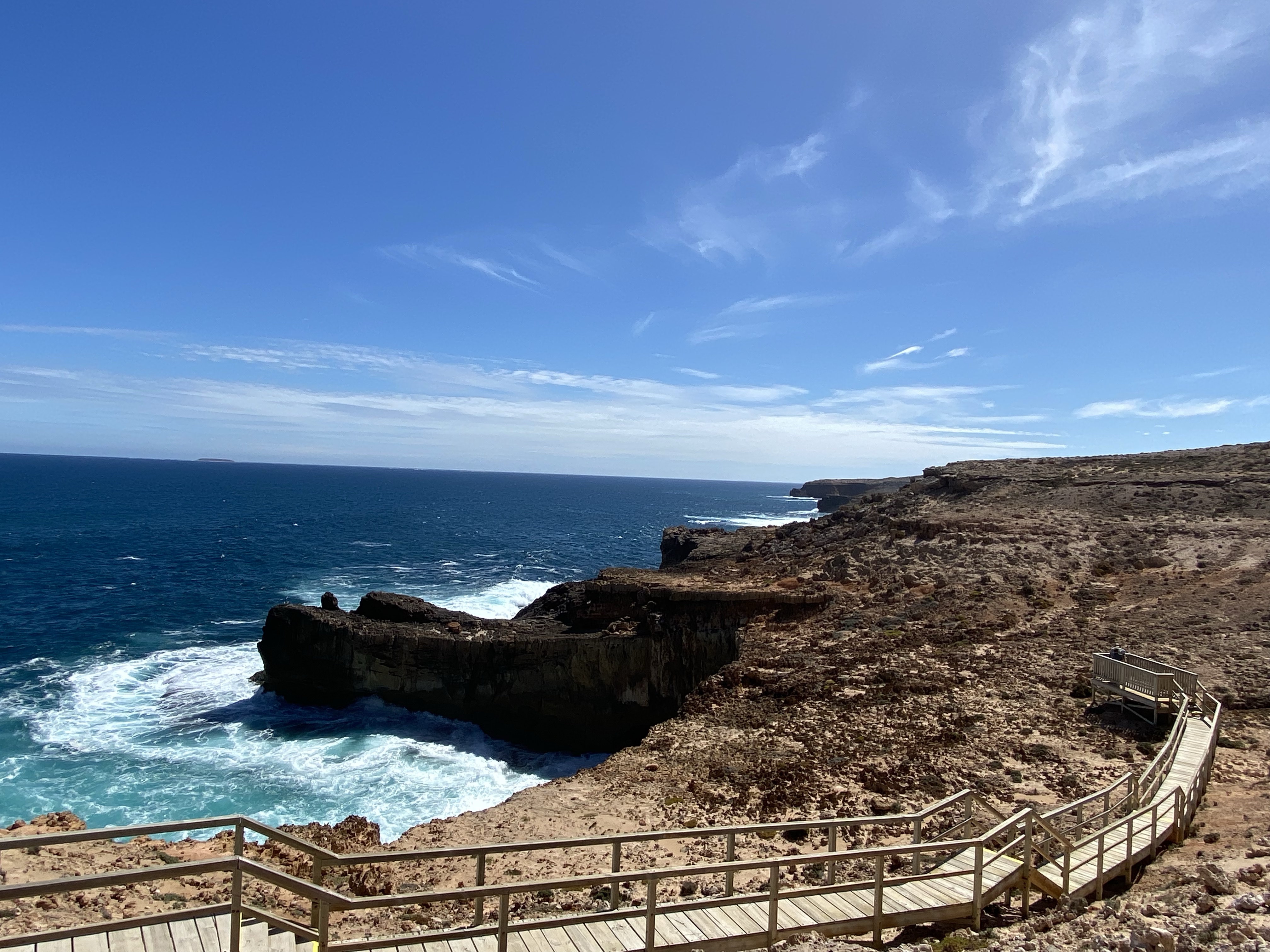
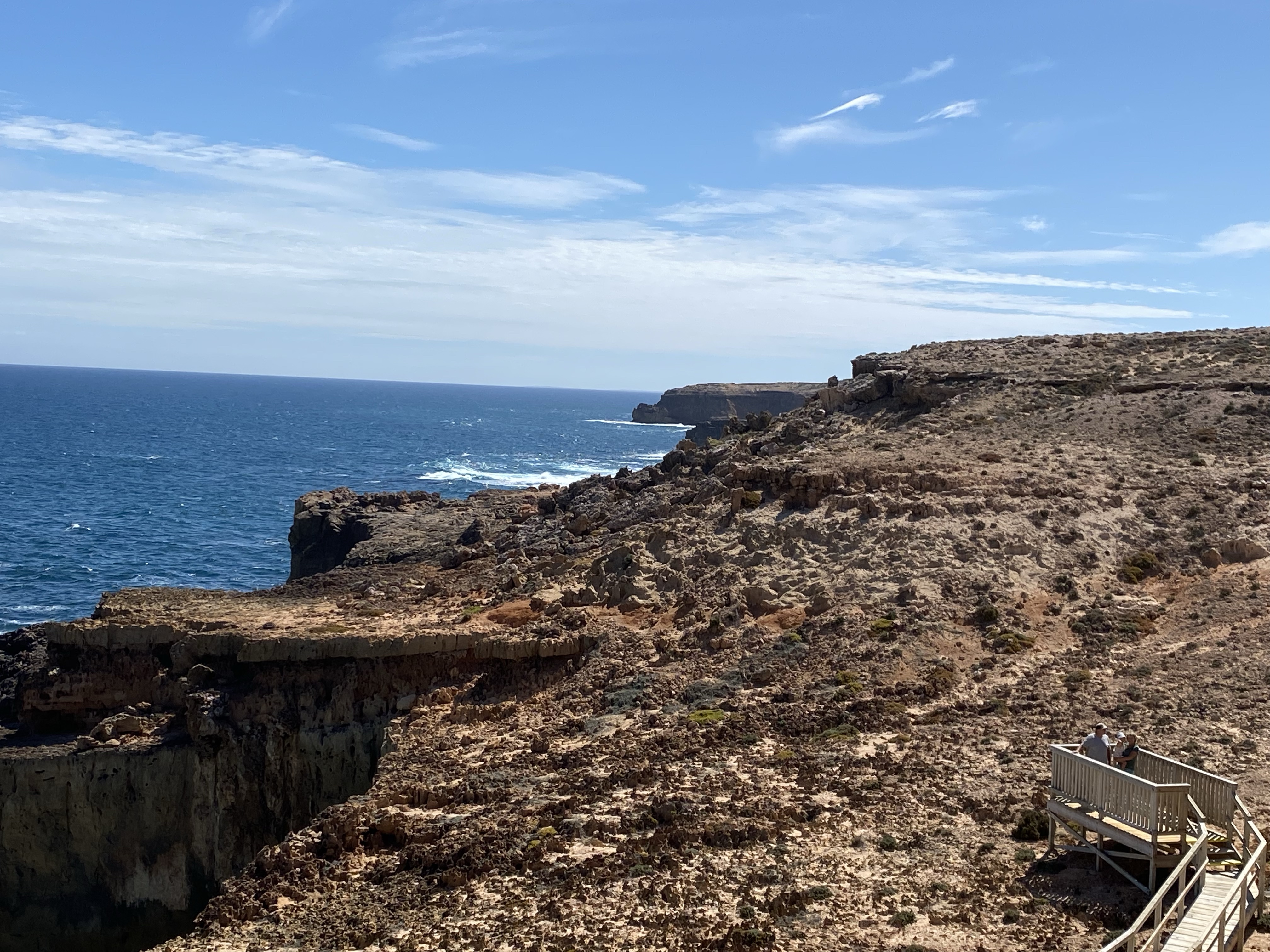
Then we moved to Cape Bauer lookout. Cape Bauer was named by Captain Matthew Flinders in 1802, after an Austrian artist of Natural History. Ferdinand Bauer recorded the fauna and flora encountered on the expedition.
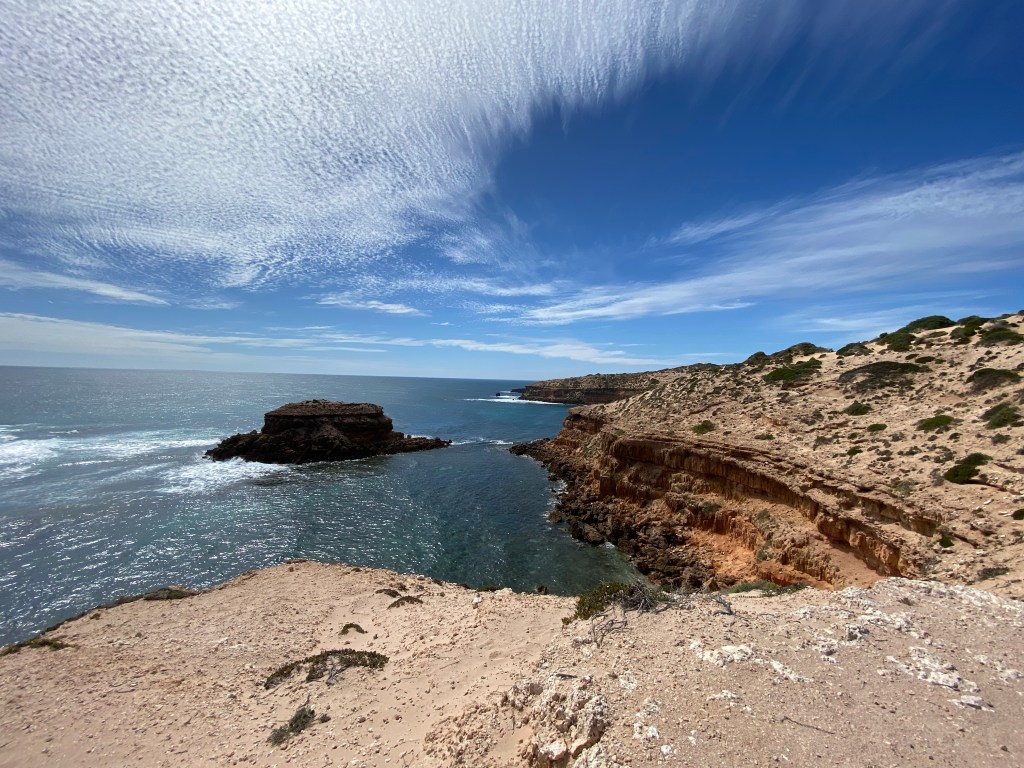
Lastly we stopped along the Gibson Peninsula. Here we walked the shallow beach and Jason did a spot of fishing. Another animal was fishing too…a shark in the shallows.
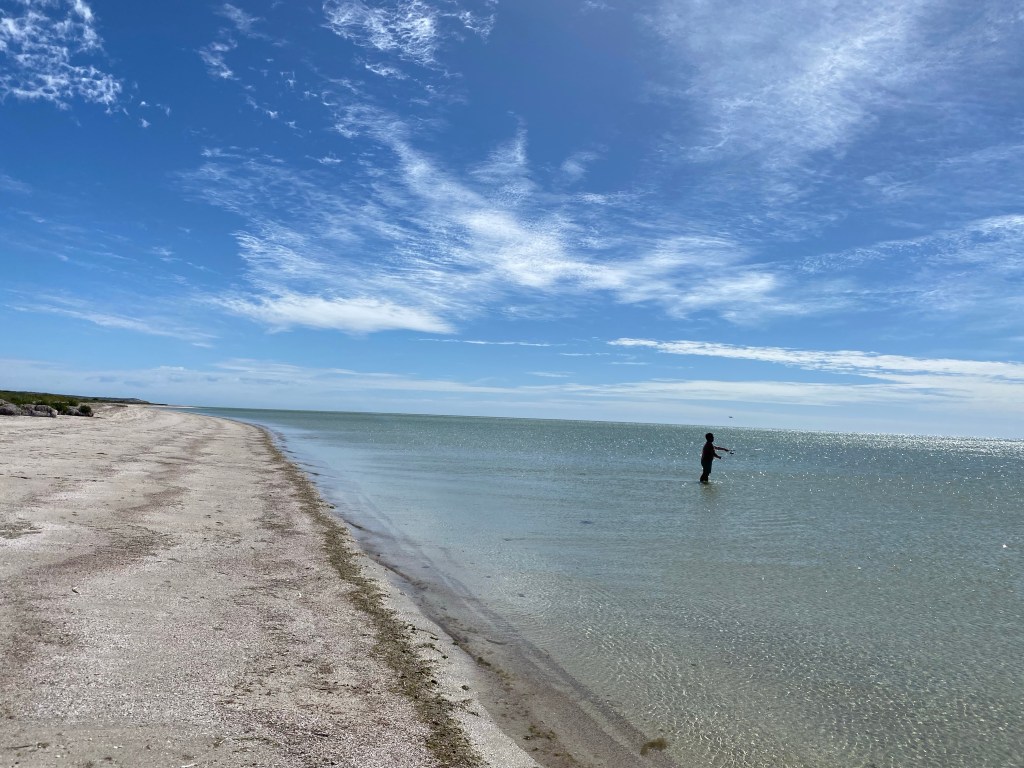
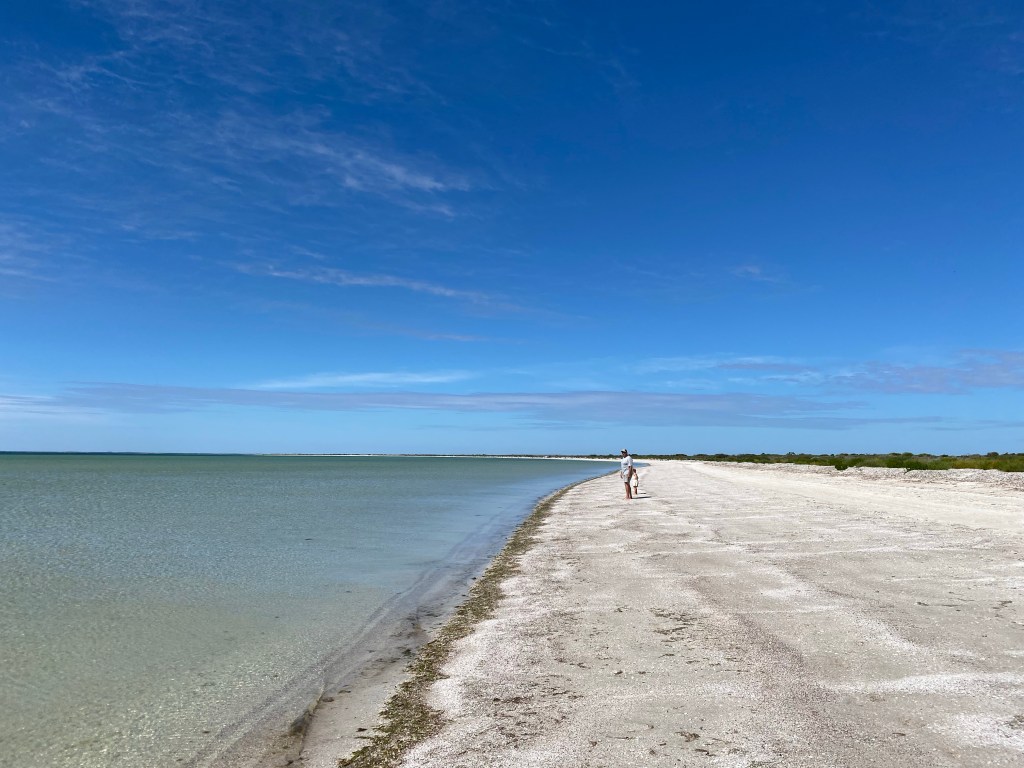
Streaky Bay
For many thousands of years, the area around Streaky Bay has been inhabited by the Wirangu people.
In 1627, Dutch explorer Pieter Nuyts, in the Gulden Zeepaard (Golden Seahorse), became the first European to sight the area. A monument has been erected on the median strip in Bay Road.
In 1802, Matthew Flinders named Streaky Bay whilst on his voyage in the Investigator. In his log of 5 February 1802, he notes:
“And the water was much discoloured in Streaks… and I called it Streaky Bay.”
Captain Matthew Flinders
It is now thought these streaks are caused by the release of oils by certain species of seaweed in the bay.
25 August 1839, Edward John Eyre, who had explored overland from Port Lincoln. He arrived at the locality and established a small base about 3 kilometres from what is now the Streaky Bay Township. That site, known as Eyre’s Waterhole, is listed on the South Australian Heritage Register.
Pastoralists moved into the area from 1854. The town was officially proclaimed in 1872. It was originally called Flinders, but was changed to Streaky Bay in 1940, to reflect local usage of the name.
Wheat growing began in the 1880s and, by 1906, 31,000 bags of wheat and 470 bales of wool had been exported from Streaky Bay by ship.
Tomorrow
We do another scenic drive called Westall Loop and drive to Pt La Batt sea lion colony.

 morrisblog.travel.blog