13th January 2022
The Defence of Darwin Experience, the story of Darwin’s role in World War II.
The Darwin Military Museum (DMM) was established as the NT’s first museum by members of the Royal Australian Artillery Association Northern Territory (RAAANT) in 1969 to exhibit
photographs and artefacts from Darwin’s history during World War Two (WW2).
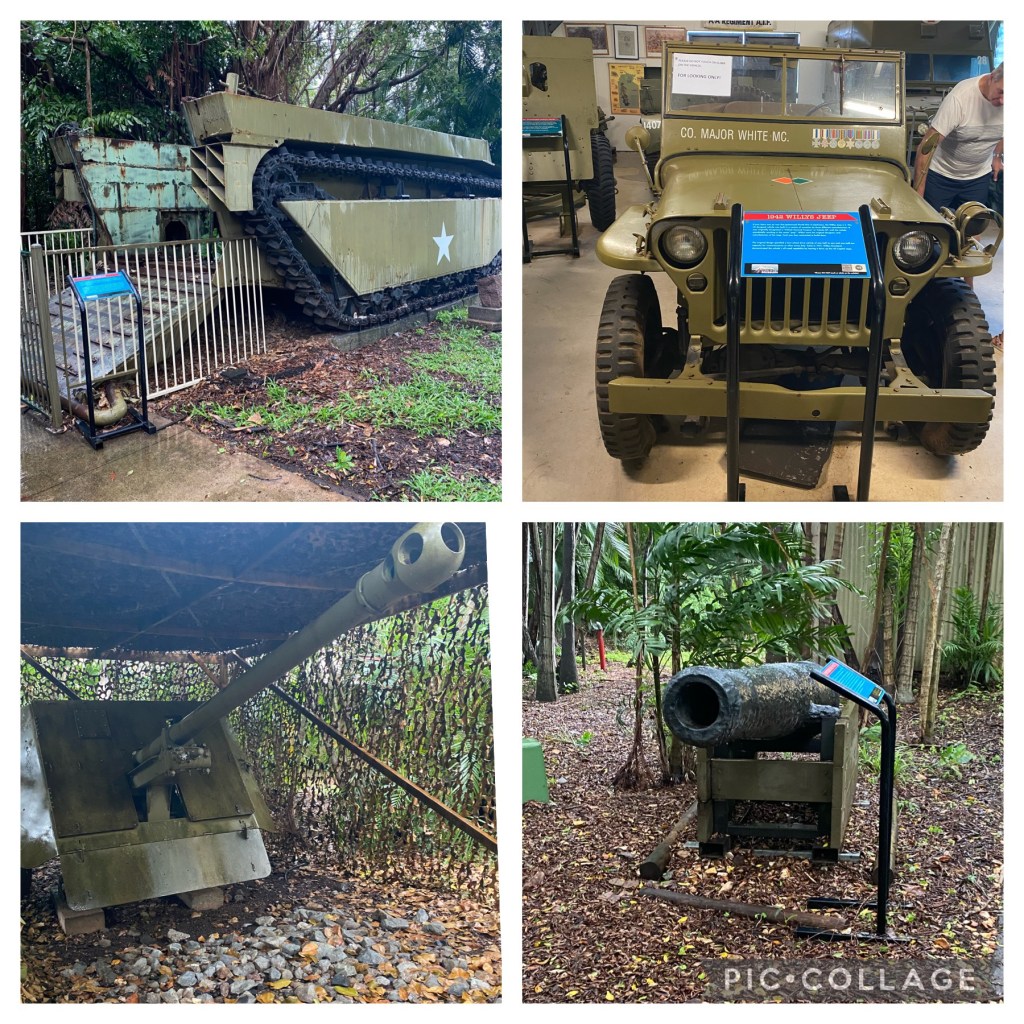
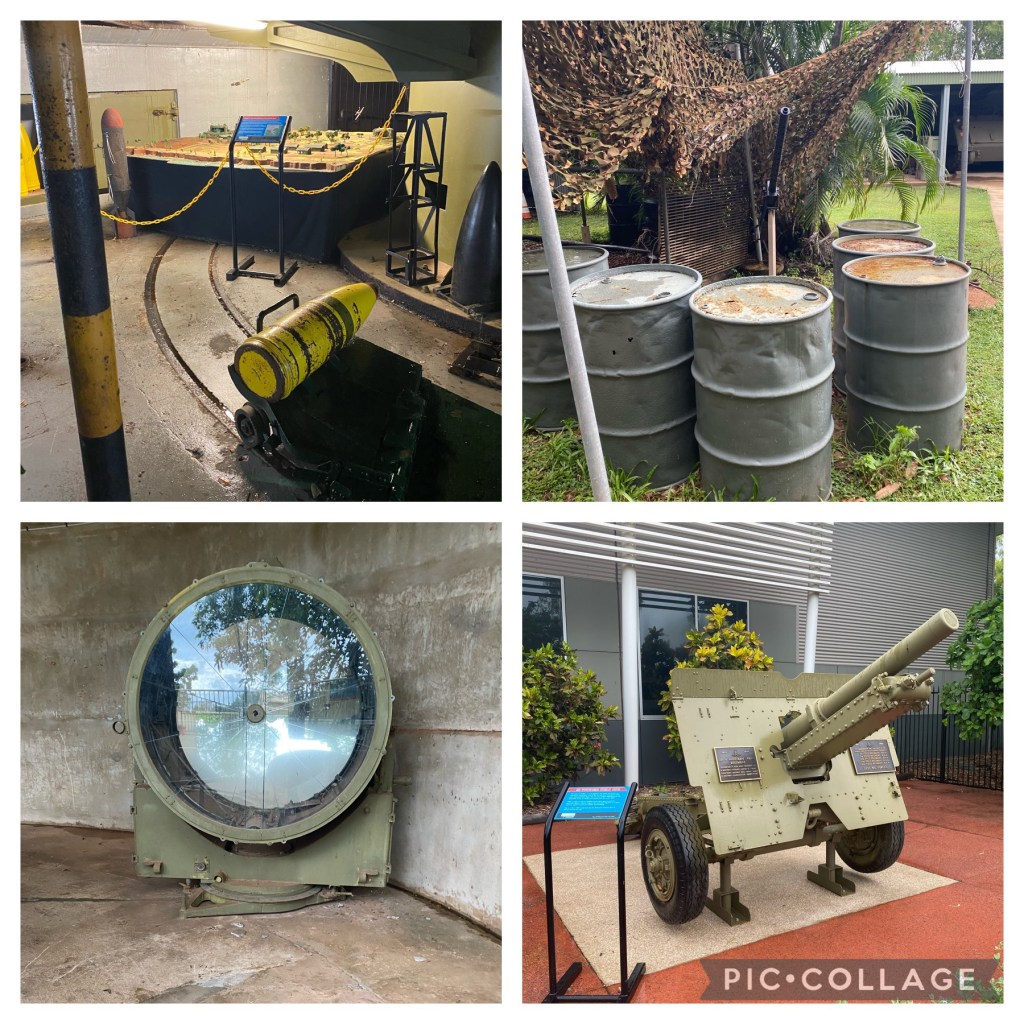
The Museum’s collection now has a large and varied exhibition of items, including Navy, Army and Air Force artefacts from Australian, American, Japanese and other armed forces engaged in conflicts from the Great War to the modern day.
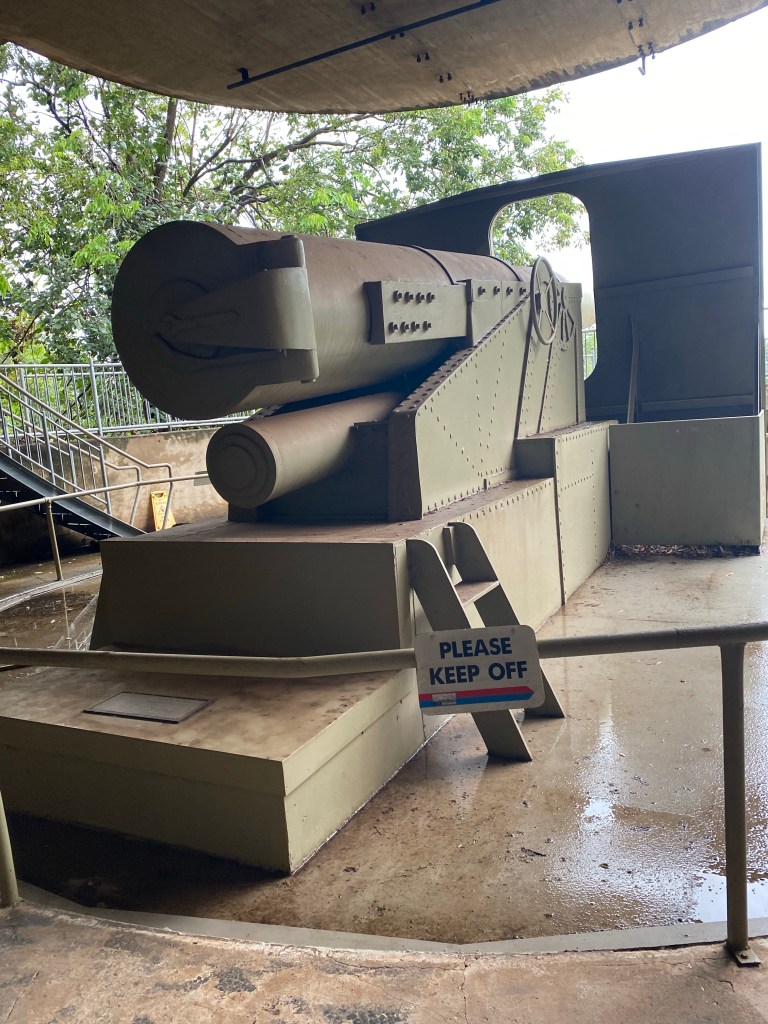
The Museum is set in 4.5 hectares of tropical gardens with the centres pieces being the WW2 9.2″ gun emplacement, the Command Post and a
number of WW2 Sidney Williams huts that are now utilised as exhibition halls.
Gunner the Kelpie
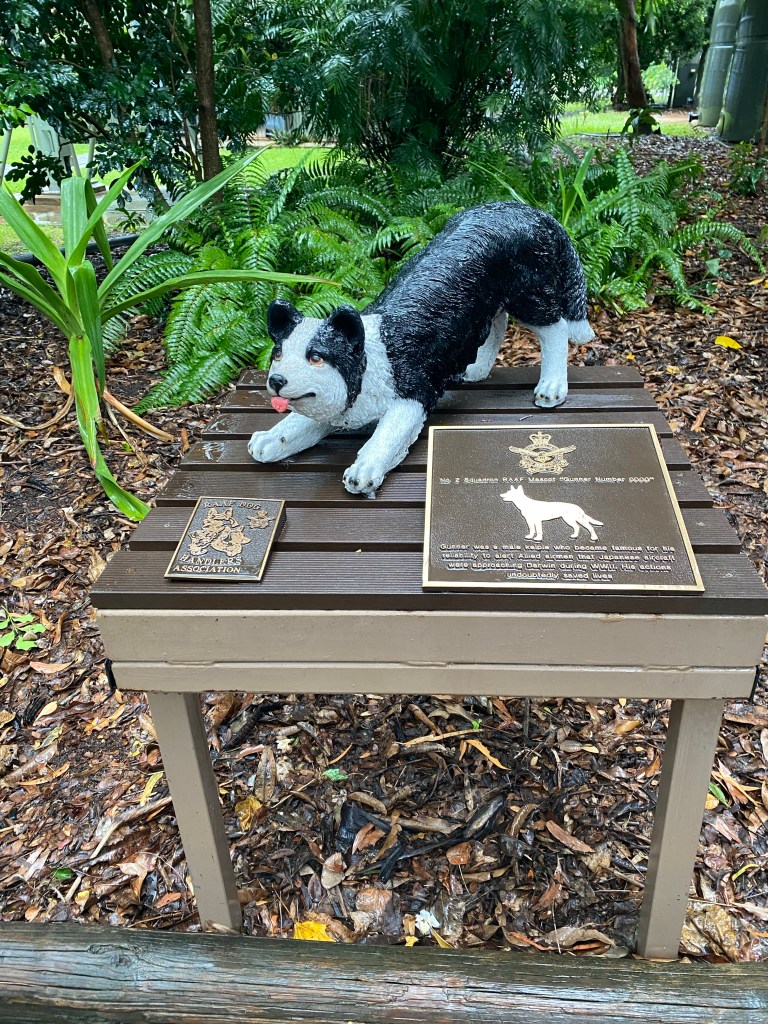
Gunner was a Kelpie that was injured during the first raid over Darwin. After this, Gunner was able to identify approaching Japanese aircraft, for a great distance, but their specific tone of engine.
He was able to warn his human companions on the enemy aircrafts subsequent approaches and undoubtedly saved lives.
Royal Australian Navy – Display Room – Teddy Sheean
One of the many brave and spine tingling stories to come out of the world wars – The story of Edward ‘Teddy’ Sheean.
Sheean was a crew member on HMAS Armidale that was attacked by 9 Japanese torpedo bombers and 3 Zero fighter planes on 1st December 1942. The attack was in the Arfaura Sea near Timor. HMAS Armidale was sunk within 3 minutes of attack.
Teddy was 18 years old on that fateful day, 27 days short of his 19th Birthday. He was born in Barrington, Tasmania. He was killed on the deck upon the bombing of the Armidale.
Having been ordered to abandon ship, Teddy, already being fatally wounded, remained at his post manning the Orelikon gun. He strapped himself to the gun and protected his shop and shipmates. He kept firing as the ship was pulled underwater, until his last breath.
He was posthumously awarded the Victoria Cross for his bravery and selfless act.
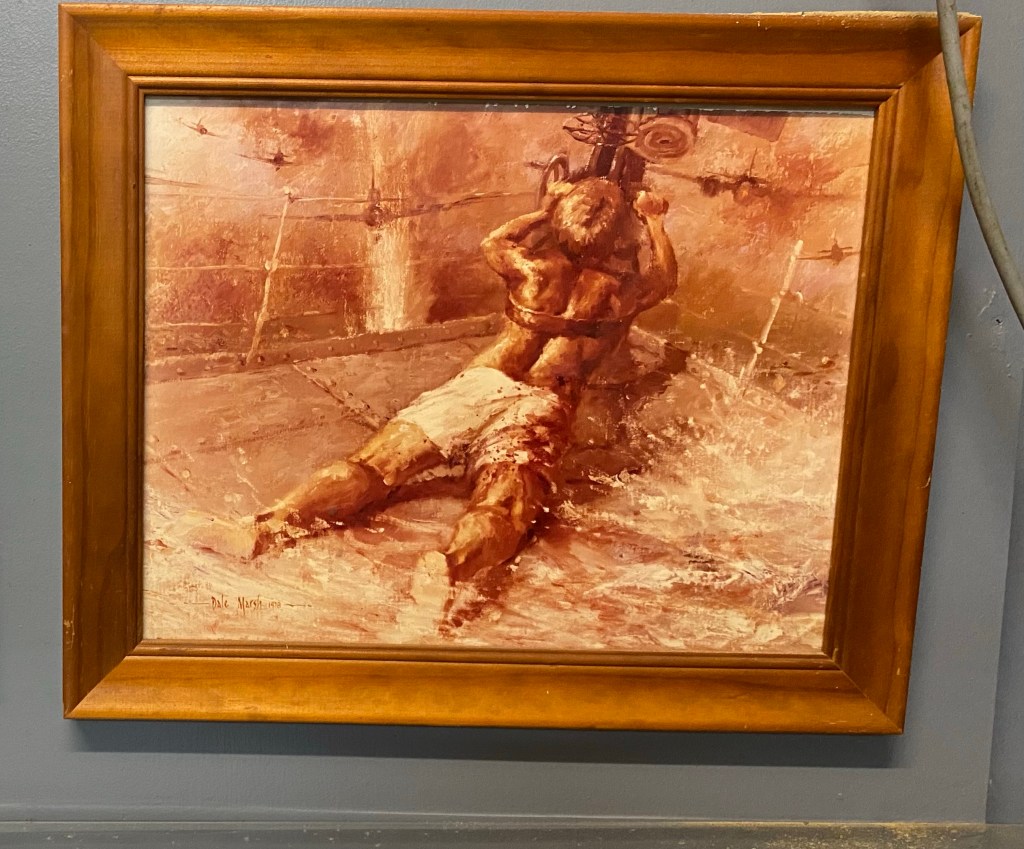
If you want to experience the full spine tingling detail, have a listen to Lee Kerneghans song ‘Teddy Sheean – forever eighteen.’
WWII Attacks on Northern Australia
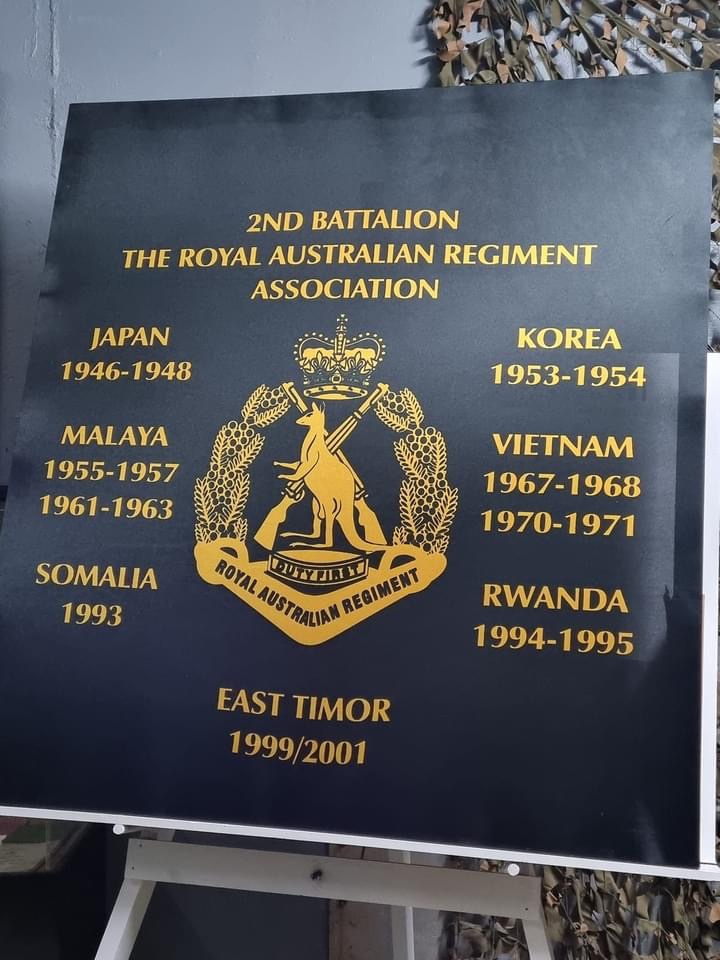
We never ever knew the extent of attack on our home front during the war. The below plaque really shows the extent of attacks on this beautiful country of ours.
Northern Territory was raided 64 times; and the top end of Australia over 107 times.
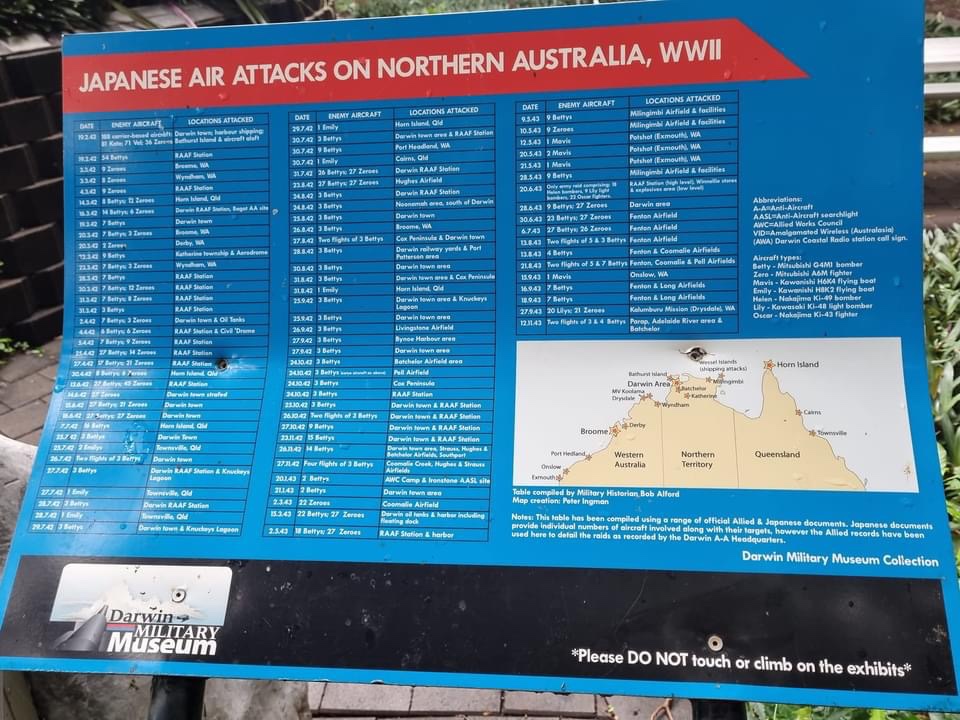
Did you know?
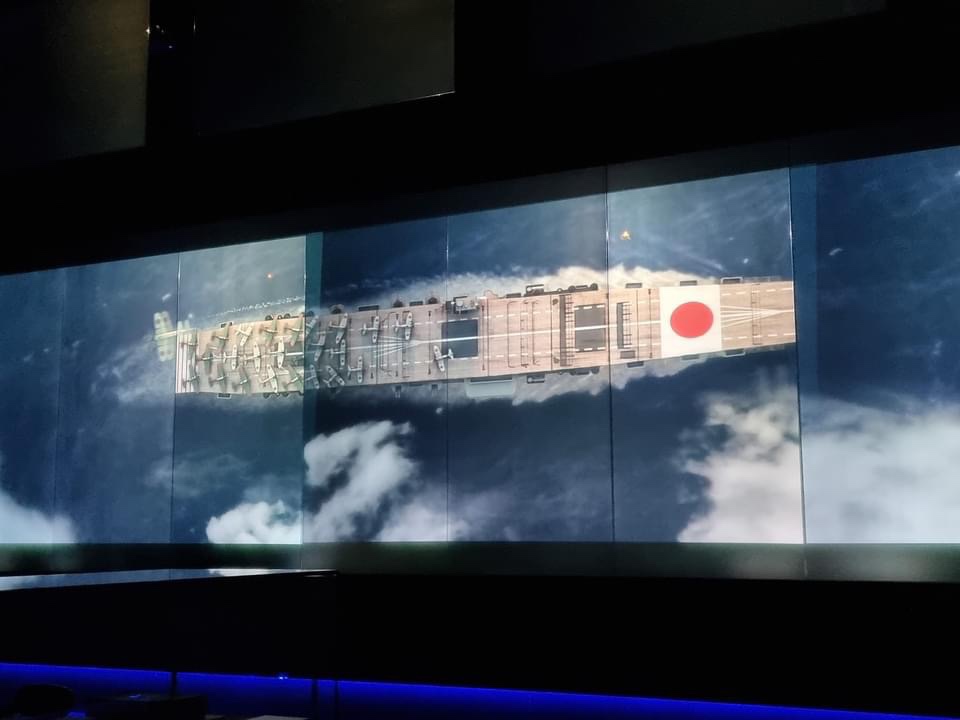
188 Japanese aircraft attacked Darwin at 0958 on 19 February 1942. Another 52 aircraft attacked Darwin in a second raid at 1145.
They were the same aircraft with the same pilots and from the same aircraft carriers that attacked Pearl Harbour on 7th December 1941.
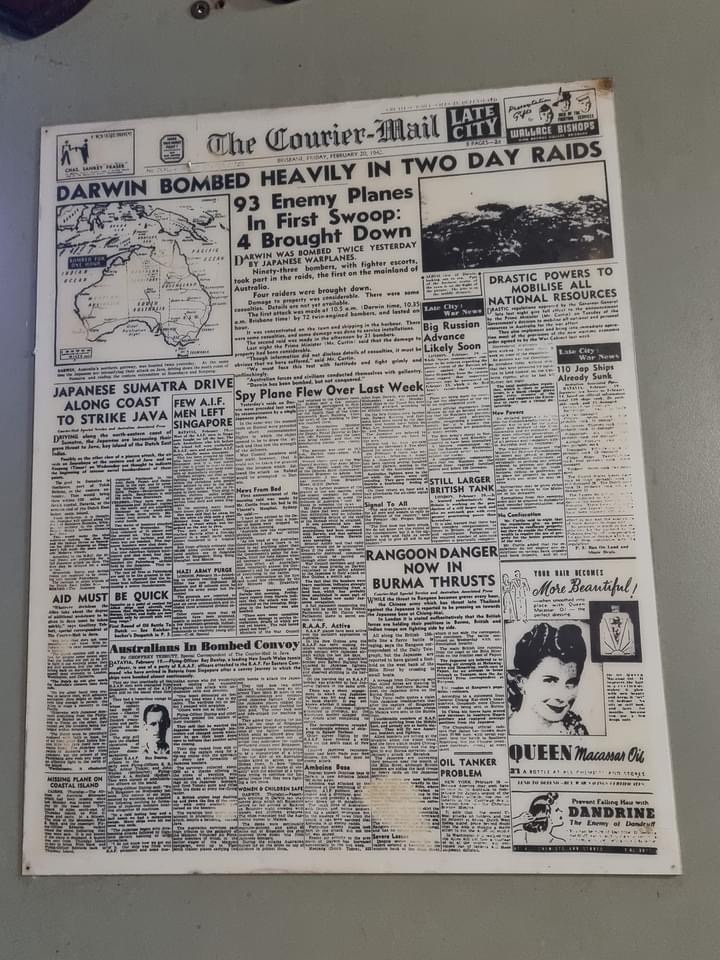
235 people were killed in the first two raids of the first day.
1672 people lost their lives in WWII operations across the NT.
The first raid
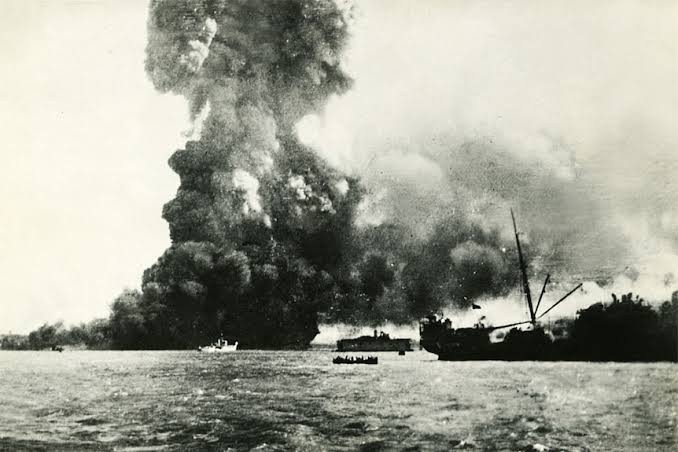
The main target for the first attack was Darwin’s harbour. There were upwards of 45 ships in the port, including the US destroyer Peary. Within minutes Peary had been sunk with a loss of 80 lives. Sunk also was the large US transport Meigs, though with a loss of only two lives.
The Australian ship Neptuna, formerly a passenger vessel, was hit. Loaded with heavy explosives, it blew up with a terrifying explosion. The ship’s captain, William Michie, and 45 crew members were killed.
Five merchant ships were sunk. The hospital ship Manunda was hit but survived to play an important role in caring for the injured; 58 crew and medical staff were wounded on that day and twelve were killed including 26 year old Sister Margaret deMestre.
One of the most dramatic events of the affray involved HMAS Katoomba, a corvette being repaired in the floating dry dock. Although the ship was trapped in the dock its captain, Commander A.P. Cousin, RANR, ordered the 12-pounder high-angle gun and Vickers machine guns, together with rifle fire, to open up on the enemy divebombers. Both ship and dock survived, largely undamaged.
Just before the air-raid alarm and the arrival of the Janapese planes, 70 waterside workers had been unloading the Neptuna and Barossa on the right-angled extension of the long pier. When the pier was hit many wharf labourers were marooned on the edge. Dozens of men were blown into the water only to have to swim through burning oil. Twenty-two are known to have died.
There were many heroic acts as the dead and dying and survivors were plucked from the water by men in small boats.
In the town the Post Office had been hit and nine peopled killed. These were the Postmaster, Hurtle Bald, his wife Alice, and daughter Iris, four women who had remained in their essential jobs as telephonists, Emily Young, Eileen and Jean Mullen, Freda Stasinowsky, their supervisor, Archibald Halls, and another PMG worker Arthur Wellington. The air-raid trench in which they had sought shelter in the Post Office garden had received a direct hit.
Darwin Hospital was also bombed, fortunately with no loss of life.
At Government House the Administrator of the Northern Territory, Charles Abbott, his wife Hilda, and members of his staff sheltered from the bombing under the house.
By 1030 the first raid was over. It had lasted just over half an hour.
The second raid
The shocked surviving population was just emerging from cover and trying to assess the damage when at 1158, the attack resumed. The second raid was launched from land in the Celebs and Ambon, recently occupied by the Japanese. This time the airfield was the target, the Zeros strafing and saturation bombing the airstrip with its easily targeted, un-camouflaged aircraft.
The remaining US Kittyhawk was destroyed together with a Liberator, three Beechcraft, three US Navy Catalinas, six RAAF Hudsons and a Tiger Moth. Surprisingly, only seven men were killed, including Wing-Commander Archihbald Tindal RAAF.

 morrisblog.travel.blog