Thursday 23rd February 2022
We had a little bit of a rough night again. This time with Madeline. We managed to get out of bed at 7am to get moving.
We made good time and we’re ready to leave at 0845. Last thing was the van light checks. Left indicator lights not working. 12 pin removed and adjusted. Left indicator and brake lights not working. 12 pin removed and adjusted with no change. We removed our resistor connection and got it all working again.
Jumped into the car, driving around the caravan park and bang, Jason just tapped the brakes and the caravan jolted. Tried again same thing happens. Noticed Redarc braking system is flashing weird colours.
It’s now 0910 and Eva frantically googling auto electrical places to get it looked at. Can’t drive without brakes. Also googling what the flashing colours mean!
Luckily a electrician advised us to come straight over. We drove 6km up the road to the factory without the brakes and the colours kept changing. Turns out it was calibrating like it was recently installed. But why?? Because e got a replacement battery in the car and it reset the system. It needed to be driven while it calibrated and it was working well. He sorted out or resistor light issues too.
At 10am on the dot, we were on our way after the false start.
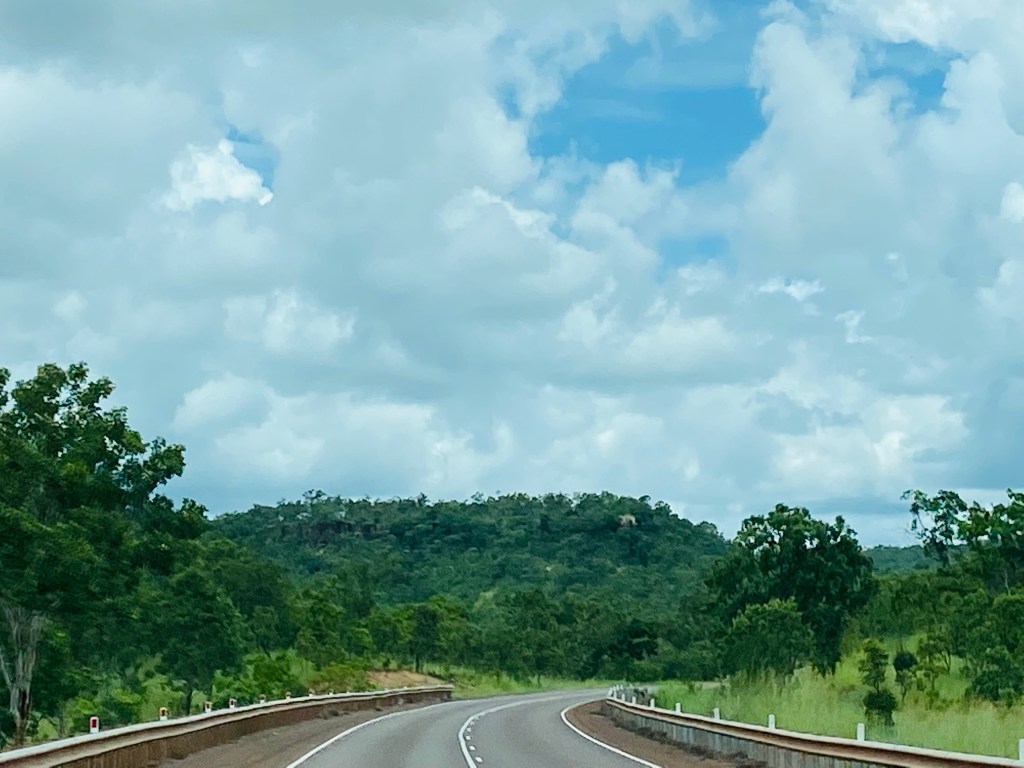
We drove firstly toward Adelaide River. Every time we stopped the car at roadwork traffic lights, Charlotte would cry.
We arrived at Adelaide River at 1120. It was spitting a little. We decided to have lunch in the van.
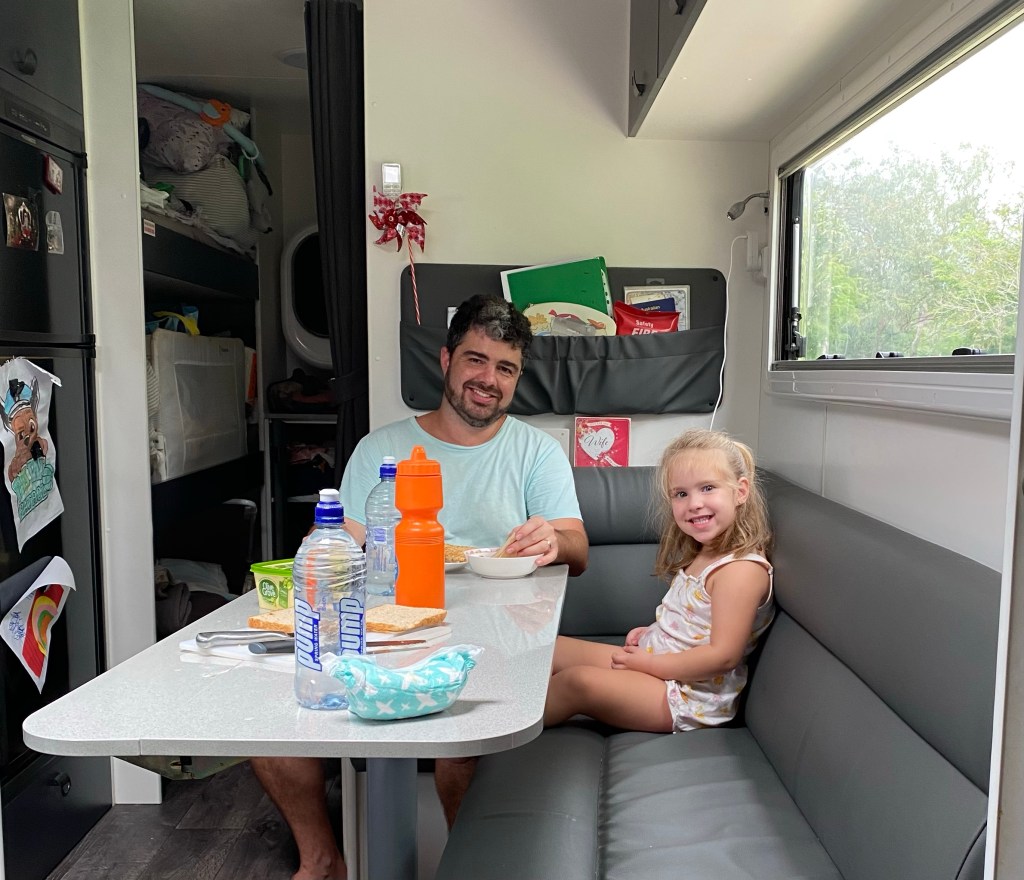
Adelaide River
The Kungarrakan and Awarai Aboriginal peoples are acknowledged as the traditional owners of the land surrounding the present day town of Adelaide River.
The first Europeans to explore the Adelaide River were John Lort Stokes and L.R. Fitzmaurice in 1839 when the HMS Beagle was surveying the Northern Territory coastline.
In 1862 John McDouall Stuart passed through the area on his journey from the Flinders Ranges to the coast of the Northern Territory. He explored the Adelaide River.
Adelaide River was first settled by workers who arrived in the area to construct the Overland Telegraph Line. During construction, the discovery of gold at Pine Creek in 1872 had a major impact on the settlement.
In 1873, a weekly mail service between Southport and a mining site further south at Yam Creek was established. This service utilised pack horses, and during the wet season months when progress was slow mail bags from the north and south were exchanged at the crossing of the Adelaide River.
The following year, Mr. Edward Hopewell was awarded this mail contract and built the Q.C.E. Hotel on the river bank and a restaurant, the “Jolly Waggoner” was opened by George Doherty, increasing the importance of the area as an overnight stop for travellers. The first police station in the town was constructed in 1879.
In 1883 the Palmerston and Pine Creek railway was confirmed. By April 1888 the railway had reached Adelaide River.
Work began in 1936 on a road linking Darwin to Adelaide River. As the railway was still the primary means of transportation at this time, it was an unsealed, dry weather road that was poorly maintained. This road followed a similar route to the present day Stuart Highway.
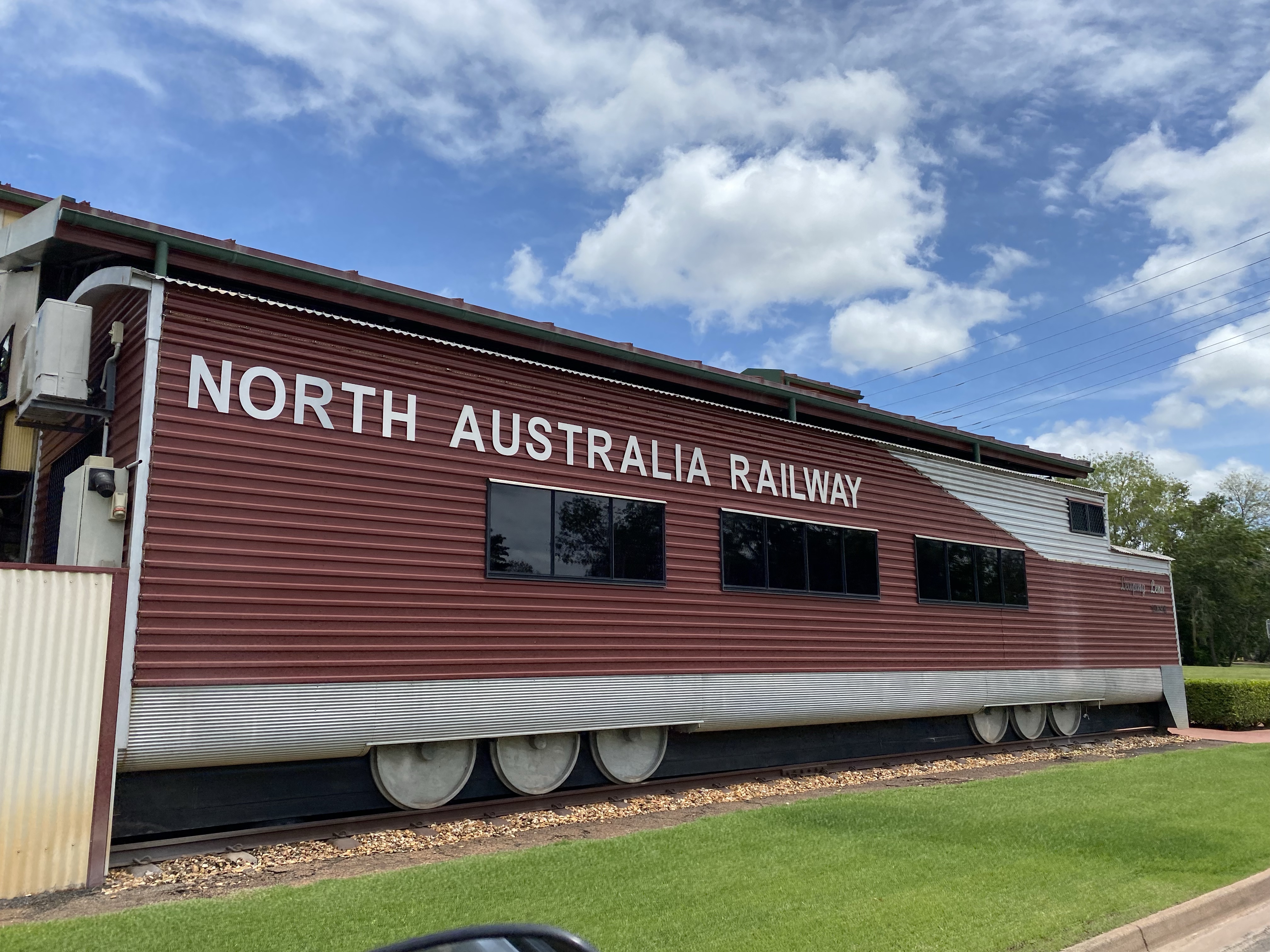
Declining passenger numbers on the North Australia Railway led to services on the line being suspended in 1976. The line was officially closed in 1981 along with the Adelaide River station.
WWII
Adelaide River played a central role in the defence of Australia during the second world war. In 1939, the town was designated as a rest area for personnel serving in Darwin.
The town became an important tactical supply and communications base for all branches of the armed forces. In August 1942, the Adelaide River War Cemetery was established.
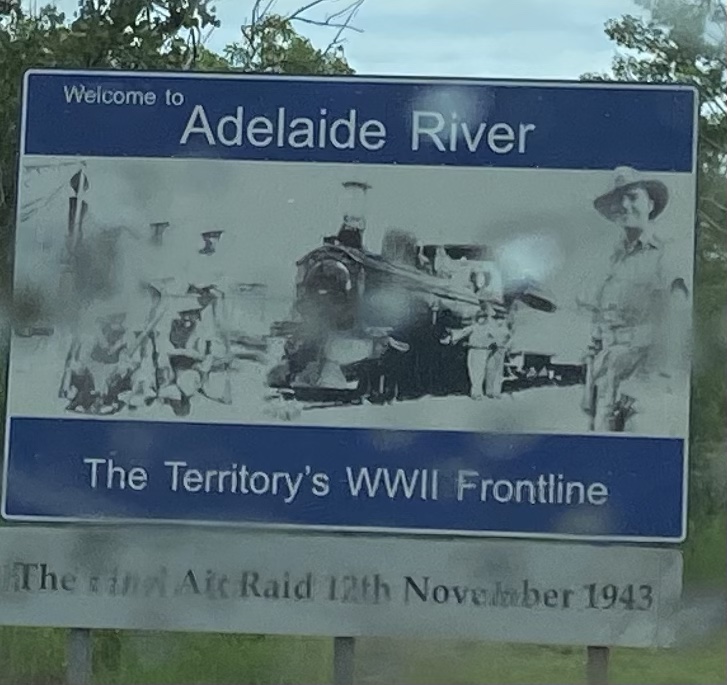
While there were numerous bombing raids on the surrounding outstations and facilities throughout 1942-43, Adelaide River itself was bombed only once, in the early hours of 12 November 1943.
After leaving Adelaide River we drove 1 hour 20 to get to Pine Creek.
Madeline and Charlotte feel asleep in the car.


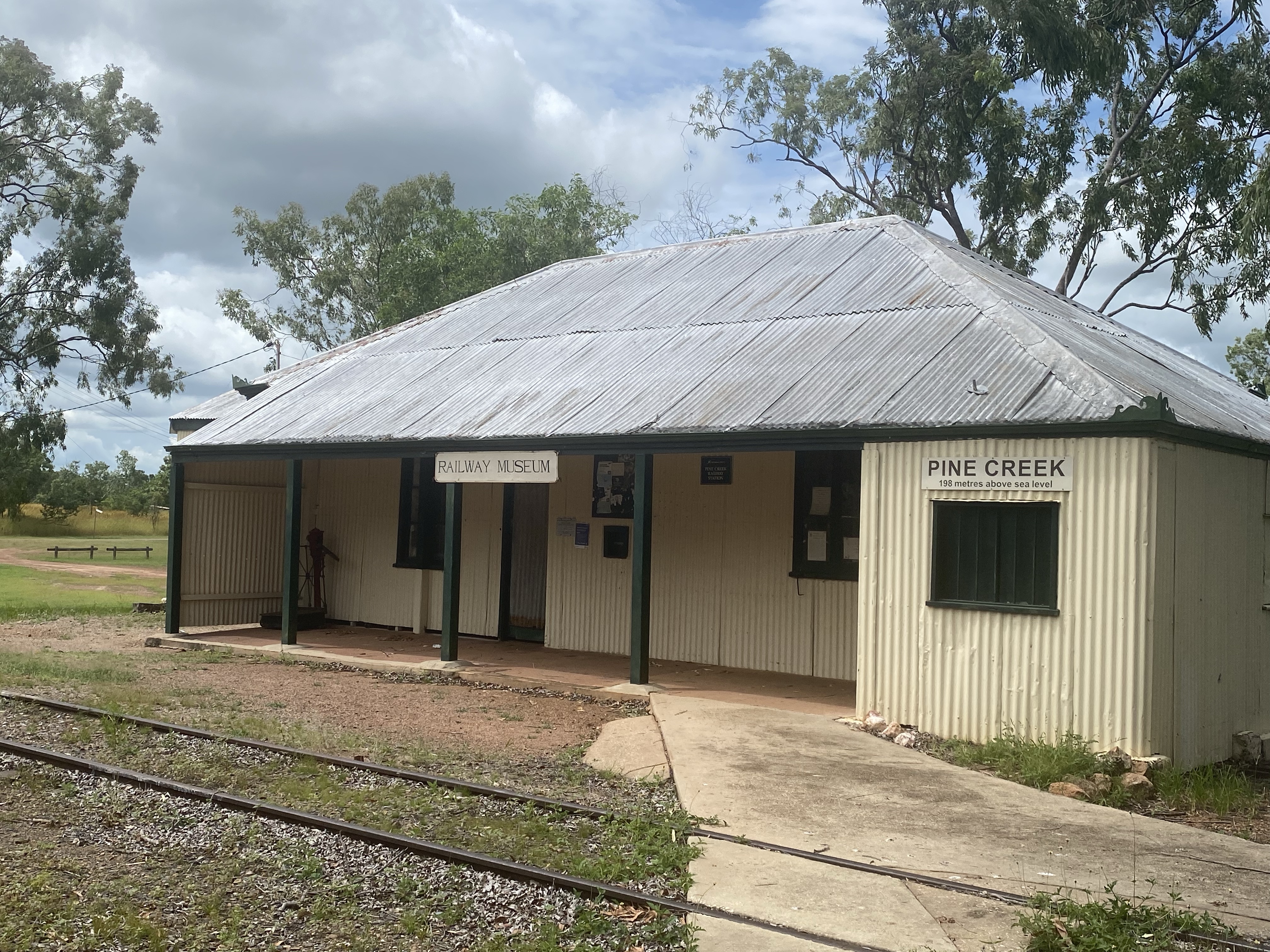
We arrived at Pine Creek and we did a walk around Miners Park and looked at some of the old mining equipment.
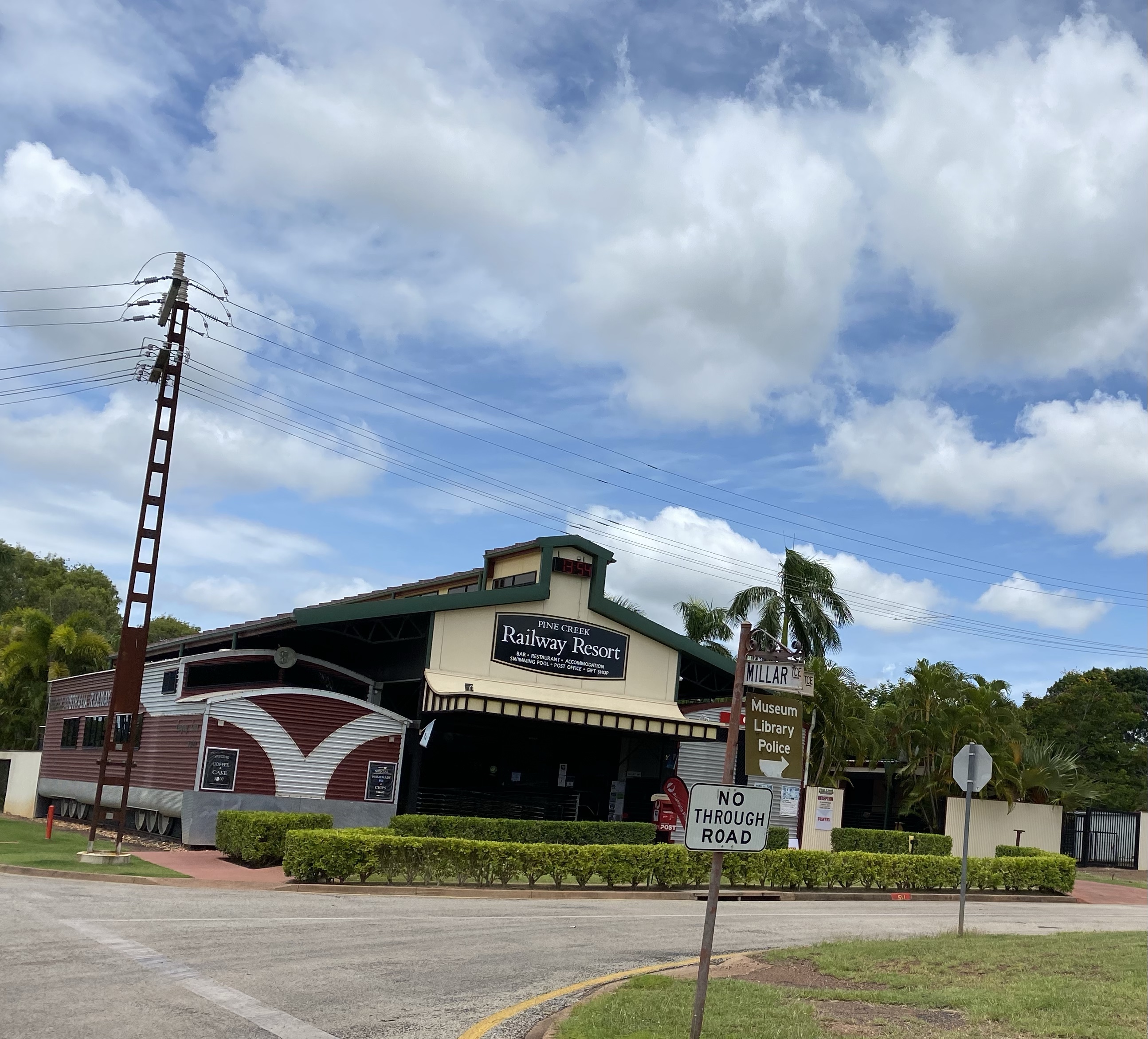
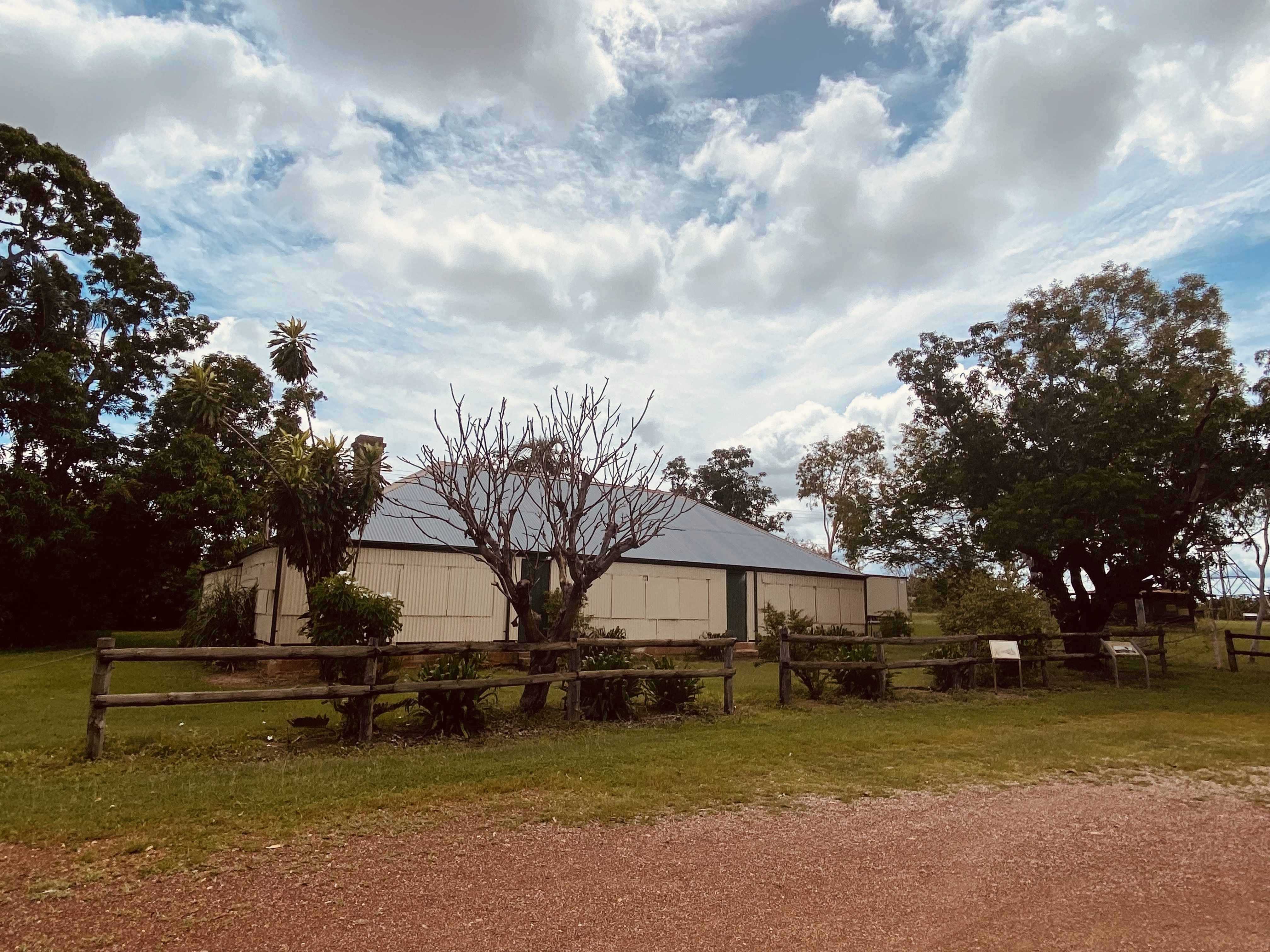
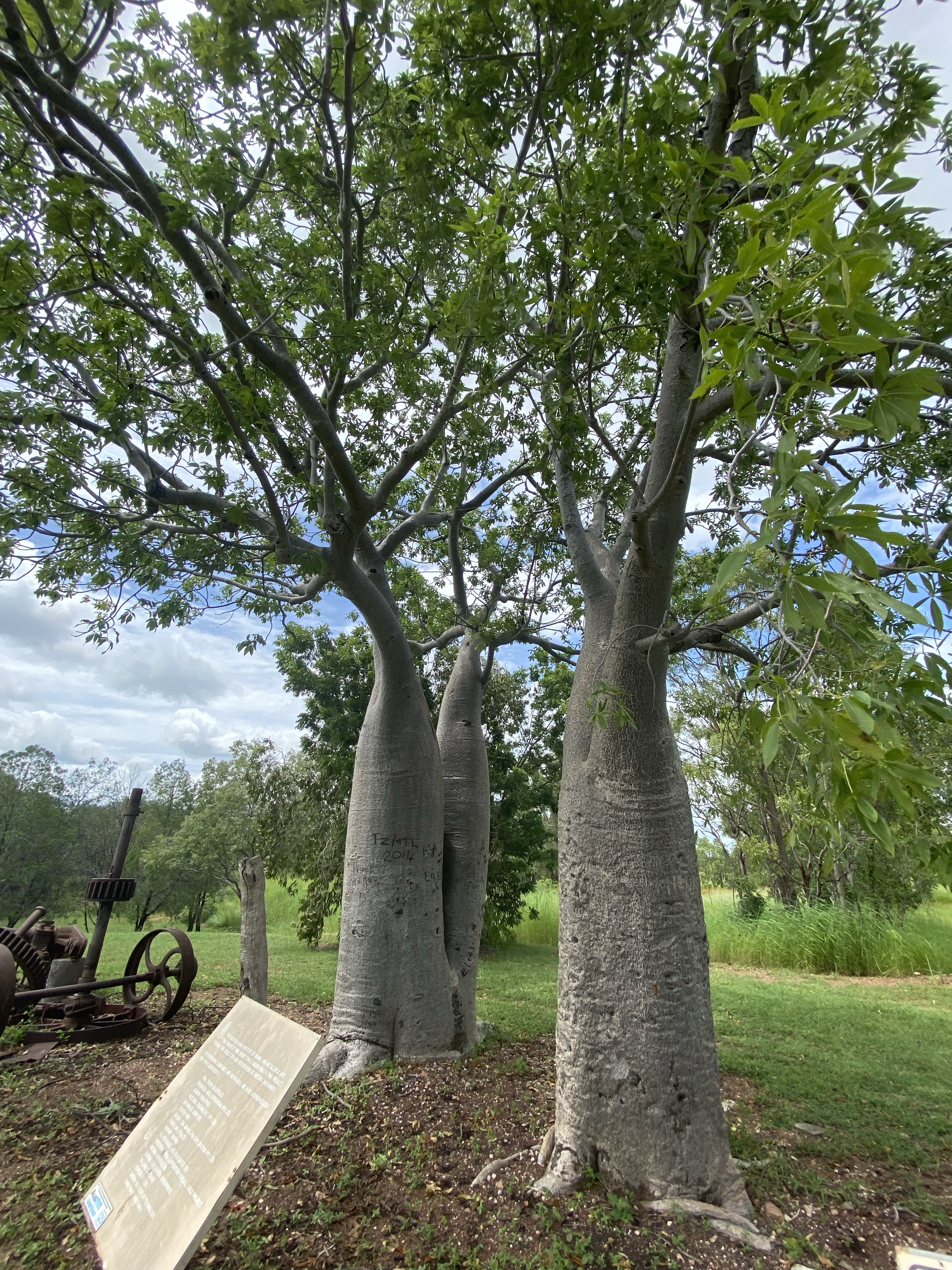
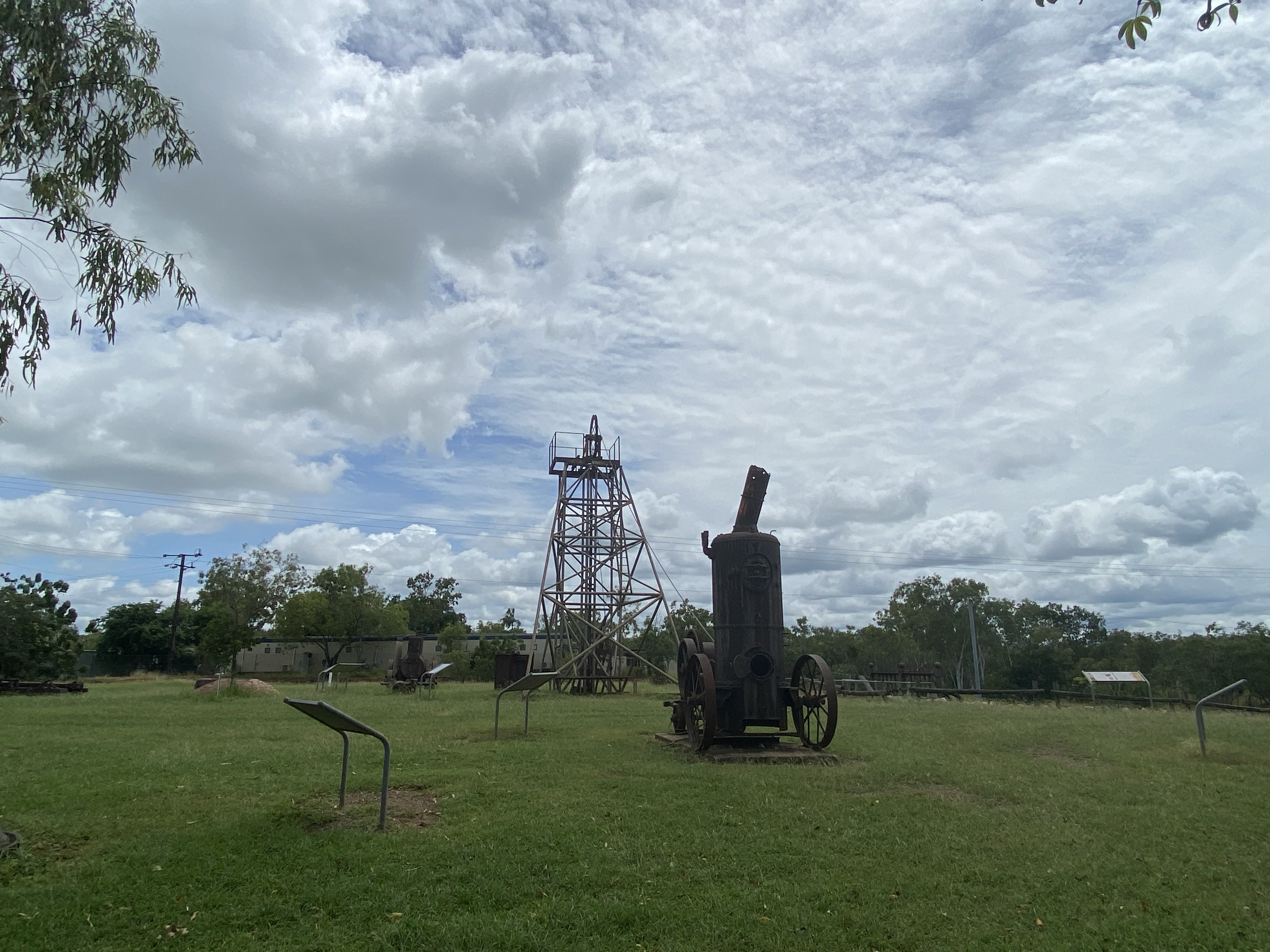
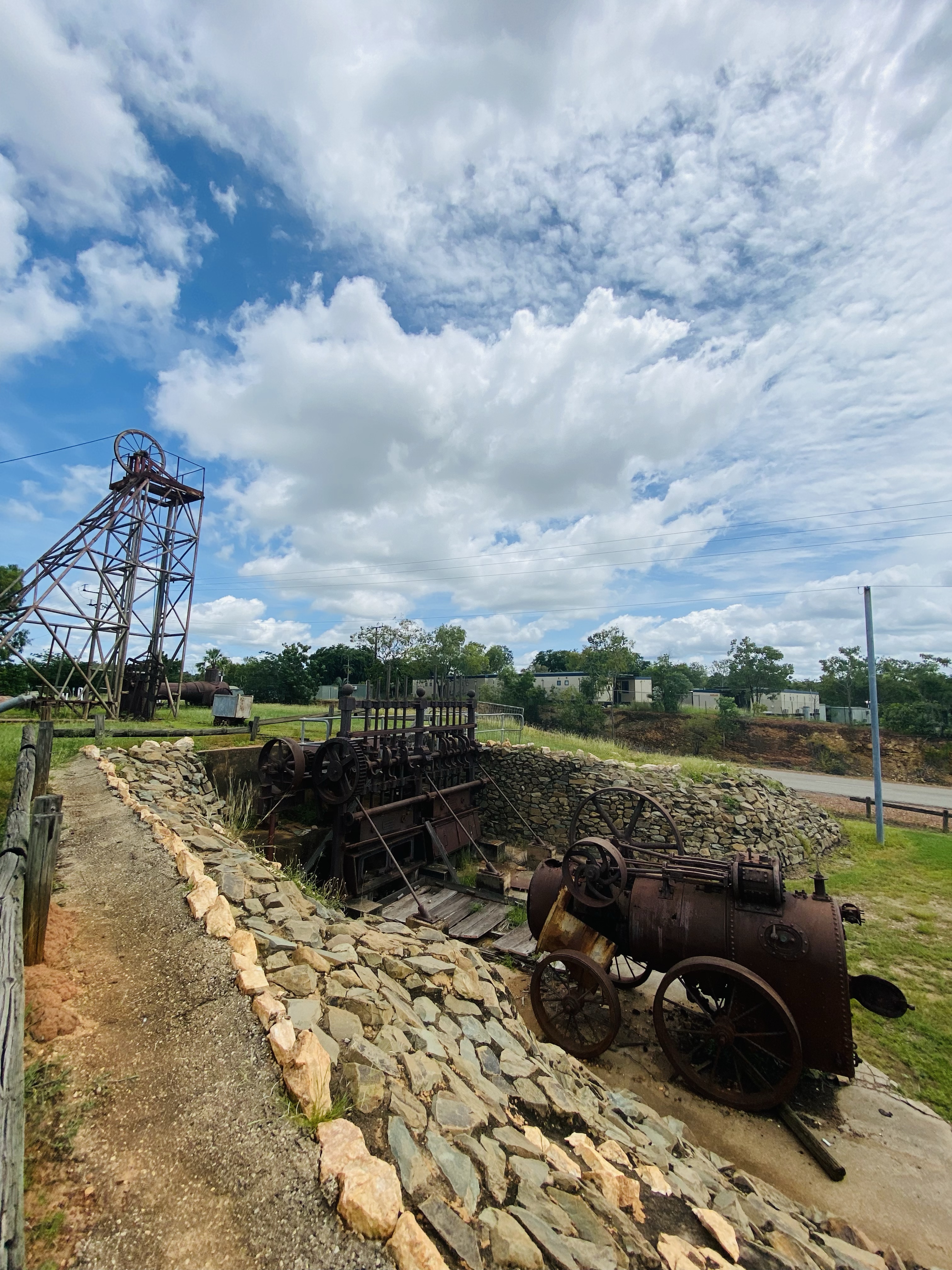
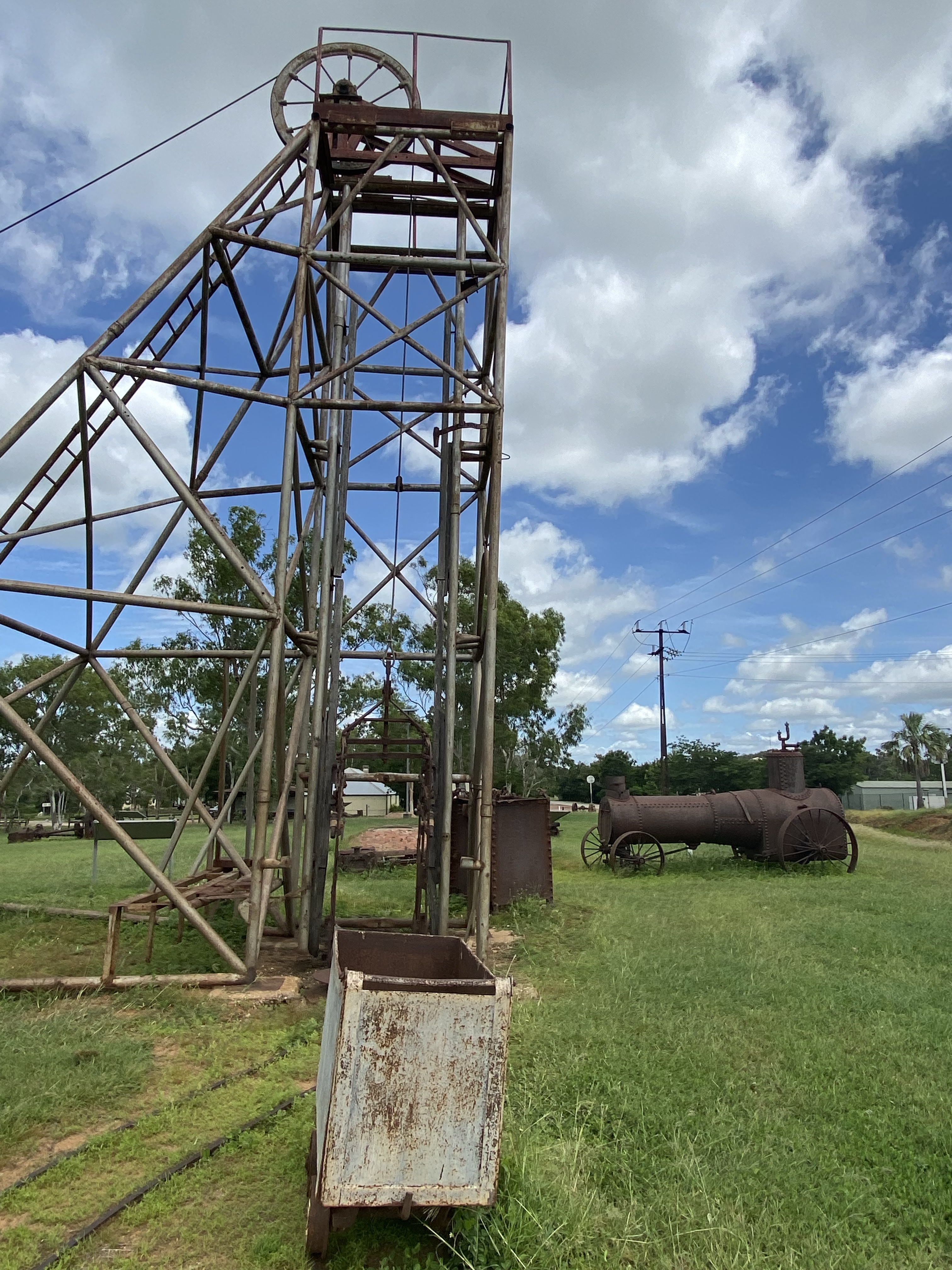
Pine Creek
Prior to the arrival of Europeans the area around Pine Creek had been occupied by the Wagiman Aboriginal language group for at least 40,000 years.
In 1862 John McDouall Stuart passed through the area on his journey from the Flinders Ranges to the coast of the Northern Territory.
Pine creek started as a small camp, set up by a Overland Telegraph wiring party in August 1871. While digging post holes, workers came across gold. After further searching, gold was found in the creek itself.
Pine Creek was named in 1870 by the teams constructing the Overland Telegraph Line. The South Australian government decided to name it Playford on 24 January, 1889 after Thomas Playford, the South Australian Commissioner of Crown Lands. This achieved little beyond confusion. It was not officially gazetted as Pine Creek until 20 September 1973.
Gold was discovered in nearby reefs in 1872 and a rush began to the area. The Pine creek district booked and by 1873 it boasted 11 batteries. The boom collapsed in 1874, but Pine Creek settlement survived.
In 1889 the railway came to town. In the 1900s mining in the area included; silver, zinc, lead and Uranium.
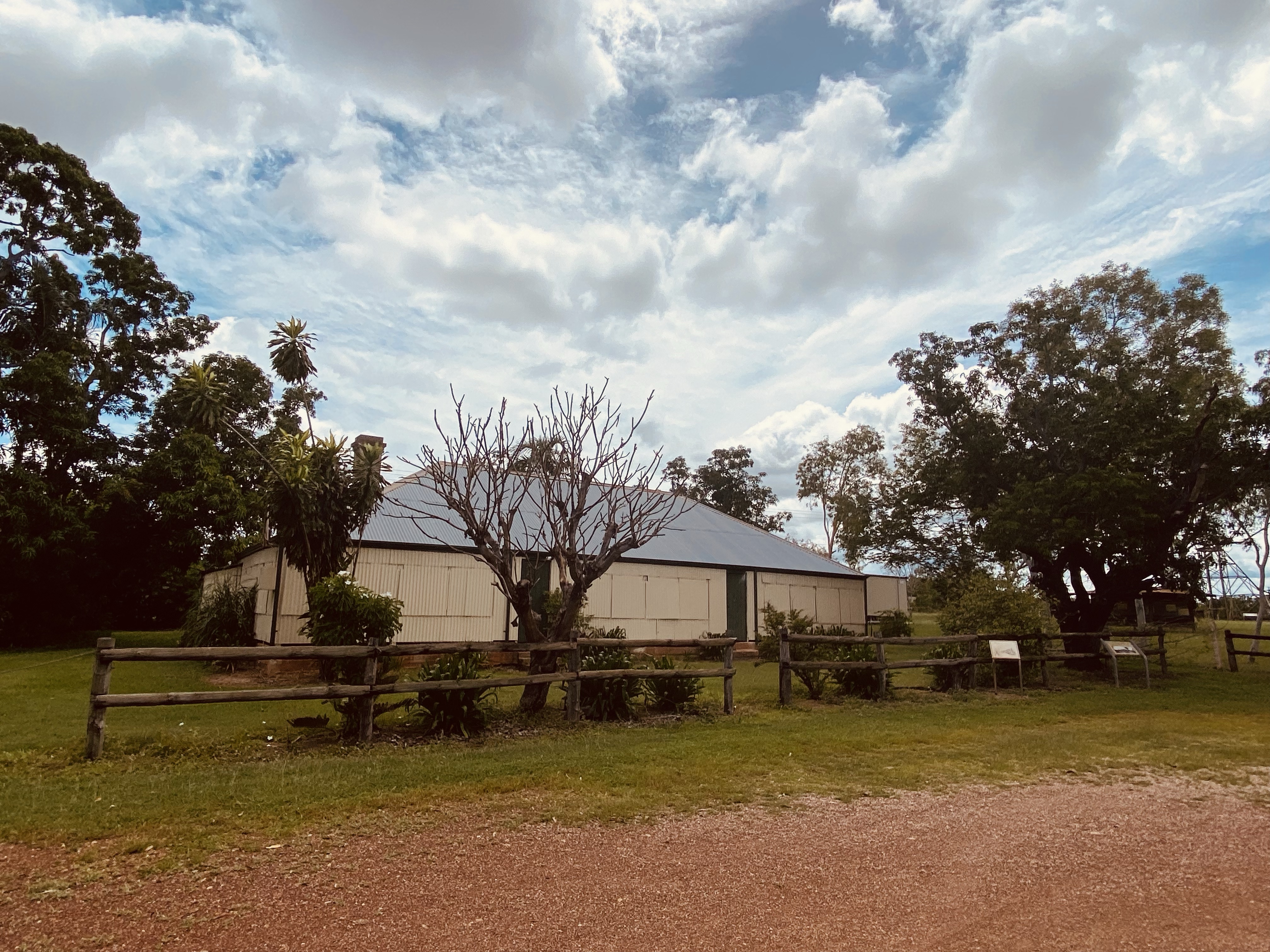
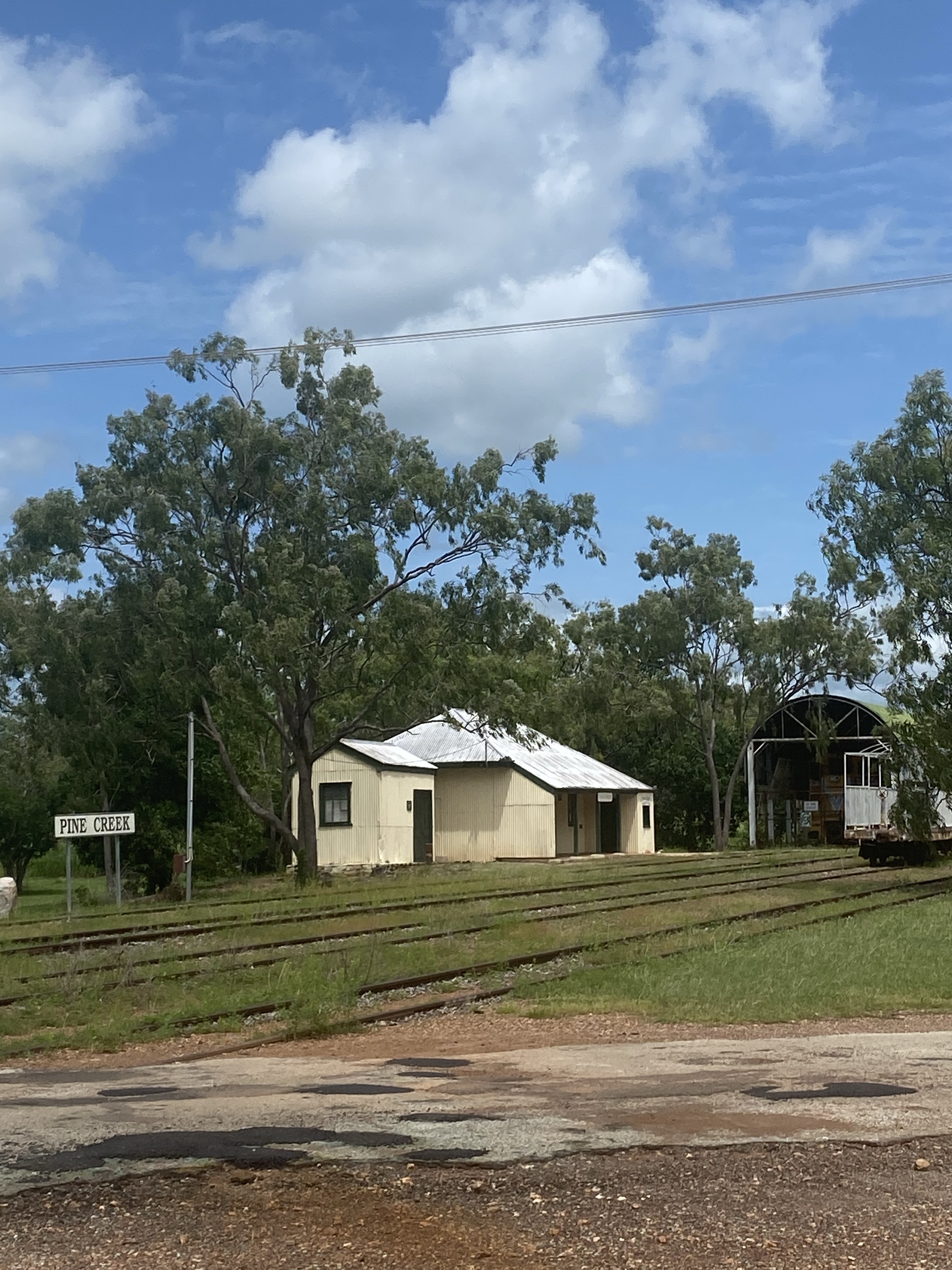
After another 30min of driving we arrived at Nitmuluk National Park – Leliyn Edith Falls.
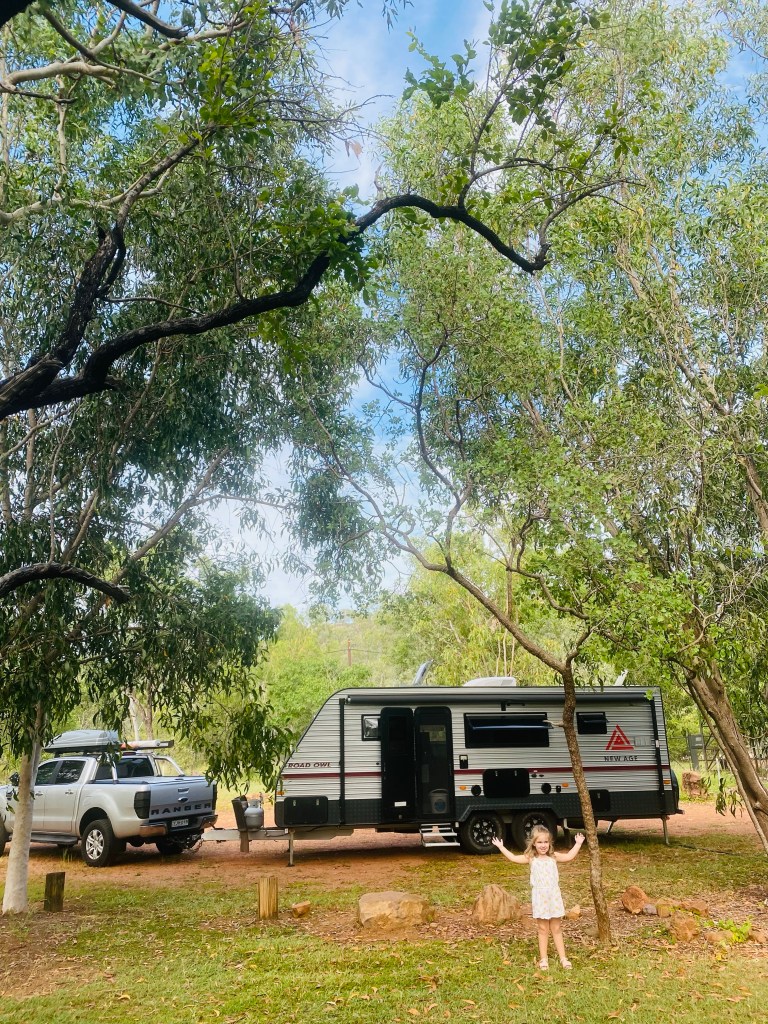
We found our camp spot and pulled up for the night. We played outside for a bit, cooked dinner and then settled in to the van for the night.
Our water pump 2 stopped working again, so we were down to 1 water tank.
Tomorrow
We will explore Edith Falls before heading to Katherine.

 morrisblog.travel.blog
Oh gosh! Hope that’s the last of your troubles and you have a problem free trip. Love to you all. Xx
LikeLike