Wednesday 10th February 2021
Today we left Canungra and travelled to Eumundi for a stop over night.
It was a long trip today. Only 204km, but we had to stop to fill water, stop again at a dump point, stop at Aldi and then we got stuck in Brisbane M1 traffic.
Madeline was in the car for 4 hrs with only a few short pit stops. She did so well!
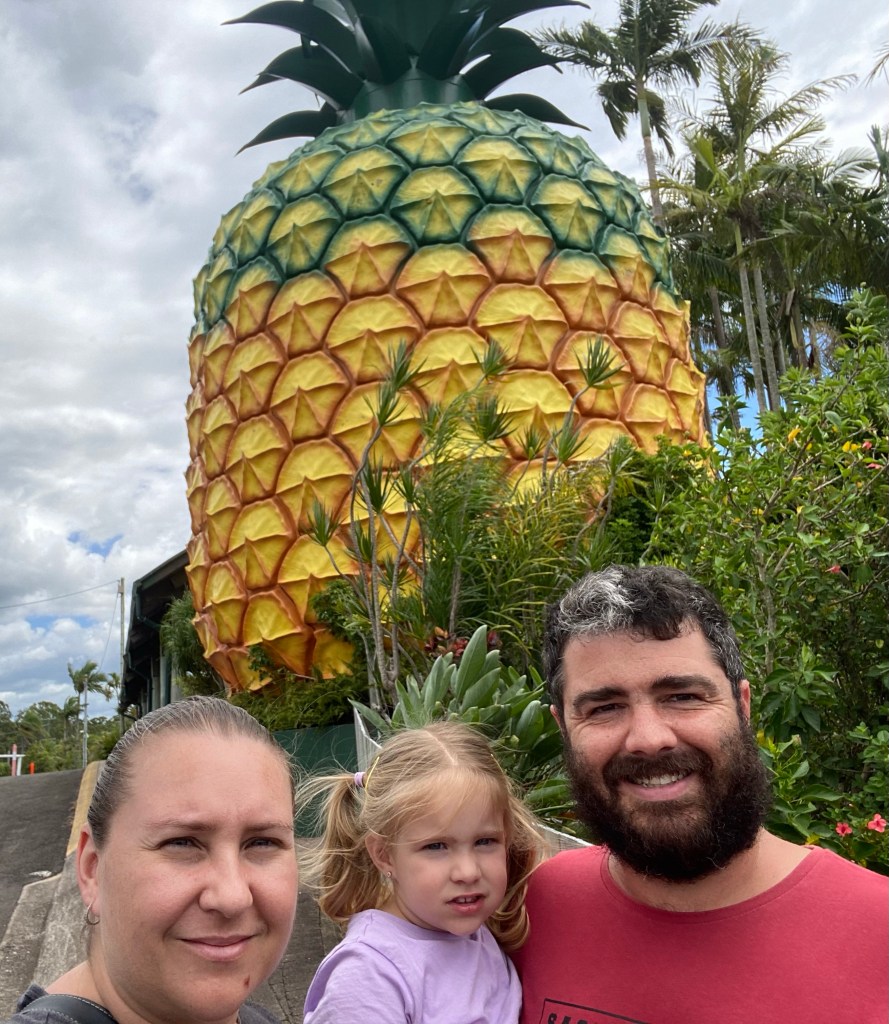
The Big Pineapple
This stop was a great disappointment. Not only was the train out of service, which we knew before arriving, there was nothing else really to see. The Big Pineapple and very small cafe with some tea-towels and hats. Not even a single pineapple item to eat.
If you read the website very carefully it states that it is undergoing a revamp, but the main page doesn’t say much except that the train is undergoing refurbishment.
Eumundi, QLD
We drove up to Eumundi Showground. What a lovely place to stay! Nice grassy area, power if you want it, camp kitchen, bubs, toilets and showers. Fabulous set up.
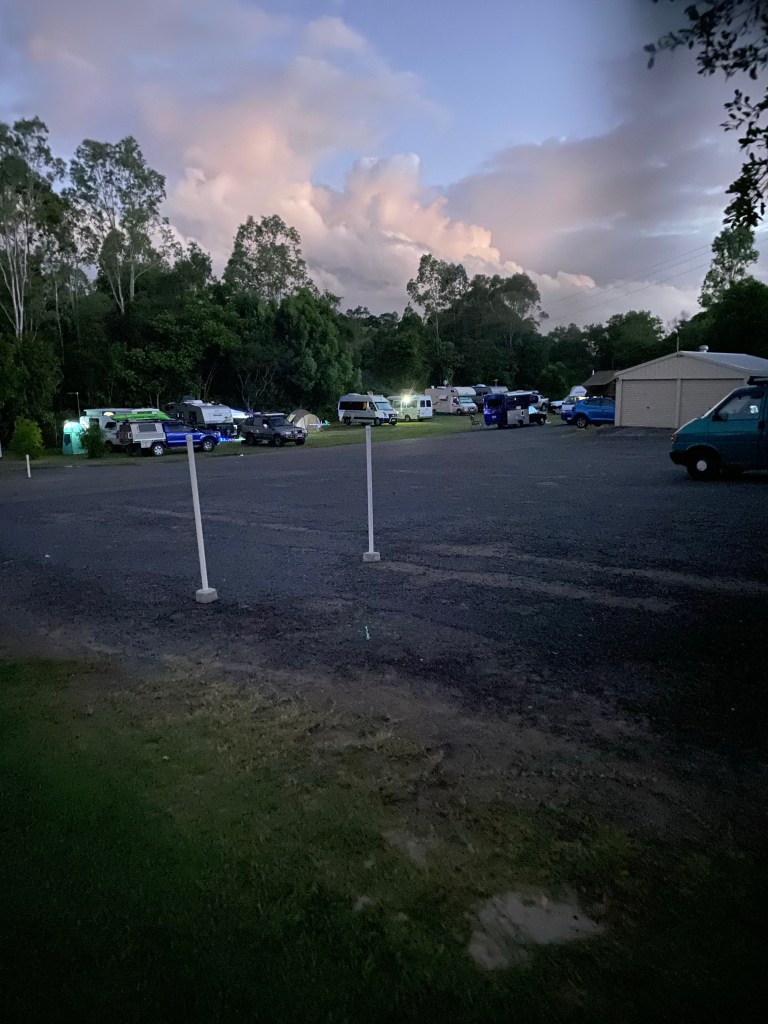
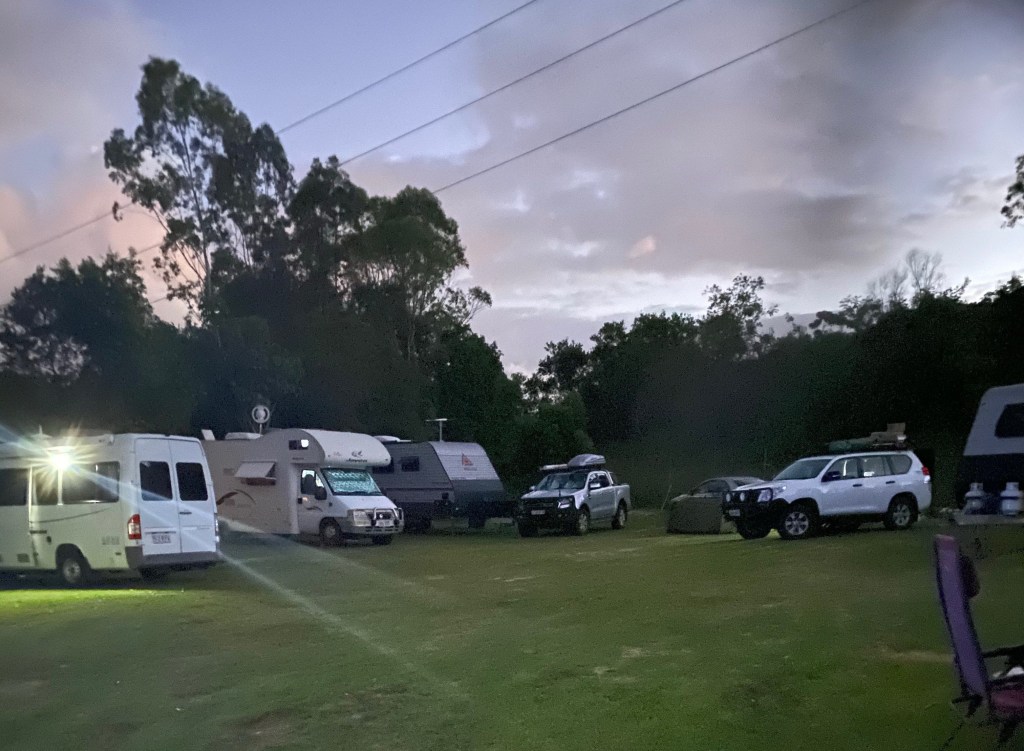
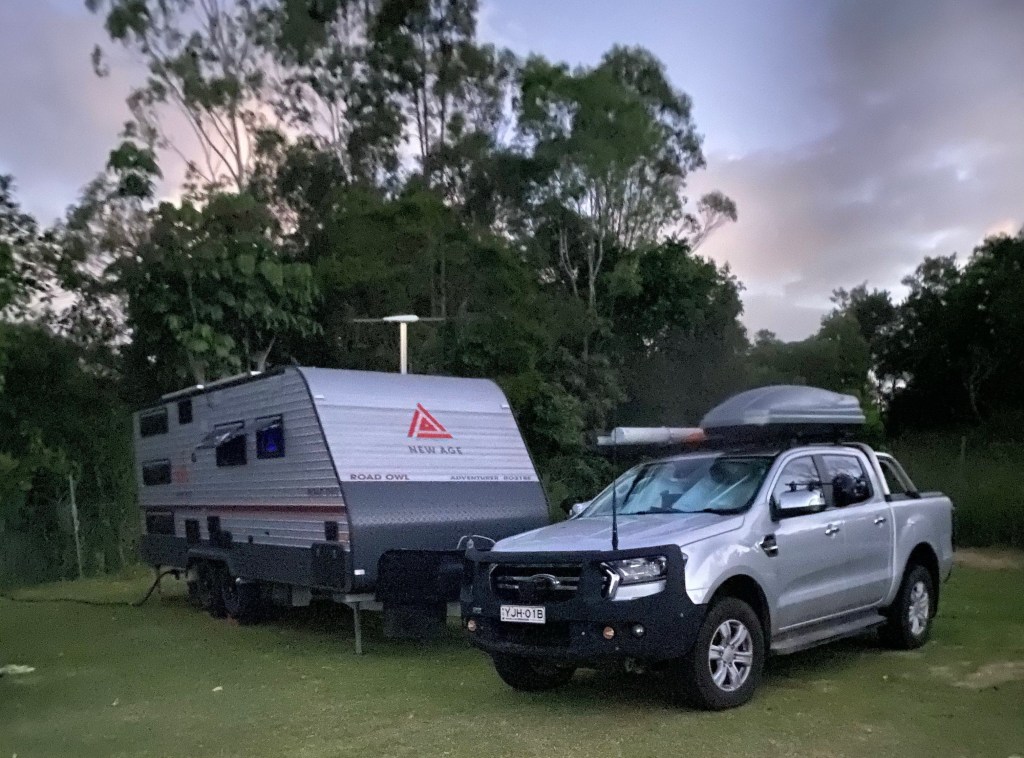
We rested in and around the caravan after arriving around 1230.
History of Eumundi
Situated 21km southwest of Noosa Heads.
The town name is thought to be derived from “Ngumundi,” the name of a local Aboriginal warrior said to have adopted escaped convict Bracefield as his son in 1831.
From the early 1850s, most of the area around the Eumundi district was part of three cattle runs: Canando, Yandina and North Kenilworth.
In 1867, after the discovery of gold at Gympie, the first road was marked and cleared. By 1879, George Gridley became the first selector to reside permanently in the Eumundi district. This started a wave of new selectors and by 1885, 47 selections were taken up.
At the turn of the century, shops started to line the newly formed streets and town businesses developed.
A railway opened from Yandina to Cooroy in 1891 along with the road to the north passing through the town, Eumundi developed as an important centre of the timber and dairying industry.
The surrounding country consisted of dense scrub full of pine, beech and cedar and long ridges covered with tallowood and blackbutt.
George Etheridge, in 1900, moved his sawmill from Petrie’s Creek (Nambour) to Main Camp and then to Eumundi. It functioned here until 1938.
As the land was cleared and grasses were planted, dairy farms and banana plantations began to build up over the area. By 1920, two butter factories had been built in the area.
By the 1960s many dairy and banana farms became uneconomic, and the holdings were taken up by people seeking rural lifestyles. The township attracted new residents who refurbished numerous buildings.
Tomorrow
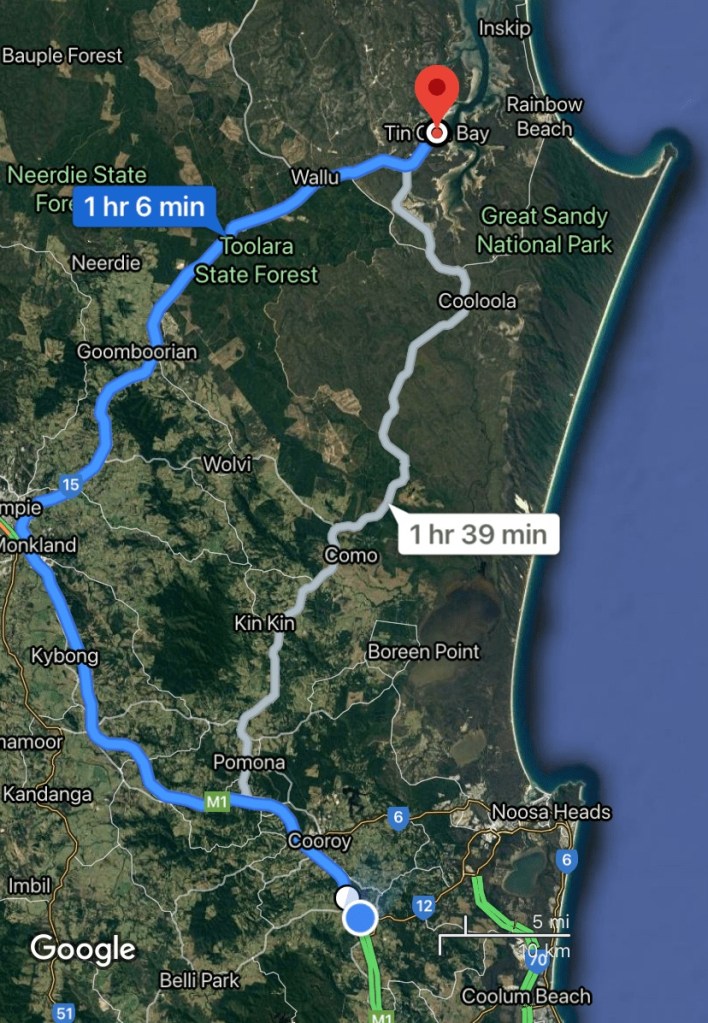
Tomorrow we plan to travel to Tin Can Bay via Gympie gold mining and historical museum.

 morrisblog.travel.blog