Friday 19th November 2021
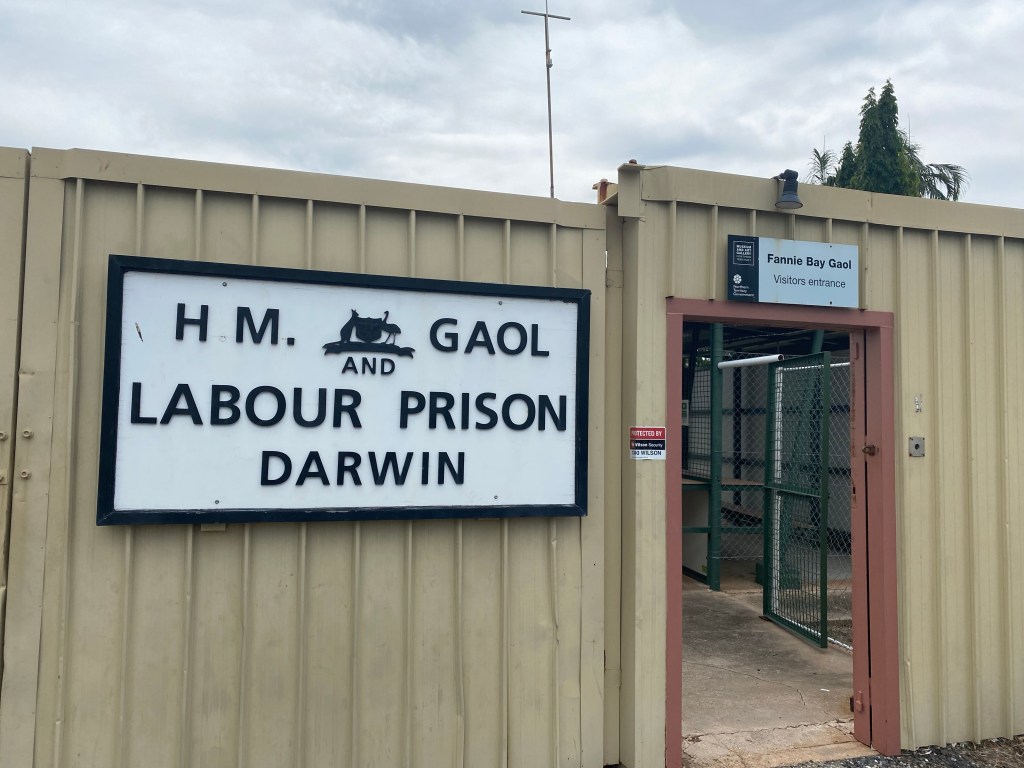
The very first goal was located in the center of town and was thought to be too close to to law abiding residents. In 1878 Fannie Bay was surveyed and plan put in place for a new goal near the Botanical Gardens, where the prisoners could be put to work.
The goal complex, consisting of stone cells, Gaoler’s house, guards’ quarters and fence were completed by 20th September 1883. 31 prisoners were transferred from the old goal.
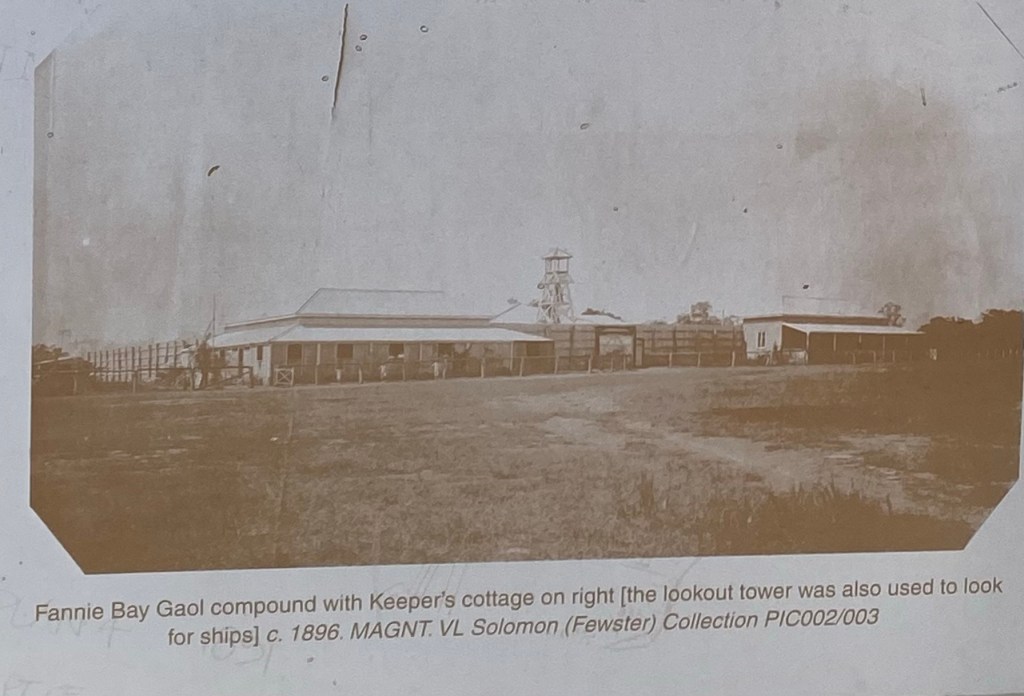
The First Years 1884-1911
The goal was miles away from the rest of the population, had little water, limited amenities and was surrounded by rainforest subject to cyclones and earthquakes.
A new infirmary building was completed in 1887 just outside the goal walls.
It is surely bad enough for unfortunate wretches to undergo hard labour and imprisonment, as a punishment for their sins against society, without being forced to stew in a perfectly reeking atmosphere of fever-laden impurities.
16 March 1889 Northern Territory Times and Gazette
A earthquake damaged the main cell block and underground water tanks in June 1894. In 1897 a cyclone damaged the cell block, accommodation and part of the wall was blown down.
Commonwealth Control 1911-1939
The Commonwealth takeover of the NT brought little improvement in the goal and its administration.
In 1920 some of the land owned by the Gaol was resumed by the Defence Department for aviation purposes. In 1921 prison labour was used to build the airstrip on present day Ross Smith Avenue.
Female prisoners were accommodated within the Gaoler’s own residence. In 1928 a separate cell block was built for the accommodation of female prisoners.
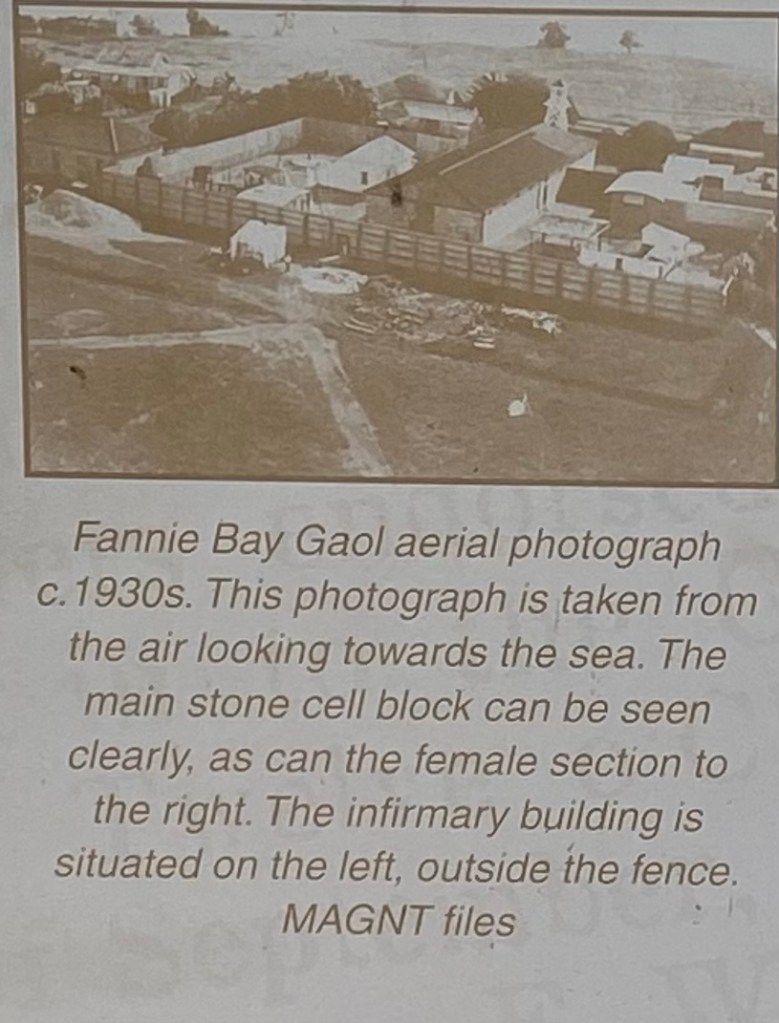
The War Years 1939-1946
Fannie Bay Goal continued operations until the bombing of Darwin by the Japanese on 19th February 1942 when the prisoners were released and told to fend for themselves.
The goal was used by the Royal Australian Air Force until 1946.
After the War 1946-1954
The site became used as a goal again after the war and was considered a temporary measure.
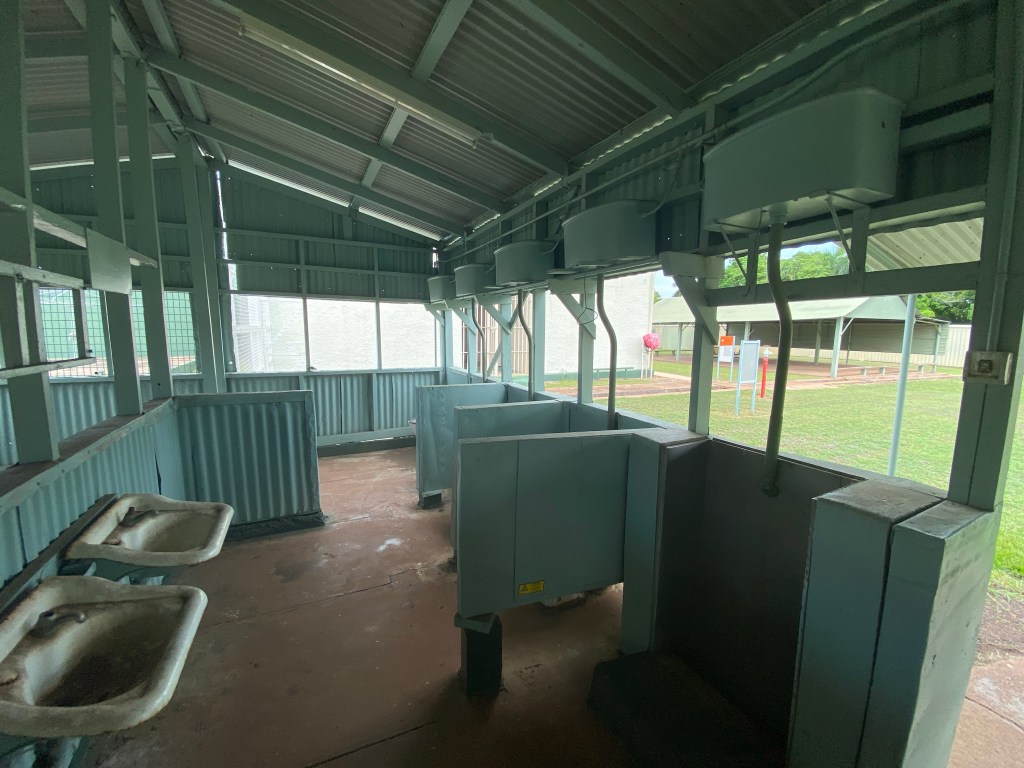
In 1952 a gallows was constructed in the infirmary building. In 1954 a separate abultion building was constructed although sewerage was not connected until 1959-60.
Rising prisoner numbers 1955-1974
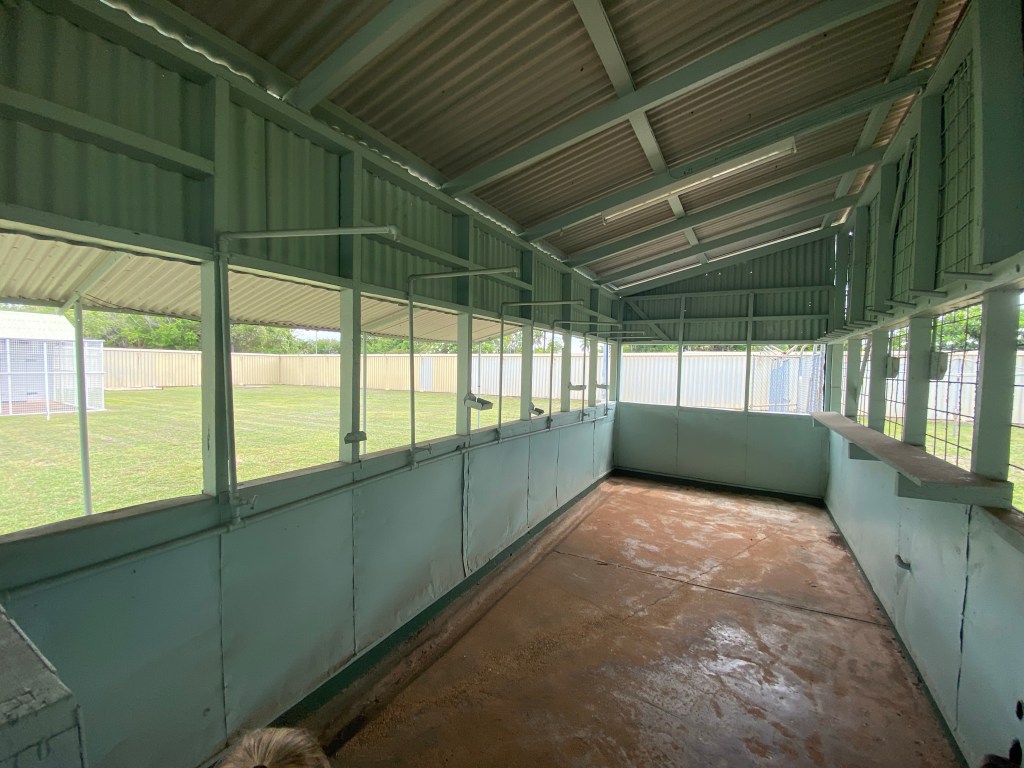
Prisoner overcrowding became an increasingly urgent problem. New buildings were erected using materials such as corrugated iron, fibro and arc mesh.
In this period a separate confinement block was built, isolation block, dormitories 1 and 2 (‘stores building’ and C and D wings
Cyclone Tracy and the End of Fannie Bay Gaol 1974-1979
24th December 1974 Cyclone Tracy struck Darwin and caused considerable damage to the Goal. Despite the damage the gaol was reopened soon after.
Immediately after cyclone Tracy, planning for the construction of a new gaol started. The new Darwin Prison at Berrimah was completed in mid-1979 and Fannie Bay Gaol was officially closed on 16th October 1980.
Lets take a look around
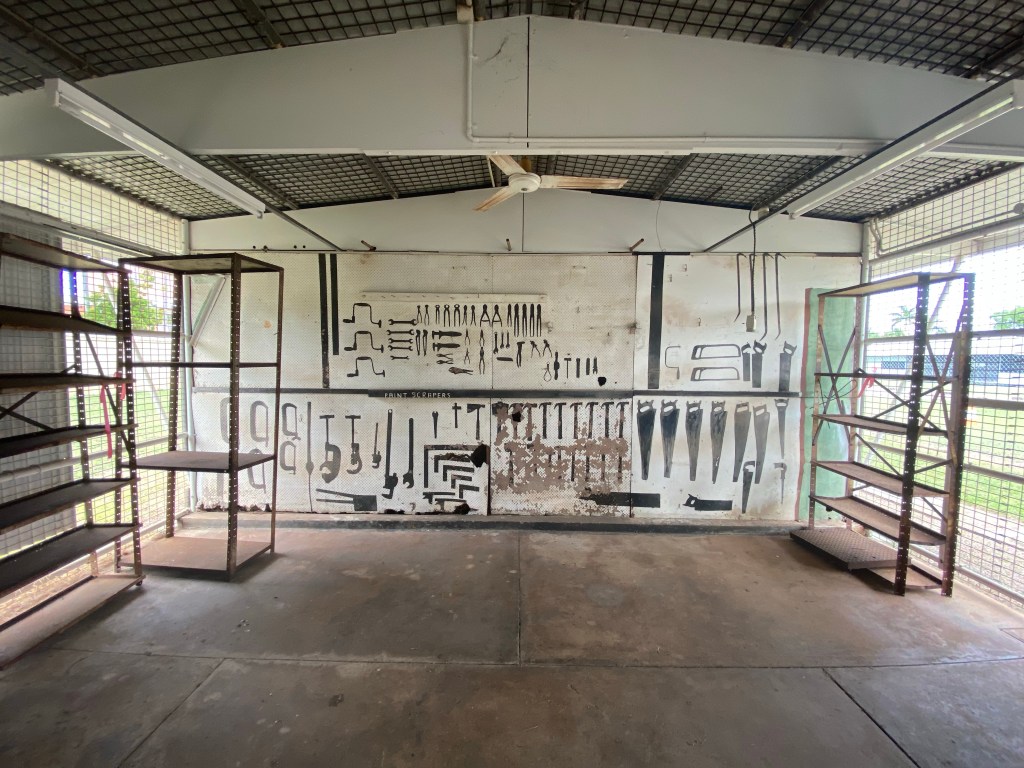
The Stores
This building was erected in Jan 1958 and used as a prisoner reception area for issuing clothing and storing personal effects. Toward the end of 1958, the building was modified to include office space for the Gaoler and the Chief Guard.
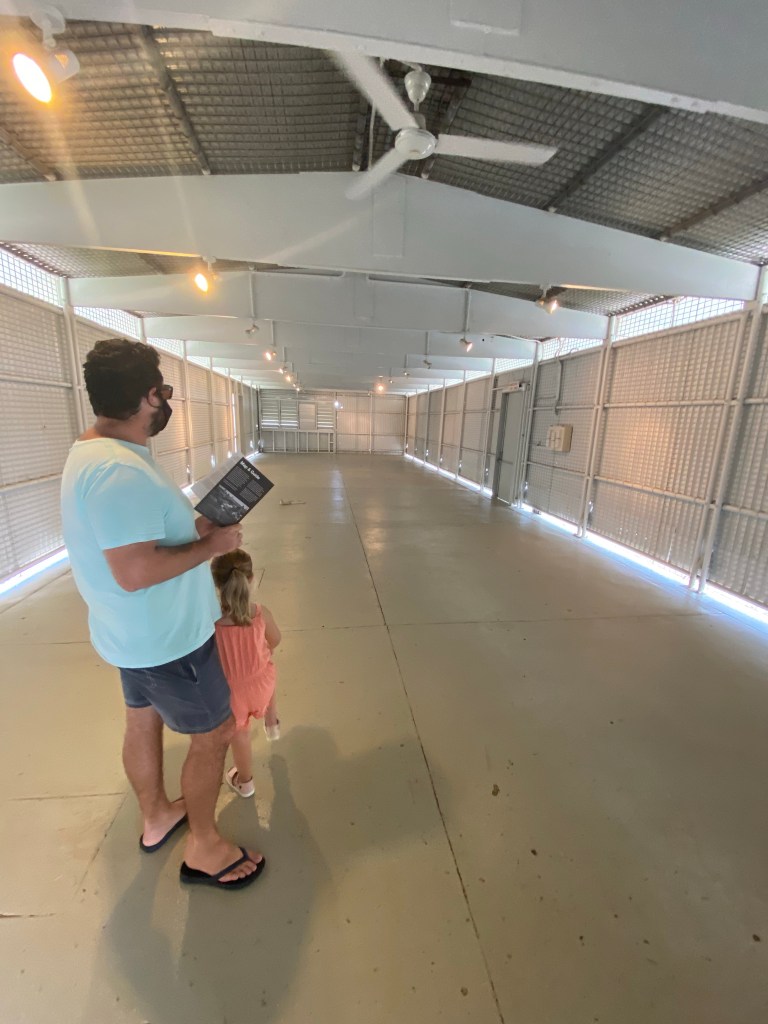
The Remand Section and Medium Security C Wing
An area were prisoners were held before being sentenced and was later used as prisoner accommodation.
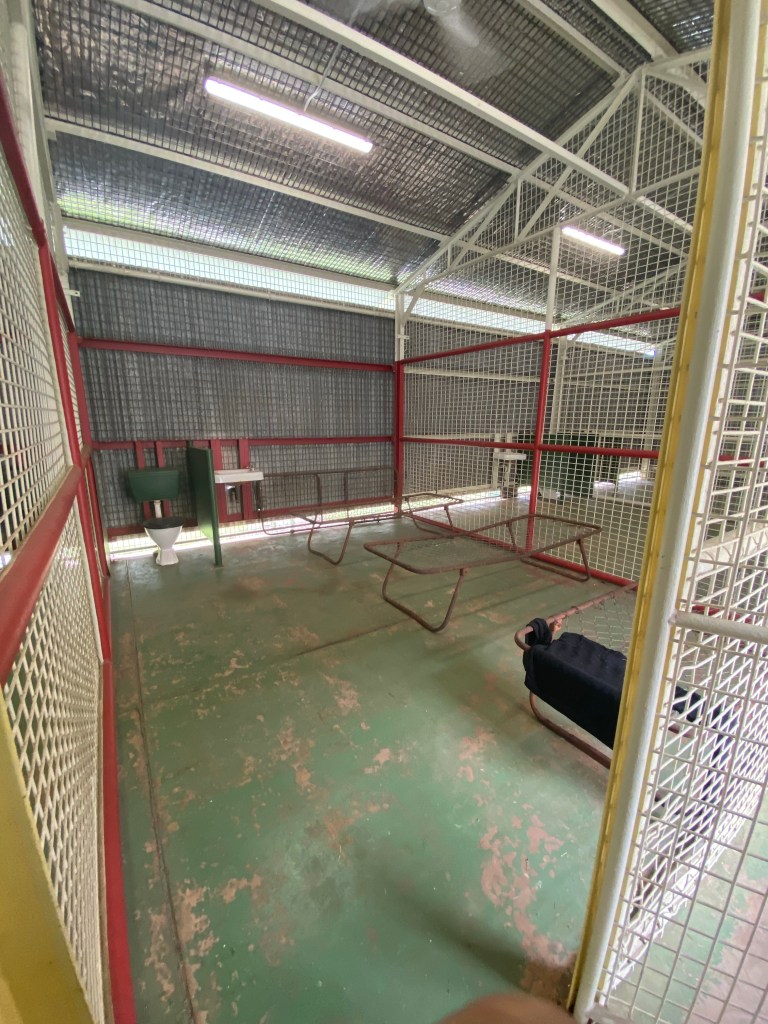
This building was made from modified Sidney Williams huts which were installed in the 1960s. The corrugated iron and internal weldmesh design appears rough, but prisoners preferred it to the isolation of closed cells.
The Infirmary
A porcellanite building dating back to 1887.
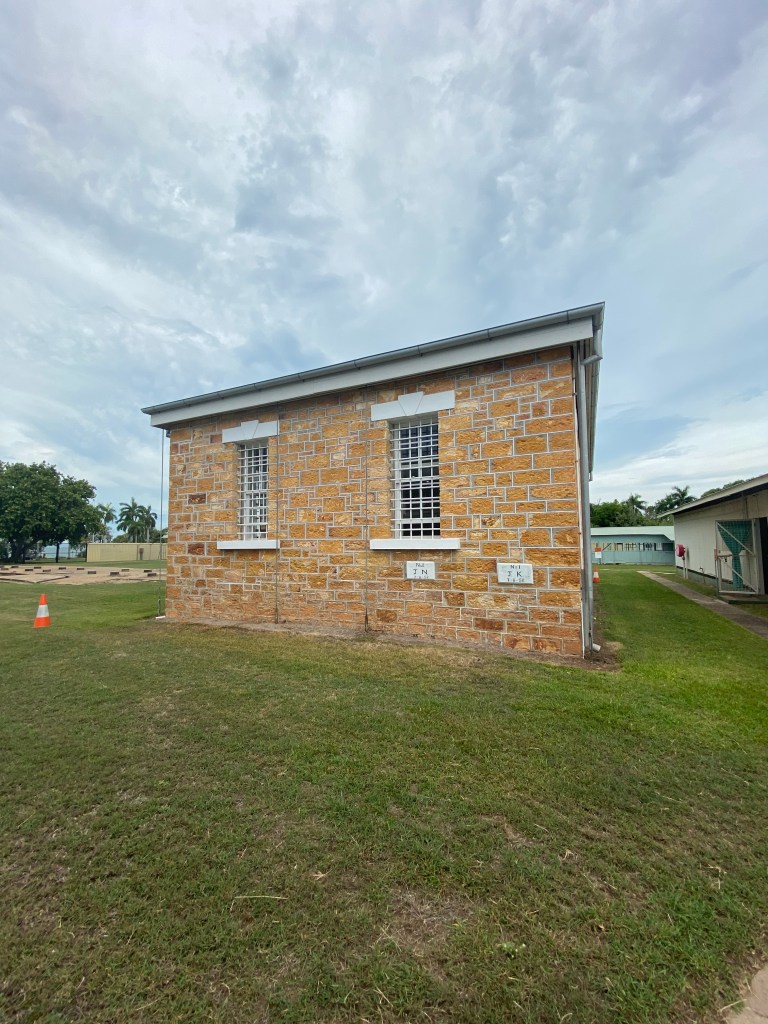
At least eleven men were executed in the Territory for the crime of murder. Of these, eight have been hanged at Fannie Bay Gaol but only two at the gallows in the Infirmary building.
The 2 men hanged at the Infirmary gallows were Jerry Koci and John Novotny, 2 Europeans who planned and murdered taxi driver, John Grantham. They were executed 7th August 1952.
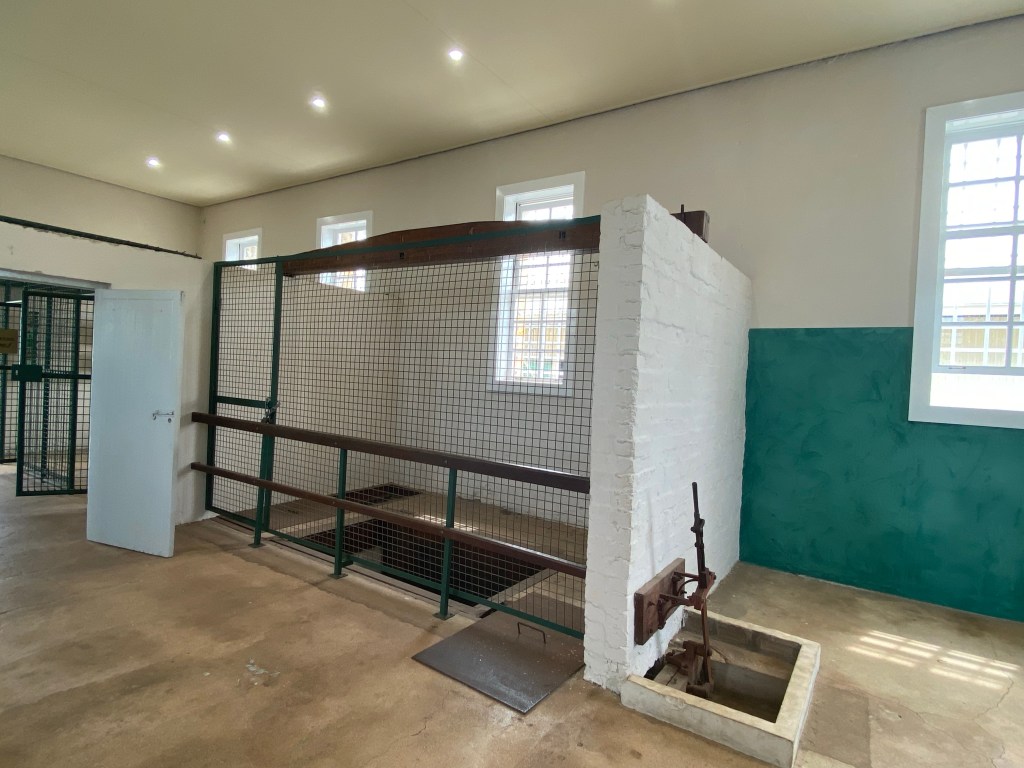
Construction of the gallows began in June 1952 and it was used on only one occasion which was the aforementioned 7th August 1952 executions.
Interestingly this was the only building we walked into that Madeline said she was scarred in. She went into every maximum security cell, no problems. But this open space gave her the spooks.
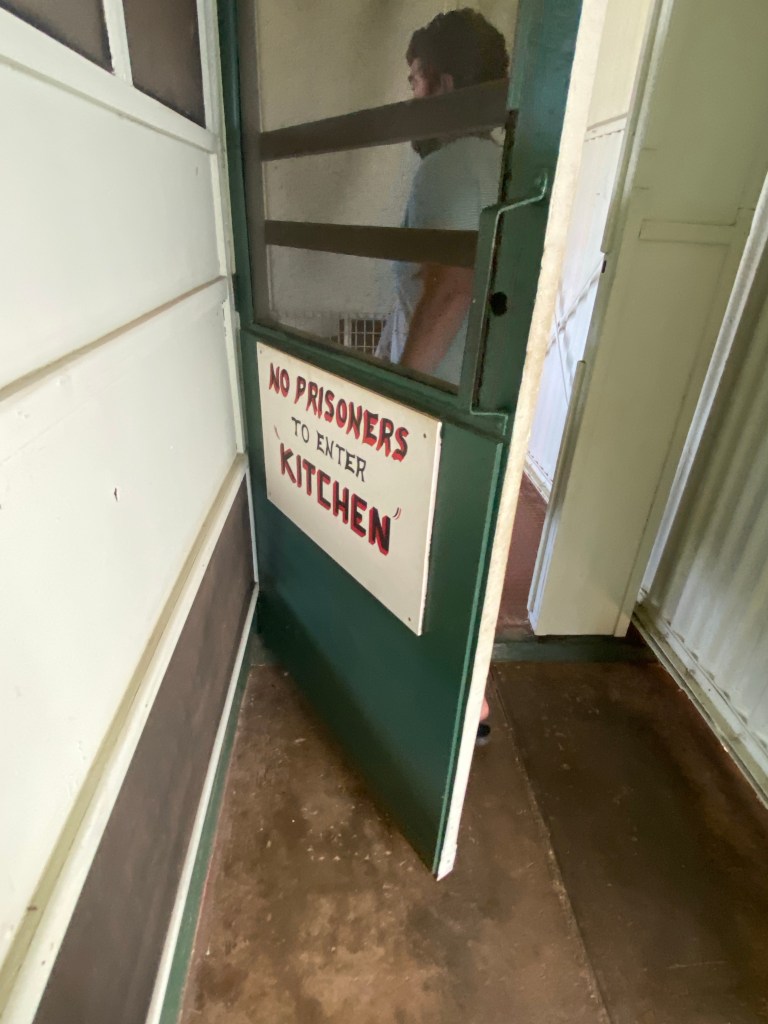
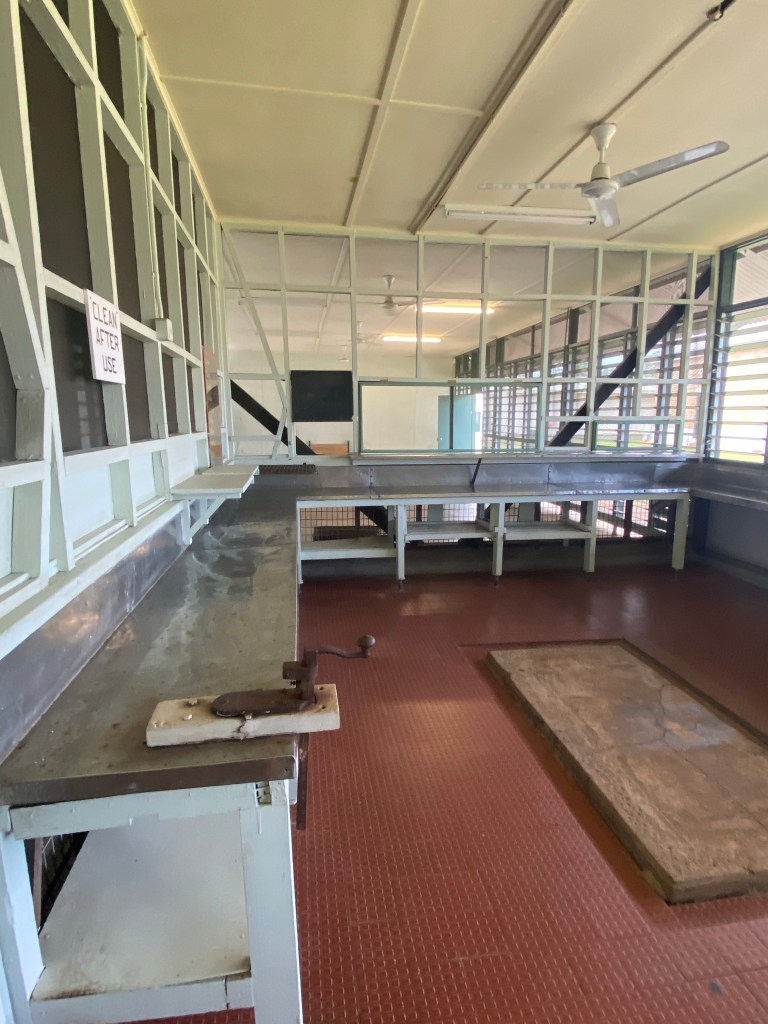
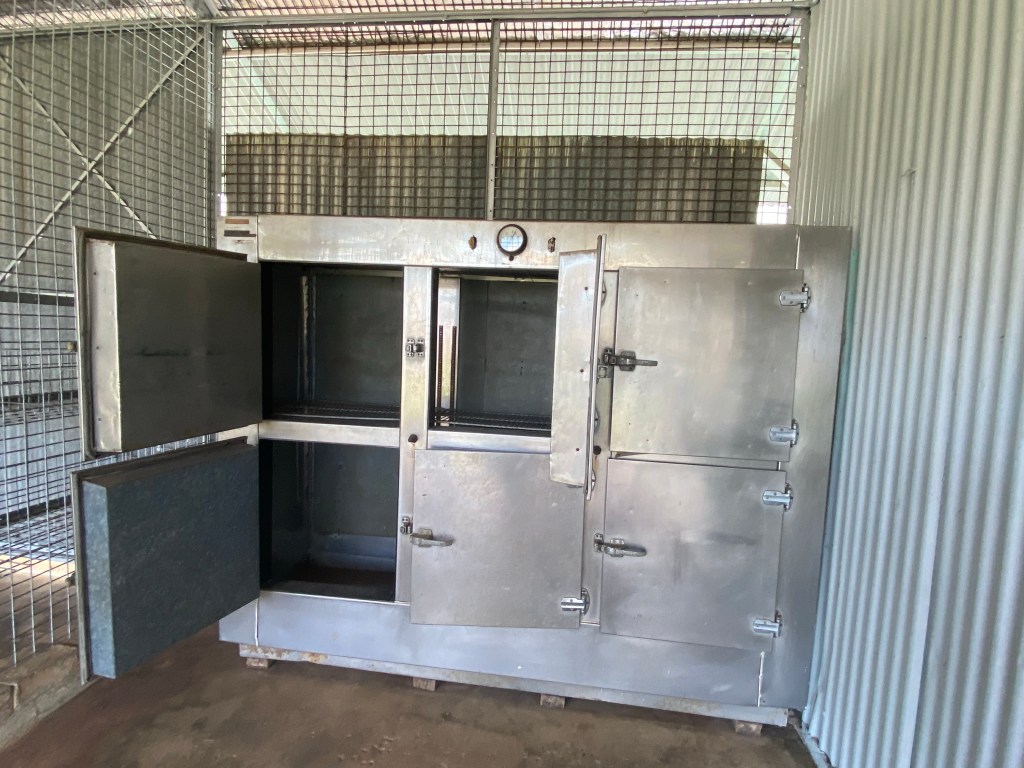
Kitchen and Mess
At the gaol prisoners did not eat in their cells, but ate communally in the mess area.
Maximum Security Blocks A and B
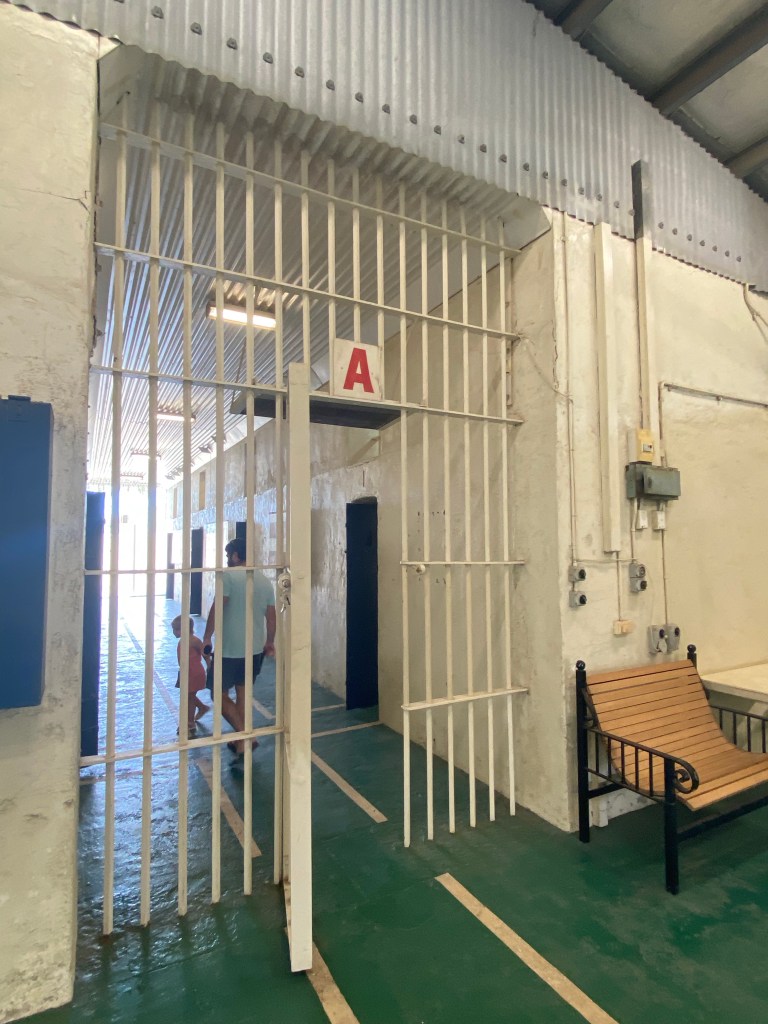
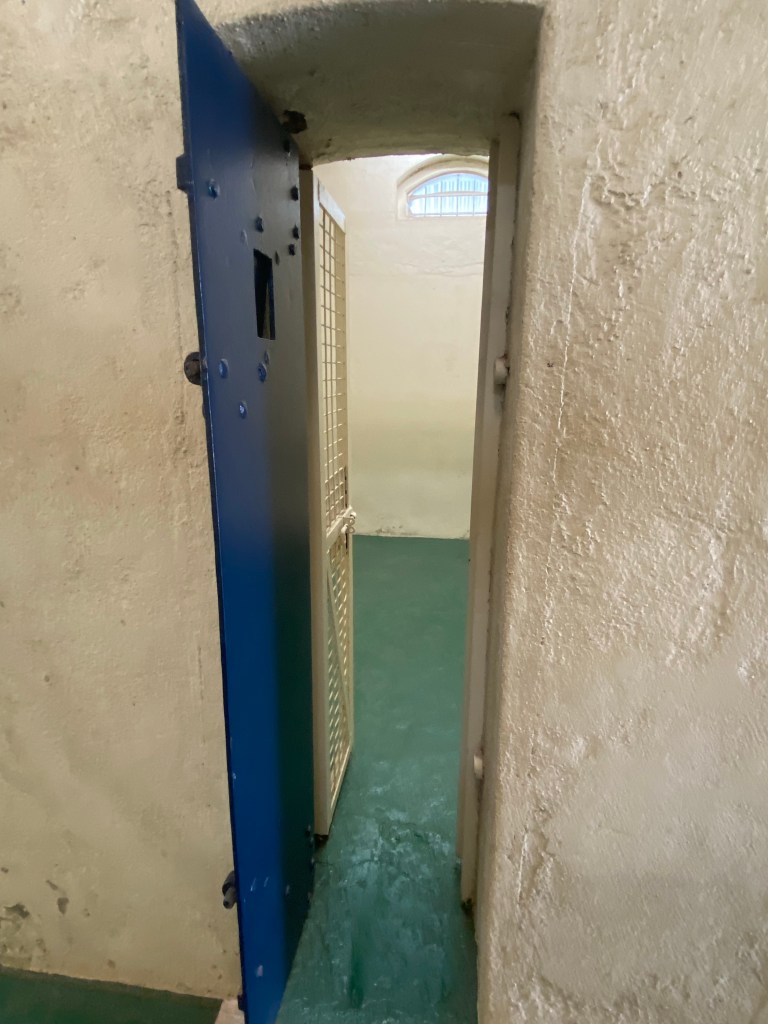
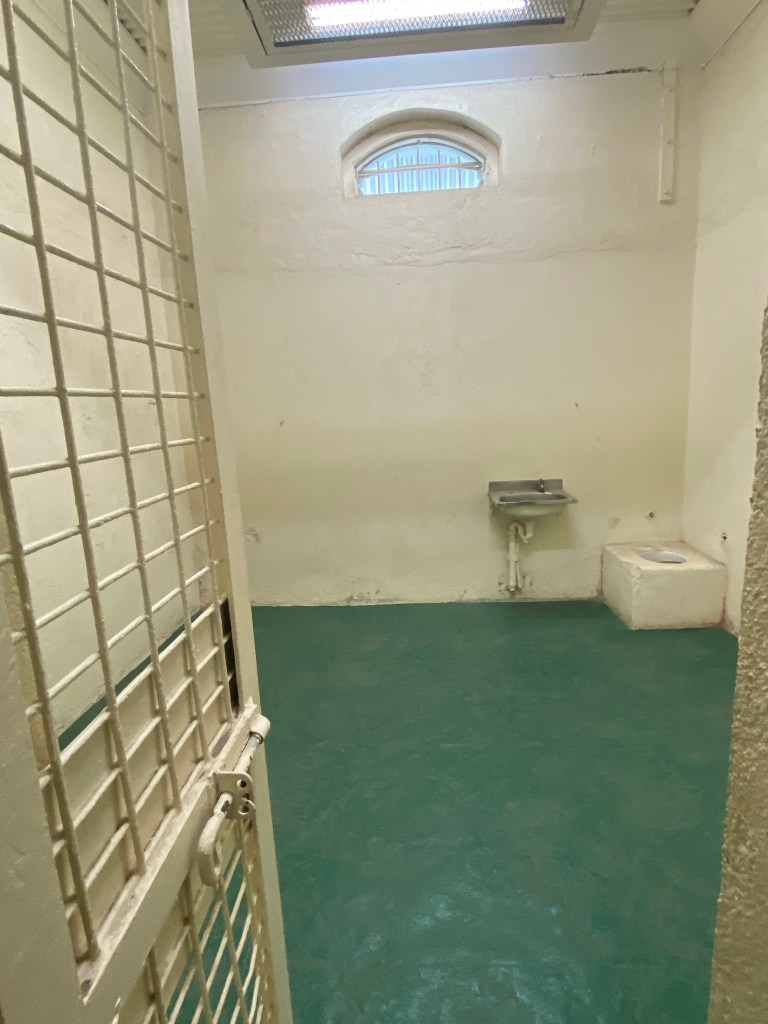
This is the oldest remaining section of the original buildings, built in 1883. Rings to shackle prisoners are still seen in some of the cells.
Each cell contained a minimum of 3 prisoners to reduce sexual behaviour between prisoners.
Ablution Block
Separate Confinement
This building originally fitted out with padded cells, was designed and installed in 1955 to house prisoners thought to be a danger to themselves or others.
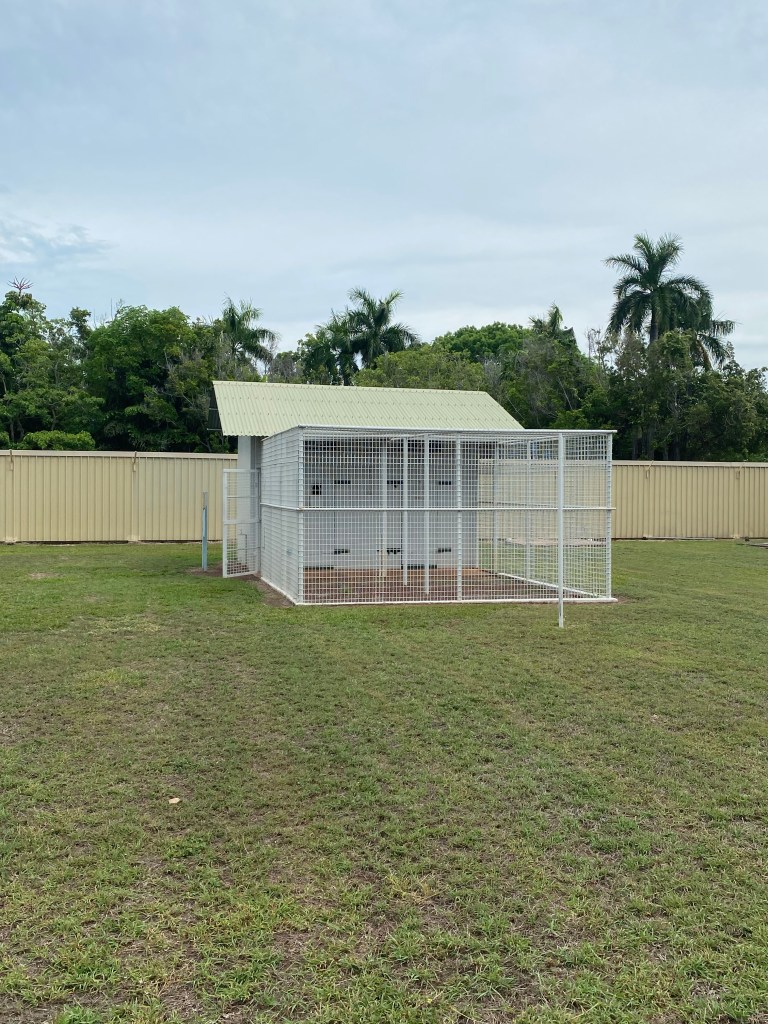
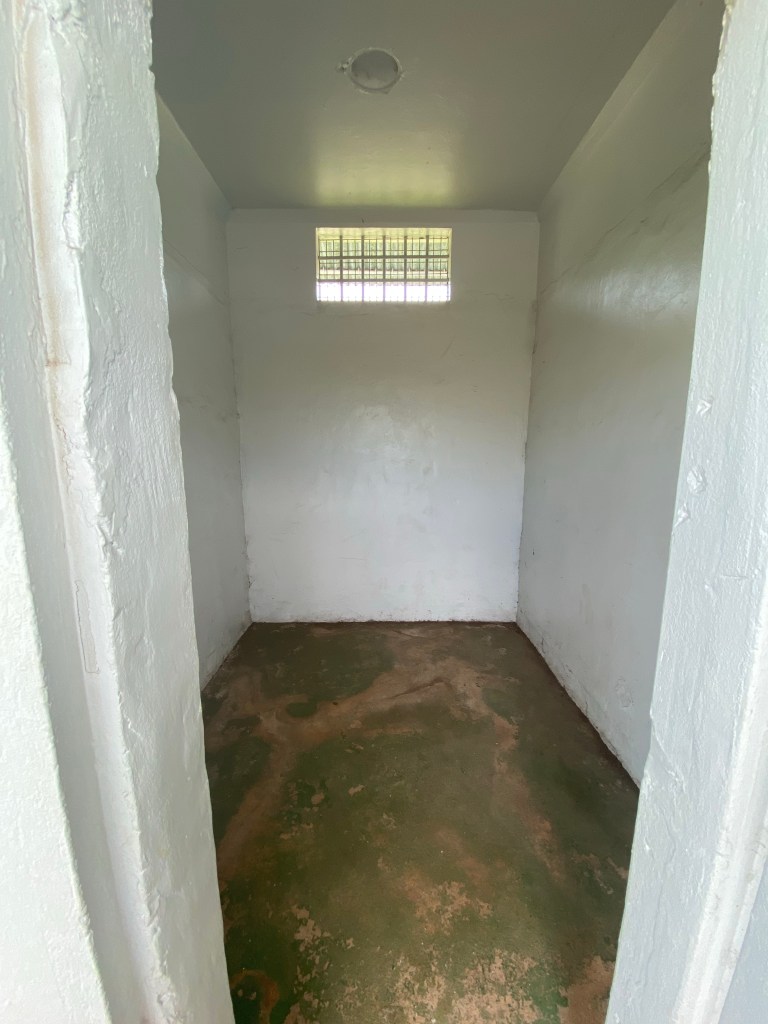
Just adjacent to this building is the Muster Area and Recreation area. One night on muster call, an additional person was counted. The idea that conditions at Fannie Bay Gaol made it good enough to break into was particularly popular in 1950s.

 morrisblog.travel.blog