Monday 4th April 2020
Today we left Coffin Bay for Port Lincoln. it was a beautiful still day as we left Coffin Bay.
Pulling into Port Lincoln we had a beautiful view from the car over the town.
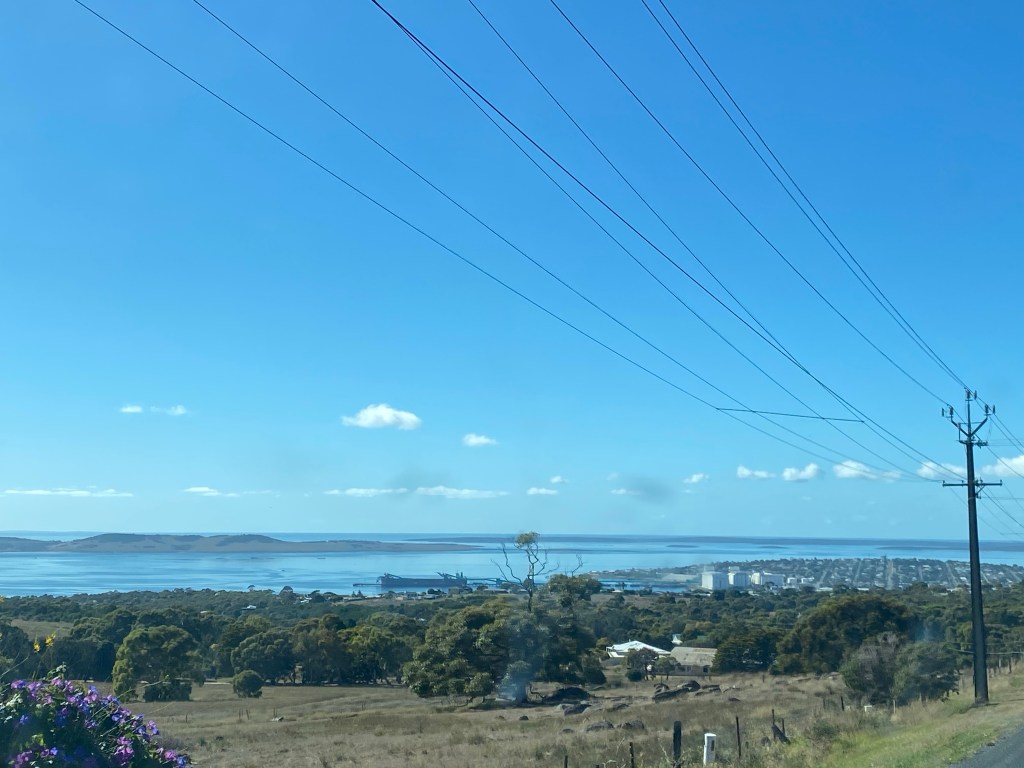
We set up our caravan and went grocery shopping.
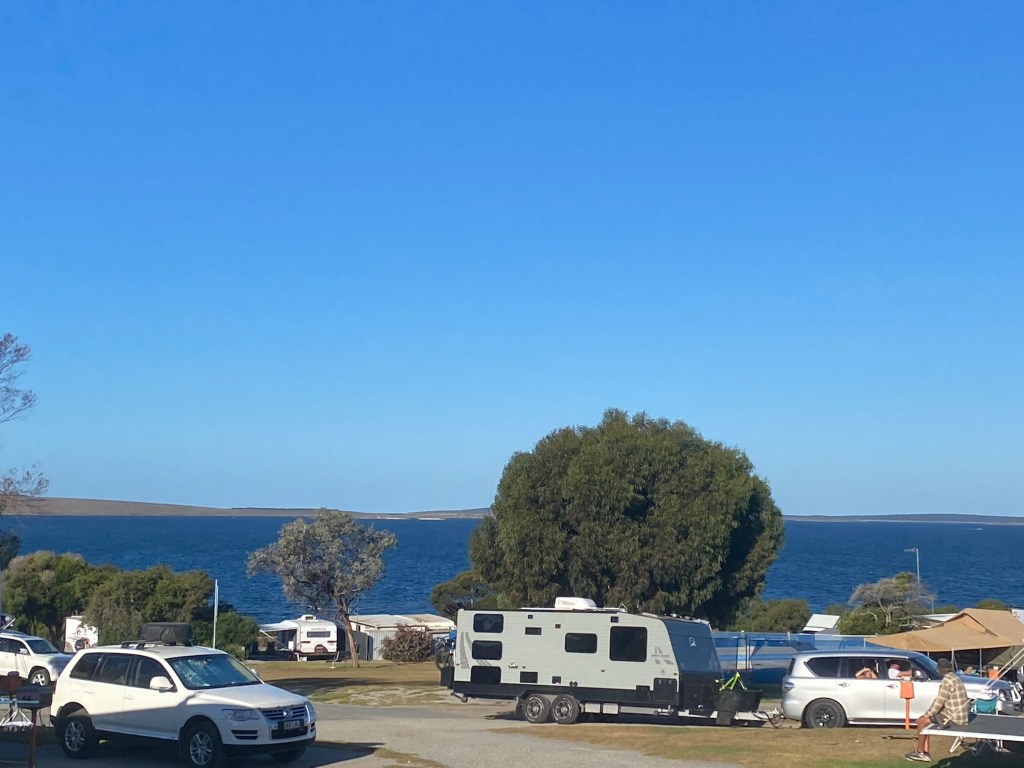
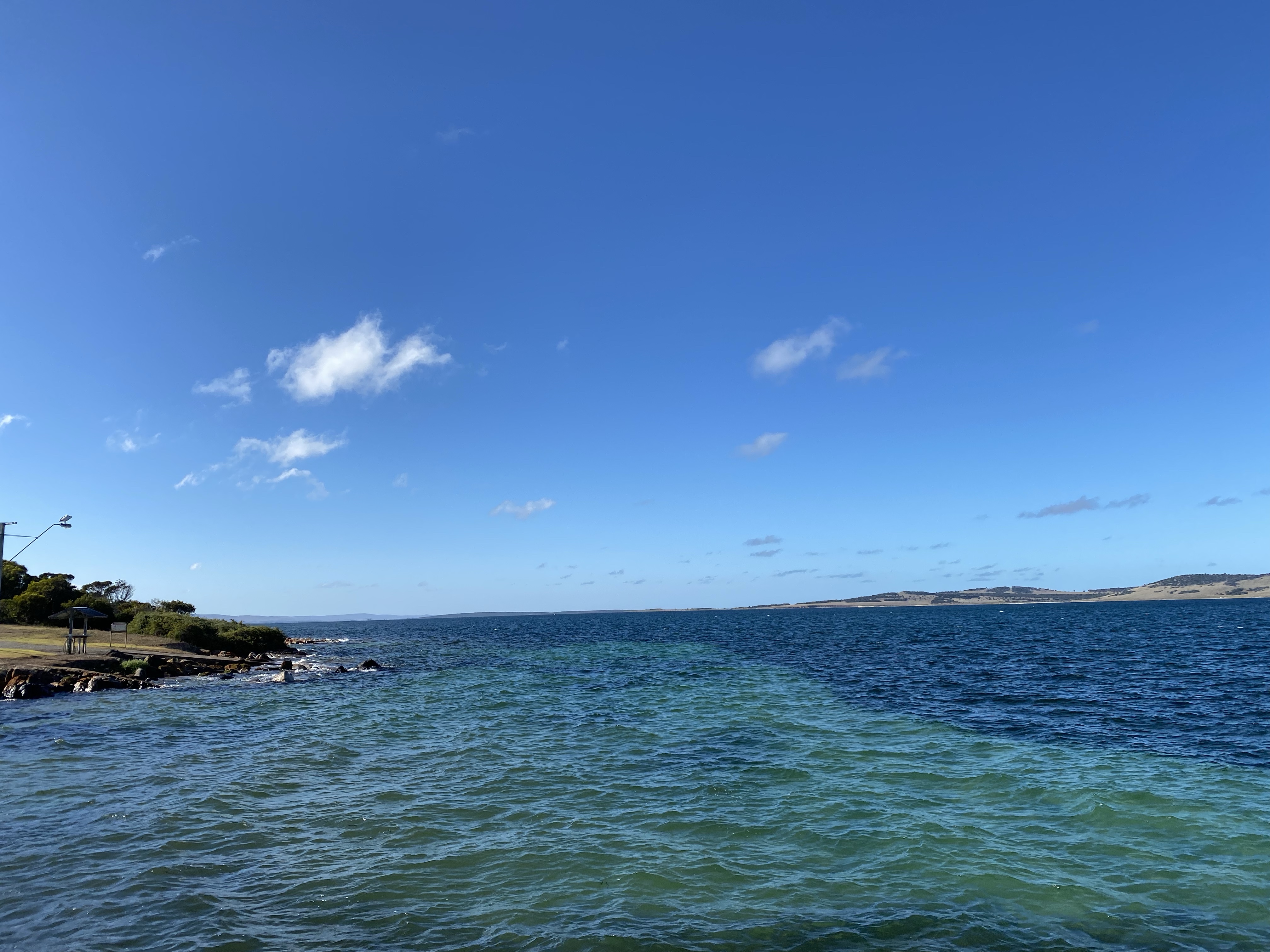
After returning and unpacking, we went down to the foreshore of the Tourist Park and checked out the water.
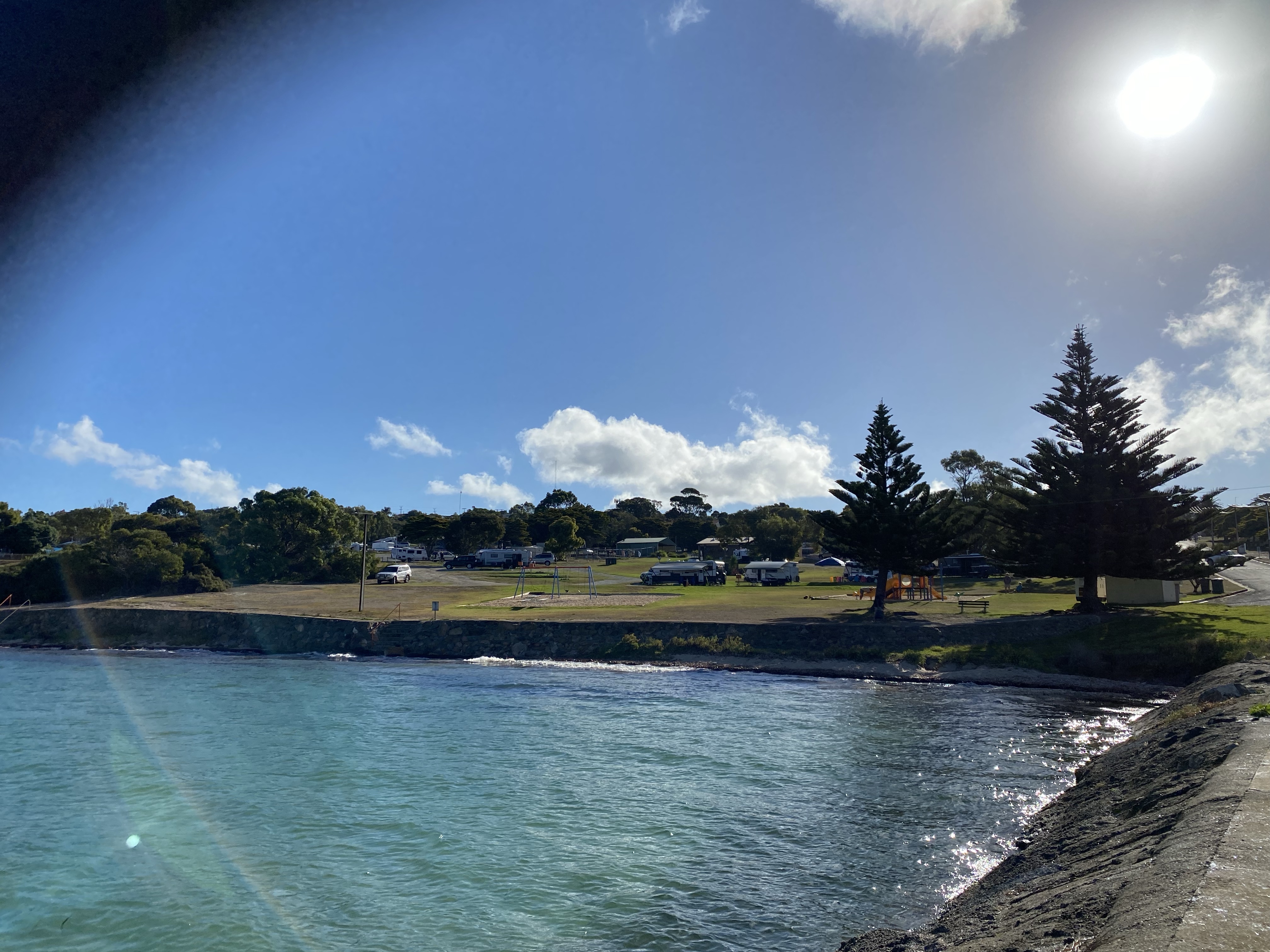
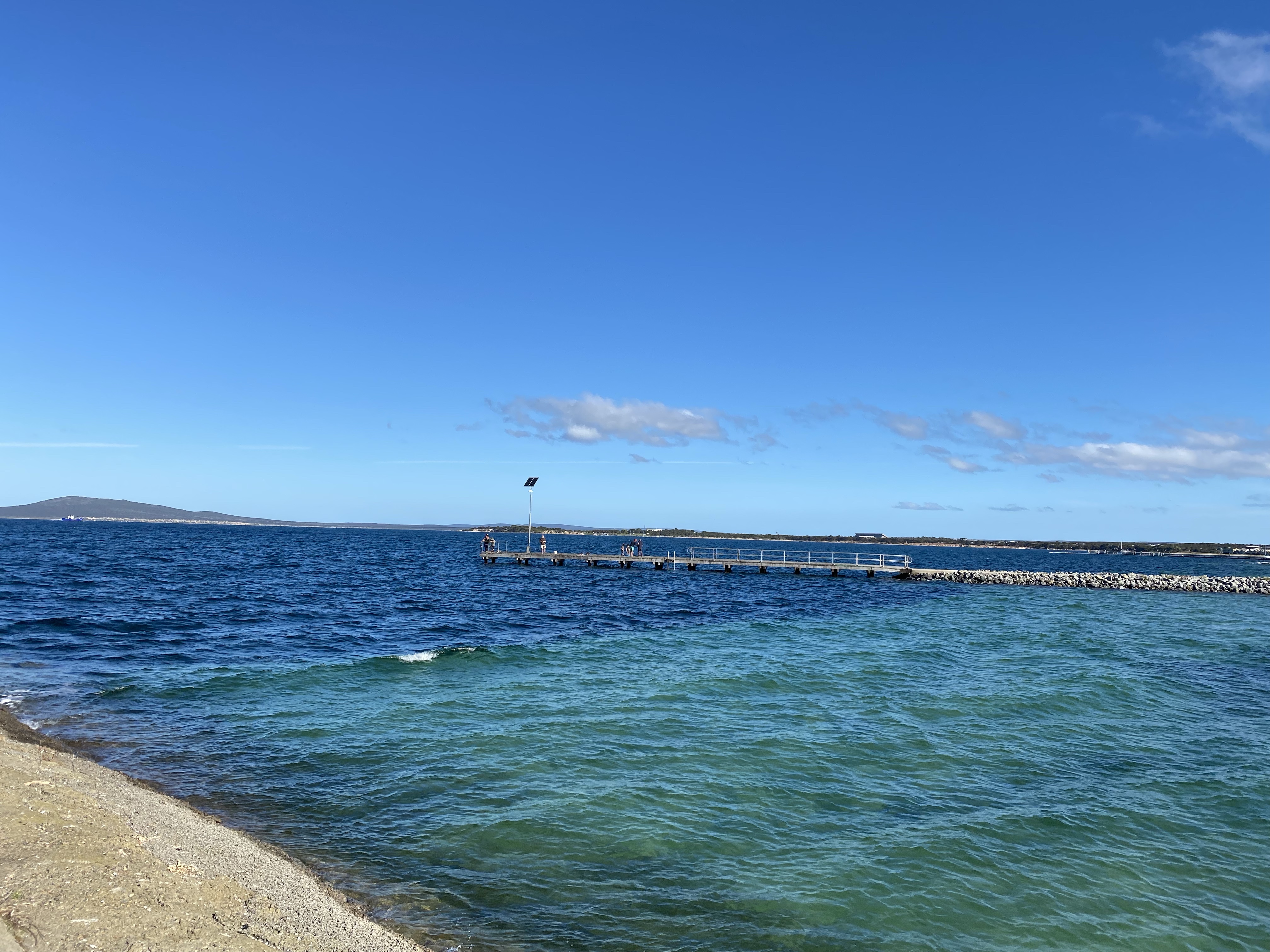
Overnight the winds really picked up and we had to fix our annex up on multi occasions overnight as it kept collapsing.
Tuesday 5th April 2022
By mid morning we packed the annex away and it started raining.
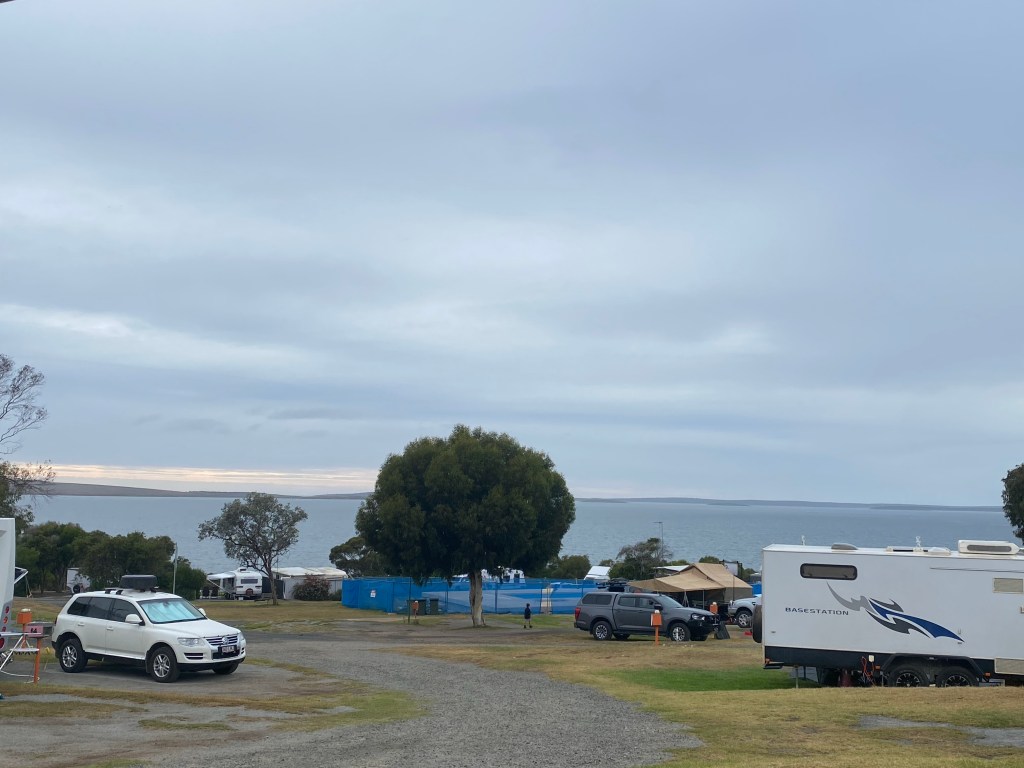
It was a dismal cold and windy day. We stayed indoors and hung out with Babcia and Dziadzio.
Eva really wanted to stay a natural oyster for the first time. We bought half a dozen and tried one natural and one with lemon juice.
Jason went first. He absolutely couldn’t swallow it. He spat it out after having his gag reflex going crazy.
Eva tried it next and was unimpressed by the sea salt taste of it. It was really like drinking seawater from a shell. The lemon one cut through the salt a little bit was not good enough to make her like it.
It’s definitely not going to be on the menu at all. Jason couldn’t and wouldn’t try the lemon juice one.
Wednesday 6th April 2022
The sun was back but the wind persisted today.
We braved the wind and went out to Mill Cottage Museum.
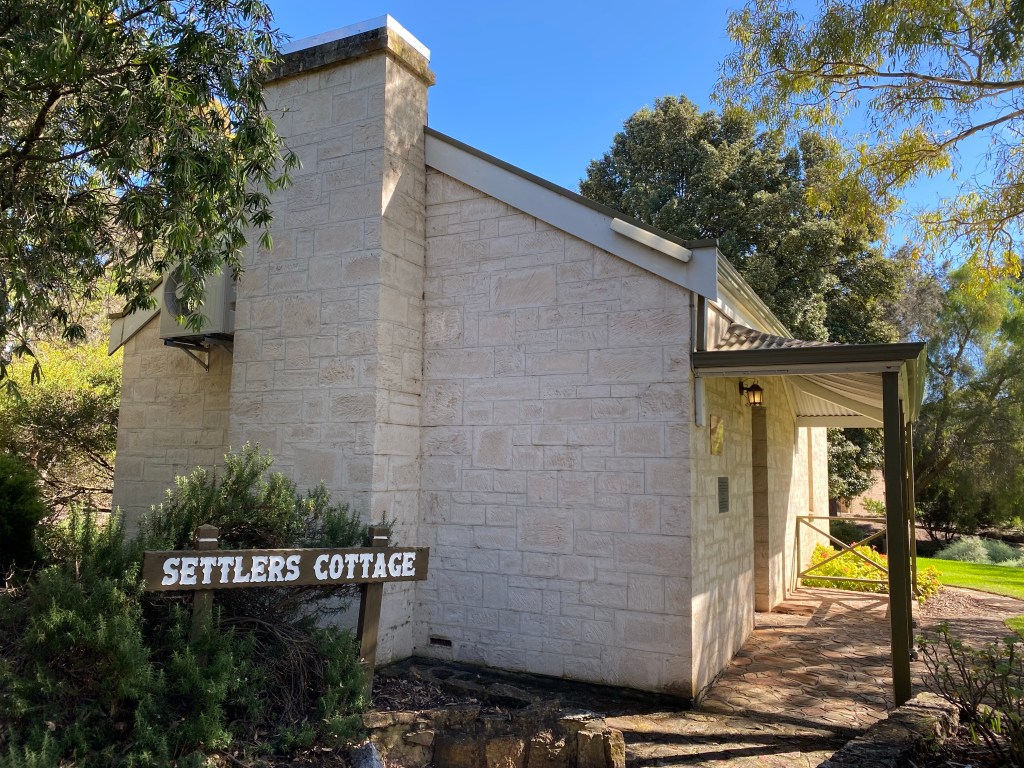
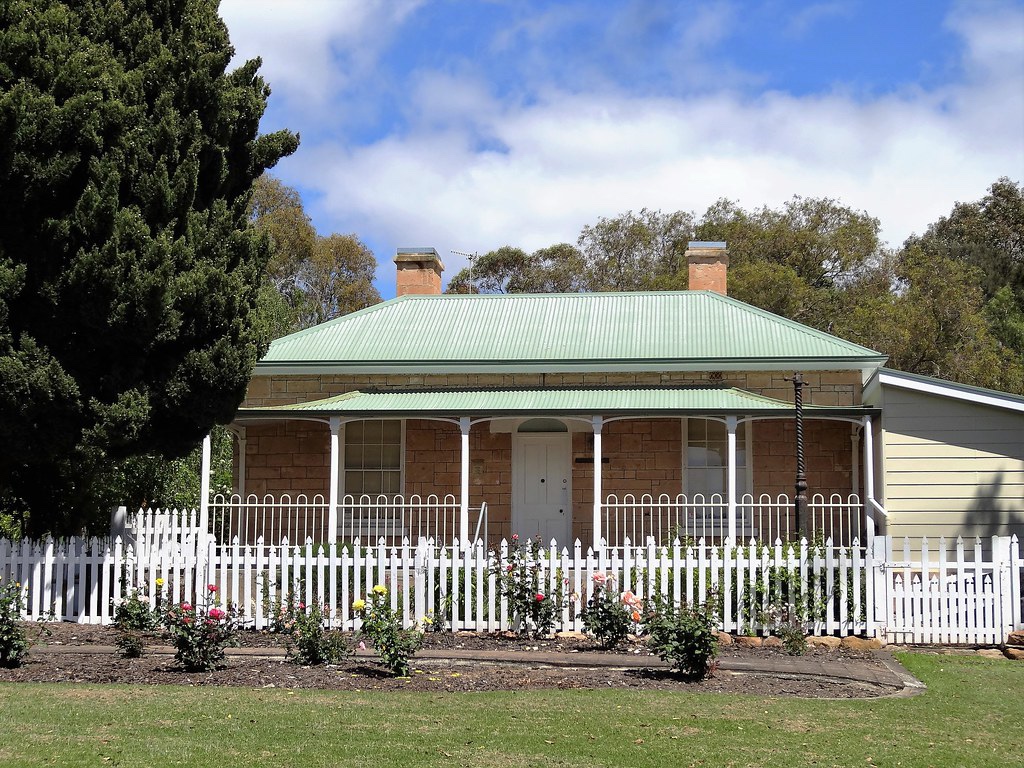
The Bishop Family and Mill Cottage
This cottage was built in 1866 for Joseph Bishop, by his father Captain John Bishop.
John Bishop
Captain John Bishop was one of the earliest settlers of Port Lincoln. He arrived on the brig Dorset in March 1839. The family ran the first store and had ownership of extensive parcels of land, including Boston island.
His wife was Esther, herself the daughter of an early settler, Joseph Kemp.
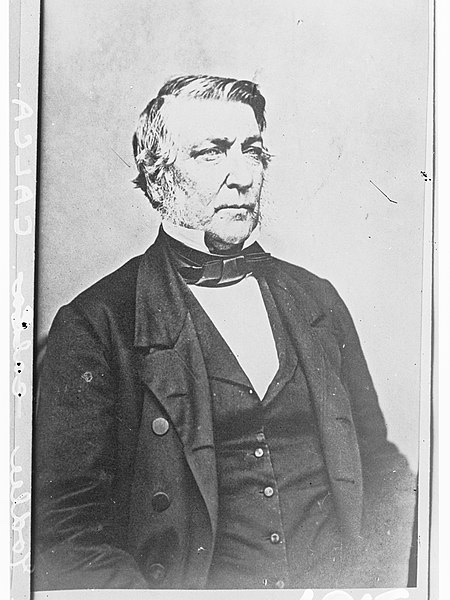
Joseph Bishop
Joseph married in 1868 and raised 6 children in the cottage. He was the oldest surviving son of Captain John Bishop.
Joseph’s marriage to Elizabeth Hammond produced four children, Sidney, Ethel, William and Amy.
His second marriage, after Elizabeth’s early death, to her sister Ethela produced two more sons Geoffrey and Myles.
When Joseph died in 1937, the house and surrounding land passed to his daughter Amy who lived there until her death at the age of 86. Amy never married, but became well known as a water colour artist.
After visiting the museum we stopped at the foreshore of the Main Street of Port Lincoln.
We had ice cream and did a short stroll down to the jetty.
We returned to the caravan park for lunch. We then went to wash and vacuum the car.
We had an early dinner today and an early bedtime as we are all a little tired.
Tomorrow is our last full day in Port Lincoln.
Port Lincoln
Port Lincoln is the only city on the Eyre Peninsula. Located on Boston Bay (a bay which is more than three and a half times the size of Sydney Harbour and, thus, the largest natural harbour in Australia) and nestled on the easterly side of the Eyre Peninsula.
The original Barngarla name for Port Lincoln was Galinyala. Barnhart a occupied these lands before European settlers.
Matthew Flinders was the first European to reach Port Lincoln under his commission by the British Admiralty to chart Australia’s unexplored coastline. On 25 February 1802, Flinders sailed his exploration vessel HMS Investigator into the harbour, which he later named Port Lincoln after the city of Lincoln in his native county of Lincolnshire in England.
A couple of months later on 19 April, Nicolas Baudin entered the same port and named it Port Champagny.
Port Lincoln, proved popular with pioneers and developers. The first settlers arrived on 19 March 1839 aboard the ships Abeona, Porter and Dorset.
In 1840, one year after settlement, the population of Port Lincoln was 270. There were 30 stone houses, a hotel, blacksmith’s shop and a store in the Happy Valley area. Around this time, Edward John Eyre explored the peninsula that was subsequently named in his honour.
By 1936 the population had grown to 3200 and the town had a first-class water supply. The port had become the commercial pivot for the area, providing for its many agricultural and commercial requirements.
City status was granted to Port Lincoln on 21 January 1971.
Today it is a successful commercial centre which is economically driven by the grain-handling facilities (the foreshore is dominated by the 47-metre-high grain silos which can load barley and wheat at a rate of 1500 tonnes per hour); the canning and fish processing works; lambs, wool and beef, fertiliser production and, in recent times, the vast wealth which has been made as a result of tuna farming for the Japanese market.
Port Lincoln has Australia’s largest commercial fishing fleet (which makes it one of the wealthiest cities in Australia) and fish farming has grown so that there are now tuna farms, kingfish farms, mussel farms, abalone farms, oyster farms and even seahorse farms in the area.
Thursday 7th April 2022
Today was our last down in Port Lincoln. It was still really windy and cold outside.
Today we stayed mainly indoors entertaining the girls.
Babcia and Dziadzio looked after the girls while we went fishing for several hours. We were not overly successful. We caught a crab, a squid that self released, a stingray that snapped the line and 3 under sized king George whiting.
We did however have a close encounter with a sealion who was photo shy. It came under the jetty, turned on its back, stared at a us for a split second and dove under the water again. It disappeared. We caught a tiny bit of footage of it popping it’s head up out of the water.
We went grocery shopping for some extra bits that needed to be bought fresh.
We came together with Babcia and Dziadzio for dinner, having KFC. Then it was an early night for us all.
Tomorrow
We travel on to Arno Bay for 2 nights.

 morrisblog.travel.blog