Sunday 4th April 2021
Tonight we woke up at 630am after a wonderful night sleep. Madeline yelled from her bed “it’s Easter, the Easter bunny has come.”
After gathering all our eggs and having an Easter breakfast, we began packing up the rest of the caravan.
We had to don our rain jackets as it was raining today. We managed to get moving after taking our time, at around 930am.
We left Agnes Water after 5 weeks of fun and memories.
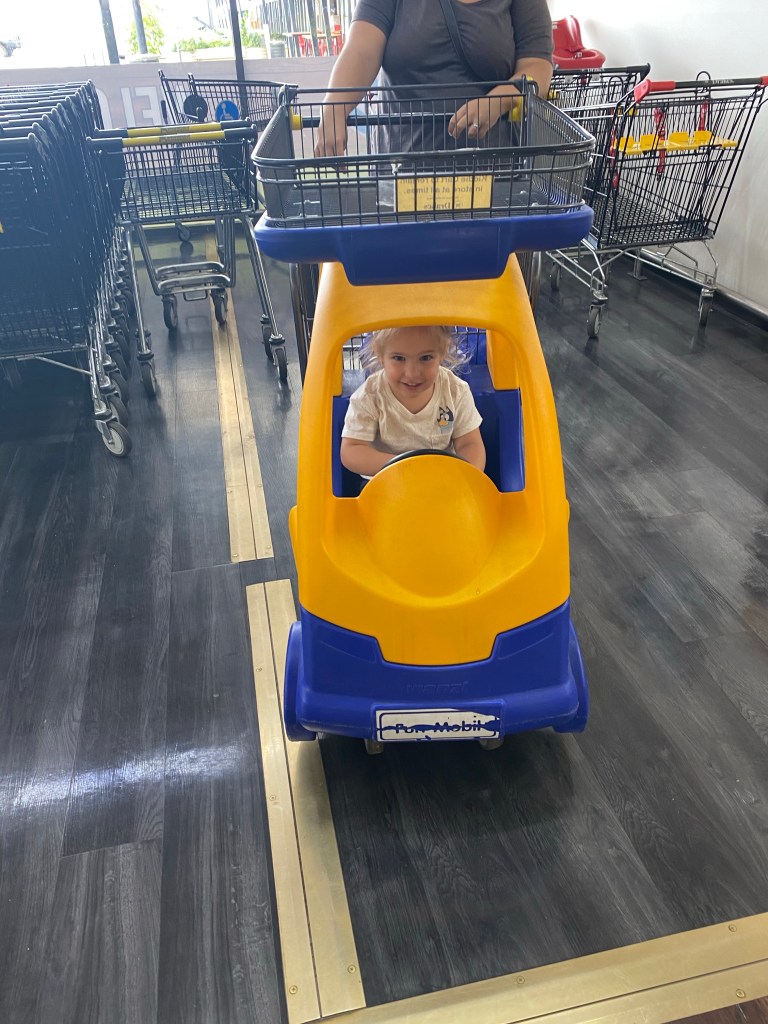
We set out north on the Bruce Highway toward Rockhampton. We travelled in the rain until it stopped at Benaraby. We found parking at Calliope and went to do our weekly shopping. The supermarket, Drake’s, had awesome kids trolleys.
We had lunch and made our way to our rest stop over for the night at Calliope River.
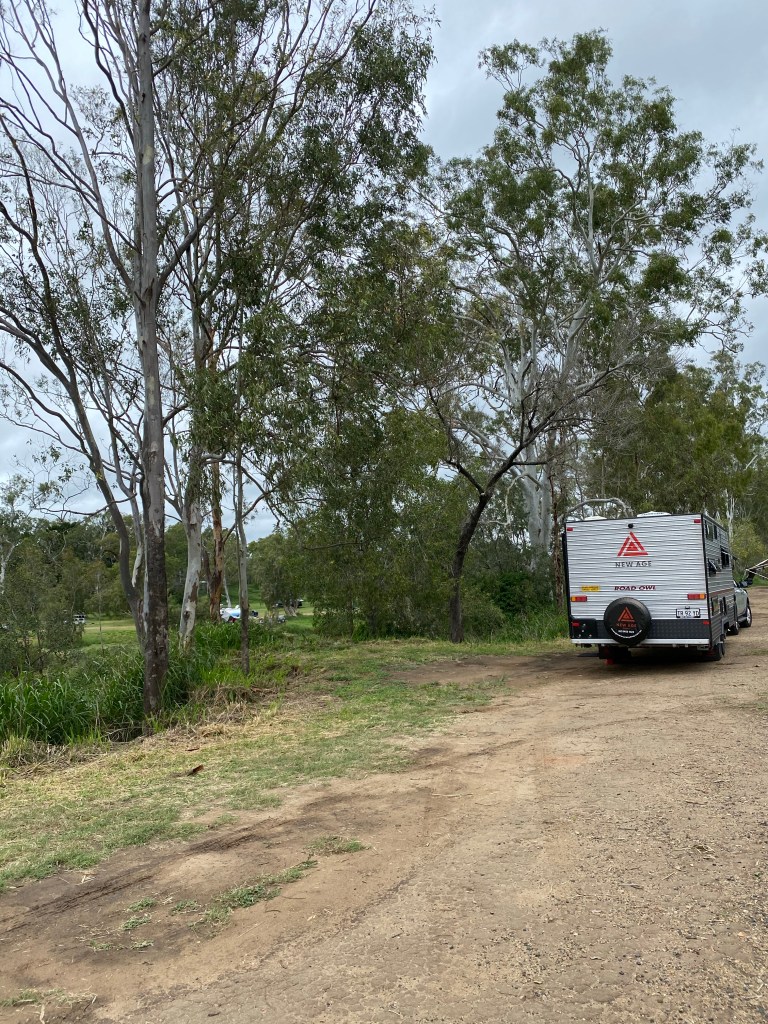
We pulled into Calliope River North Rest Area, found a spot, levelled up and parked.
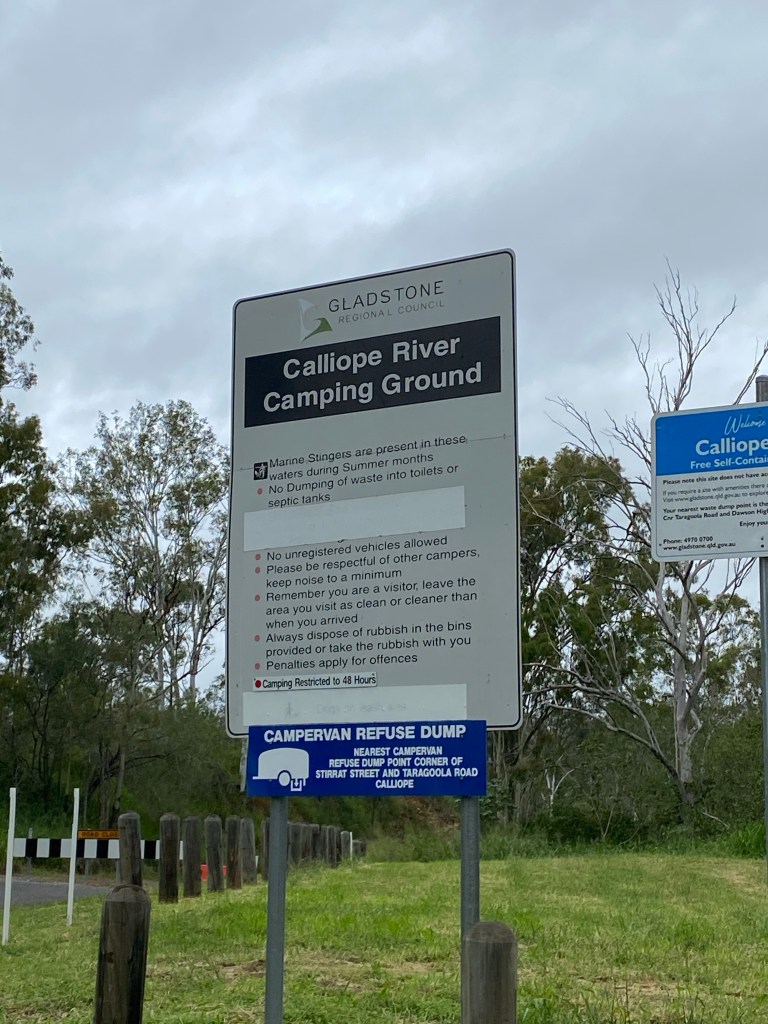
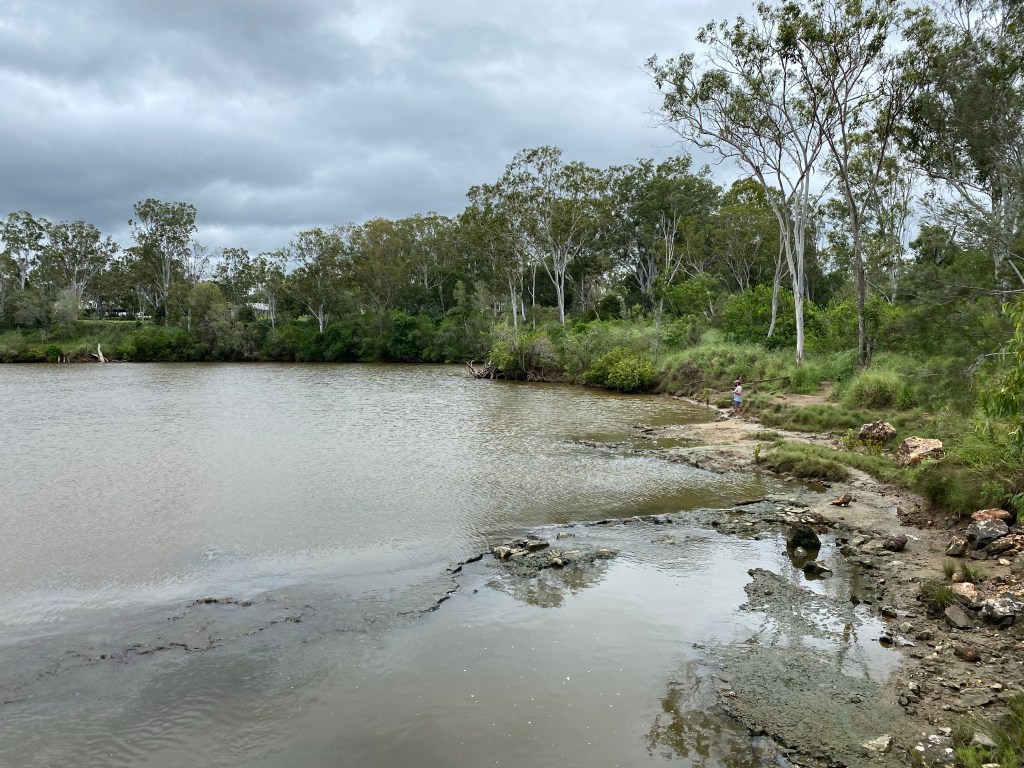
After we set up, we walked down to the bridge over the river and had a good look around.
We then had a cup of tea before detected in the rest area for an hour. We found a few pieces of tin can, some conduit, a bottle top, a pull tab and not one but two zippers.
We came back to the van and settled in for dinner and bedtime.
Calliope, QLD
Calliope is a rural town in the Gladstone locality and is 22km South-West of Gladstone.
The town came into existence as Queensland’s first officially proclaimed goldfield in 1863. When the gold was exhausted it went into decline.
Its Name
In 1854 the town and the local river were named by Governor Charles Augustus FitzRoy after the HMS Calliope. The HMS Calliope was the vessel in which the governor was travelling.
History
Prior to the settlement of Europeans the area around Calliope was occupied by the Gureng Gureng Aboriginal people.
In 1854 Governor Charles Augustus FitzRoy sailed the HMS Calliope up the river.
The town was surveyed and alluvial gold was found in 1862. The population had reached 800 by 1864. In that year the local post office opened for business. Alluvial gold was readily won, keeping the diggings active for several years. By 1868 Calliope boasted sufficient permanent settlement to sustain a private school, and three years later the Calliope township was surveyed. A state primary school opened in 1872.
Most of the gold in the district was gone by the mid-1870s.
By 1885 there were only 20 miners left in the district. The town continued as a service centre for the local beef industry.
By 1896 copper had been discovered at Many Peaks, 60 km south of Calliope. A railway was constructed through the town in 1910 from Port Curtis (Gladstone) to Many Peaks.
Today Calliope attracts fossickers for gold, petrified wood and chalcedony.
Tomorrow
We travel up north to Rockhampton. We will be staying in and around Rockhampton for a week.

 morrisblog.travel.blog