Friday 1st October to Sunday 3rd October 2021
Friday
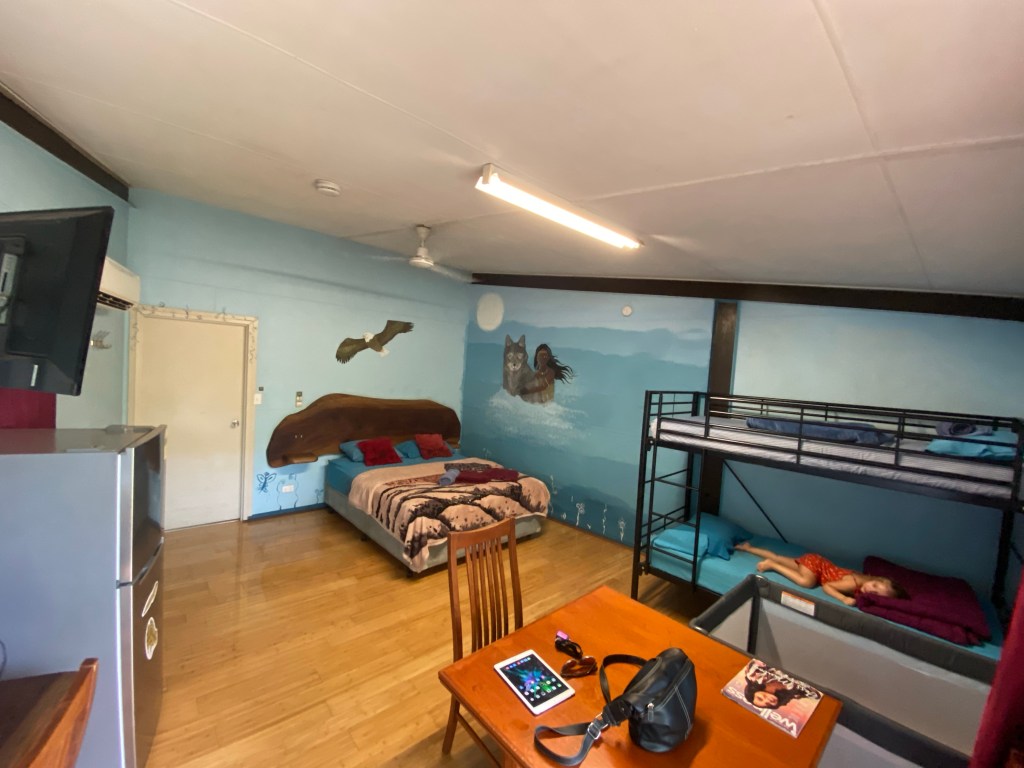
We drove to Batchelor, NT and checked into our accommodation.
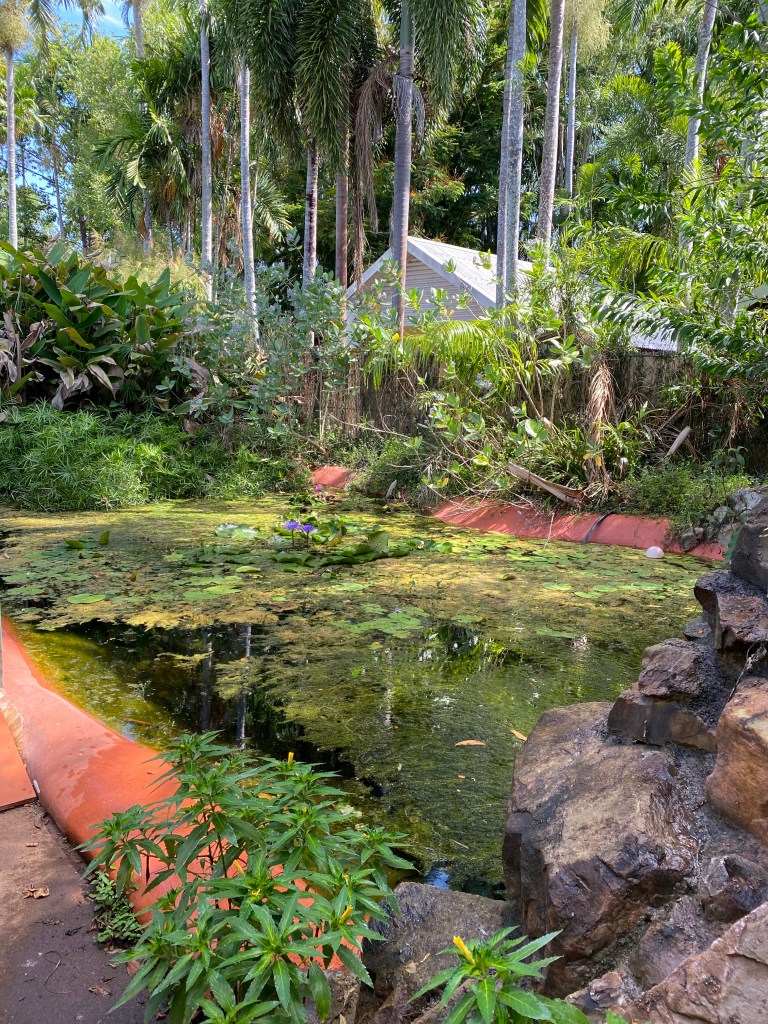
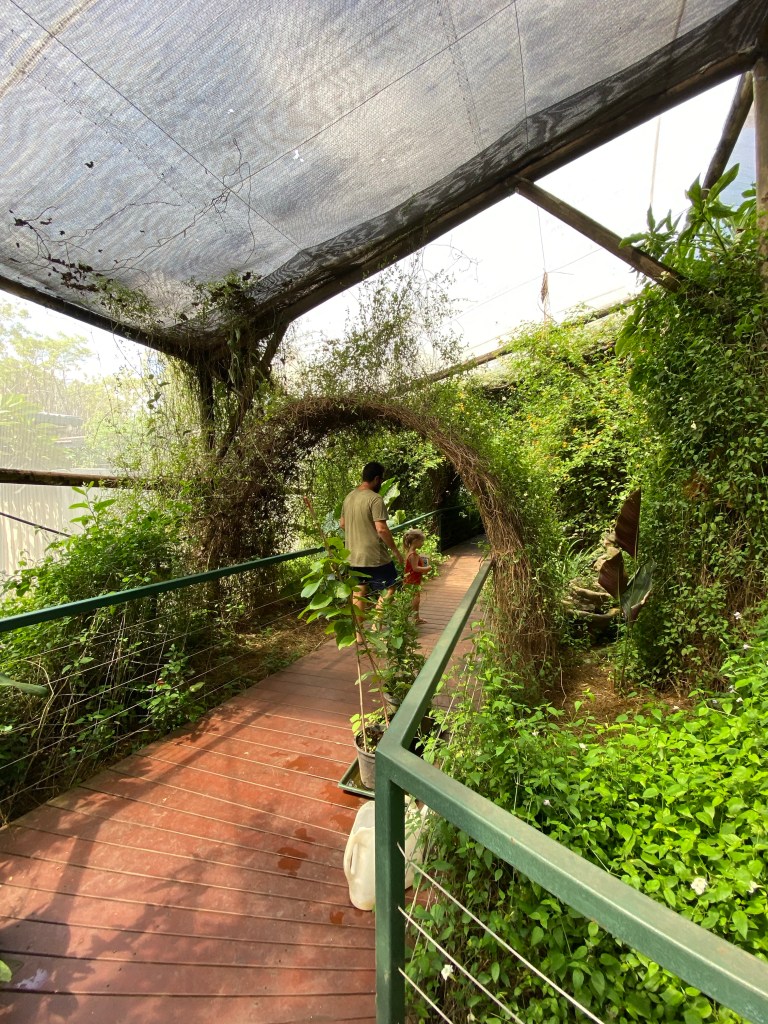
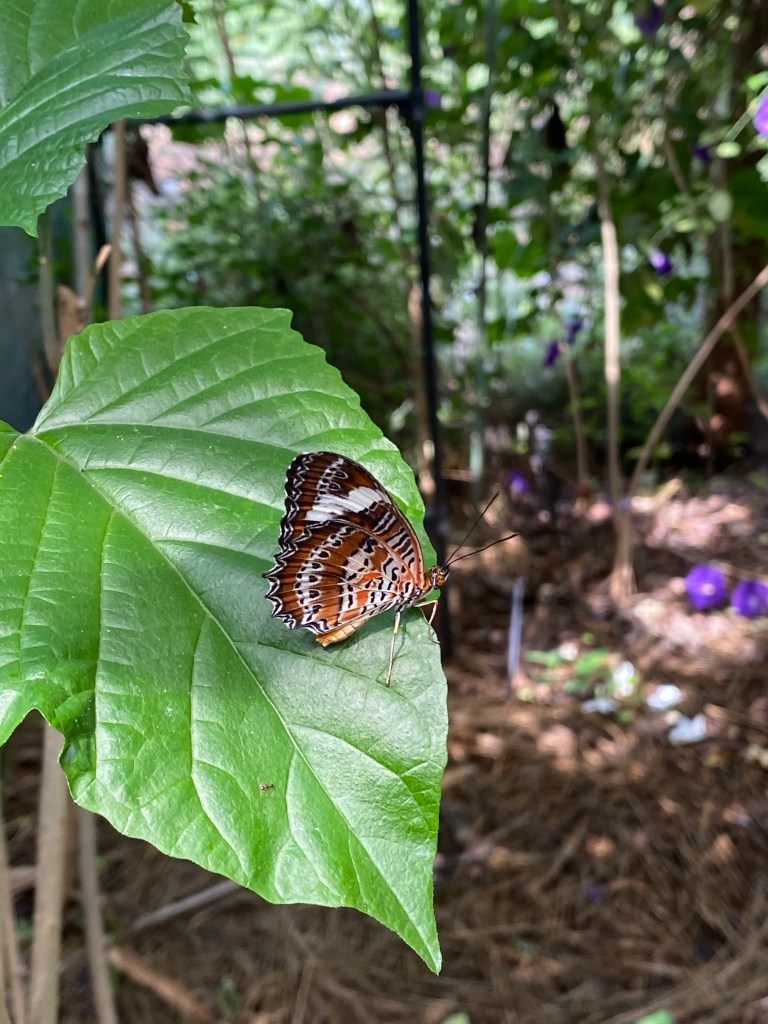
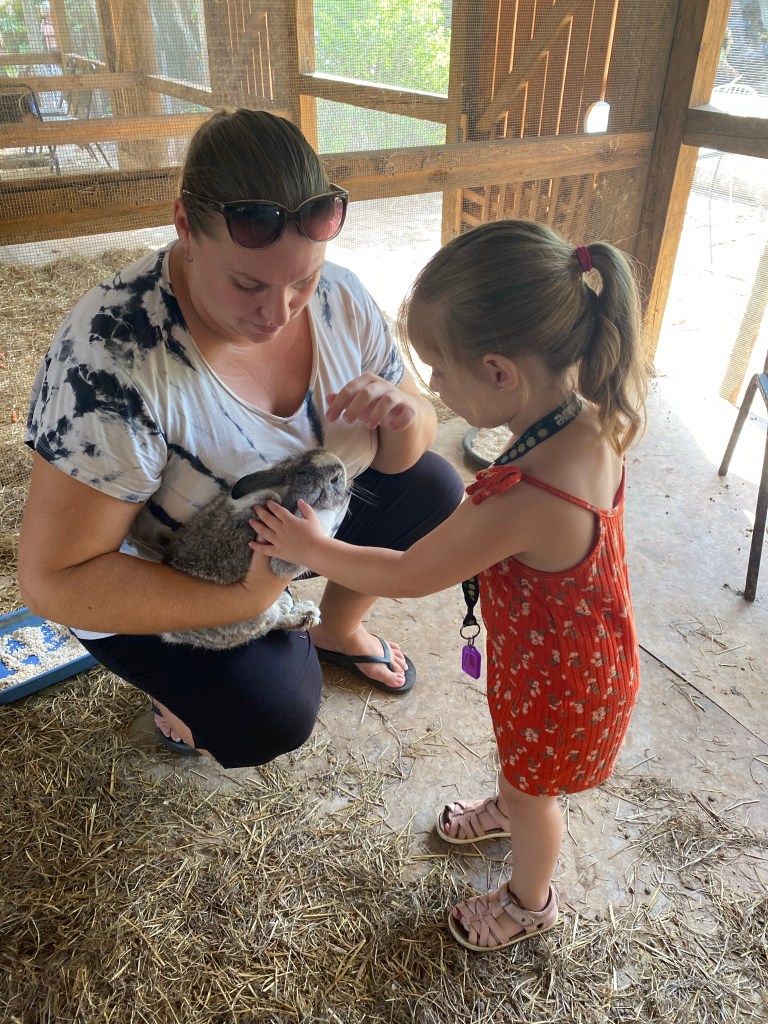
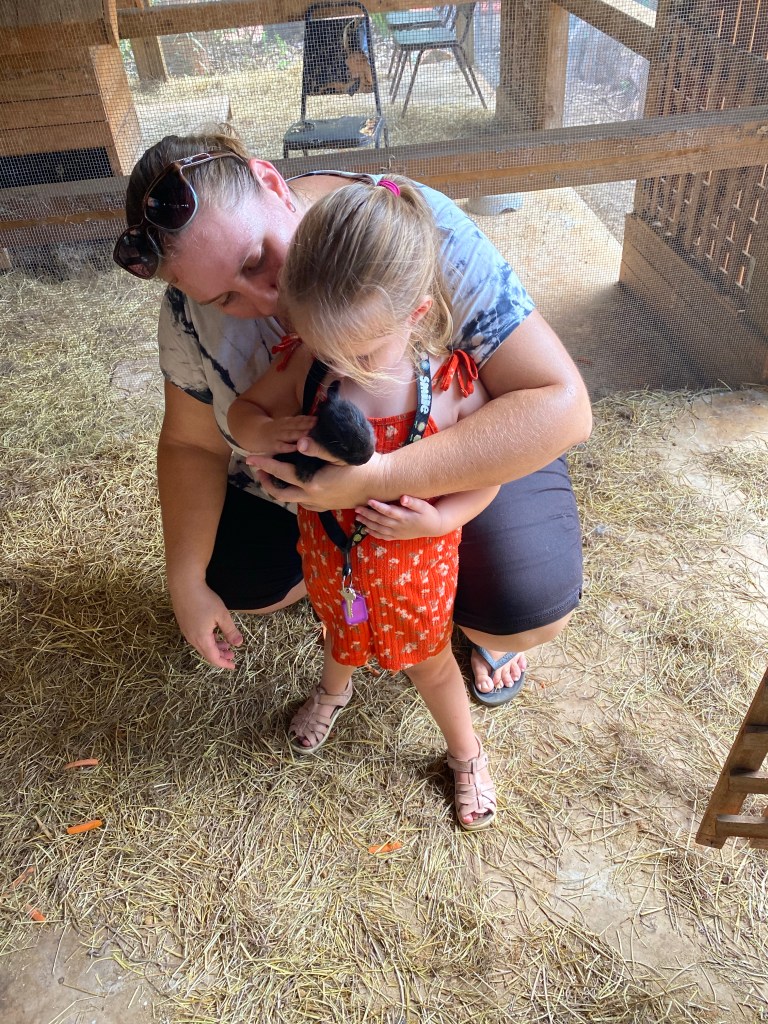
Butterfly Farm Batchelor was our accomodation for the weekend.
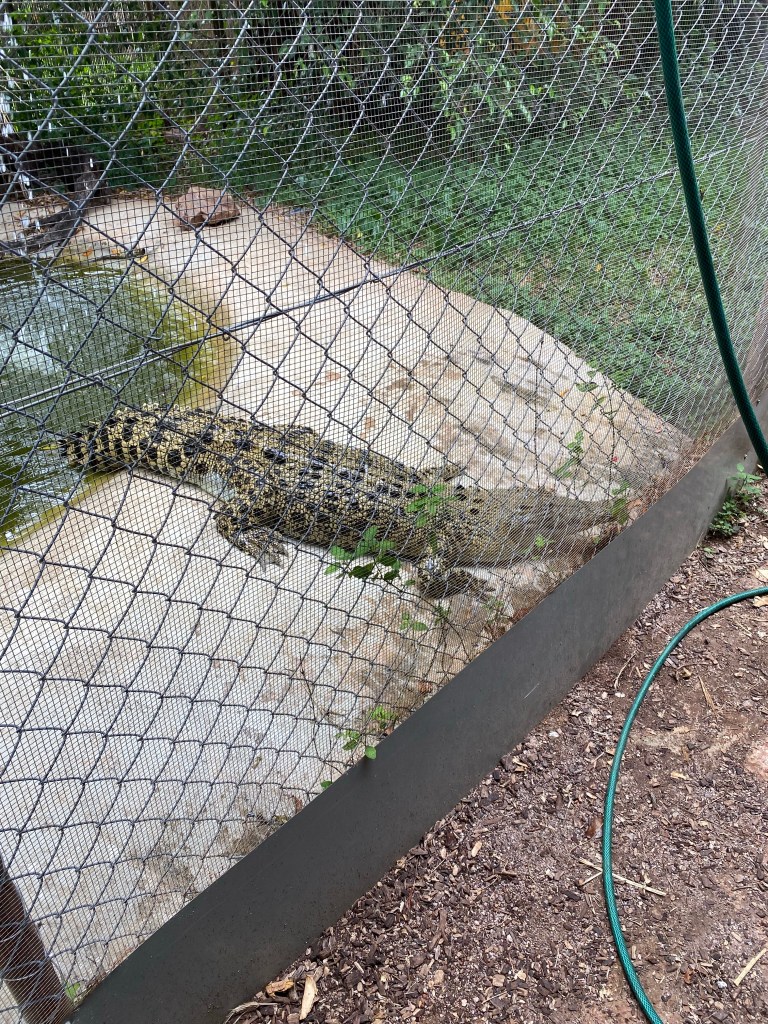
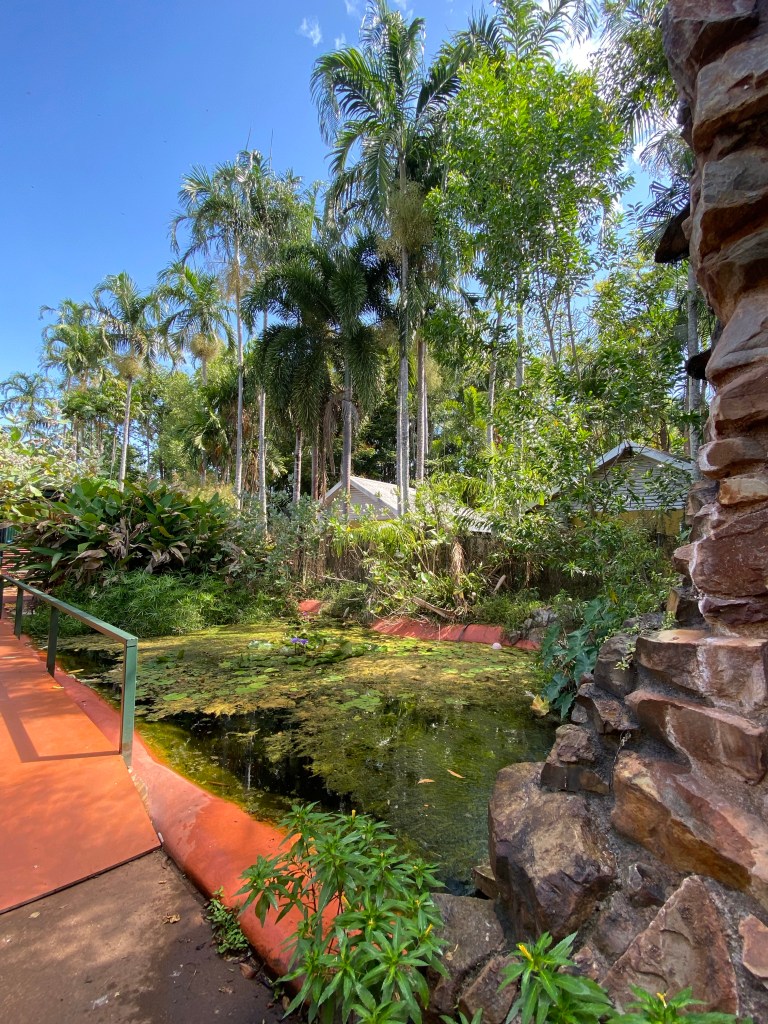
We explored the farm in the afternoon.
Batchelor
Batchelor is located 98 km south of Darwin via the Stuart Highway.
Prior to the arrival of Europeans the area was occupied by Warrai and Kungarakany First Nation people.
In 1872 gold was discovered at Yam Creek and a settlement was created at Rum Jungle.
Batchelor was named after Egerton Lee Batchelor (1865-1912) who was the first minister in charge of the administration of the Northern Territory after it was handed to the Commonwealth by South Australia in 1911. The town was named shortly after Batchelor died in 1912.
The town was small and unimportant until it became a large Allied airforce base during World War II. It was home to US Army Air Forces, Australian RAAF and the Royal Netherlands East Indies Army Air Force.
In 1948 a mining prospector named Jack White discovered uranium at Rum Jungle. He was eventually paid £25,000 for the discovery.
Mining in the area began in 1952 when Consolidated Zinc Pty Ltd began mining the uranium.
The last uranium ore was extracted in 1963.
By 1982 the town was home to the Batchelor Institute, a TAFE college primarily for indigenous students.
In 2011 the local abattoir was reopened. It specialises in cattle, buffalo and camel meat.
Today the town’s survives largely on tourism to Litchfield Park.
Rum Jungle
Located 11 km to the north-west of Batchelor is Rum Jungle.
The settlement at Rum Jungle sprang up in 1872 when the Overland Telegraph construction party found gold at Yam Creek. The miners arrived in the district by walking down the road beside the telegraph poles.
In 1874 a Mr Lithgow built The Rum Jungle Hotel out of rough timber and sheets of stringy bark. The completion of the railway from Darwin to Pine Creek led to the demise of the hotel which was closed in 1889.
Rum Jungle is a direct result of the discovery of uranium in 1948, during the height of the Cold War when atomic bombs were everyone’s worst nightmare. By 1952 the Commonwealth Government, with assistance from various private companies, created the mine.
It was closed in 1971 after producing 3,530 tonnes of uranium oxide and 20,000 tonnes of copper concentrate. It has long been considered one of the most dangerous radioactive areas in Australia
Saturday
Saturday we woke after a nice sleep in our cabin. We were planning on a short day trip into Litchfield National Park today.
Litchfield National Park
Litchfield National Park is an ancient landscape shaped by water. It features numerous stunning waterfalls which cascade from the sandstone plateau of the Tabletop Range.
The Park covers approximately 1500 sq km and contains representative examples of most of the Top End’s natural habitats.
Aboriginal people have lived throughout the area for thousands of years. It is important to
the Koongurrukun, Mak Mak Marranunggu, Werat and Warray Aboriginal people whose Ancestral Spirits formed the landscape, plants and animals and are still present in the landscape today.
Magnetic and Cathedral Termite Mounds
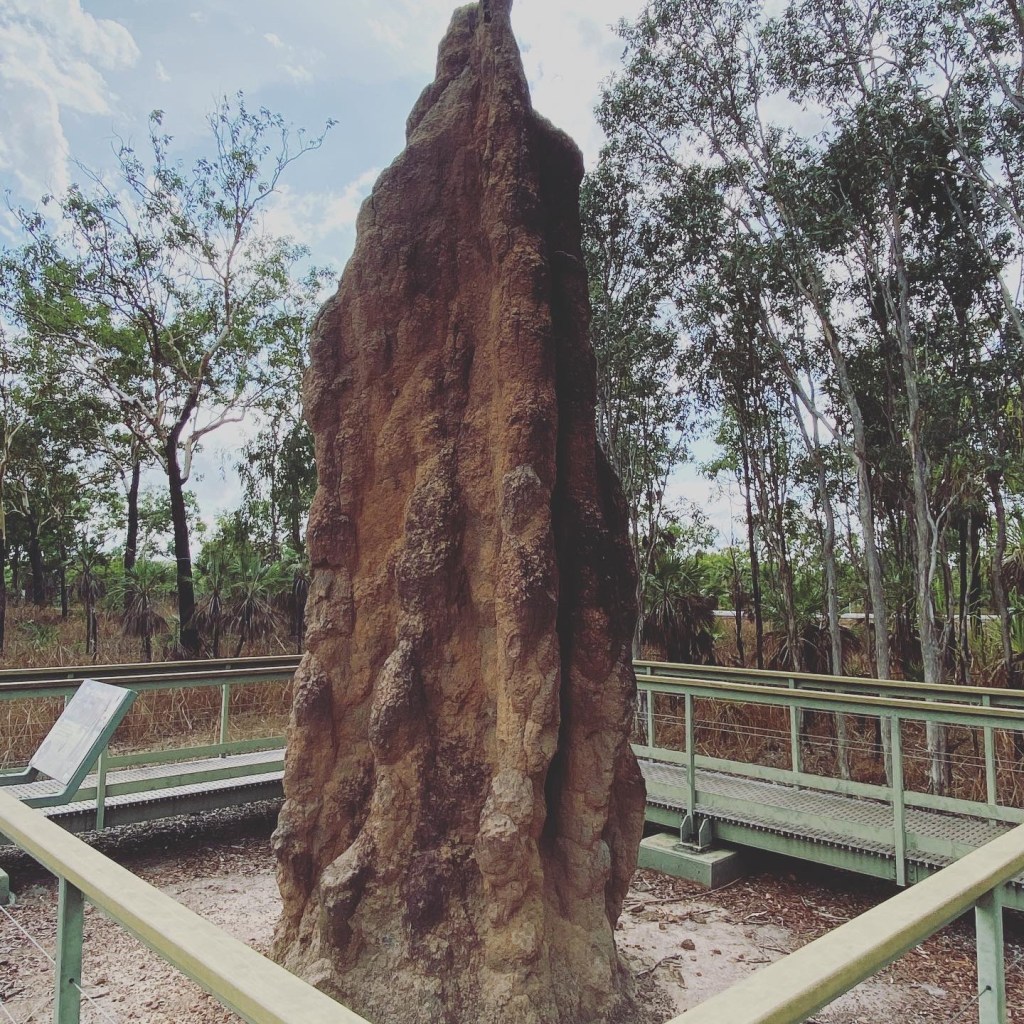
Cathedral termites build mounds well over 5m high. The termite is 5mm in size. They are built on well drained soil.
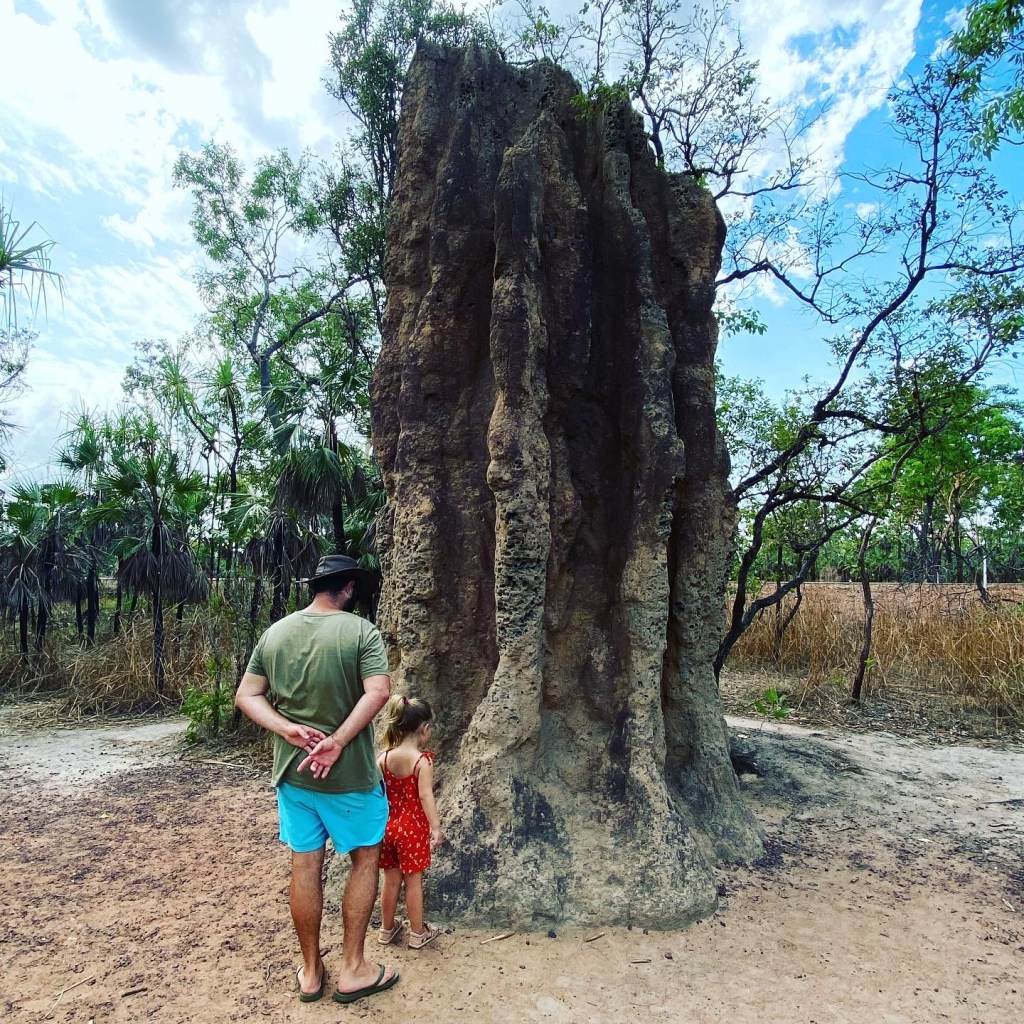
The Magnetic Termite has to withstand the extreme heat and waterlogged soils, unable to build underground.
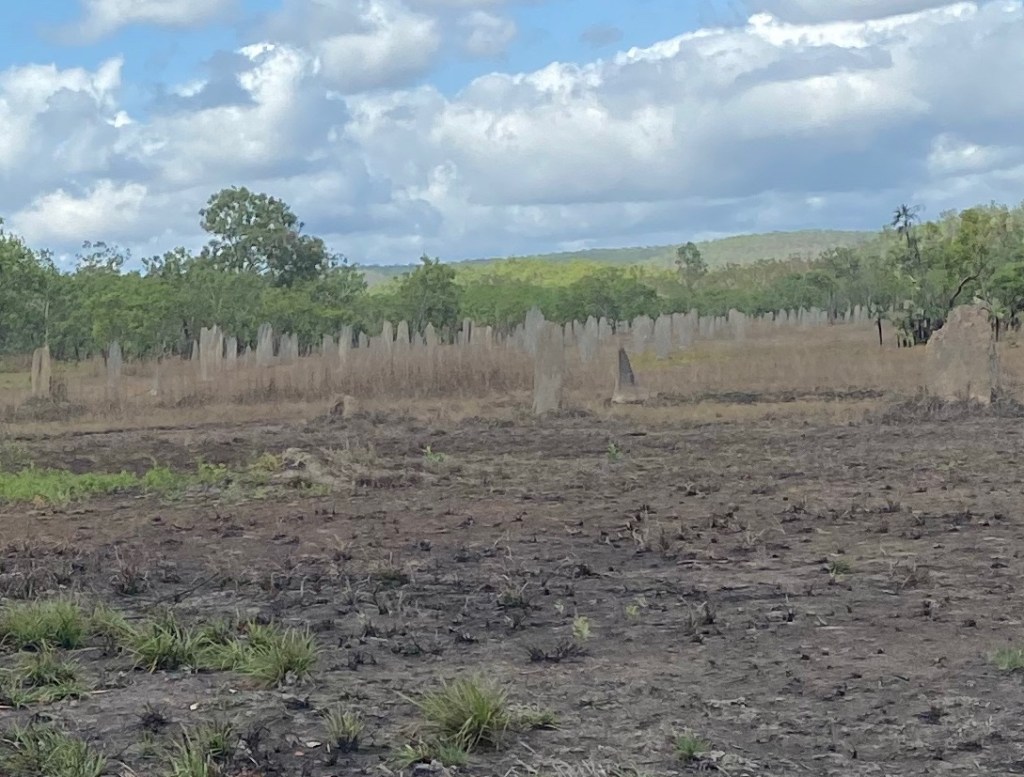
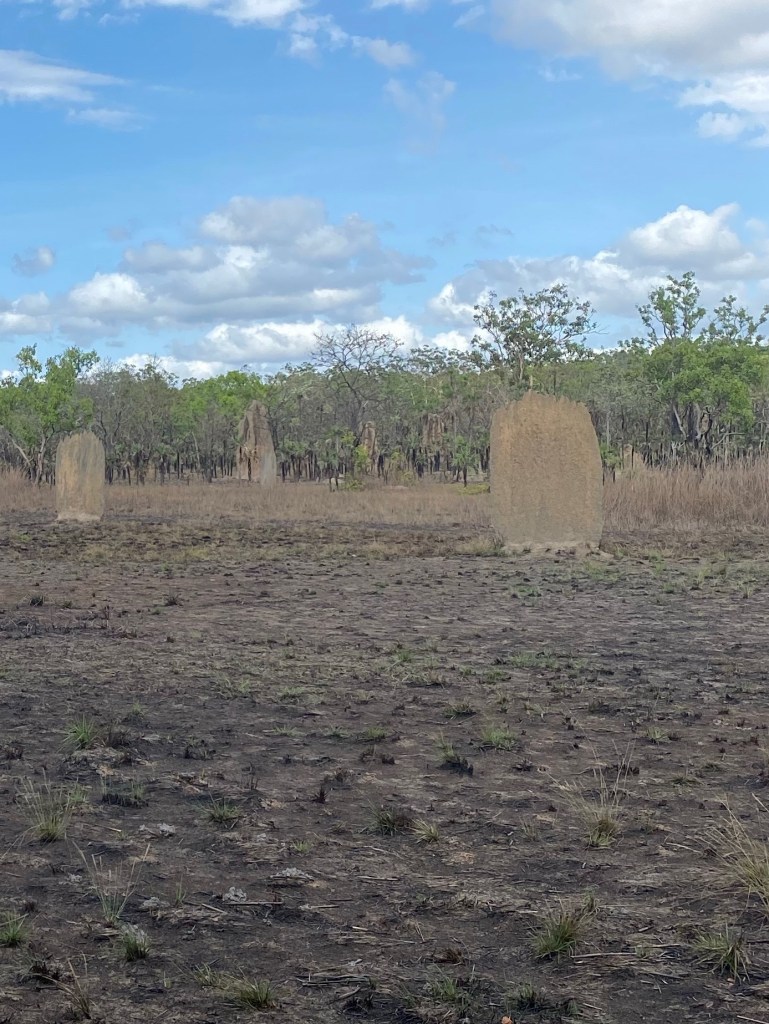
The Magnetic Termite, is so named, as all their mounds are built aligned on a north-south axis. These termites are found no where else in the world.
They are orientated to maintain internal temps with one side always in the shade.
Florence Falls
The creek and the falls are permanent structures. The porous rocks of the tabletop plateaus absorb Wet Season rains, then they percolate as springs during the Dry Season.
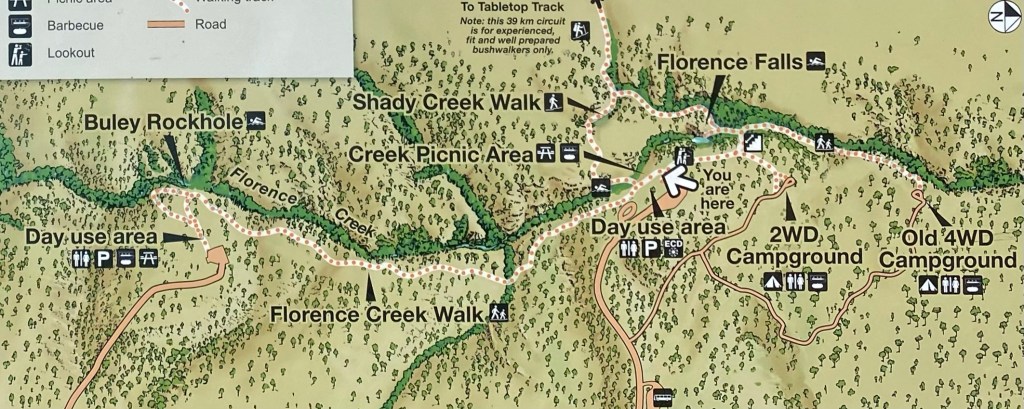
The walk from the car park gave us two options; Descend to the falls over 430m with 135 stairs or walk 1.2km on a creek walk.
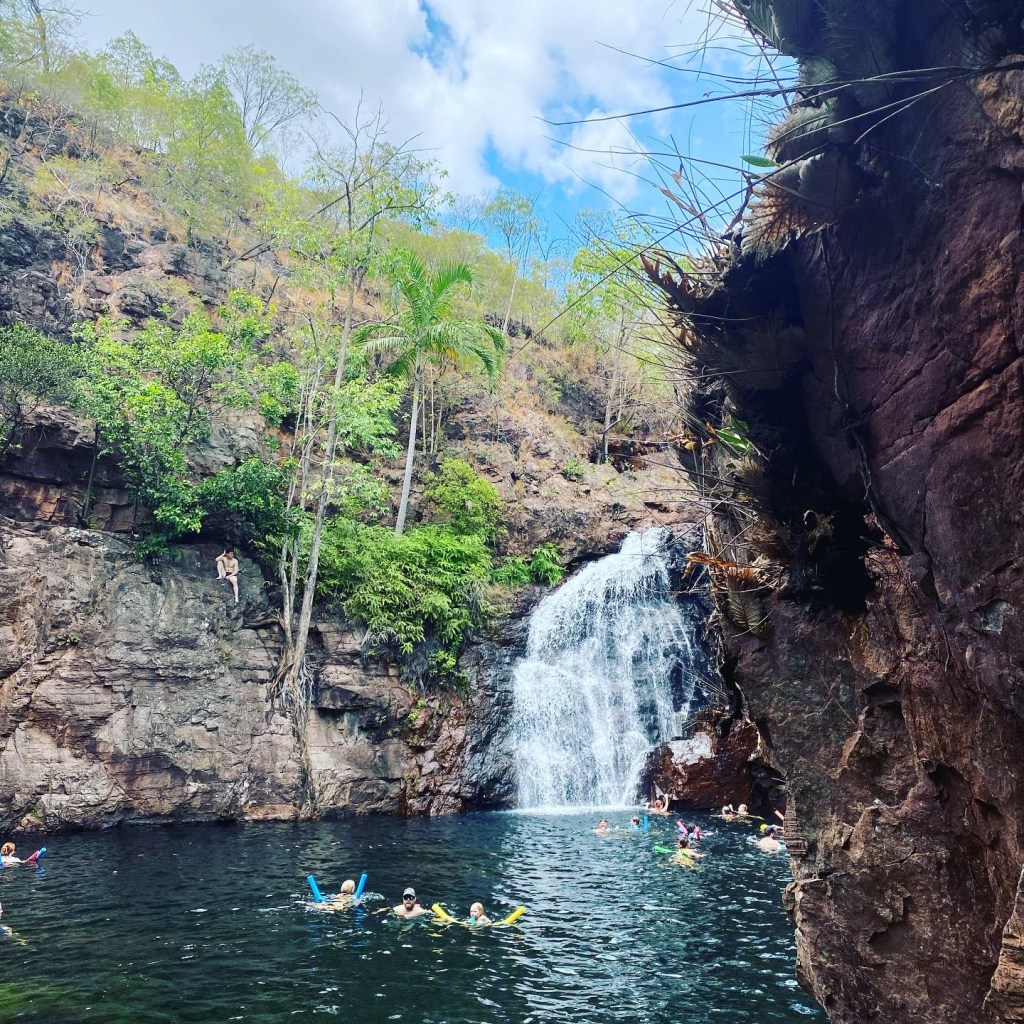
We descended the stairs with all our gear on our shoulders. It was a pleasant walk past a beautiful waterfall lookout.
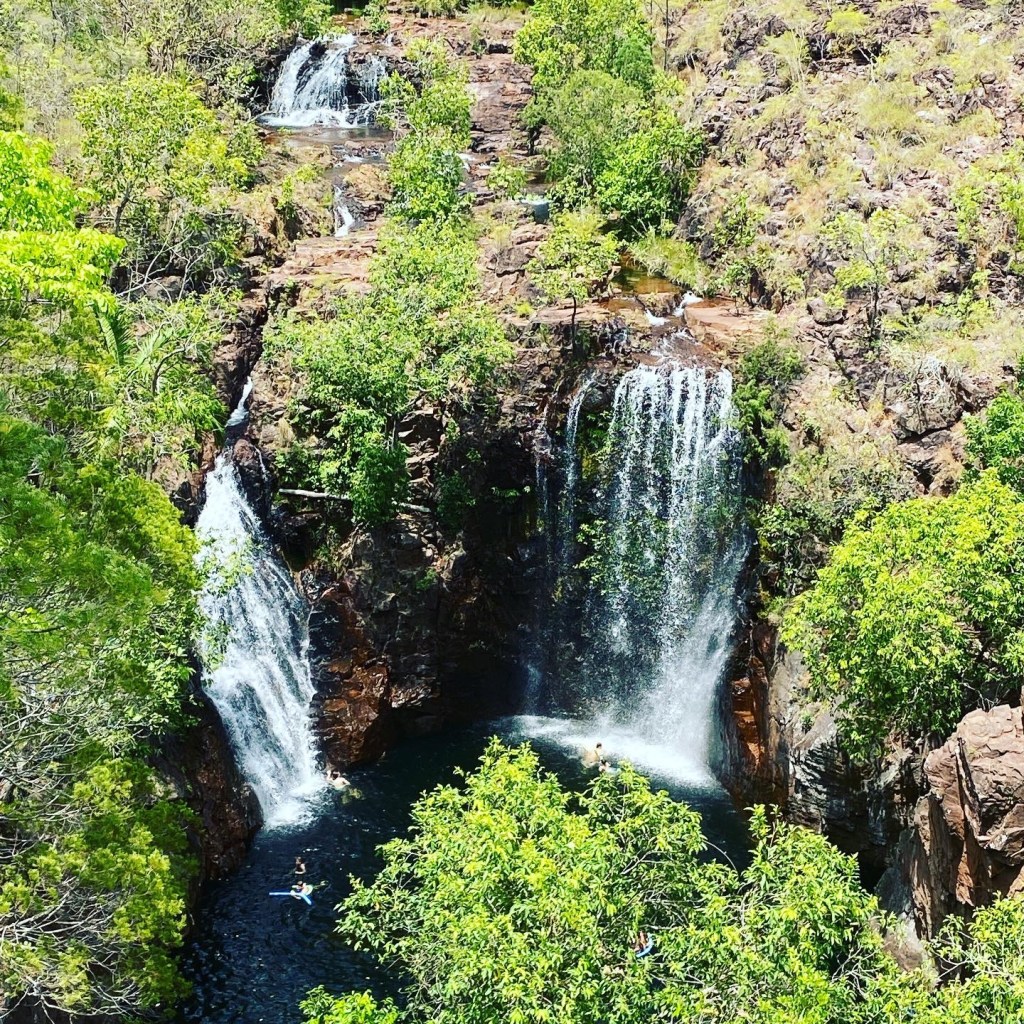
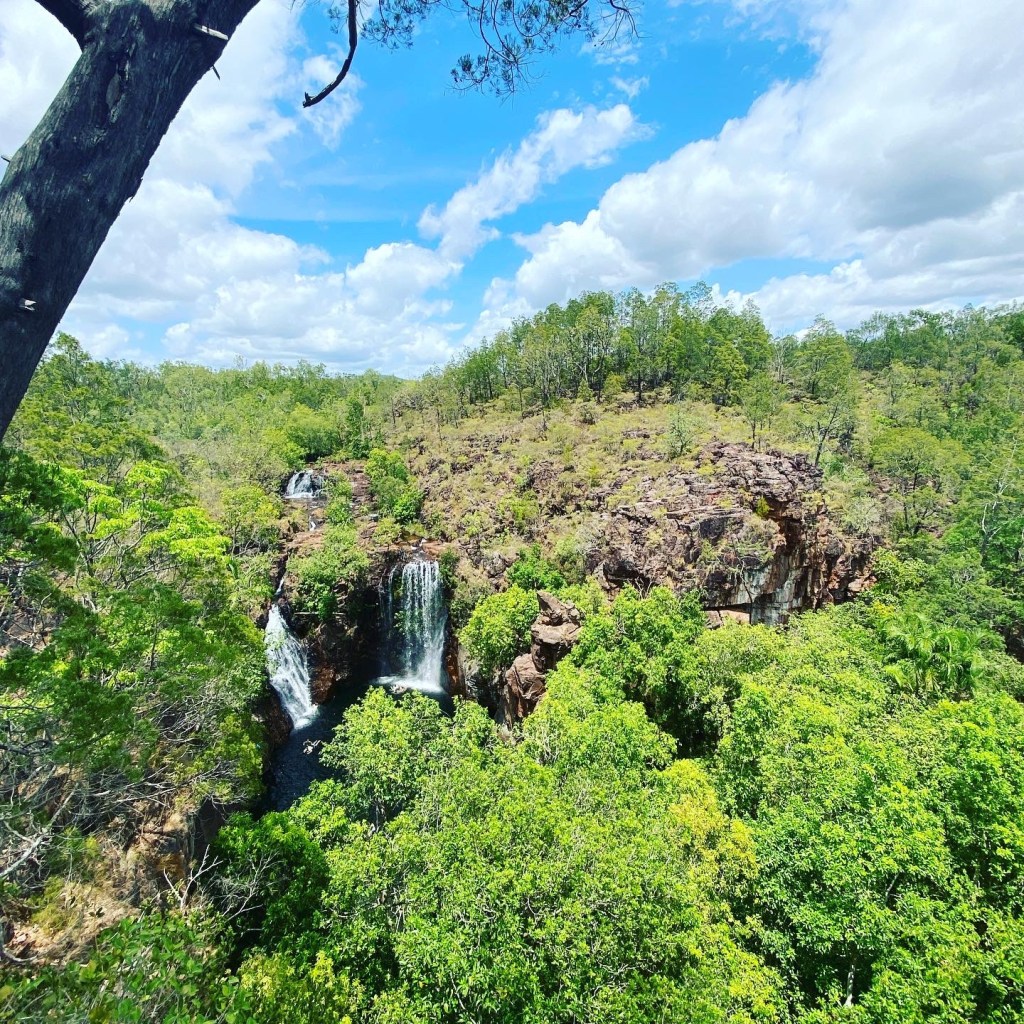
We arrived at the plunge pool and set our things down. We jumped in with the other people.
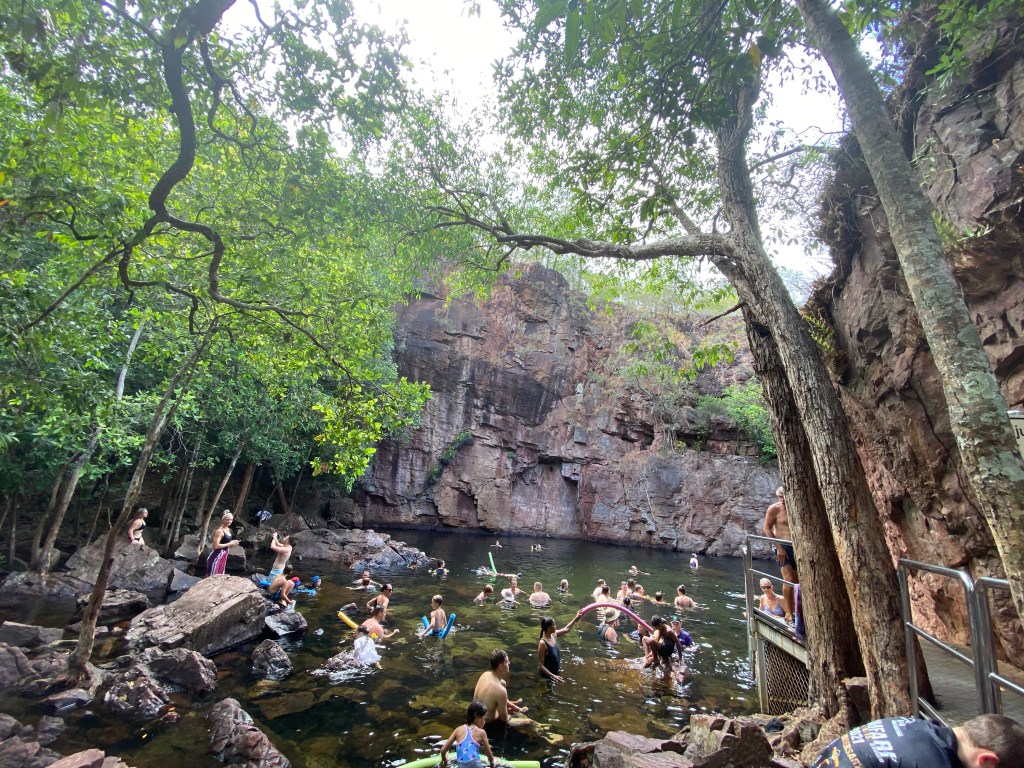
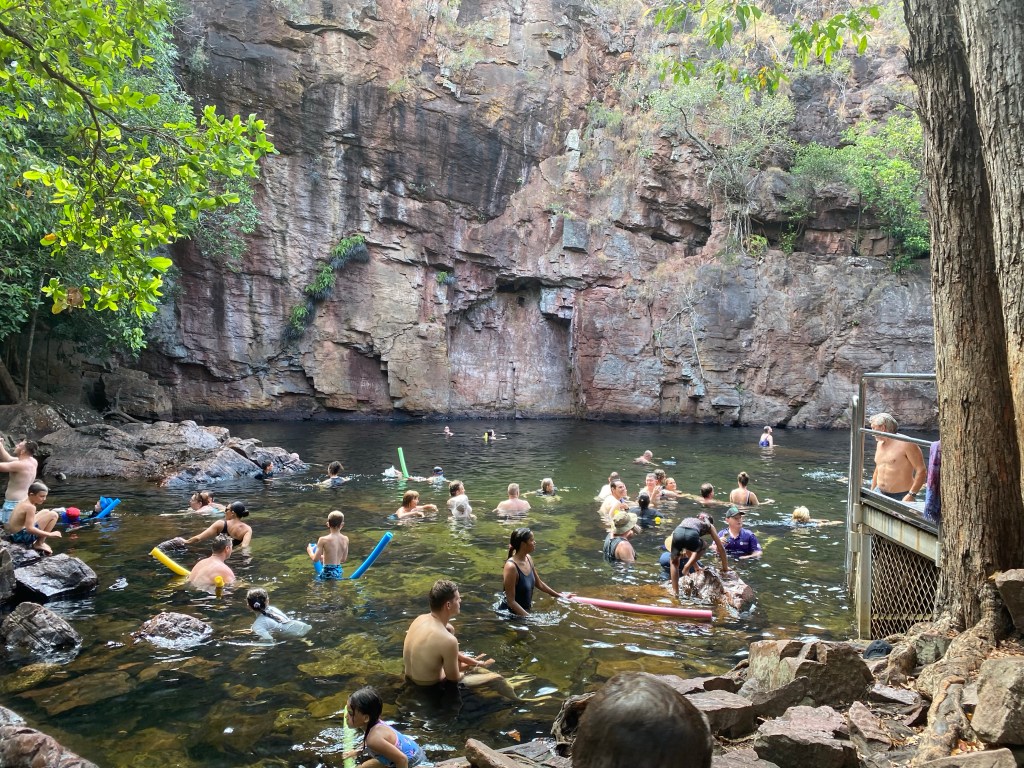
Within a few minutes Eva was bitten 3 times. The culprit were fish that was biting off the scabs from wounds on her legs. Being on Asprin she bleed most dramatically. Jason was bitten on the base of his toe at a site of a new cut.
After emerging from the water to collect herself, Eva came back in a floated with her leg on the water surface.
After a spot of lunch we climbed the stairs and returned to the car.
Batchelor
We returned to our cabin for a quiet remainder of the afternoon.
We went to the Litchfield Hotel and had dinner at Lil’Ripper Bistro.
Sunday
We packed up and left Batchelor. We stopped in at Berry Springs on our way back to our house sit.
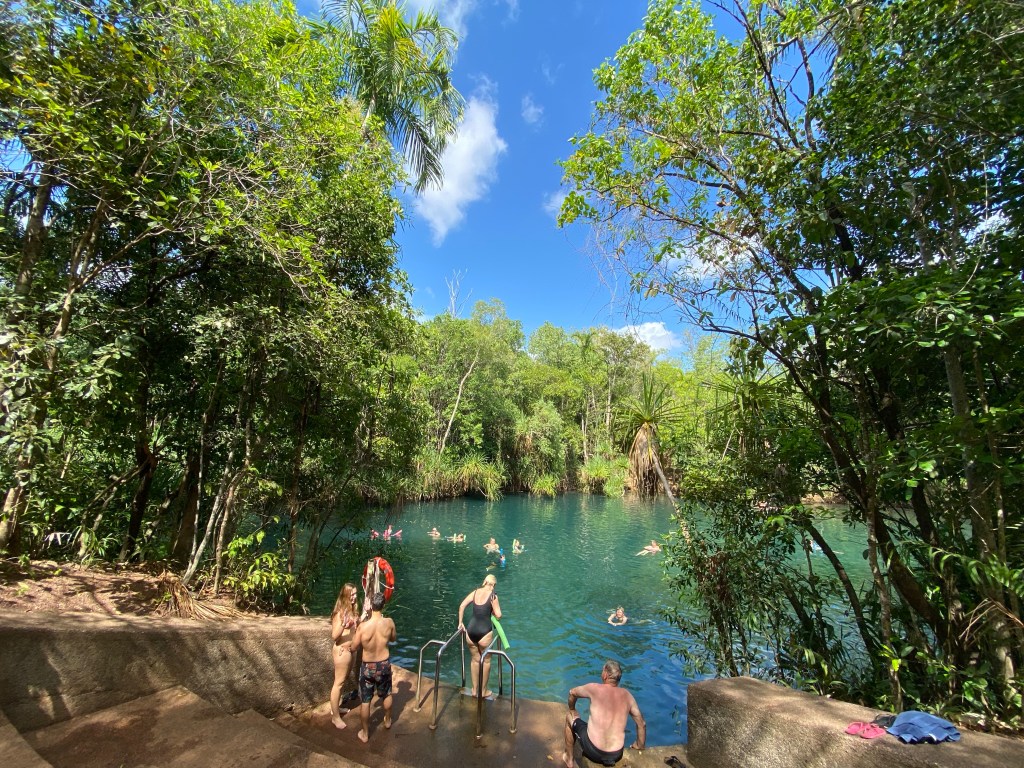
The location is known as Laniyuk by the indigenous Kungarakany people.
The name Berry Springs derives from Berry Creek, named by the Surveyor General of South Australia, George Goyder, in 1870, after his chief draftsman, Edwin Berry.
During World War II, over 100,000 service personnel were deployed to the Litchfield area. A low weir was built across Berry Creek to provide a swimming pool as part of a rest and recreation camp for troops, and it is still a popular swimming venue.
Sum up
It was a great weekend away. We made it home for the NRL grand final. Disappointed that the Bunnies lost by 2 points, but it was a great game.

 morrisblog.travel.blog