Thursday 18th February 2021
Today we woke up at 730am and got ourselves ready for our trip to Lake McKenzie.
It was forecast 70% chance rain again today, but we headed out anyway. We were glad we did.
After driving for 1 hr in rain sodden sand and large puddles covering the track, we arrived at Lake McKenzie carpark. There were toilet facilities and picnic tables surrounded by high fences to keep hungry and curious dingos out.
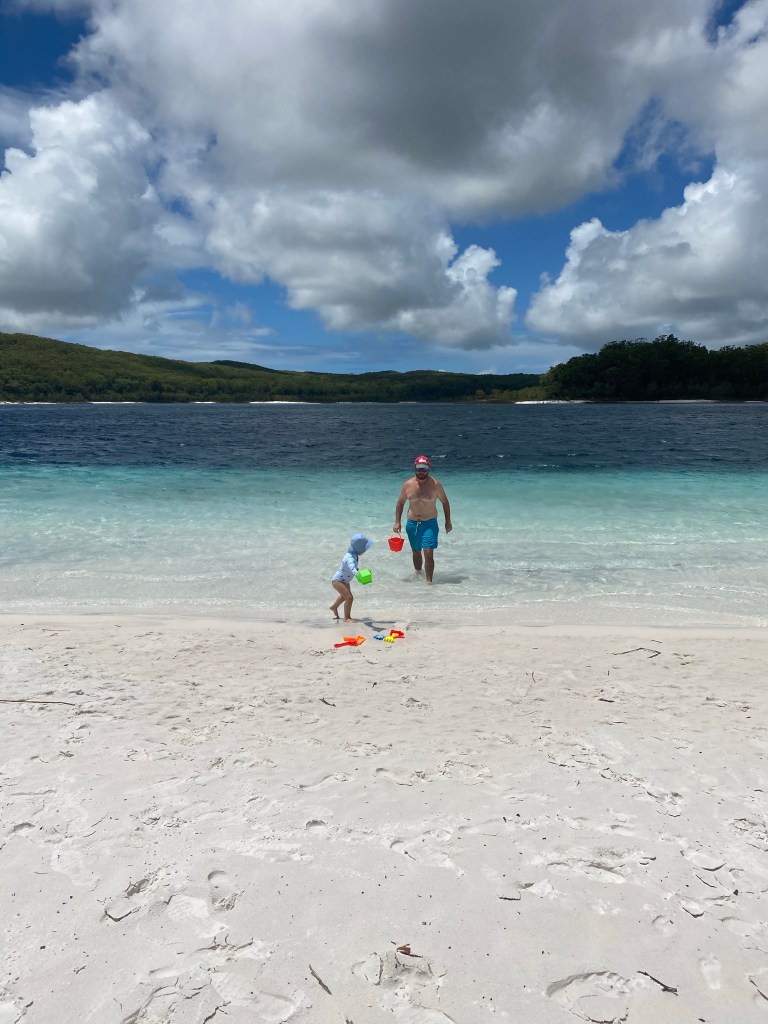
We walked down the track to the lake and were welcomed by this beautiful sight.
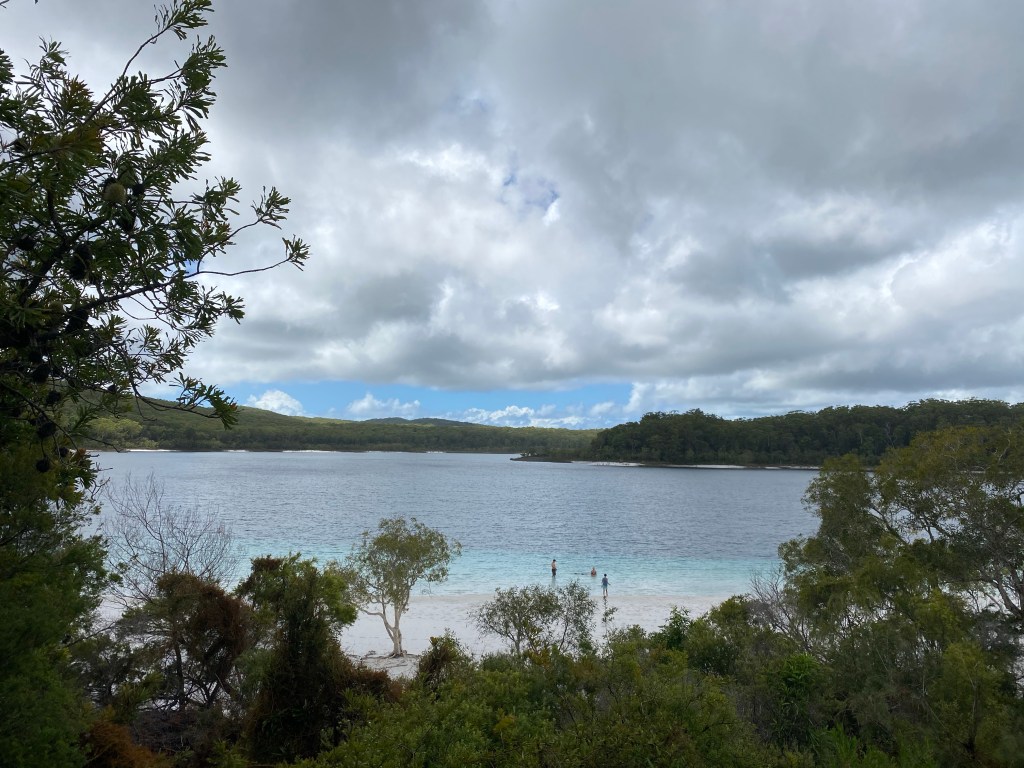
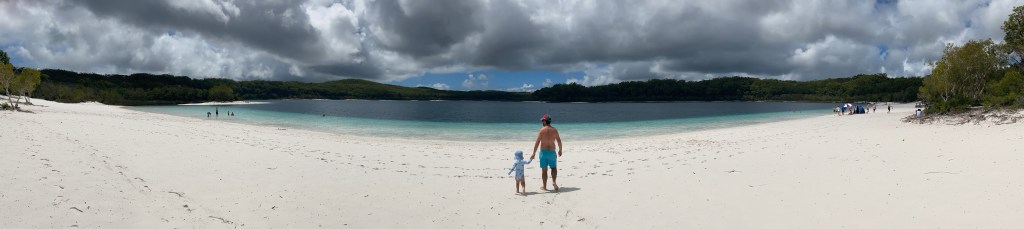
Lake McKenzie
The water was a warm 26 degrees Celsius and was interrupted by small rolling waves, due to a moderate a breeze. There were a few ducks in the lake, no dingos in sight and multiple families and friends enjoying a swim.
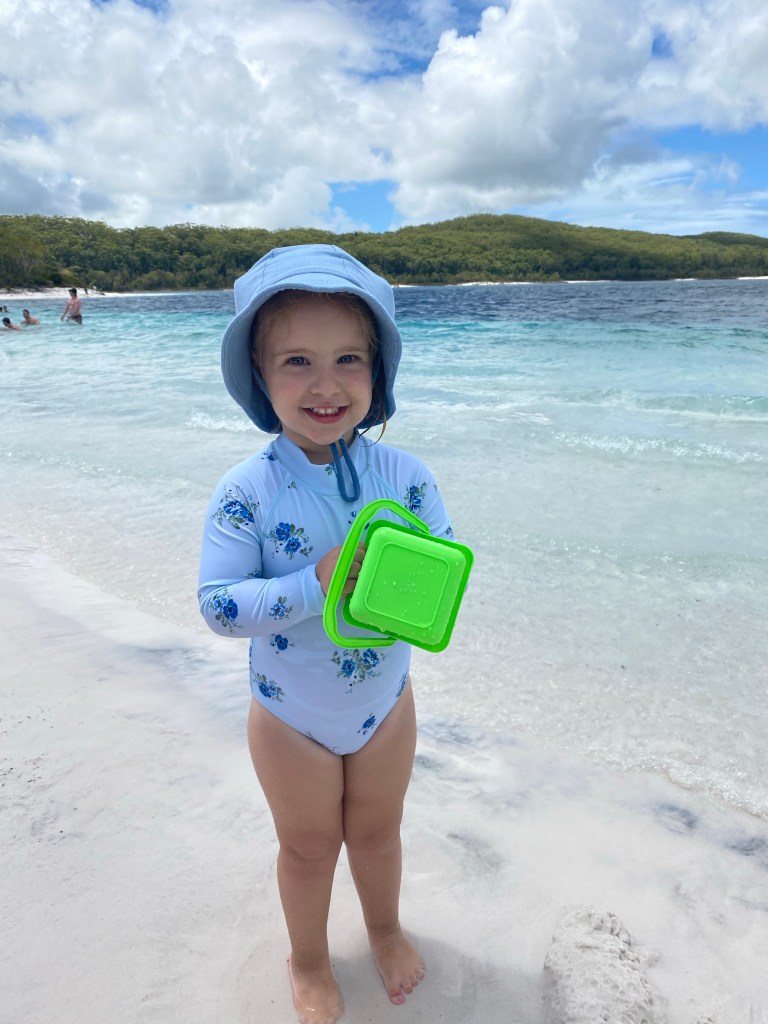
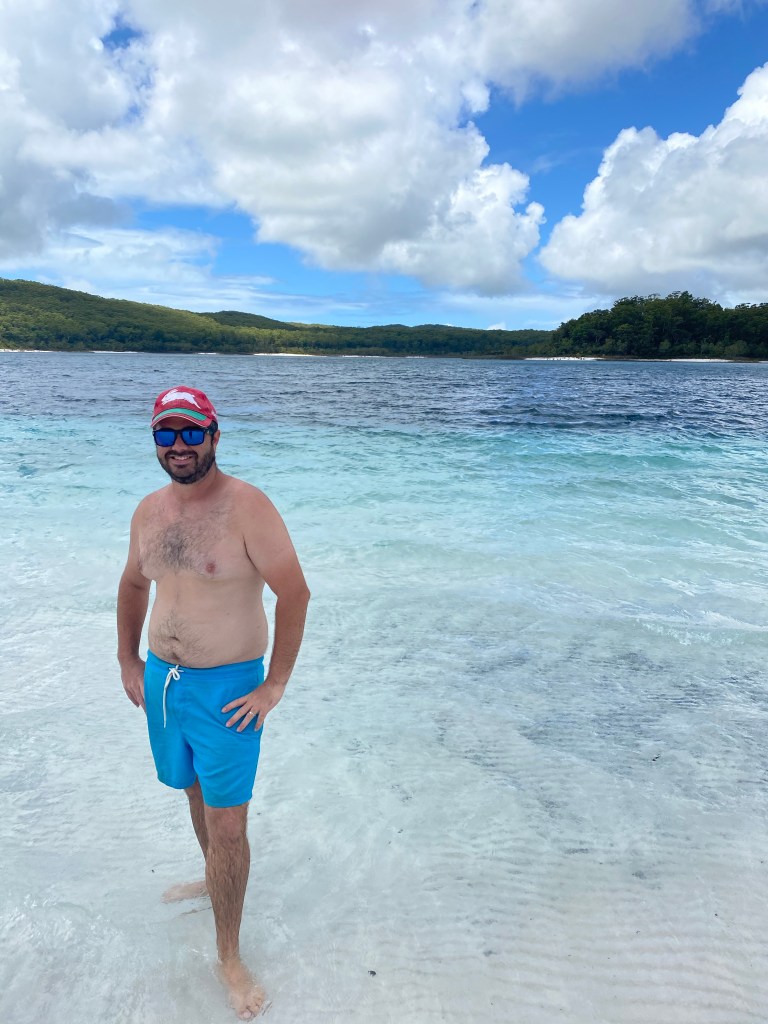
We spent the whole morning in the water playing, splashing and having fun.
History
Lake McKenzie is 1200m long, 930m wide and 6.6m average depth. It is 100m above sea level.
It is a ‘perched’ lake, which means it contains only rainwater, no groundwater, is not fed by streams and does not flow to the ocean. The sand and organic matter at the base of the lake form an impervious layer, preventing rainwater from draining away.
The sand here is pure, white silica and is not only beautiful to look at but feels beautifully soft to walk on. The sand acts as a filter, giving the water its clarity and helping to make the water so pure it can support very little life.
In 1918, NSW timber merchant Mr H. McKenzie, of Sydney, bought the rights to log 4000 hectares of land for 10 years and immediately began building the first and only timber mill on Fraser Island at the McKenzies Jetty site, just south of Kingfisher Bay Resort. McKenzie Ltd was responsible for this mill, a jetty and a number of steam locomotives and tracks servicing its logging areas.
The timber industry on Fraser Island
Andrew Petrie, a former superintendent of public works in the Brisbane penal colony, explored Fraser Island in 1842 and returned to Brisbane with glowing reports about the abundance and quality of timber the island had to offer.
In 1860 Fraser Island was gazetted as an Aboriginal reserve, but this was revoked two years later when valuable timber reserves were identified by William Pettigrew, operator of Brisbane’s first steam mill. After hearing Petrie’s accounts of the Fraser Island timber Pettigrew surveyed the area with Petrie’s son Tom.
William Pettigrew, in partnership with the Sims family, constructed a saw mill in Maryborough.
Timber getting and European settlement caused many conflicts with the Aboriginal people. The consequence of this was the tragic clubbing to death of John Piggot in 1864, which halted logging on the island until 1868 when the first bullocks were brought in to haul logs.
Logging gradually spread across the rainforest pockets.
The first reafforestation scheme in Queensland occurred on Fraser Island during 1883-84. This involved the planting of 28,000 Kauri Pine seedlings among heavy scrub. However, Kauri Pines are not shade tolerant and this planting was unsuccessful.
In 1905 the first steam tramway was laid from Urang Creek to Poyungan and Bogimbah Scrub to haul logs to the coast. Tramways were laid on a south-east, north-west alignment to avoid crossing the sand dunes. The tracks were regularly shifted to where logging was most common at that time.
Sparks from chimney stacks of the steam locomotives often caused bush fires.
In 1906 two of Maryborough’s largest saw millers jointly purchased the right to log 4,300ha of Fraser Island. Tallowwood and blackbutt were the most highly sought after timber species.
During 1908 the central part of Fraser Island was declared a Forestry Reserve and came under the control of the State Forest Service.
In 1913 the first State Government Forestry Camp was set up at Bogimbah Creek by Forest Ranger Walter Petrie.
In 1920 the Forestry Camp was moved to Central Station where a busy community developed, with forestry workers living in tents, bark huts and houses.Vegetable gardens and fruit trees were planted, a school was built for the children and machinery sheds, stables and plant nurseries were established.
Prior to 1925, Satinay Trees had not been popular as they were regarded as too soft for hardwood and too hard for softwood; however the timber was found to be resistant to white ant, borer and fire, became popular for cabinet making. The close texture of the satinay produced a beautiful lustre when polished.
By 1925 most of the island was set aside as state forest and when the McKenzie operation was no longer economically viable, McKenzie sold out and the State Forest Service bought at auction a steam locomotive, tramlines and the jetty. The State Forest Service continued to operate the steam tramways until 1935.
During the 1980s the State Government came under increasing pressure from
conservation groups to halt logging on Fraser Island. Logging ceased in 1991.
Afternoon fishing
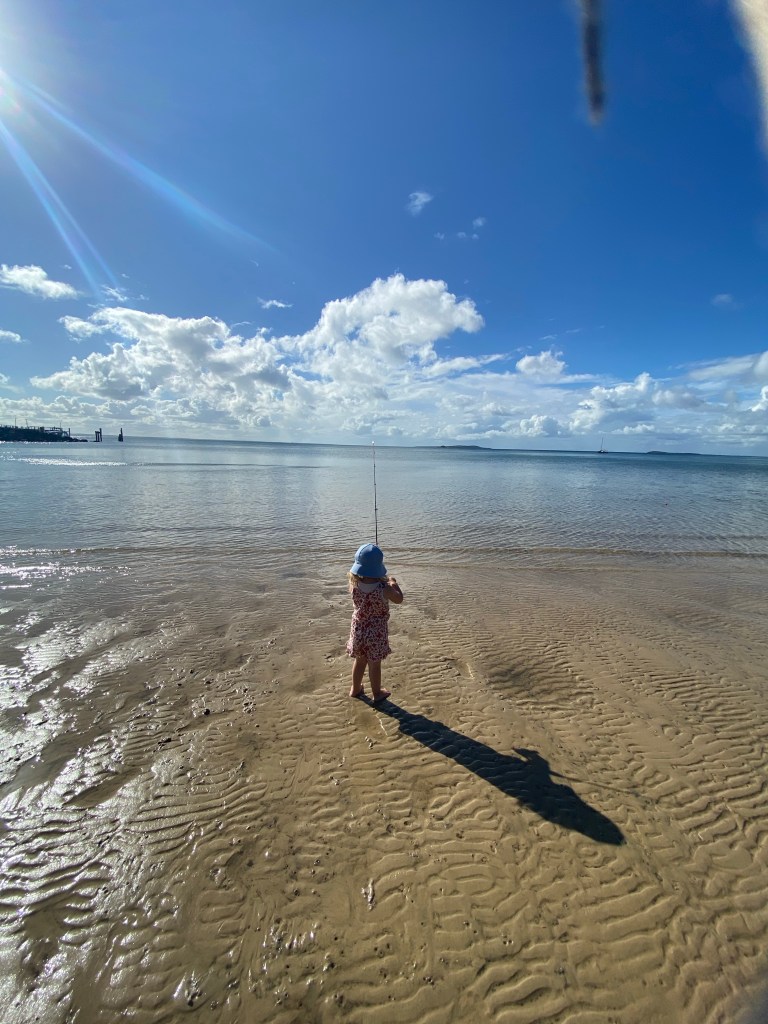
We returned back to the hotel and spent the afternoon on the beach near Kingfisher Bay Wharf.
We were able to watch soldier crabs, beach crabs, sea snails and bait fish at the going out of the tide.
Madeline again tried her hand at fishing. Being an inpatient toddler who has her own ideas, she wanted the bait cast out and then immediately she began reeling it in. We explained the concept of bait fishing to no avail. She enjoyed watching her float come back in, over and over and over again.
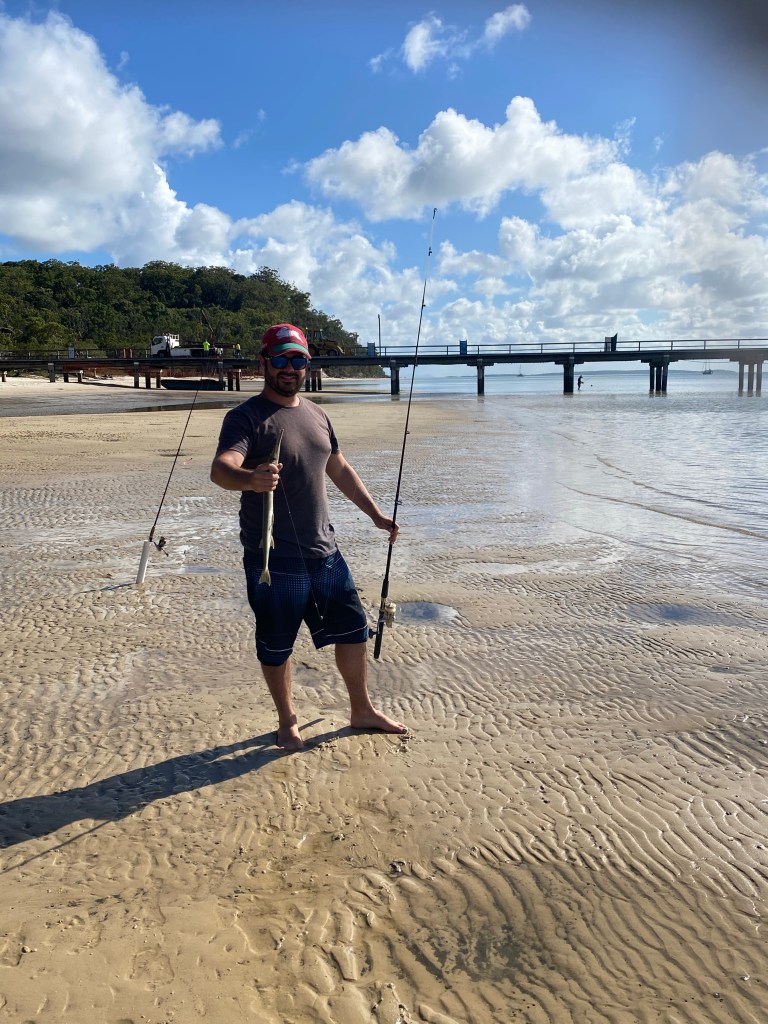
Jason managed to catch 3 very sharp toothed fish on the squid he caught off the wharf a few days earlier.
These are a saltwater Long Tom. Feisty things with a sharp bite that will take you hook, line and sinker.
Tomorrow
Tomorrow we pack up and leave Fraser Island on the afternoon barge. We’ve had a wonderful time here and would recommend a visit to everyone and anyone.
We head back to Torquay to our hone on wheels, which Madeline can’t stop talking about. “Yay my caravan!”
Tomorrow night we are visiting Eva’s uncle Jerry and his wife who happen to live in Harvey Bay. it’s been a long while between catch ups and he has yet to meet Jason and Madeline. We are looking forward to a short but sweet visit before moving up the Bundaberg on Saturday.

 morrisblog.travel.blog